



Why China's rural markets are winning over a new generation
Rural market days were once simply part of everyday life across China's countless town and township markets. Now they are back with renewed appeal — not just in memory, but trending on social media and through the camera lenses of legions of young people.
"Let's see what 100 yuan (about $14) can buy at the market!" "Eat your fill for 30 yuan!" Livestreamers kick off their broadcasts with enthusiasm, warming the hearts of viewers who may still be in bed on the other side of the screen.
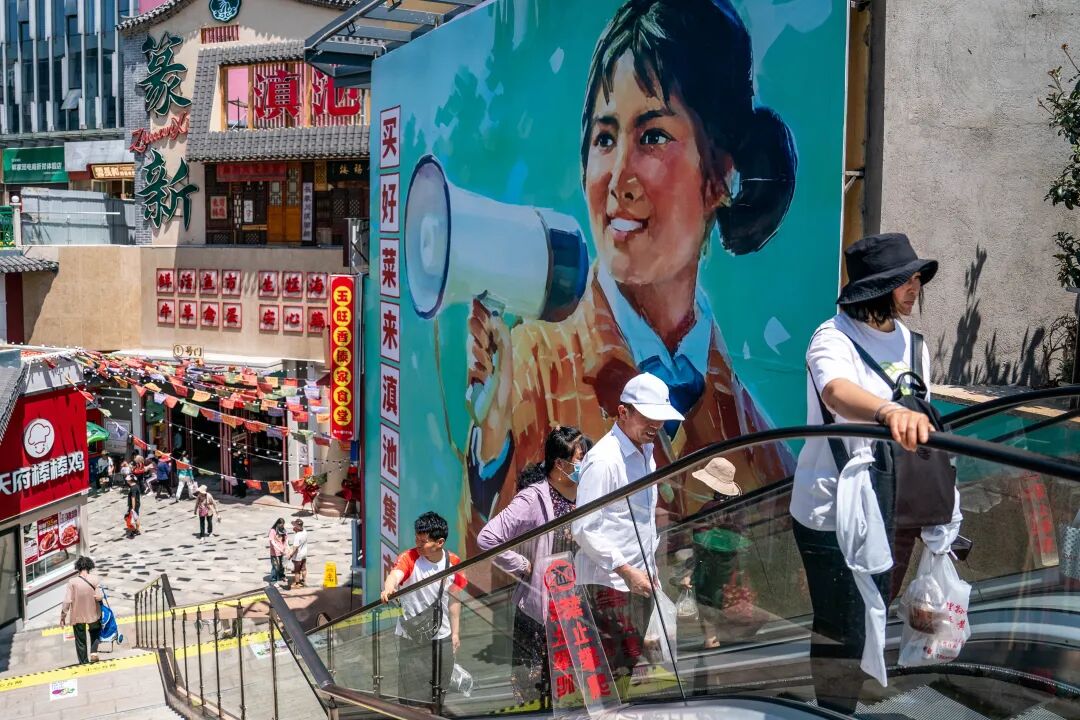
Shoppers take an escalator at Zhuanxin Dianchi Market in Kunming, southwest China's Yunnan Province. (Photo/Hu Chao)
Through livestream sessions, migrants working far from home reconnect with their roots, while curious viewers nationwide get a virtual taste of regional culture. "Going to market online" is more than a shift in consumer behavior. It meets an emotional need while reviving cultural memory.
Jingui Market in Jingui town, Helan county, Yinchuan, northwest China's Ningxia Hui Autonomous Region opens on the first, fourth and seventh days of each lunar month. According to general manager Wu Kehui, the market has operated for over 70 years, covering nearly 50 mu (about 3.33 hectares) with more than 400 vendors selling everything from clothing and produce to fresh meat and livestock. It serves as the main hub where residents from over 20 surrounding villages buy daily necessities and sell their agricultural products.
The market has become one of Ningxia's most famous markets, thanks in large part to the internet. On market days, it records up to 30,000 visits, with annual transactions approaching 100 million yuan.
"The market is only about 10 kilometers from downtown Yinchuan, attracting crowds of people, including urbanites," Wu said. "For them, visiting the market isn't just about shopping. It's a nostalgic journey in search of childhood memories."
Many young people capture these everyday scenes on camera, often propelling the market into the social media spotlight and drawing visitors from other places, even from abroad.
Why have rural markets, once dismissed as unsophisticated and outdated, become hot destinations? "The hustle and bustle of daily life touches the heart the most," said Wu, who is in his 60s, cutting to the essence of the phenomenon.
Ma Zhimei, a Ningxia influencer born in the 1990s, put it this way in one of her market-day videos: "Stepping into the market feels like stumbling back into childhood. The market hasn't changed; we have, from kids to adults. But that warmth hidden in the everyday hustle has never changed."
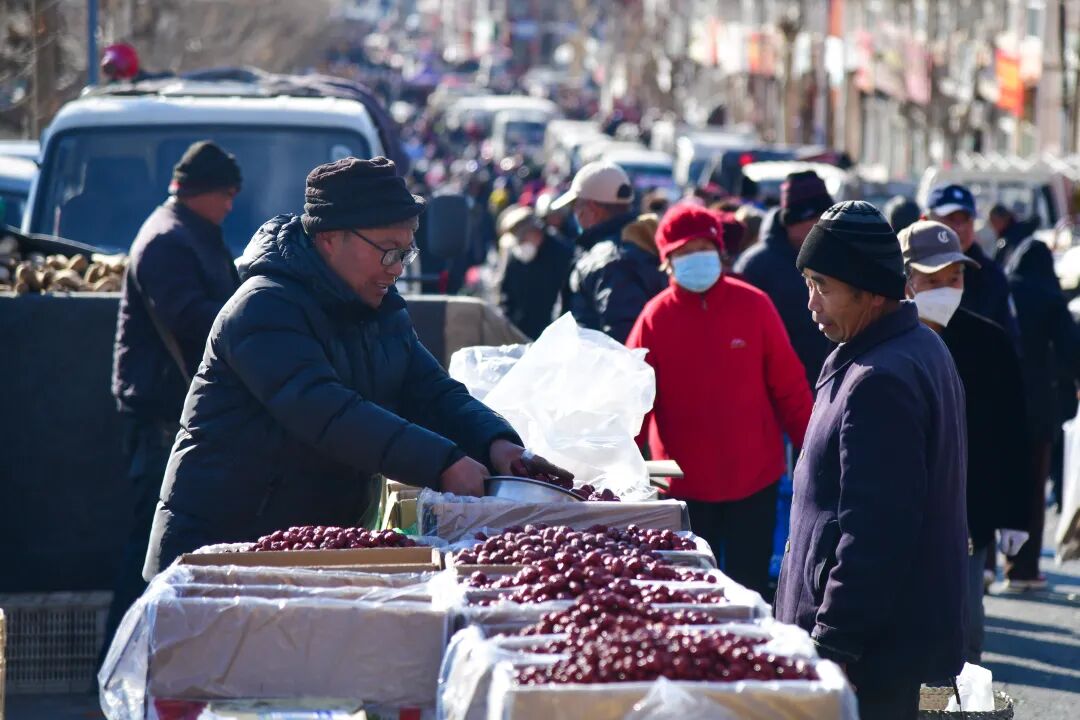
Photo shows a market day scene in Shima town, Zibo, east China's Shandong Province. (Photo/Zhu Zheng)
For Feng Yurao, a 32-year-old from Ningxia, the standout advantages of rural markets are fresh, additive-free goods at reasonable prices. More importantly, the relaxed atmosphere of market days offers the slower pace young people crave amid the relentless rhythm of city life. Compared with gleaming urban supermarkets stocked with endless options, rural markets may not be perfect, but they feel real, and they feel warm.
Zhang Wanjing, a folklorist at the Ningxia Academy of Social Sciences, said the rural market revival represents a contemporary expression of rural civilization. Its vitality lies in people: it satisfies emotional needs, rebuilds community ties and strengthens cultural confidence. Social interaction at markets is low-pressure and freewheeling. The cheerful calls of vendors, freshly prepared food, and lively human exchanges offer spiritual respite from the fast pace of modern life. People visit markets not just for good deals but for genuine human connection.
This quest for authentic lived experience has both fueled the revival of rural markets and given rise to a new profession: market-hopping livestreamers.
They come in all varieties: some focus on food, sampling snacks across markets nationwide; others highlight handicrafts, uncovering stories behind traditional techniques; still others turn their lenses on the personalities behind the stalls, documenting the diverse lives of vendors. They are participants, chroniclers and promoters all at once, building cultural bridges between urban and rural China.
Guo Na, born in the 1980s in central China's Hunan Province, has become a market-hopping livestreamer. On Dec. 17, 2023, she completed her first market livestream at the market in her hometown of Guyuefeng town, Lukou district, Zhuzhou, Hunan.
"Several thousand people watched simultaneously, peaking at 20,000 in the livestream session. The response exceeded expectations," she said. Guo realized that amid rapid urbanization, the vibrant scenes of rural markets are gradually disappearing. From that moment, she committed to waking early on weekends, heading out to the countryside to livestream and film rural markets.
Over two years, she has visited nearly all 54 markets across eight townships and towns in Lukou district, launching over 50 livestream sessions.
Interestingly, livestreamers don't limit themselves to local markets. They've begun market-hopping like migratory birds, moving from one market to another and weaving together the cultural landscapes of different regions.
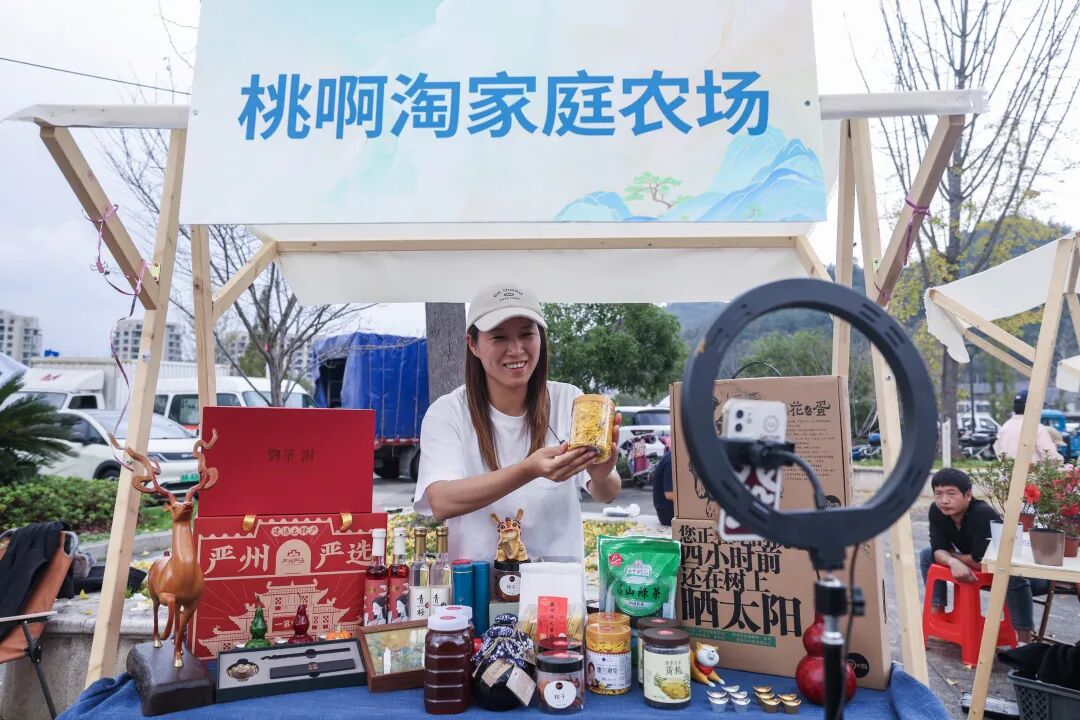
Xia Yue, a well-known agricultural entrepreneur, promotes local products during a livestream at a market in Jiande, east China's Zhejiang Province. (Photo/Xu Yu)
According to Zhang, internet-famous rural markets operate on a symbiotic logic. Markets provide livestream content rooted in intangible cultural heritage, local cuisine and regional culture. Market-hopping livestreamers, in turn, leverage these cultural features and supply chains to promote local specialties, amplify market influence and draw customers. Meanwhile, the government improves infrastructure and supports livestreamers. Together, this ecosystem transforms rural markets into sustainable museums of rural life and engines of shared prosperity.
As more young people visit or even settle in rural areas, the revival of rural markets is becoming a powerful driver of rural revitalization and the preservation of folk culture.
Some places are already exploring systematic approaches to convert the online popularity of market-going into lasting momentum for rural revitalization, such as establishing rural market culture archives, training local livestreamers, and promoting integration between rural markets and other sectors.
In Ningxia's Helan county, the government has supported market upgrades such as parking, charging stations and 5G coverage, enhancing the consumer experience while developing its rural markets as cultural tourism destinations.
Wu explained that Jingui Market, now renovated, is more spacious, cleaner and more appealing. During festivals, shoppers browse stalls, sample delicacies, enjoy Qinqiang opera performances and take part in lucky draws. In 2025, the market added a dedicated food hall with over 20 specialty food vendors, all young entrepreneurs.
Zhang believes that thanks to a deeper sense of cultural identity and attachment to rural roots, more ambitious young people are joining the movement to document rural life and help farmers sell products, injecting fresh vitality into rural revitalization.
Photos




Related Stories
- Village cafe brews rural revitalization in China
- China's Lyushan Township endeavors to promote comprehensive rural revitalization
- Sheep farming grows into robust driver of rural revitalization in Huzhou, E China's Zhejiang
- Feature: Red fruits of Funiushan -- how cornus revitalizes a rural Chinese town
- Tech-driven rural revitalization takes roots across China
Copyright © 2026 People's Daily Online. All Rights Reserved.
