



China continues strengthening position as leading source of outbound investment
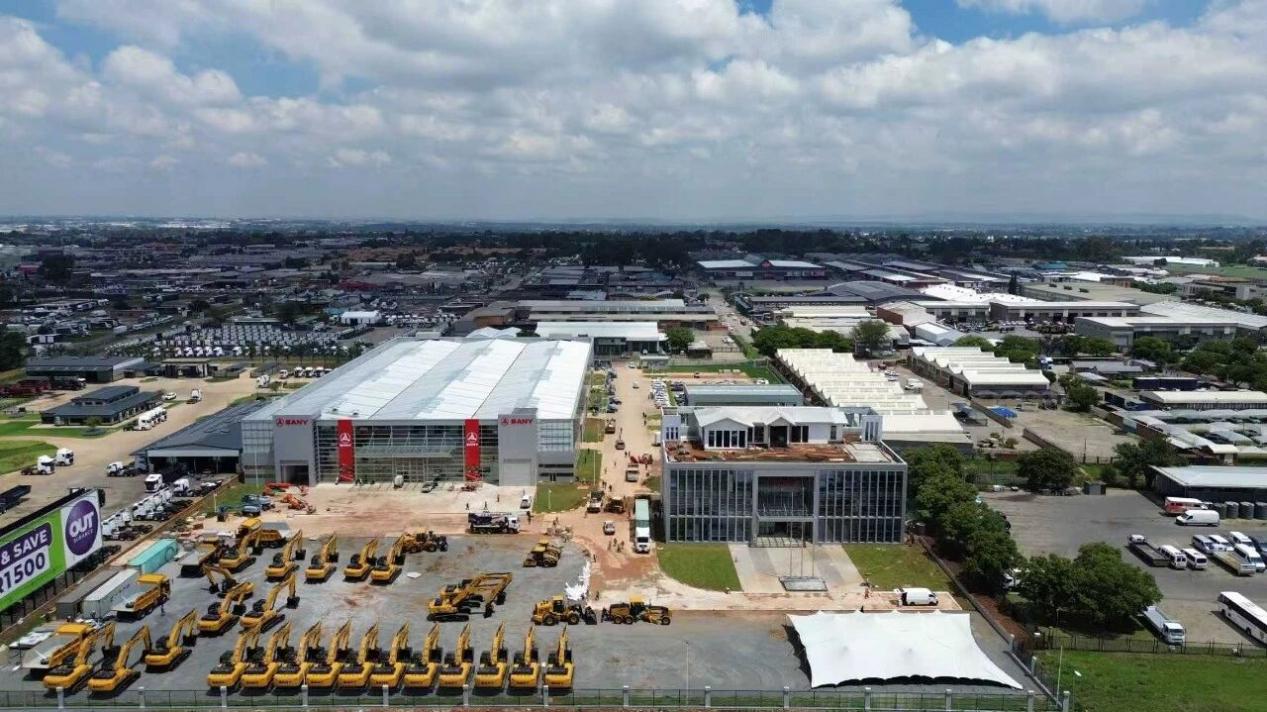
Photo shows the SANY South Africa Industrial Park. (Photo from SANY Group)
China's total outbound direct investment (ODI) increased 7 percent year-on-year to 1.03 trillion yuan ($145 billion) in the first 10 months of 2025, according to the latest data from China's Ministry of Commerce. During the same period, Chinese companies made non-financial direct investments in 9,553 overseas businesses in 152 countries and regions, with total investment reaching 872.6 billion yuan, up 6 percent year-on-year.
Analysts highlight that the sustained, high-quality growth of China's outbound investment not only facilitates the optimal allocation of global production factors but also supports economic and social development and improves people's well-being in relevant countries and regions, broadening the scope for mutually beneficial cooperation.
On November 19, 2025, China's leading heavy equipment manufacturer SANY commissioned a new industrial park in Johannesburg, South Africa, strengthening its support for the country's industrialization drive. The 28,000-square-meter industrial park integrates manufacturing and logistics functions as well as a talent training center. Once fully operational, it will have an annual production capacity of around 1,000 excavators.
South African Deputy Minister of Employment and Labor Judith Nemadzinga-Tshabalala said the project will help cultivate a new generation of technicians and engineers in South Africa and reflects the Chinese company's confidence in South Africa's economic prospects and its long-term commitment to the region.
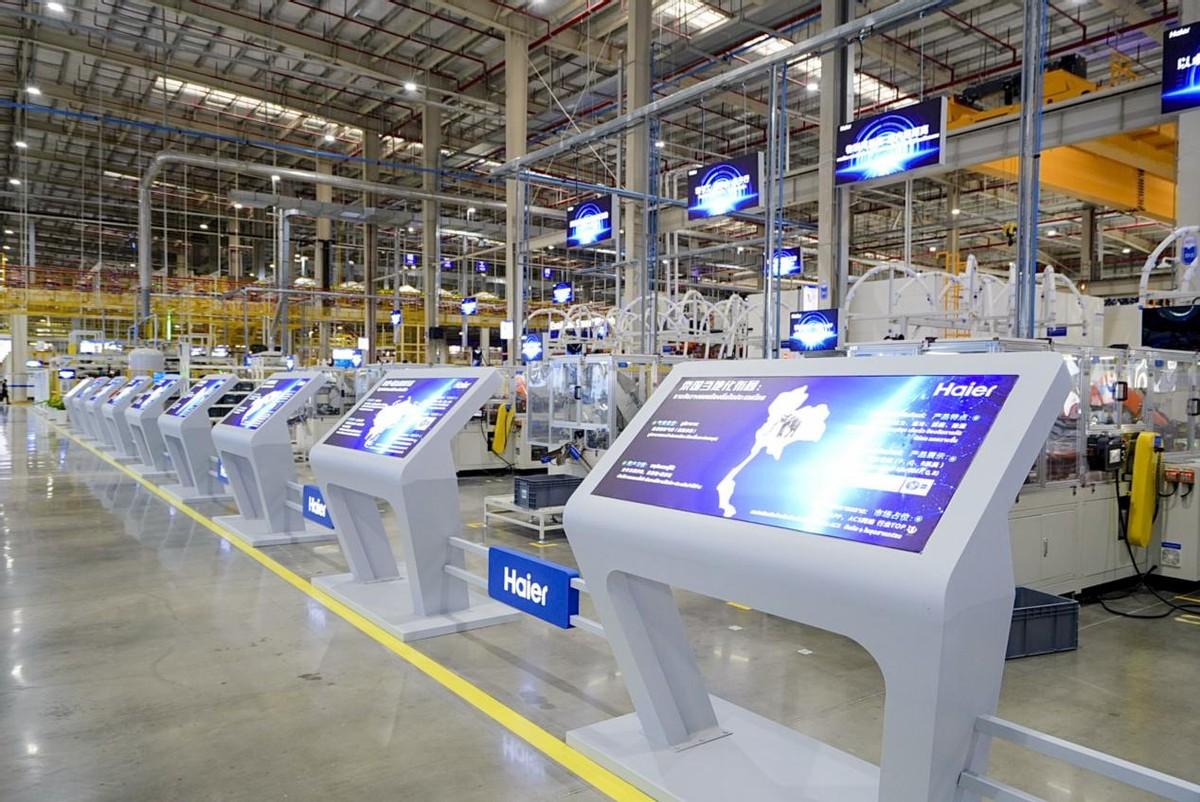
Photo shows an air conditioner manufacturing base of Chinese home appliance company Haier in Chonburi, Thailand. (Photo from Haier)
According to the 2024 statistical bulletin of outward foreign direct investment, China has ranked among the world's top three sources of ODI for 13 consecutive years, underscoring its position as a major global investor.
By the end of 2024, Chinese investors had established around 52,000 overseas enterprises across 190 countries and regions, with 70 percent of them reporting profitability or breakeven performance. In 2024, China's outward FDI spanned 18 industry sectors, with investments in five sectors, namely wholesale and retail, leasing and business services, manufacturing, finance, and mining, each exceeded $10 billion and collectively accounting for over 80 percent of the total. Investment in the construction sector and the information transmission/software and IT services sector recorded substantial growth, rising 80.5 percent and 205.5 percent year on year, respectively.
Shane Sang, Tax Partner at PwC China, observed that Chinese enterprises are shifting from market-seeking to value-driven strategies. Increasingly, they are pursuing technological innovation and moving up the global value chain through diverse cooperation models.
On Sept. 23, 2025, Chinese household appliance manufacturer Haier officially launched its air conditioner production base in Chonburi, Thailand. The project moved from planning to operation in just 10 months, and with an annual capacity of 6 million units, it has become the largest air-conditioner manufacturing facility of a Chinese brand in Southeast Asia.
"Our facility in Thailand integrates advanced technologies and best practices from our operations in China, encompassing product design, intelligent manufacturing, and green practices," said Dong Jianping, general manager of Haier Electrical Appliances (Thailand) Co., Ltd. As of now, Haier has established 35 industrial parks and 163 manufacturing centers worldwide.
Beyond innovation and manufacturing, many Chinese service enterprises are expanding their global presence alongside clients and partners.
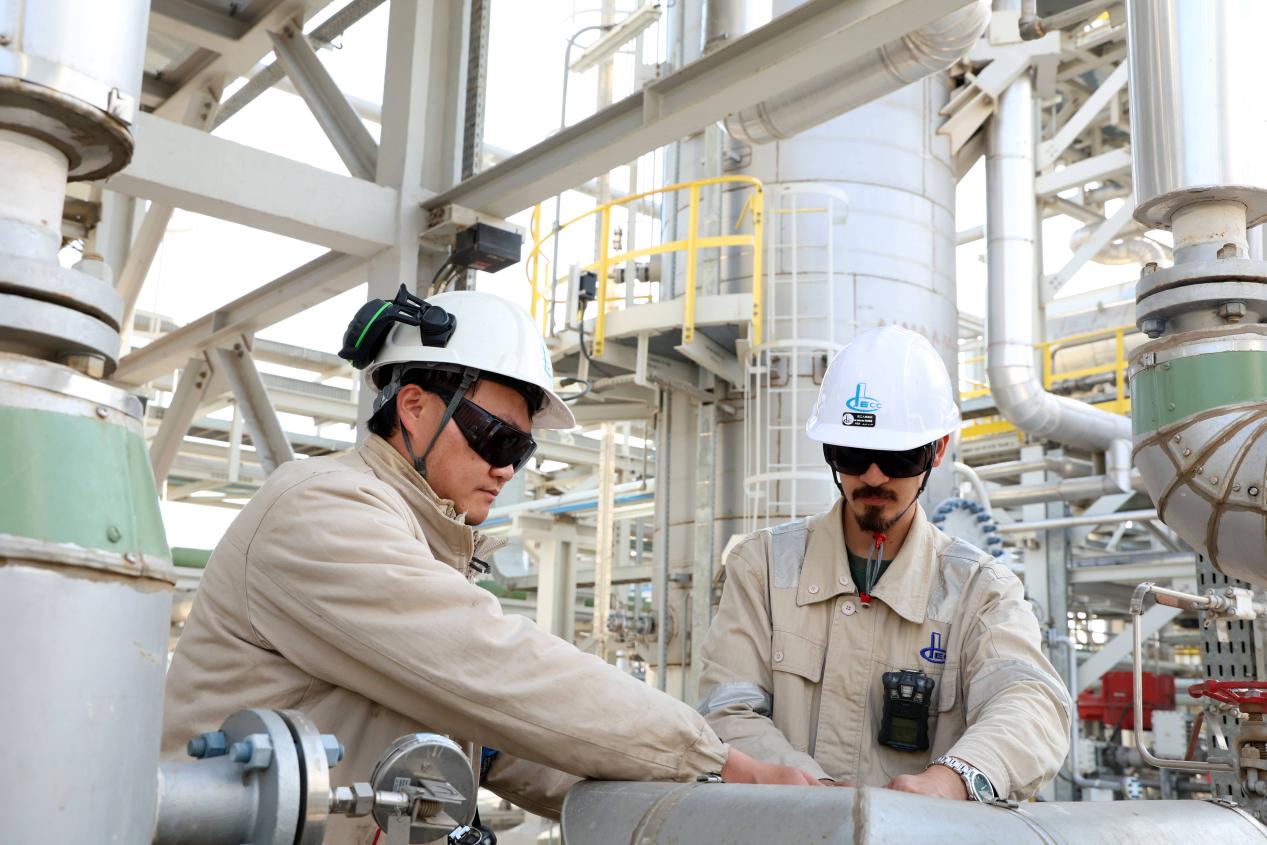
A Chinese technician and a local employee at the Halfaya gas processing plant project in Iraq test a valve. (Photo by Enas Ibrahim)
As Chinese automobiles gain wider acceptance in international markets, demand for overseas vehicle sales and after-sales services has grown significantly. Recently, the Philippines branch of Chinese logistics giant SF Express has partnered with Chinese automakers GAC and Geely to provide end-to-end supply chain solutions, including after-sales spare parts distribution.
"The Philippines, with more than 7,000 islands, presents complex logistical challenges. Over the past two years, we have invested tens of millions of yuan to establish a smart delivery network that covers the entire country," said Zhang Lin, head of supply chain at SF Express Philippines.
Respecting the concerns of all parties and contributing to local development, environmental sustainability, and people's livelihoods are essential for enterprises engaged in overseas expansion. In this regard, Chinese companies have accumulated valuable experience.
Recently, at the 2025 PMI China Awards, the Halfaya gas processing plant project developed by China Petroleum Engineering and Construction Corporation (CPECC) was recognized with the outstanding ESG (environmental, social, and governance) Project Award.
According to Jiang Feng, deputy general manager of CPECC, Iraq previously lacked sufficient gas processing capacity, resulting in the flaring of most associated gas from oil extraction. Once operational, the Halfaya plant is expected to reduce sulfur dioxide emissions by approximately 30,000 tons and carbon dioxide emissions by 3.53 million tons annually. It will also supply clean energy to around 4 million households, significantly improving environmental outcomes.
"The project has created more than 1,500 construction jobs and 100 long-term positions. We emphasize local procurement and actively engage in public welfare and community outreach initiatives, fostering harmonious and stable relations with local communities," Jiang said.
Looking ahead, experts suggest that China further improve its outbound investment policies and mechanisms, foster innovation in ODI models, and encourage diversified investment approaches, including overseas processing, economic and trade cooperation zones, as well as trilateral and multilateral cooperation.
Photos



Related Stories
- China rolls out early-batch major projects to accelerate investment
- China's ETF market hits record 6 trln yuan
- China unveils new version of Catalogue of Encouraged Industries for Foreign Investment
- China signals policy push to stabilize, revive investment
- China to take multiple measures to stabilize investment growth
- Investment grows as firms make tech shift
- Foreign biz circle bullish on China's opening-up
- Germany stays major investment hub for Chinese firms despite economic headwinds: survey
- China eyed for long-term investment
- Measures unveiled to strengthen support for private investment
Copyright © 2026 People's Daily Online. All Rights Reserved.
