



China Buzz: 'Qi Ji Chi Cheng,' galloping into the Year of the Horse
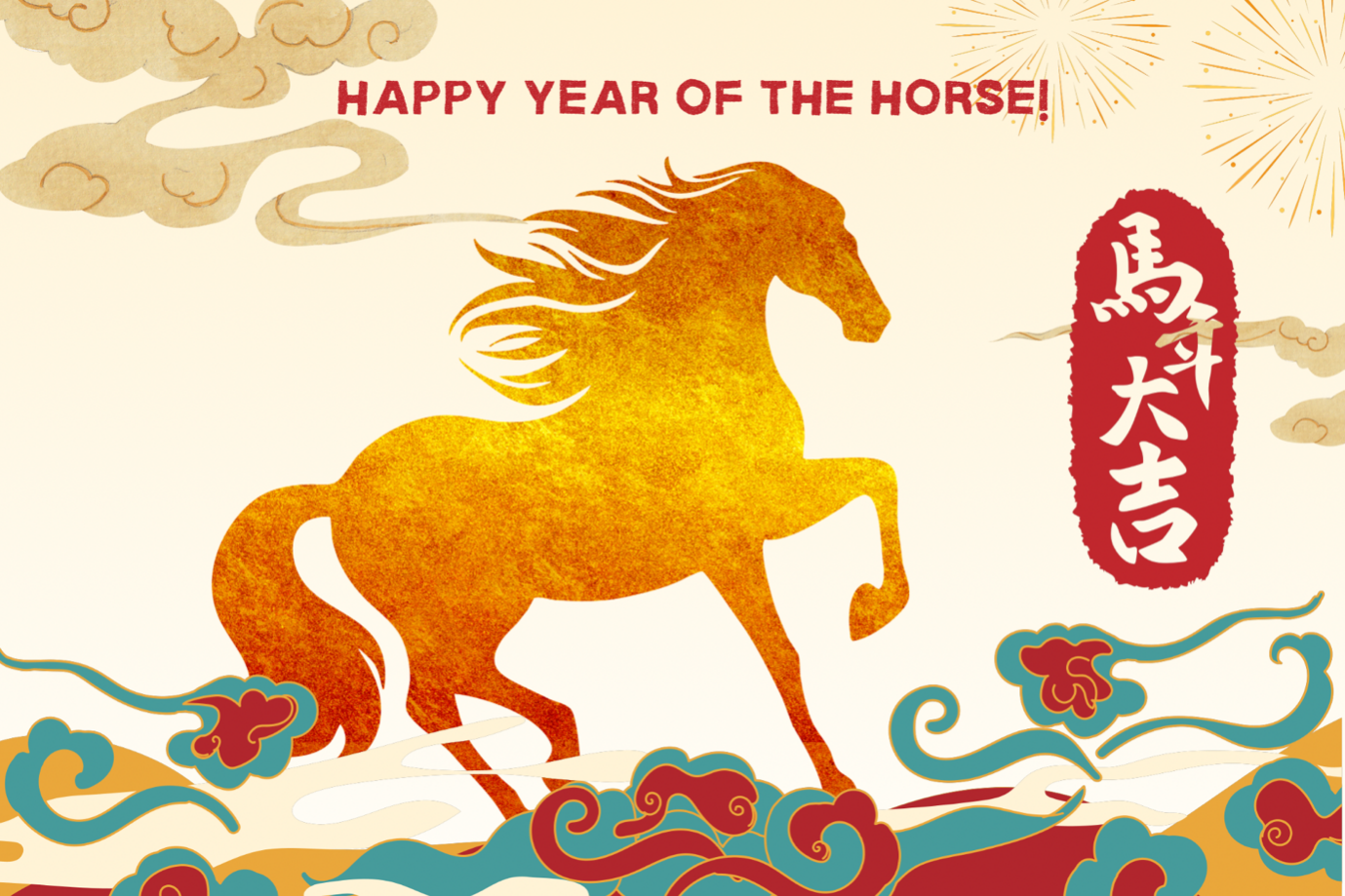
The Year of the Snake 2025 is coming to an end. The Chinese people will celebrate the Spring Festival in February 2026, ushering in the Year of the Horse. The horse, a symbol of unbridled energy transformed into an elegant, irresistible gait, is highly esteemed in Chinese culture.
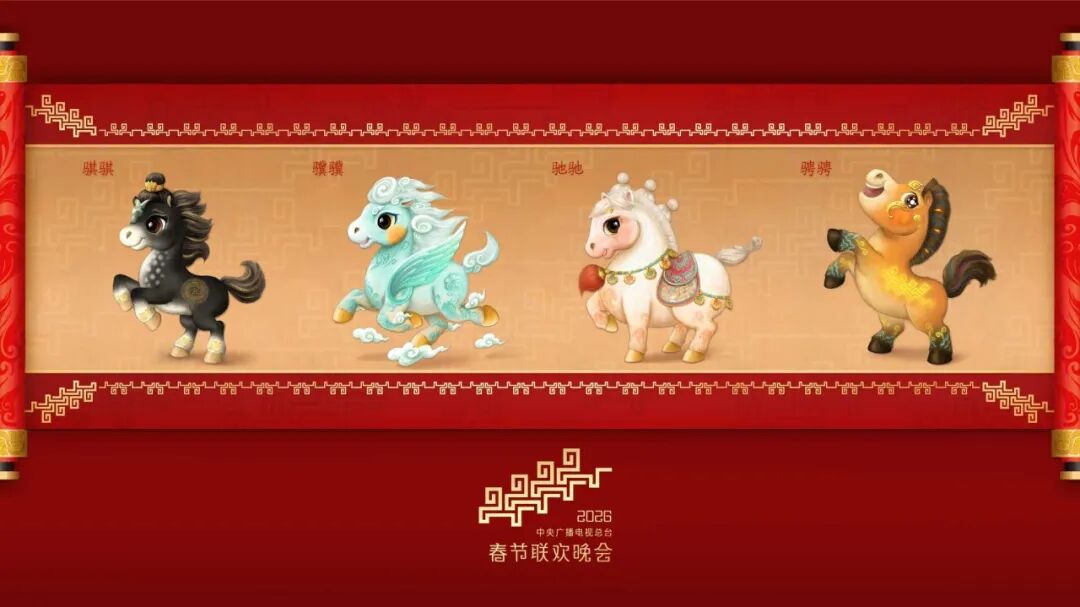
To express this cultural spirit, China's most-watched television show, the Spring Festival Gala, released its logo for the 2025 Year of the Horse. The logo features four magnificent horses whose designs draw influence from ancient Chinese poetry, artifacts and characters.
(Photo/CMG)
The ancient Chinese poem Li Sao (Sorrow After Departure), written by the patriotic poet Qu Yuan (340-278 B.C.), is the inspiration for the names of the four horses. The verse "Cheng Qi Ji Yi Chi Cheng Xi" (乘骐骥以驰骋兮) contains the names of four horses — Qiqi, Jiji, Chichi and Chengcheng — all of which include the character for "horse." The names, when put together, form "Galloping Steed, Onward Unstoppable," the theme of the Spring Festival Gala.
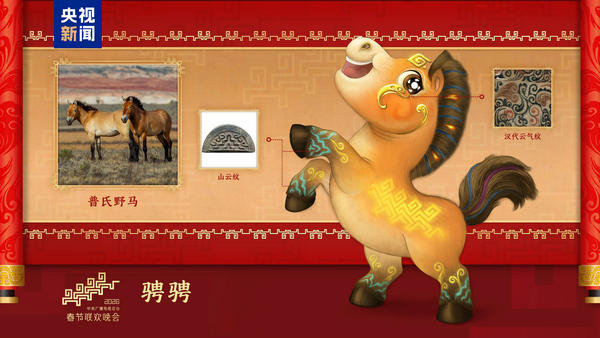
Three of the mascot designs draw inspiration from iconic horse figures appearing in art across Chinese history, specifically from the Western Zhou Dynasty (1046-771 B.C.) and the Han (206 B.C.-A.D. 220) and Tang (618-907) dynasties. The fourth is modeled on Przewalski's horse, the world's only surviving species of truly wild horse. Together, they blend Chinese cultural heritage with a dynamic spirit of innovation.
(Photo/CMG)
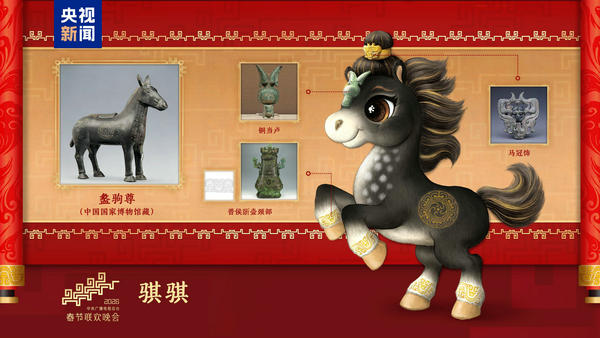
The first mascot, Qiqi, takes its design from the Western Zhou Dynasty relic, a horse-shaped bronze zun (wine vessel).
This horse-shaped bronze zun dates back to the Western Zhou Dynasty and is 32.4 centimeters tall and 34 cm wide. The sacrificial vessel exudes a sense of vitality and features plain, circular patterns. The 105-character inscription on its chest and back records a ceremony to mark the maturity of horses from over 3,000 years ago.
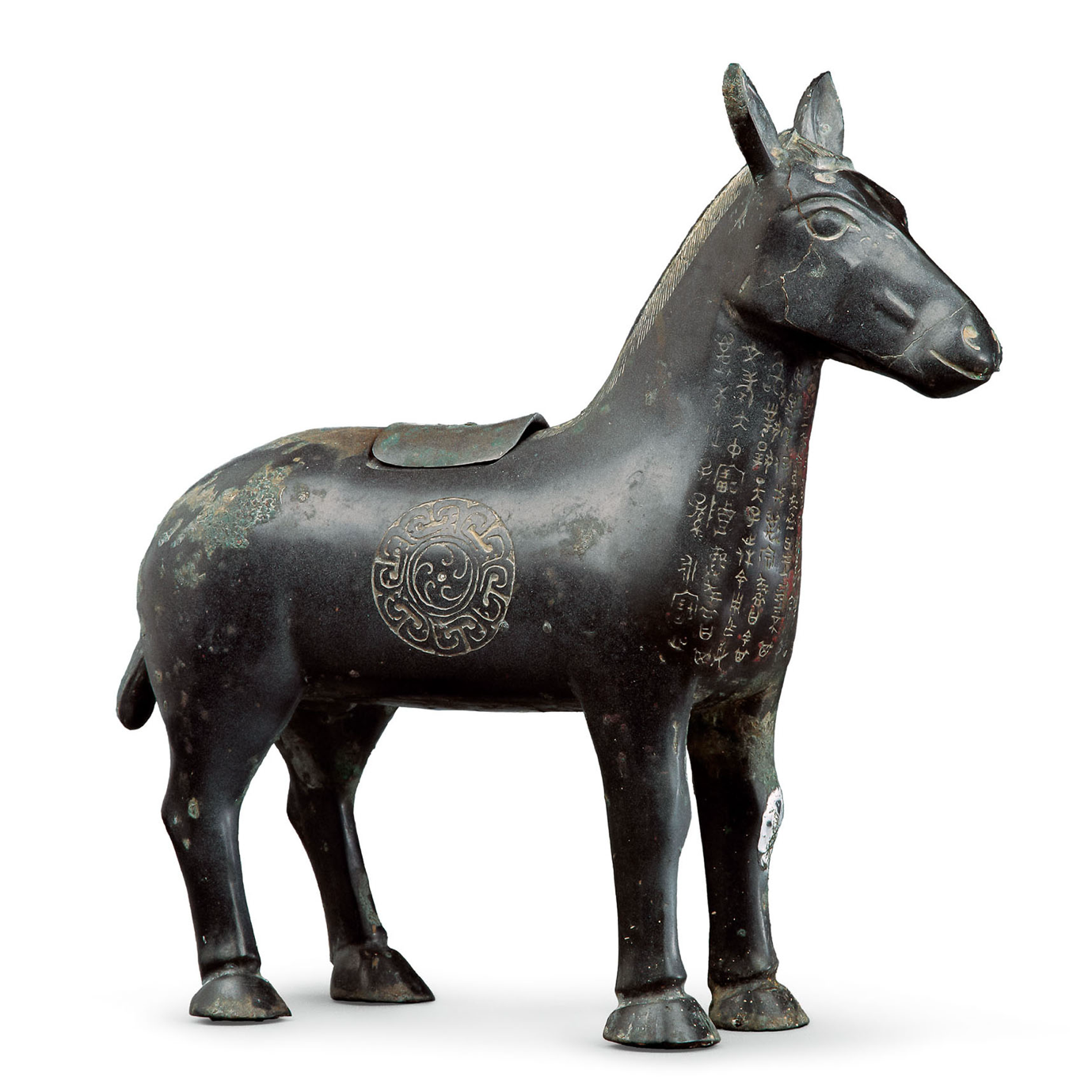
The bronze sacrificial wine vessel (zun) of a standing horse, dating back to the Western Zhou Dynasty, is on display at the National Museum of China. (Photo/National Museum of China)
Unearthed in 1955 from Licun village, Meixian county, northwest China's Shaanxi Province, the vessel is a representative combination of artistic design and practicality. The National Museum of China now holds it in its permanent collection.
Its sleek, elegant design and magnificent dark blue-black color scheme reflect the horse's status as a symbol of royalty and grace in ancient China. It embodies the notion of relentlessly pursuing excellence through its aura of refinement, ambition and youthful vitality.
(Photo/CMG)
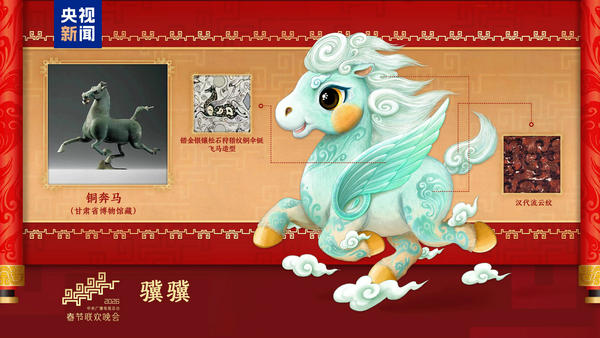
The second mascot, Jiji, draws inspiration from a famous bronze horse statue from the Han Dynasty (206 B.C.-A.D. 220). The wings spread wide in graceful flight and symbolize vitality and an unwavering spirit of progress, ready to soar toward new challenges.
The bronze horse statue, popularly known as "Bronze Galloping Horse Treading on a Flying Swallow," was unearthed in the 1960s from the Leitai Tomb of the Eastern Han Dynasty (25-220) in Wuwei, northwest China's Gansu Province, and is now preserved in the Gansu Provincial Museum. Its image became a symbol of Chinese tourism in 1983.
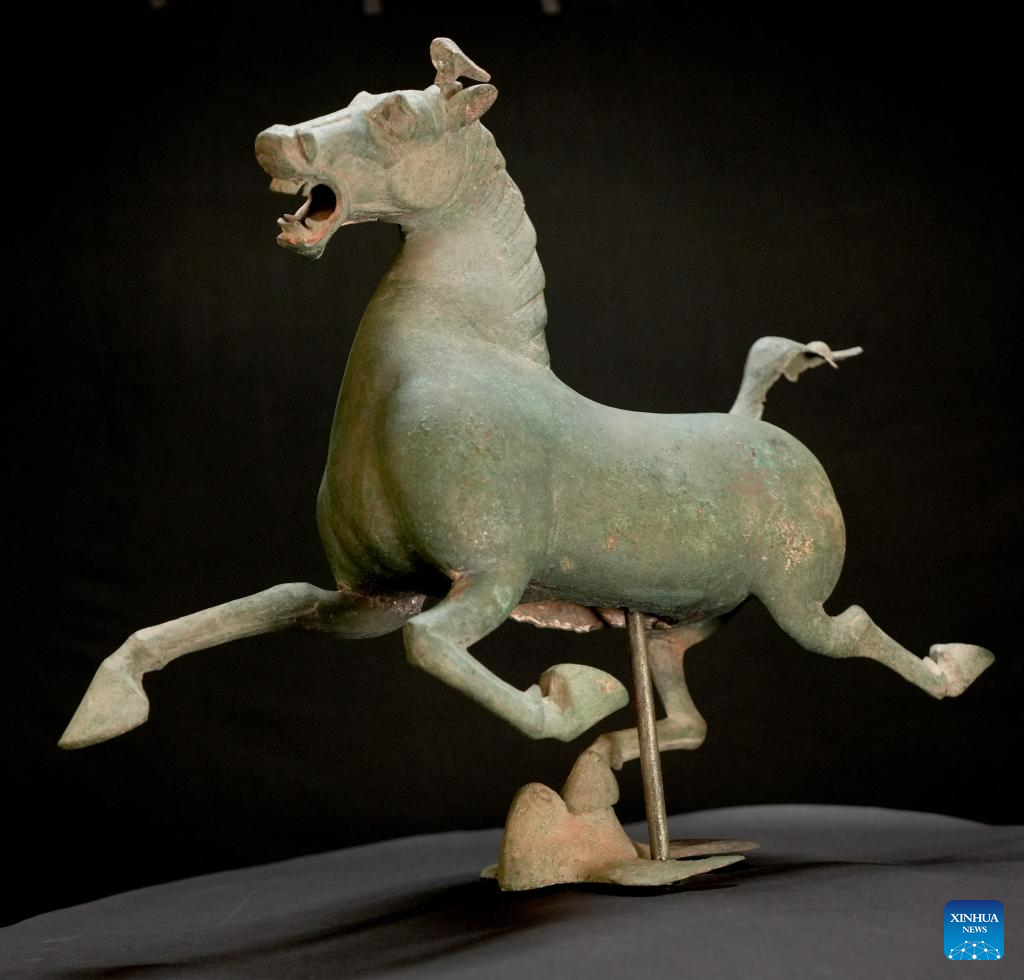
This photo taken on Oct. 27, 2023, shows the side view of an ancient bronze horse statue at Gansu Provincial Museum in Lanzhou, capital of northwest China's Gansu Province. The bronze horse statue, popularly known as "Bronze Galloping Horse Treading on a Flying Swallow," was unearthed in the 1960s from the Leitai Tomb of the Eastern Han Dynasty (25-220) in Wuwei, Gansu, and is now preserved in Gansu Provincial Museum. Its image became a symbol of Chinese tourism in 1983. (Xinhua/Wang Yuguo)
In November, China's Ministry of Culture and Tourism unveiled the Auspicious Horse mascot of the upcoming 2026 Spring Festival, which was also inspired by this well-known bronze sculpture.
According to the ministry, a mascot merchandise line will be launched, including plush toys, blind boxes and fridge magnets, as well as festival supplies like Spring Festival couplets, red envelopes and lanterns. The image of the Auspicious Horse and related merchandise will be used by Spring Festival events across the globe.
(Photo/CMG)
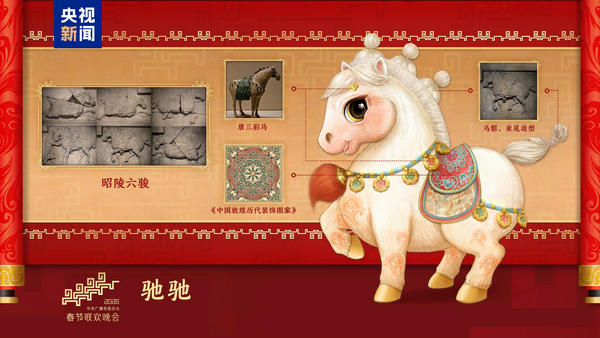
Chichi represents the prestigious "three-color" glaze horse from the Tang Dynasty (618-907), known for its unique three-pronged mane. With a bold, confident stance and a tail poised to gallop, Chichi encapsulates the grandeur of the Tang Dynasty while embodying a spirit of self-assurance and strength.
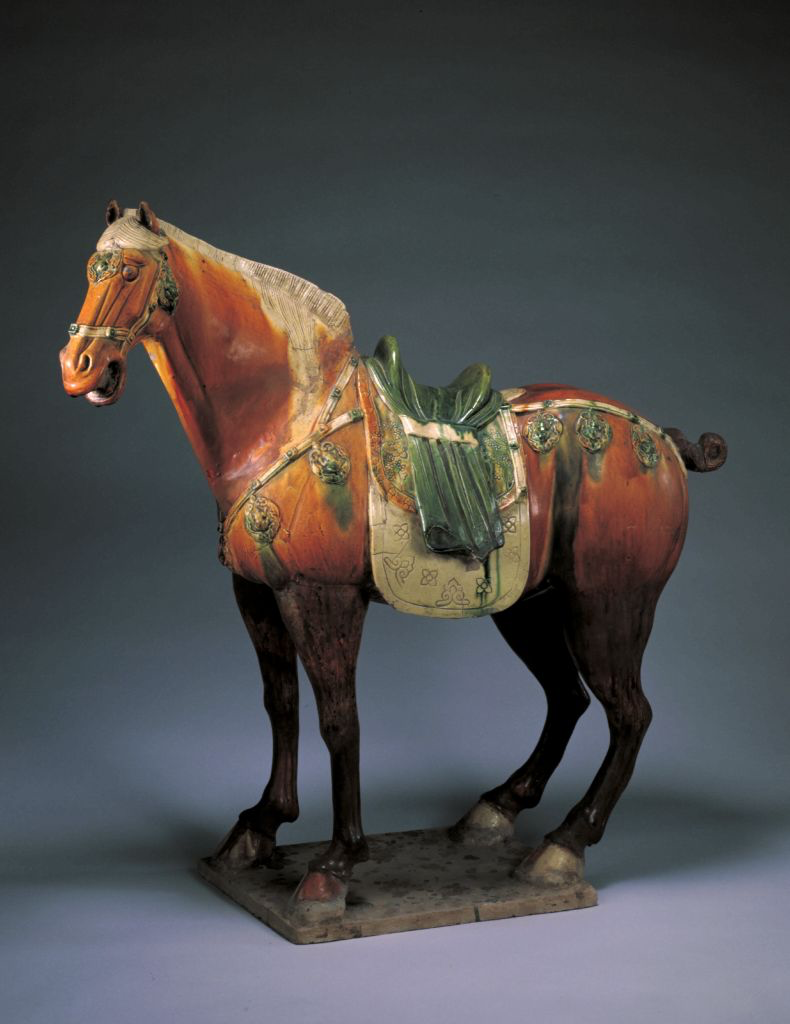
Tri-color glaze horse at the Palace Museum. (Photo/The Palace Museum)
Tri-color glaze pottery is a versatile type of decoration on Chinese pottery using glazes, predominantly in the three colors of amber, green, and a creamy off-white. In the early 20th century, a large number of tri-color glazed pottery wares were discovered in the Mangshan Mountains of Luoyang, central China's Henan Province, gaining recognition from scholars. Such wares are particularly associated with the Tang Dynasty and its tomb figures; therefore, they are also named Tang Sancai in Chinese.
(Photo/CMG)
Chengcheng is modeled after Przewalski's horse, the world's only remaining wild horse species. It represents the resilience of nature and the harmony between humanity and the environment. With its robust build and agile frame, Chengcheng celebrates ecological conservation and biodiversity.
The population of Przewalski's horses in China has surpassed 900, accounting for one-third of the global total, according to officials.
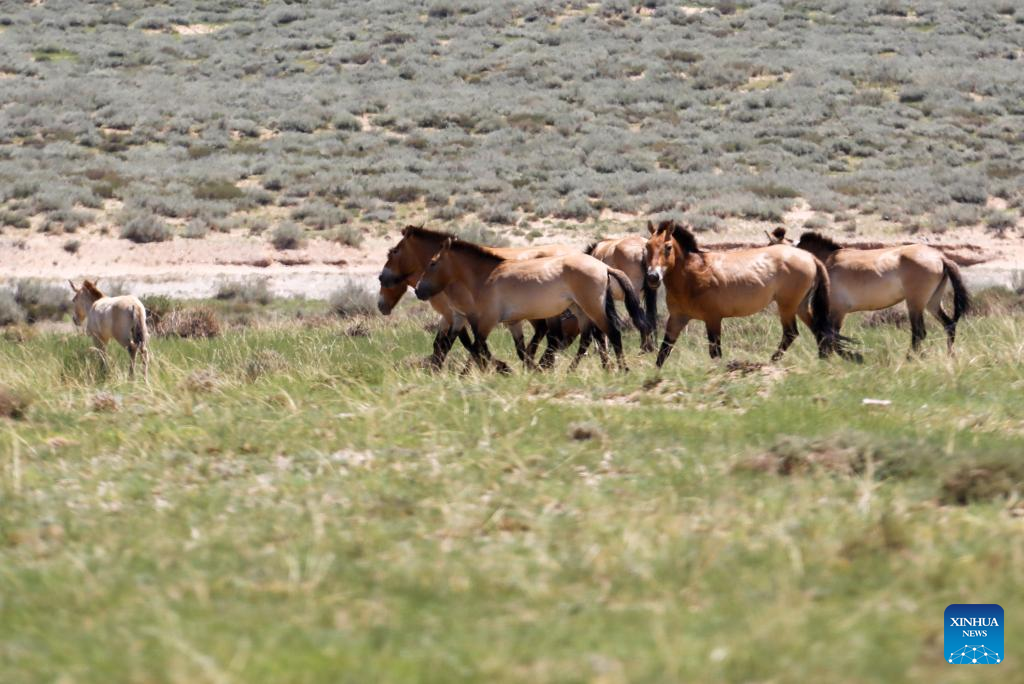
This photo, taken on July 16, 2025, shows Przewalski's horses at the Helan Mountain Nature Reserve in northwest China's Ningxia Hui Autonomous Region. (Xinhua/Zhang Hefan)
Przewalski's horse boasts an evolutionary history spanning over 60 million years. Native to the Junggar Basin in northwest China's Xinjiang Uygur Autonomous Region and parts of Mongolia, the species is listed as a national first-class protected animal in China and remains endangered globally.
In 1985, China launched a program to reintroduce Przewalski's horses from overseas and established breeding bases in Xinjiang and Gansu. Through years of scientific conservation efforts, including habitat restoration, a professional monitoring system, and step-by-step rewilding programs, the population has seen steady growth.
Photos



Related Stories
- In pics: folk culture fair in Cixi, China's Zhejiang
- The "cultural ferrymen" offering a more authentic glimpse into everyday China
- People across China hold diverse events to mark Winter Solstice
- Exhibition of Chinese life aesthetics held in Madrid, Spain
- Armenian editions of Chinese literary classics unveiled in Yerevan
Copyright © 2026 People's Daily Online. All Rights Reserved.
