
The international community space is creeping with tension. It is charged, bleeding and sagging at the ends. It’s like a super saturation that is not ready to take more troubles.
The world seems to be living at the most troubled times with heightening terrorism everyday. Within the axis of Europe and North West Asia, the world has lost count of terror attacks with the last at Nice, France on July 14 with casualty index of about 90 deaths.
The threat for the collapse of the delicate balance of peace at the Korean Peninsula is already a handful for the East Asia as North Korea toys with nuclear armament and a counter action planned by the South Korea, Japan and the United States. That is enough tension and needs no addition.
That is why many watchers of the international space got uncomfortable over the turbulence in the South China Sea by countries that have no business there other than the business of peacemaking in matter that had been pending before the arbitral tribunal, The Hague for three years until the decision on July 12.
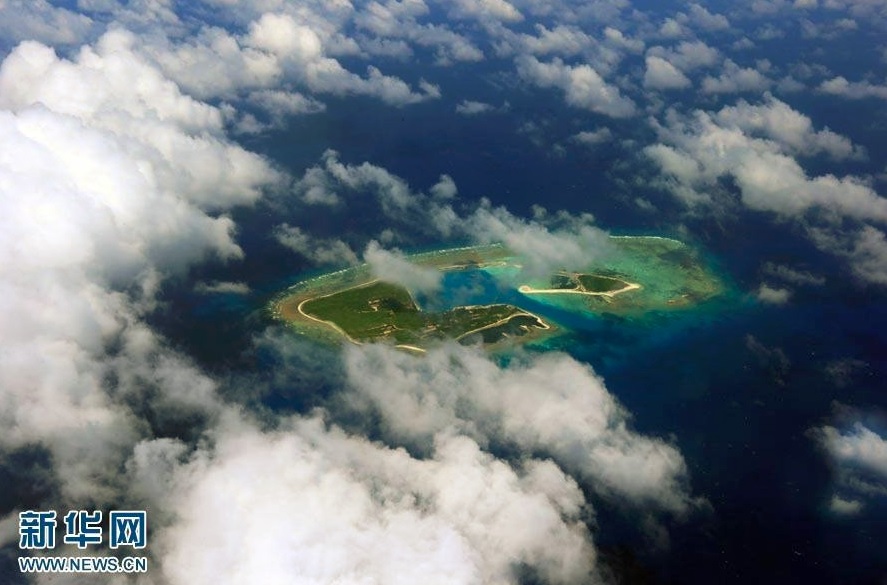
There are reasons why the matter never deserved the frontline discourse it enjoyed especially given the slant towards crisis.
By every assessment, that piece of land of questionable economic value is too infinitesimal to be a prime concern of the state of Philippines battling for the basics of existence.
With 101m mouths to feed and economic strength of about $741b GDP, the country needs peace and friendship more than any dispute over a tiny spot of land that would not impact better life of the poor citizens. It is also too tiny to make China lose its status and reputation as pacifist world power that is not identified with ruffling feathers. No matter how viewed, the island or best stated, a portion of it, is far in essence, less than the peace and good neighbourliness of the two nations involved.
Now, enough energy has been dissipated and it seems commonsense is about to rule the day after the drama that was never worth the sweat.
The arbitral tribunal has given a ruling, and China that refused to join issues with Philippines in the arbitration has flatly refused the decision. In municipal litigation, a declaratory decision is not enforceable. In this case at the arbitral tribunal, the matter was unilaterally initiated by Philippines and fully financed by it. That implied from the beginning that whoever paid the piper dictated the tune, thereby destroying the foundation of neutrality on which fair justice is premised.
All along, China hinged her argument for non-participation on grounds that the arbitral tribunal lacked jurisdictional competence to be seized of the matter for two major reasons - Philippines acted in scorn of her international obligation via a bilateral treaty between the two in respect of the same matter. They had agreed that whenever disputes that arise regarding territorial issues and maritime delineations, the two neighbours would resolve it through negotiations; Secondly, the ASEAN states also have another agreement on peaceful resolution of disputes through negotiations by states directly involved instead of recourse to a third party. Based on the two, China insisted her neighbor broke its own promise by approaching the arbitral tribunal over the same matters. That implies Philippines has no reason not to abide by the Bilateral Treaty it entered into with China over the South China Sea disputes.
 |
Day|Week

 Who Will Fit The Chinese Roles In Game Of Thrones?
 China's Hubei Shennongjia added to World Heritage List
 Cute Dog At Fruit Stand Becomes Latest Internet Sensation
 Thai most beautiful transgender Nong Poy release new photos
 Top 10 livable Chinese cities
 The last primitive tribe in China
 China's first intelligent security robot debuts in Chongqing
 A Total of 3,552 Subscribers Vanish In Two Days; YouTube Closes All Doors to Users’ Inquiries
 Out of this world! Futuristic UFO-shaped yacht has its own garden and a stunning underwater viewing deck
 An old tea house in Chengdu


