
After a pledge to grant local governments more power over the reform of state-owned enterprises (SOE) in the latest government work report, at least 25 provinces have issued reform plans, with most offering employee stock ownership on a trial basis, chinanews.com reported on Tuesday.
In the work report, the central government urged an accelerated pace for SOE reform, which covers equity diversification, board mandates, executive recruitment, management systems, mixed ownership and employee stock ownership.
So far, 25 provinces, autonomous regions and cities have drafted detailed plans. Included on that list are Shandong, Jiangsu, Zhejiang, Yunnan, Hunan, Sichuan, Jiangxi, Shanxi, Qinghai, Hubei, Henan, Liaoning, Guangzhou, Heilongjiang, Hebei, Jilin, Gansu, Fujian, Ningxia Hui Autonomous Region, Guangxi Zhuang Autonomous Region, Shanghai, Beijing, Tianjin, Chongqing and some others.
Most of the new plans include a pilot program for employee stock ownership. For instance, Gansu, one of the western provinces, will select qualified provincial SOEs for the first round of the program. Some provinces have also made timetables for the reforms. Hebei, a northern province, planned to complete the pilot program outline by the end of 2015, and put it into practice in 2016.
Li Shuguang, a professor at China University of Political Science and Law, said that employee stock ownership is a breakthrough for ownership reform. However, since it involves the interests of employees and intellectual property owners, a trial operation is the prudent route.
Reform of remuneration systems is also a big focus. A guideline issued by the Communist Party of China Central Committee and the State Council last September called for a differentiated remuneration system. According to the guideline, remuneration of executives should be linked with the executives’ positions, as well as with their individual performances and the revenue of their enterprises.
Zhou Fangsheng, Deputy Director of the China Enterprise Reform and Development Society, said that a differentiated remuneration system will break the current one-size-fits-all approach. Hebei province, for instance, will outlaw all forms of bonuses or premiums in its plan. A better incentive system will take shape after market-oriented remuneration goes into effect, Zhou added.
 Thai most beautiful transgender Nong Poy release new photos
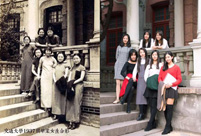 Now and then photos of Shanghai Jiaotong University
 Is this what air travel will look like in 2050?
 Aerial view of watermelon terraces in S China's Baise
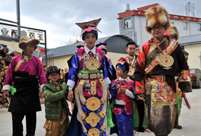 Traditional wedding of a post-80s Tibetan couple
 Models in cheongsams present classical oriental beauty
 Second commissioned C28A corvette made by China enters Algerian Navy
 Intoxicating Wuyuan in spring
 Gold and silver wares of Qing Dynasty exhibited in Shenyang Imperial Palace
 Top 20 hottest women in the world in 2014
 Top 10 hardest languages to learn
 10 Chinese female stars with most beautiful faces
 China’s Top 10 Unique Bridges, Highways and Roads
 Textbook piracy crackdown unlikely to work, greater awareness needed: experts
 After two-child policy, sperm banks struggle to collect enough donations
 Foreign investors to gain more access to China: minister
 Overseas forces feed on disappearance cases to hype their rhetoric
Day|Week


