

The photo shows “nine ding”, or ancient cauldrons found during the excavation into the tomb of "Haihunhou" (Marquis of Haihun) in Nanchang, East China's Jiangxi province. The number nine was only used by Chinese emperors in early feudal times, and it is common for tombs of emperors to be called 'nine-ding tombs', according to archaeologists. Archaeologists believe the tomb belongs to Liu He, grandson of Emperor Wu. He was given the title "Haihunhou" after he was deposed as emperor after only 27 days. Haihun is the ancient name of a very small kingdom in the north of Jiangxi. (Photo/CNS)
 |
Day|Week

 Spectacular aerial photos of the Three Gorges
 New balls please! Polish sports stars strip off for risqué calendar
 A glance at life of Ukrainian models working in Chongqing
 Contestants of Mrs. Globe pose for photo in Shenzhen
 Bikini models attend hot pot banquet in Hefei
 118-meter-high Never-used Building in NW. China Demolished
 J-10B fighters with homegrown engine in test flight
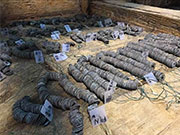 10 tons of copper coins unearthed in 2,000 years old ancient tomb
 Beautiful graduate from police college becomes Internet hit
 Photos of U.S. Navy intruding in South China Sea released


