Hong Kong serves as first stop for mainland firms going global
By Yan Xiaojing, Wu Yuyangyang, Zhang Yujie, Han Yuxuan and Yu Ying (
People's Daily Online)
13:29, November 12, 2026A year after its launch, the HKSAR Government's GoGlobal Task Force has helped more than 360 mainland companies set up or expand in the city, using Hong Kong's professional services to reach overseas markets.
Two companies show how it works: a Hangzhou restaurant group that opened its first restaurant outside the mainland here, and a Beijing robotics firm whose robots now work in hotels in more than 20 countries and regions.
The GoGlobal Task Force was launched on Oct. 6 2025, chaired by Algernon Yau, secretary for commerce and economic development of the HKSAR Government. Invest Hong Kong runs it with the Hong Kong Trade Development Council and the Hong Kong Productivity Council, and support for mainland firms going global is written into departmental key performance indicators. "We want to build a one-stop, fast and unprecedented platform," Algernon said.
"A large proportion of mainland companies use Hong Kong as their first stop overseas," said Alpha Lau, director-general of investment promotion at Invest Hong Kong. "Whether they go further abroad or find opportunities here, their success is our success."
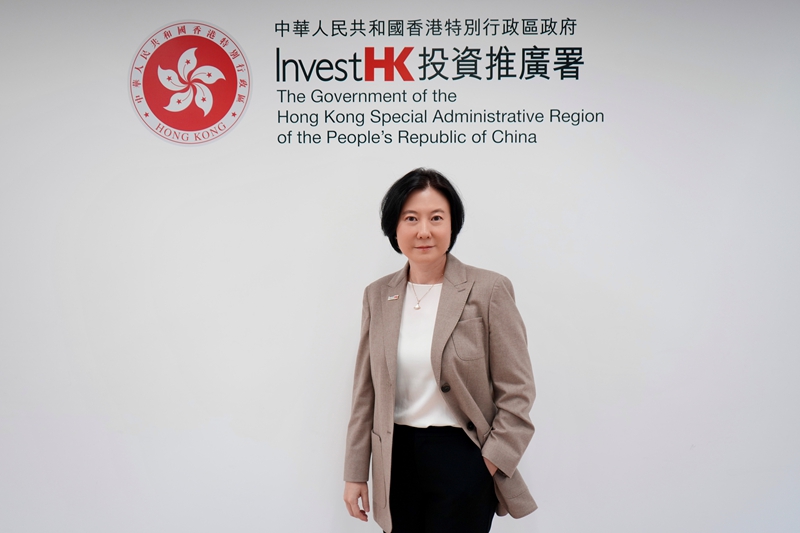
Alpha Lau, director-general of investment promotion at Invest Hong Kong, speaks in an interview with People's Daily Online. (People's Daily Online/Han Yuxuan)
The service list covers company setup, partners, tax incentives, industrial parks and universities. "We can help them connect and pave the way," Lau said. She likens the mechanism to a "joint fleet": at home it links mainland provinces; abroad it draws on Invest Hong Kong's 35 offices, the trade council and the city's overseas trade offices.
In the first half of 2026, Invest Hong Kong helped 413 mainland and overseas companies set up or expand, up about 10 percent year on year. These projects are expected to bring in more than HK$53 billion (about $6.8 billion) in foreign direct investment, up 36 percent, and create over 8,600 jobs.
Green Tea Group Limited opened its first restaurant outside the mainland in August 2024 and listed in Hong Kong in May 2025. Its flagship Jiangnan dim sum restaurant in Sham Shui Po opens at 8 a.m. "Hong Kong is close to the mainland in food culture yet highly international in its rules," said Thomas Tao, vice president and general manager of the overseas business division of Green Tea Group. "It is our testing ground and bridgehead."
Invest Hong Kong offered one-on-one help on policies, licensing and premises.
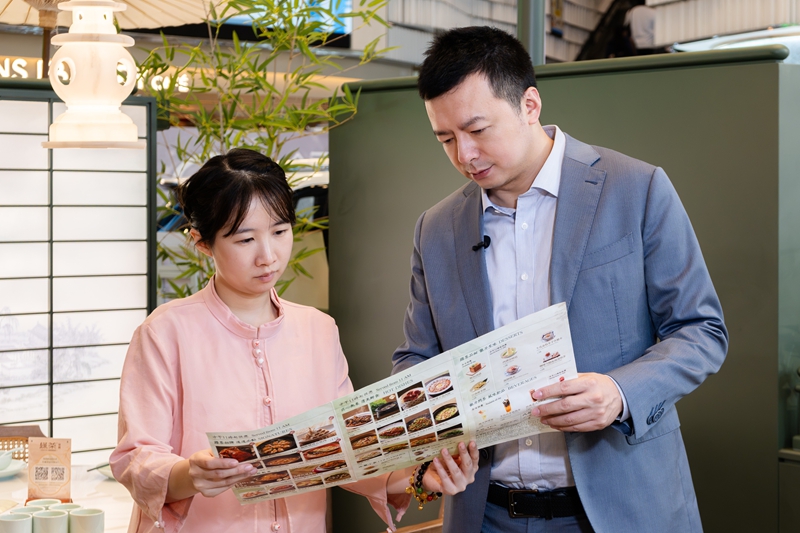
Thomas Tao, vice president and general manager of the overseas business division of Green Tea Group, talks with staff at a restaurant. (People's Daily Online/Han Yuxuan)
Yunji Technology, founded in 2014, serves more than 40,000 hotels and over 200 medical institutions, logging 750 million service trips in 2025. In October 2025, it listed in Hong Kong and set up an international headquarters and an R&D center at Cyberport.
"We saw Hong Kong's ambition to move from a financial center to an innovation hub," said Xie Yunpeng, chief development officer of Yunji Technology. "If our products work in Hong Kong's scenarios, that benchmark helps us enter other markets."
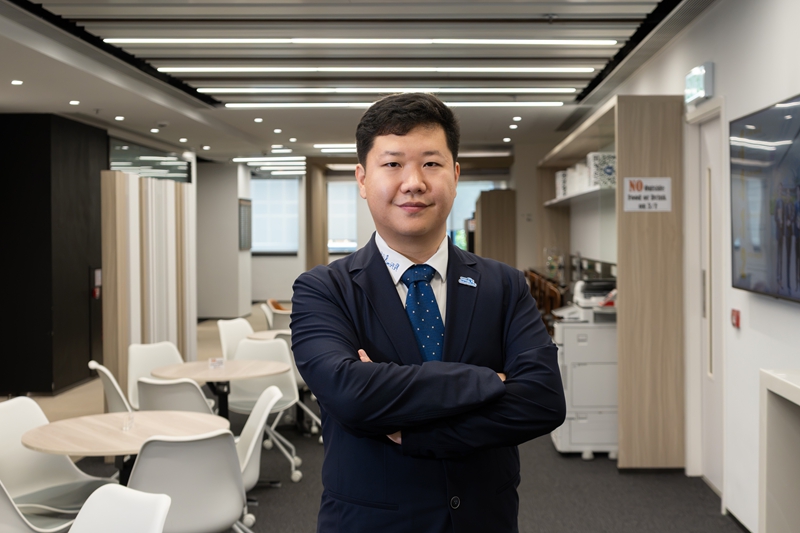
Xie Yunpeng, chief development officer of Yunji Technology. (People's Daily Online/Han Yuxuan)
Both are going further. Green Tea has opened in Singapore, Malaysia and Thailand, with more than 20 overseas restaurants; Yunji's robots are in more than 20 countries and regions, and it signed with an Indonesian distributor at Hong Kong's Belt and Road Summit.
Hong Kong is turning scattered services into a system, carrying "made-in-China" products to the next stage: global brands.
(Intern Chen Tianyi contributed to this article.)
(Web editor: Hongyu, Wu Chengliang)