



Innovation behind less invasive treatment for serious diseases
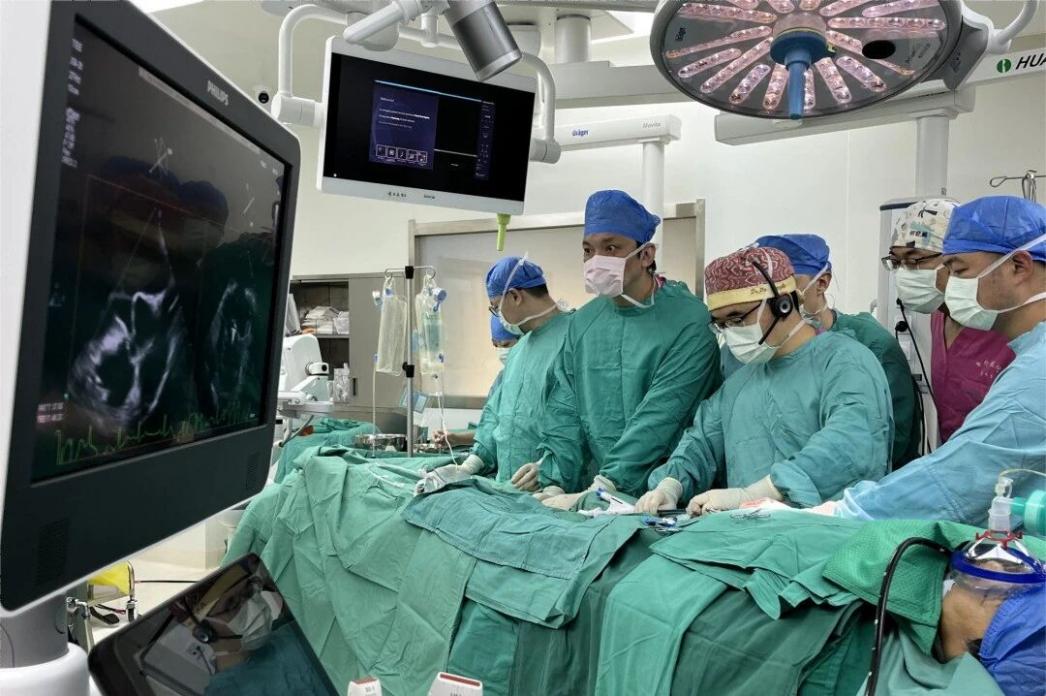
Professor Pan Xiangbin's team at Fuwai Hospital performs a cardiac procedure using the Percutaneous and Non-Fluoroscopic Procedure. (Photo courtesy of Fuwai Hospital)
Can serious illnesses be treated with minimally invasive procedures? Traditional cardiac interventions often rely on X-ray guidance and iodine-based contrast agents, which can pose significant risks to pregnant women and patients with compromised kidney function.
Addressing this clinical limitation, researchers in China have developed an ultrasound-guided percutaneous cardiac procedure. By navigating instruments through the skin using real-time ultrasound imaging, surgeons can perform complex heart treatments without open-chest surgery, radiation exposure, or contrast dyes.
Such advancements not only minimize physical trauma and accelerate patient recovery but also underscore a broader principle: persistent medical challenges frequently serve as catalysts for scientific breakthroughs.
This pattern of constraint-driven innovation extends well beyond healthcare. In densely populated urban areas, engineers have designed vertical-shaft tunnel-boring machines that excavate downward to create underground parking spaces, significantly reducing surface disruption.
Similarly, while seawater holds vast potential for clean hydrogen generation via electrolysis, dissolved salts and impurities typically degrade equipment. By integrating physical separation with electrochemical processes, scientists have engineered a selective membrane that filters out contaminants, enabling direct hydrogen extraction from seawater without prior desalination.
Tackling these multifaceted problems demands interdisciplinary collaboration. By moving beyond established approaches, questioning conventional assumptions, and drawing on knowledge from different disciplines, researchers can open up new paths to innovation.
Translating laboratory breakthroughs into widespread public benefit, however, requires deliberate efforts to ensure accessibility. To expand access to the ultrasound-guided cardiac procedure, developers have integrated the necessary equipment into mobile surgical units. These fully equipped vehicles allow medical teams to deploy advanced care directly to remote communities.
Likewise, precision agriculture in China has been transformed by equipping farm machinery with the BeiDou Navigation Satellite System. Coupled with government subsidies and on-site technical training, this integration ensures that cutting-edge positioning tools are not merely technologically advanced, but practically usable for farmers nationwide.
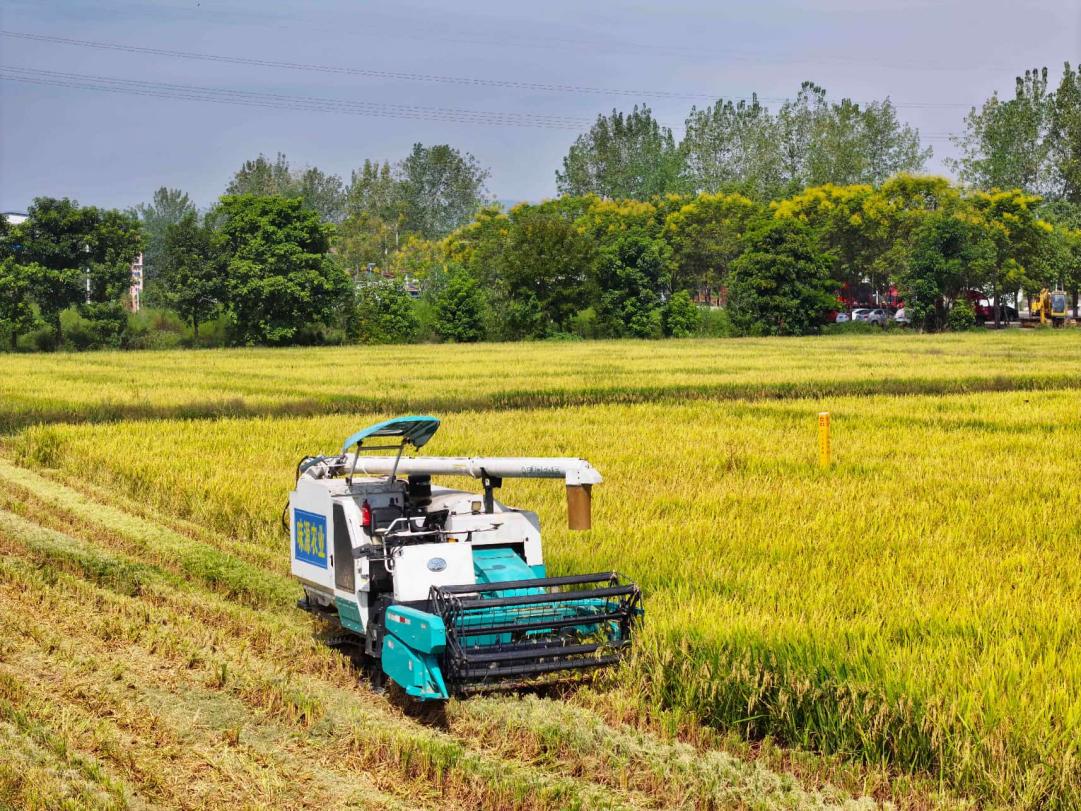
An agricultural technician operates an autonomous combine harvester to harvest rice using BeiDou positioning and 5G technology in Liangping district, southwest China's Chongqing municipality, on Sept. 7, 2026. (Photo/Liu Hui)
The gap between a functional prototype and a widely adopted solution is often bridged by cost, training, and service infrastructure. Yet high performance and broad accessibility need not be trade-offs. Designing technologies for usability and equitable distribution is, in itself, a critical form of innovation. When development strategies explicitly incorporate deployment logistics and support, emerging technologies can realize their full societal impact.
Currently, the Percutaneous and Non-Fluoroscopic Procedure is used in nearly 2,000 medical institutions across 72 countries, including the UK, France and Kenya, and has helped treat more than 200,000 patients.
Recognizing its global value, the United Nations has initiated training programs to expand medical expertise and patient access. Addressing a shared global health need, this homegrown Chinese innovation is strengthening China's medical capabilities while giving other countries more treatment options. This is a concrete contribution to building a global community of health for all.
Advanced technologies can benefit people across national borders. In Rwanda, local technicians who learn to grow mushrooms using Juncao grass go on to share their knowledge with women's cooperatives and youth groups.
China's Fengyun meteorological satellites also provide early warnings and disaster prevention services to countries and regions around the world, including developing nations.
Protecting lives, preventing disasters and alleviating poverty are shared aspirations of people around the world. By sharing data and technical standards and training talent, China is extending cooperation beyond technology transfer to helping other countries build the capacity to apply these innovations, giving Chinese innovation greater global significance.
The idea of treating serious illnesses with less invasive methods reminds us that technological progress should start with people's needs. Innovation can better serve humanity when it dares to explore new approaches, works patiently to lower barriers to access and seeks to benefit others.
Looking ahead, China will continue to turn its strengths in independent innovation into drivers of development and improvements in people's lives, further strengthening the sci-tech foundations of Chinese modernization and creating more opportunities for the world through its own development.
Photos




Related Stories
- China completes first demo unit of next-gen heavy-ion cancer therapy accelerator
- BCI training could help restore fine motor skills
- Medical workers stick to posts during National Day holiday
- From spinal implant to cancer therapy, foreign patients seek out China's medical advances
- Chinese-developed cell therapy shows promise for severe heart failure
- Chinese medical team supports Burkina Faso's 1st bronchial sleeve lobectomy
- Chinese researchers treat rare disease via new RNA editing technology
- Experiment on China's space station expected to provide new approach for fatty liver treatment
- Chinese researchers construct "biological pacemaker" to control heartbeat
- China-Sierra Leone medical cooperation saves Guinean heart patient
Copyright © 2026 People's Daily Online. All Rights Reserved.
