



Rising Chinese presence at Paris Motor Show highlights opportunities for China-Europe auto cooperation
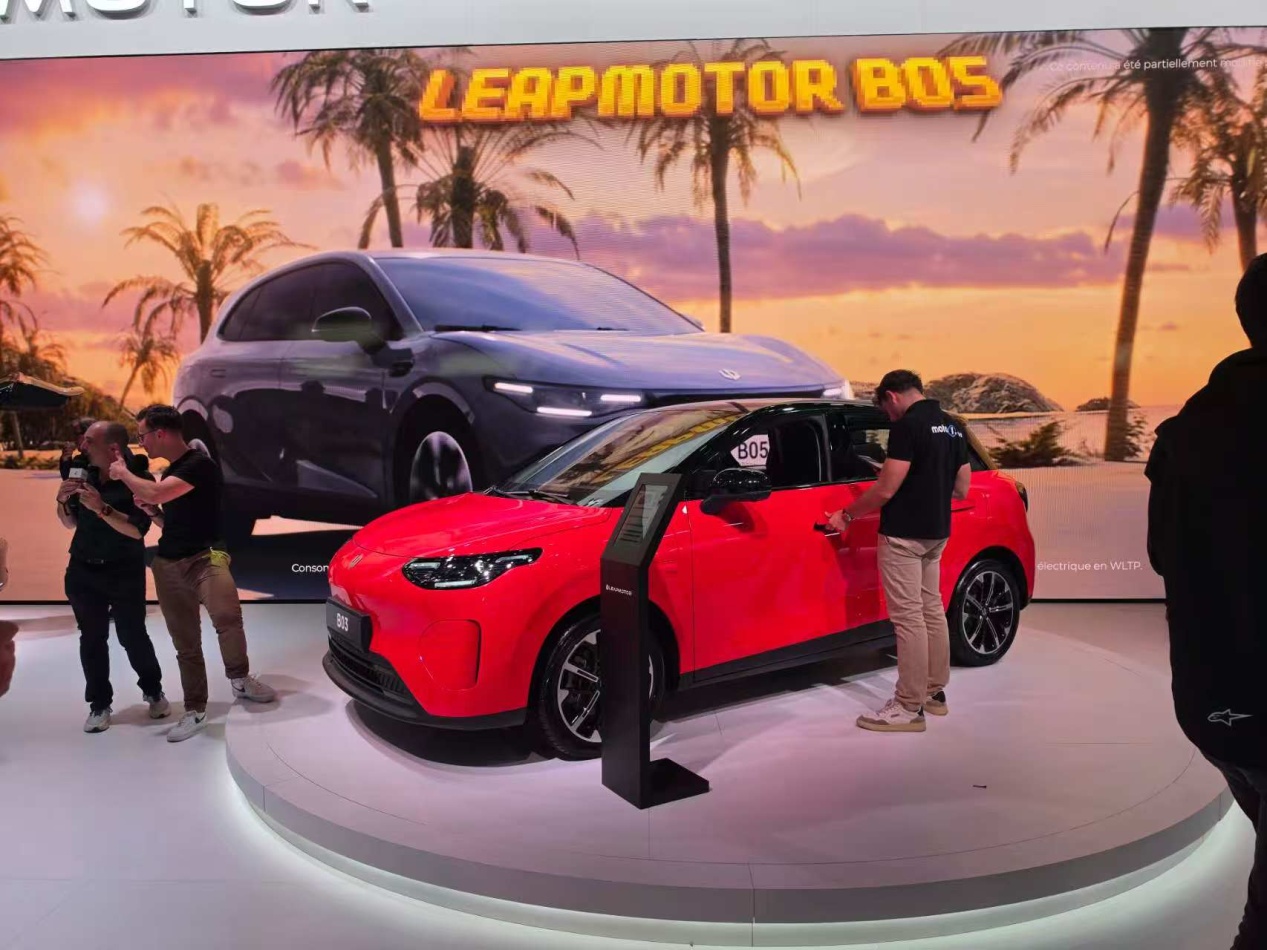
Leapmotor's all-electric compact model B03 makes its overseas debut at the Paris Motor Show, targeting young consumers in Europe. (People's Daily/Shang Kaiyuan)
Chinese auto brands commanded the spotlight at the 2026 Paris Motor Show, which ran from Oct.12 to 18. Of the 59 exhibitors, over 20 were Chinese companies, accounting for about 40 percent of the total, a record high.
Brands showcased over 100 vehicles, including more than a dozen global debuts. Their footprint at the event kept expanding.
Chinese automakers are expanding into Europe through a long-term approach rooted in local markets and aimed at mutual benefit and win-win outcomes.
Across the industrial chain, Chinese companies are steadily advancing their localization efforts.
XPENG, a Chinese new energy vehicle manufacturer, has begun production at a Magna plant in Austria. Chinese auto giant BYD announced during the show that it would build two additional plants in Europe, following the establishment of its factory in Hungary.
Chery, another Chinese automaker, said it would reopen an idle vehicle assembly plant in Barcelona, a project expected to create more than 1,000 jobs. Chinese automaker GAC made localization a priority from the outset, establishing a design center in Milan and preparing to set up a European R&D center.
"In Europe, for Europe" has become a shared commitment among Chinese automakers seeking to build a lasting presence in the market.
Chinese brands are also working to win over consumers. BYD, MG -- a marque owned by Chinese automaker SAIC Motor -- and XPENG have introduced extended warranties to reassure buyers about after-sales service.
An international survey of 2,500 European respondents found that 55 percent were willing to consider a Chinese brand for their next car purchase, up from just 43 percent two years ago. In Hungary, around three-quarters of respondents had already included Chinese brands such as BYD on their shopping lists. Even in Germany, a major automotive manufacturing country, 52 percent of respondents were open to Chinese models, compared with just 37 percent in early 2024.
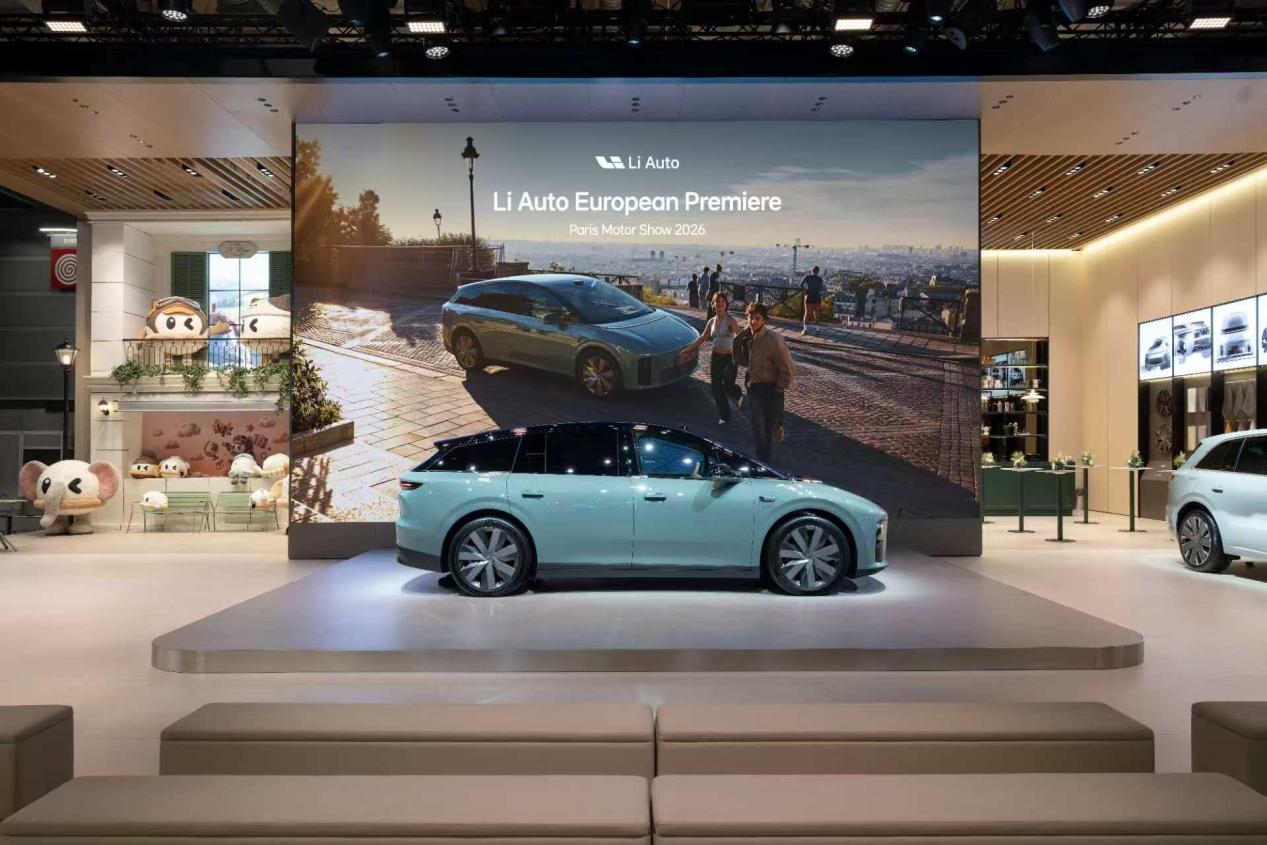
Li Auto displays a model launched for the European market. (People's Daily/Shang Kaiyuan)
At its core, China-Europe cooperation in the auto industry is about helping both sides advance their transition to electrification, rather than engaging in a zero-sum contest.
As Zhu Jiangming, chairman of Chinese new energy vehicle maker Leapmotor, noted, only by taking both sides' needs into account can cooperation deliver results greater than the sum of its parts.
Europe's auto industry is at a critical turning point, facing practical challenges including lengthy R&D cycles and high conversion costs. The participation of Chinese companies is giving consumers more choices, expanding business opportunities for dealers, and injecting technological expertise and investment into the upgrading of local industries.
The strong complementarity between the two sides has been demonstrated repeatedly in practice. Renault completed the development of a new model in just 16 months by drawing on its team in China. An electric version of Citroen's classic 2CV could also move toward production more quickly with the help of Leapmotor's technology platform.
A representative of the European Automobile Manufacturers' Association has acknowledged that Europe's auto industry cannot complete its transition to electrification without the technological capabilities and industrial supply-chain strengths of Asian companies.
Yet the growing momentum for industrial cooperation has not been matched by a similar shift in the policy environment. While cooperation between Chinese and European automotive businesses continues to deepen, some European politicians are becoming increasingly wary of China. The contrast between these two trends is striking.
This tension was particularly evident recently: even as Chinese brands made a collective appearance at the Paris Motor Show, Chinese companies were not invited to a banquet held at the Elysee Palace. The episode serves as a reminder that the reality of China-Europe cooperation extends beyond the lively scenes at the auto show. Political wariness continues to create uncertainty for businesses seeking to work together.
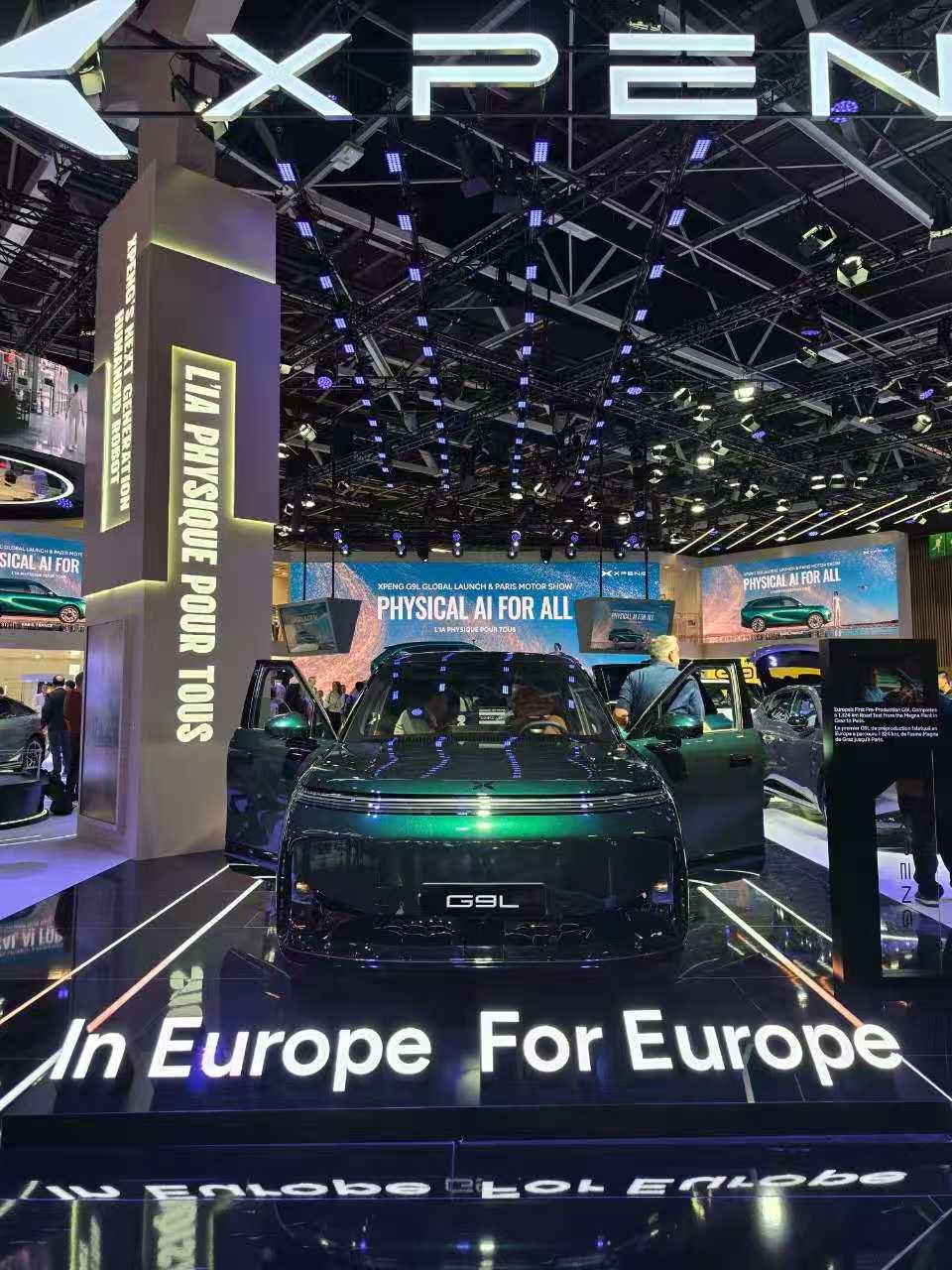
XPENG's next-generation intelligent flagship SUV, the G9L, makes its European debut at the Paris Motor Show, with plans for local production in Austria. (People's Daily/Shang Kaiyuan)
If Europe wants to attract Chinese investment to create jobs and support its industrial transition, it needs to respect the realities of cross-border investment and provide a stable, predictable policy environment for legitimate business cooperation. Clinging to a zero-sum mindset and repeatedly erecting trade and investment barriers in the name of security will ultimately undermine businesses' willingness to cooperate and cause Europe to miss opportunities for its own transformation.
The automotive industry is a prime example of deep global integration, with openness and cooperation remaining the prevailing trend. As two of the world's major economies, China and Europe have far more in common economically than they have competing interests. Faced with a new wave of industrial transformation, Europe should do better to seize the opportunity to work with China for mutual benefit than to focus on building walls and barriers. In doing so, both sides can share the benefits of development.
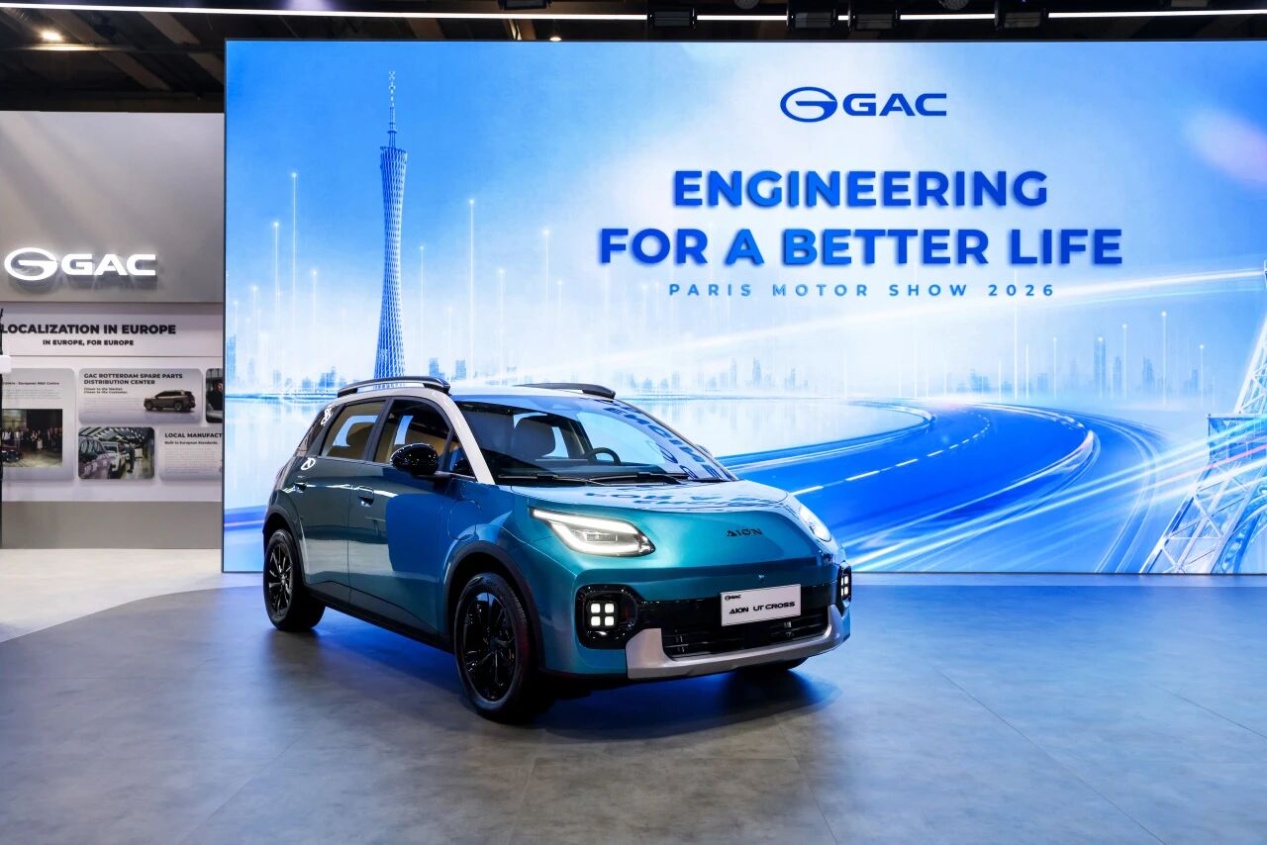
The AION UT Cross is developed under the lead of a design center of GAC in Milan, catering to European buyers' aesthetic preferences. (Photo courtesy of GAC)
Photos

Related Stories
- From underdog to contender: China's motorcycle breakthrough signals industrial advancement
- PD Explainer | The rise of ZXMOTO: China's 'Fast & Furious' moment in motorcycles
- Two decades of pursuit: founder Zhang Xue leads ZXMOTO to historic double victory in WSBK
- Formula 1 Grand Prix makes roaring comeback
- Highlights of vehicles at Munich Motor Show 2023
- 100th Brussels Motor Show to be held in Brussels, Belgium
- In pics: MotoGP race of Teruel Grand Prix
- Tesla recalls 48,442 vehicles in China
- China has 365 mln motor vehicles at end of September
- 2019 edition of Seoul Motor Show held in South Korea
Copyright © 2026 People's Daily Online. All Rights Reserved.
