



Shaanxi universities put their research to work for local industry
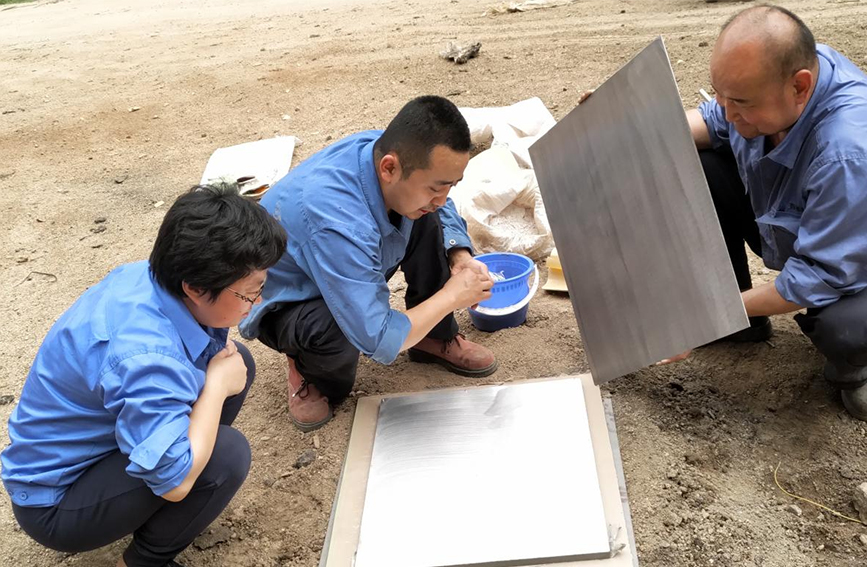
Zhao Hui (first from left), a professor at Xi'an Shiyou University and a part-time deputy head responsible for technology at a company specializing in metal materials in northwest China's Shaanxi Province, assists with the trial production of the company's new product. (Photo courtesy of Zhao Hui)
In northwest China's Shaanxi Province, university researchers are being placed inside companies as part-time tech deputies as a way to move lab work onto the factory floor. Their projects range from improving strawberry yields to breaking bottlenecks in advanced materials manufacturing.
The arrangement rests on a policy introduced in July 2025 that lets companies recruit university and research institute experts part-time. Companies gain expertise they couldn't otherwise access while the researchers keep their academic positions.
The arrangement addresses a longstanding gap: researchers often struggle to turn laboratory findings into commercial products, while companies lack the expertise to overcome technical obstacles.
It is already delivering practical results across the province.
One of those deputies is Wang Junli, a professor from Xianyang Polytechnic Institute, who has been working with a strawberry farm in Huangling county, Yan'an city, northwest China's Shaanxi Province. There he helped introduce soilless cultivation, integrated water and fertilizer irrigation and eco-friendly pest and disease control.
In the first quarter of 2026, yields increased from 1,200 kilograms to 4,000 kilograms per mu (approximately 0.0667 hectares), the harvesting period doubled, and the fruit reached the market more than 10 days earlier with a price premium of more than 25 percent.
Similar collaborations are addressing challenges in advanced manufacturing.
Zhang Yin, a professor at Xi'an Jiaotong University, spent years working with a local tech firm on a problem that had stalled its production line: getting amorphous and nanocrystalline alloy ribbons to come out at a uniform thickness. Solving it unlocked mass production.
"Deputy heads responsible for technology cannot simply bring papers into the workshop; we need to work on the production line," he said.
Chen Jingwen, a professor at Shaanxi University of Science and Technology, worked with a shipbuilding company in Ankang city, Shaanxi Province, to develop the HD500 fully hydraulic cutter-suction dredger — overcoming three major engineering hurdles and driving a sharp rise in orders.
Wang Liguo, a researcher with a doctoral degree from Xi'an Technological University, worked with a company to develop high-end 3D curved optical glass using gravity bending — work that also helped the firm qualify as a high-tech enterprise.
With more than 100 universities and more than 1,000 research institutions, Shaanxi wants the program to produce more than short-term technical fixes.
The province has set out rules covering appointments, performance evaluations, incentives and the movement of researchers between universities and industry.
Under the framework, universities and companies work together on three fronts: solving hard technical problems, building joint platforms and training talent. The aim is a collaboration model that outlasts individual projects.
The exchange runs both ways: researchers help companies set up joint labs and technology centers, and companies open their doors to students who need somewhere to train.
For example, after overcoming key technical challenges in producing high-purity quartz sand for a company specializing in materials technology, Li Feng, an associate professor at Shangluo University, went a step further to facilitate the joint establishment of a key laboratory for silicon-based materials by the company and the university.
The company's facilities now double as a training site, with students arriving from the university each year for hands-on work.
"Solving technical challenges is only the first step. For university-business cooperation to last, we need to build platforms, develop teams, and cultivate talent," Li said.
"At its core, the 'deputy heads responsible for technology' mechanism is designed to forge a direct connection between universities and businesses and enable researchers to help solve industrial challenges," said Yang Dexing, a member of the Shaanxi Committee of the Chinese People's Political Consultative Conference and a professor at Northwestern Polytechnical University.
Yang said the next step is to expand the model: sending teams of experts into companies, arranging temporary placements in both directions, and bringing industry professionals into the classroom.
These measures, he said, would help align talent development with what industry actually needs.
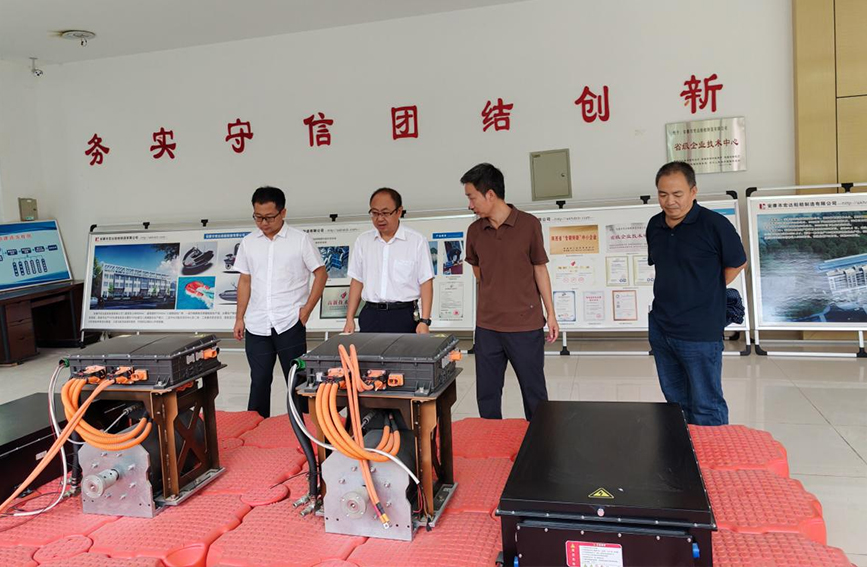
Chen Jingwen (second from left), a professor at Shaanxi University of Science and Technology and a part-time deputy head responsible for technology at a shipbuilding company in northwest China's Shaanxi Province, provides technical guidance on the development of a new-energy vessel propulsion system at the company's workshop. (Photo courtesy of Chen Jingwen)
Photos
 Xi'an-Ankang high-speed railway boosts tourism in Ankang, China's Shaanxi
 Tourists enjoy sunrise at Mount Tai in China's Shandong
 Basha Village in China's Guizhou draws tourists with charming scenery and folk customs
 Low-altitude tourism programs become growth point in Hongcun Village, China's Anhui
Related Stories
- Qingdao leverages industrial design to drive manufacturing innovation
- Profits of China's major industrial firms up 17.6 pct in first seven months
- China's display industry: From follower to frontrunner
- Traditional industries resurgent: emerging demand sparks new life
- Profits of China's major industrial firms up 18.8 pct in first five months
- China's shipbuilding industry charts greener, smarter course: report
- Chinese umbrella industry ascends the global value chain
Copyright © 2026 People's Daily Online. All Rights Reserved.
