



Diversified desert industry thrives at Baijitan national nature reserve in China's Ningxia
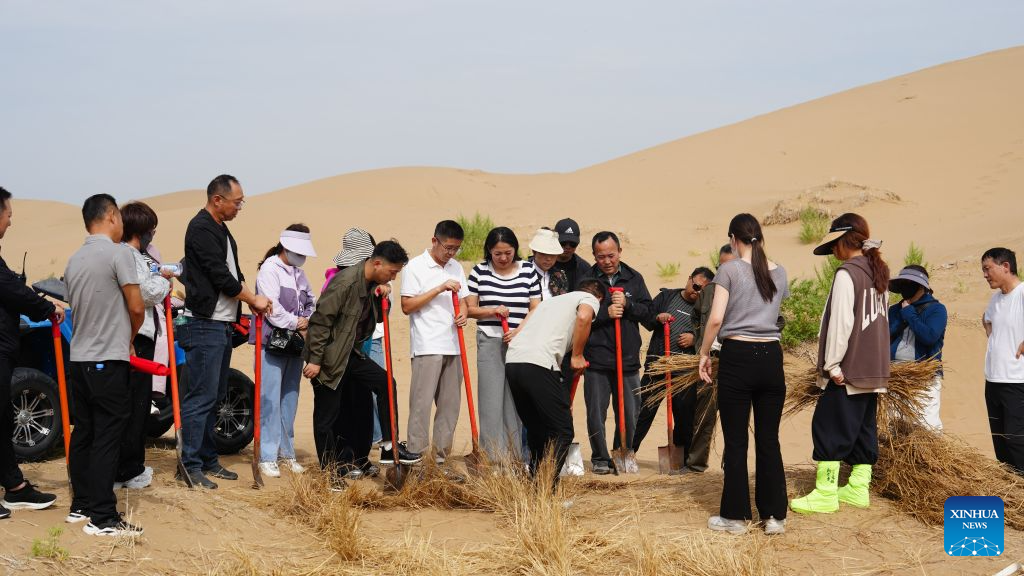
Visitors learn to set straw checkerboard barriers at the Baijitan national nature reserve in Lingwu, northwest China's Ningxia Hui Autonomous Region, Sept. 23, 2026. Baijitan national nature reserve lies on the southwestern edge of the Maowusu Desert. Over the past 70 years, generations of workers have planted trees and vegetation to combat desertification, restoring 700,000 mu (about 46,667 hectares) of land and controlling nearly one million mu (about 66,667 hectares) of drifting sand. Forest and grass coverage has reached 41 pct, helping curb the desert's expansion.
After years of exploration, the reserve has developed a diversified desert industry while combating desertification, including afforestation, specialty fruit cultivation, ecological farming and tourism. The approach has enabled both ecological restoration and local economic development. (Xinhua/Liu Hai)
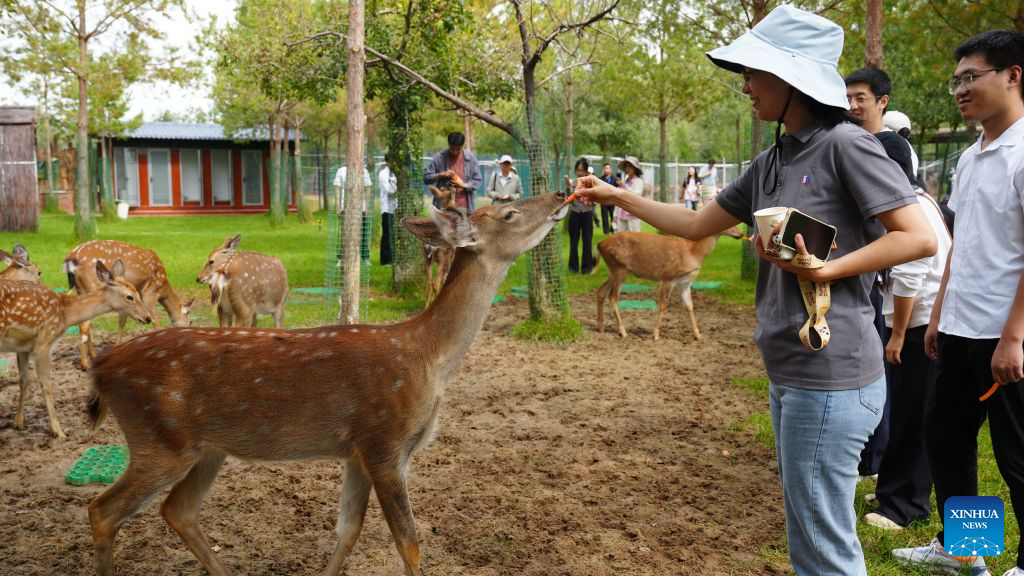
Visitors feed deer at the Baijitan national nature reserve in Lingwu, northwest China's Ningxia Hui Autonomous Region, Sept. 23, 2026. Baijitan national nature reserve lies on the southwestern edge of the Maowusu Desert. Over the past 70 years, generations of workers have planted trees and vegetation to combat desertification, restoring 700,000 mu (about 46,667 hectares) of land and controlling nearly one million mu (about 66,667 hectares) of drifting sand. Forest and grass coverage has reached 41 pct, helping curb the desert's expansion.
After years of exploration, the reserve has developed a diversified desert industry while combating desertification, including afforestation, specialty fruit cultivation, ecological farming and tourism. The approach has enabled both ecological restoration and local economic development. (Xinhua/Liu Hai)
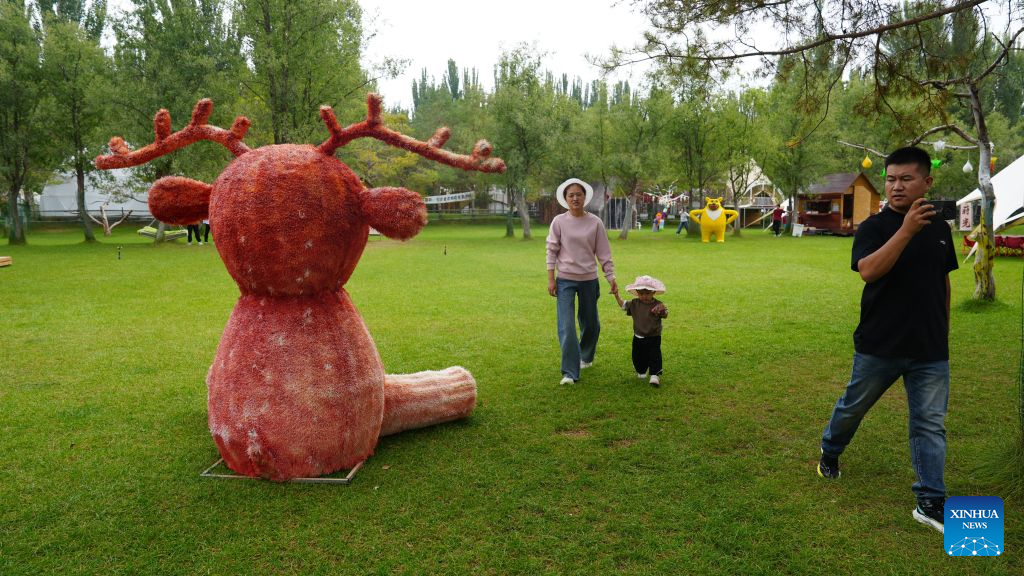
Visitors enjoy themselves at the Baijitan national nature reserve in Lingwu, northwest China's Ningxia Hui Autonomous Region, Sept. 23, 2026. Baijitan national nature reserve lies on the southwestern edge of the Maowusu Desert. Over the past 70 years, generations of workers have planted trees and vegetation to combat desertification, restoring 700,000 mu (about 46,667 hectares) of land and controlling nearly one million mu (about 66,667 hectares) of drifting sand. Forest and grass coverage has reached 41 pct, helping curb the desert's expansion.
After years of exploration, the reserve has developed a diversified desert industry while combating desertification, including afforestation, specialty fruit cultivation, ecological farming and tourism. The approach has enabled both ecological restoration and local economic development. (Xinhua/Liu Hai)
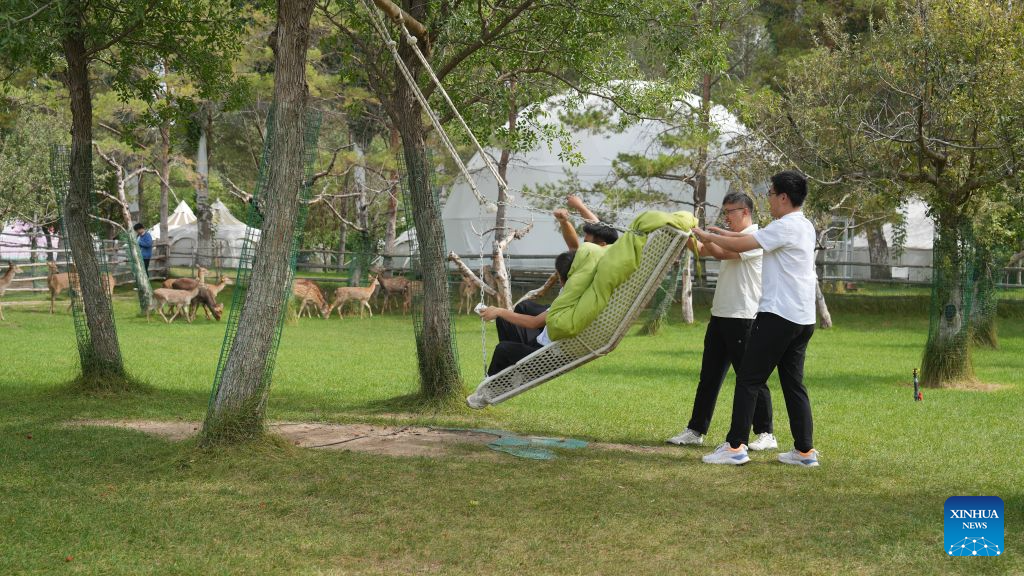
Visitors enjoy themselves at the Baijitan national nature reserve in Lingwu, northwest China's Ningxia Hui Autonomous Region, Sept. 23, 2026. Baijitan national nature reserve lies on the southwestern edge of the Maowusu Desert. Over the past 70 years, generations of workers have planted trees and vegetation to combat desertification, restoring 700,000 mu (about 46,667 hectares) of land and controlling nearly one million mu (about 66,667 hectares) of drifting sand. Forest and grass coverage has reached 41 pct, helping curb the desert's expansion.
After years of exploration, the reserve has developed a diversified desert industry while combating desertification, including afforestation, specialty fruit cultivation, ecological farming and tourism. The approach has enabled both ecological restoration and local economic development. (Xinhua/Liu Hai)
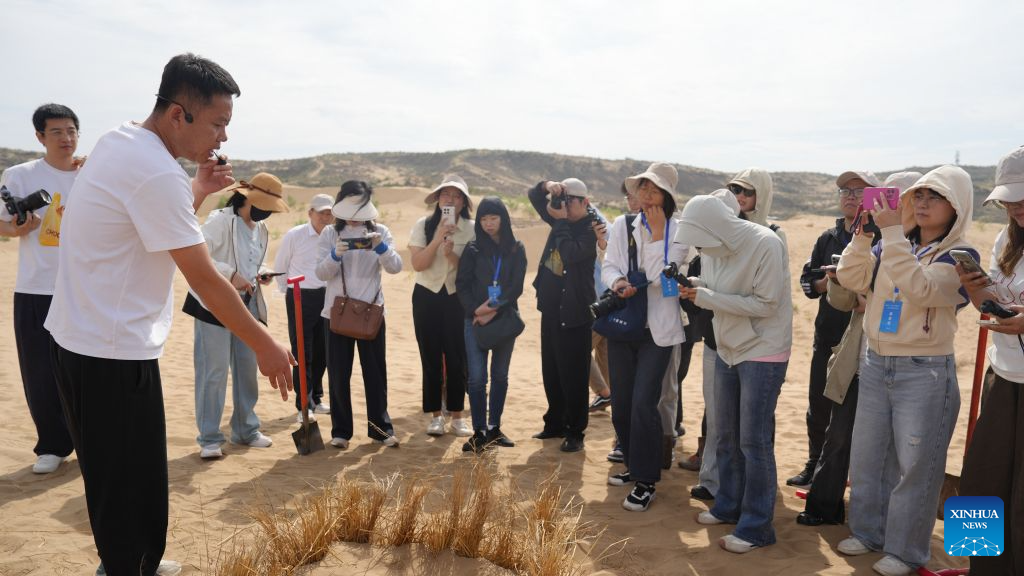
A staff member of the Baijitan national nature reserve (L, front) introduces anti-desertification technique to visitors in Lingwu, northwest China's Ningxia Hui Autonomous Region, Sept. 23, 2026. Baijitan national nature reserve lies on the southwestern edge of the Maowusu Desert. Over the past 70 years, generations of workers have planted trees and vegetation to combat desertification, restoring 700,000 mu (about 46,667 hectares) of land and controlling nearly one million mu (about 66,667 hectares) of drifting sand. Forest and grass coverage has reached 41 pct, helping curb the desert's expansion.
After years of exploration, the reserve has developed a diversified desert industry while combating desertification, including afforestation, specialty fruit cultivation, ecological farming and tourism. The approach has enabled both ecological restoration and local economic development. (Xinhua/Liu Hai)

Visitors enjoy themselves at the Baijitan national nature reserve in Lingwu, northwest China's Ningxia Hui Autonomous Region, Sept. 23, 2026. Baijitan national nature reserve lies on the southwestern edge of the Maowusu Desert. Over the past 70 years, generations of workers have planted trees and vegetation to combat desertification, restoring 700,000 mu (about 46,667 hectares) of land and controlling nearly one million mu (about 66,667 hectares) of drifting sand. Forest and grass coverage has reached 41 pct, helping curb the desert's expansion.
After years of exploration, the reserve has developed a diversified desert industry while combating desertification, including afforestation, specialty fruit cultivation, ecological farming and tourism. The approach has enabled both ecological restoration and local economic development. (Xinhua/Liu Hai)
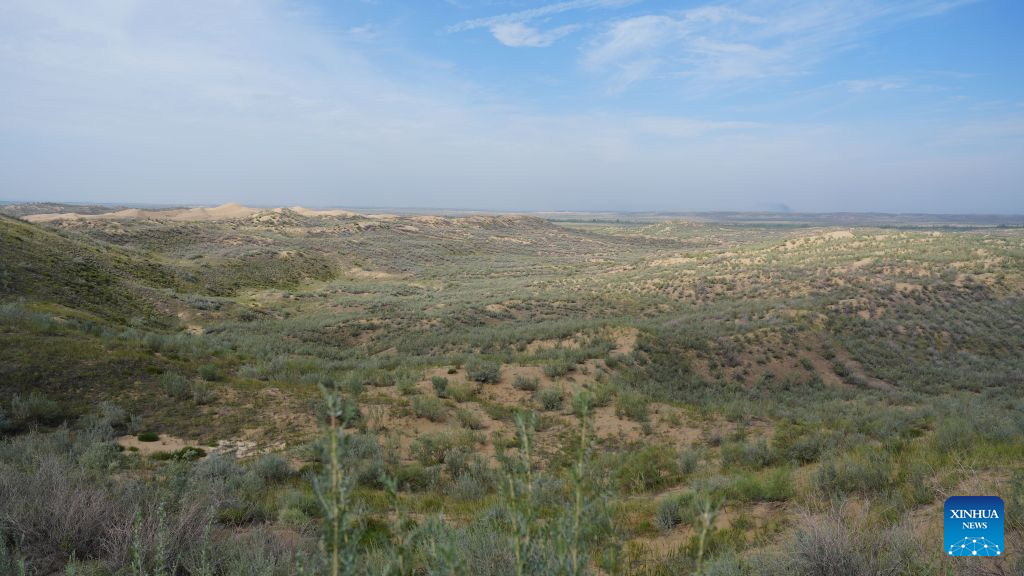
This photo taken on Sept. 23, 2026 shows a view of the Baijitan national nature reserve in Lingwu, northwest China's Ningxia Hui Autonomous Region. Baijitan national nature reserve lies on the southwestern edge of the Maowusu Desert. Over the past 70 years, generations of workers have planted trees and vegetation to combat desertification, restoring 700,000 mu (about 46,667 hectares) of land and controlling nearly one million mu (about 66,667 hectares) of drifting sand. Forest and grass coverage has reached 41 pct, helping curb the desert's expansion.
After years of exploration, the reserve has developed a diversified desert industry while combating desertification, including afforestation, specialty fruit cultivation, ecological farming and tourism. The approach has enabled both ecological restoration and local economic development. (Xinhua/Liu Hai)
Photos


Related Stories
- Morning tea industry emerges as new economic growth driver in Wuzhong, China's Ningxia
- Pingluo County in China's Ningxia emerges as major seed production hub
- China's Ningxia develops wine industry to boost local economy
- "Theater village" in NW China's Ningxia brings relocation stories to life
- Intangible cultural heritage crafts boost employment in NW China's Ningxia
Copyright © 2026 People's Daily Online. All Rights Reserved.
