



Xinjiang Diary, Day 4: Zhundong and Jiangbulake, one gives and the other welcomes
Note: Over the next several days, I'll be traveling across northwest China's Xinjiang Uygur Autonomous Region as part of People's Daily Online's "China Momentum" program. I'll be writing daily about what I see and experience.
I never left Changji today. That may seem unspectacular, but after nearly eight hours of driving and seeing what felt like two entirely different worlds, I think it's pretty spectacular.
We started with something I couldn't see, at a converter station in Zhundong. There, electricity from Xinjiang begins a journey of more than 3,000 kilometers to east China's Anhui Province along the Zhundong-Wannan ±1,100-kilovolt ultra-high-voltage direct-current transmission line. By Aug. 14, the station had already sent 43.6 billion kilowatt-hours of electricity east this year. Since the project began operating, more than 431.2 billion kilowatt-hours have made the same journey.
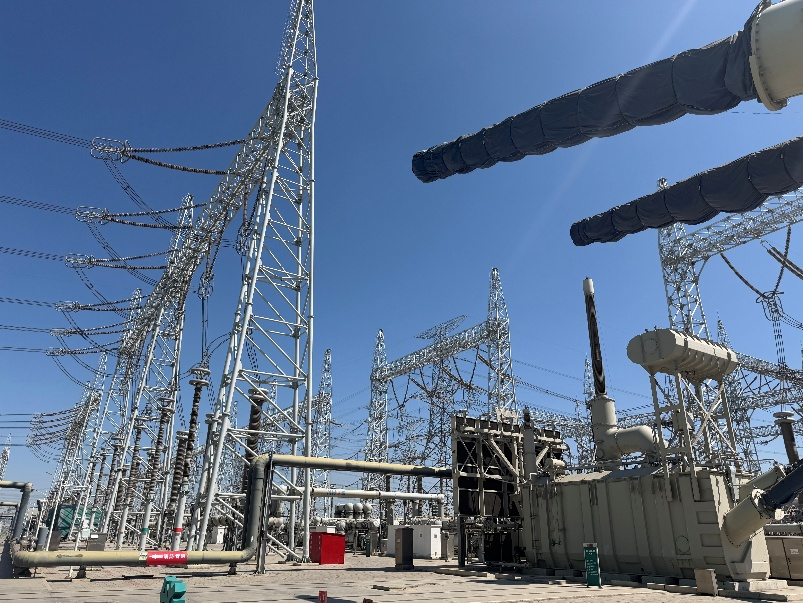
The Zhundong-Wannan ±1,100-kilovolt ultra-high-voltage direct-current transmission line in Zhundong, Changji, northwest China's Xinjiang Uygur Autonomous Region. (People's Daily Online/Michael Kurtagh)
Those numbers are almost impossible to picture. It was easier to think of it this way: somebody in Anhui turns on a light tonight with electricity that began its journey here, in a place they will probably never see, and it arrived in just the blink of an eye.
Then we went deeper into Zhundong, to see what was actually feeding the system. Zhundong doesn't ease you into it. It is flat in a way that makes you feel like a mistake, like something drawn with a ruler and then left out in the sun to bake. No trees. No shade. Just the road running straight until it stopped being a road and became a shimmer.
What lies underneath that flatness is almost absurd to think about. The Zhundong coalfield has predicted reserves of 390 billion tonnes, with 253.1 billion tonnes already proven, accounting for 17.8 percent of Xinjiang's coal reserves and 7 percent of China's.
At the edge of one mining operation, I watched trucks the size of houses roll across the pit, engines groaning under the weight of the coal, and I did what anybody would do. I looked for the drivers. I assumed there was somebody up in each cab, hands on the wheel, doing the unglamorous work that keeps a mine like this running.
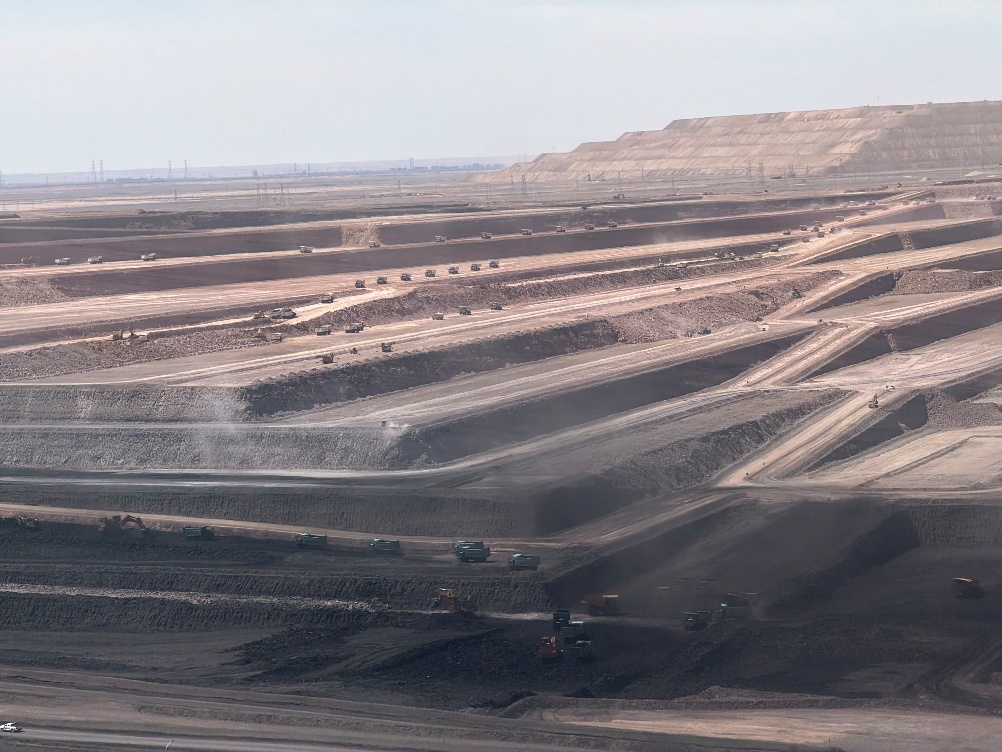
A mining operation in Zhundong, Changji, northwest China's Xinjiang Uygur Autonomous Region. (People's Daily Online/Michael Kurtagh)
There wasn't.
A worker mentioned it almost as an aside, that not one of the trucks in front of me had a person inside. I made them say it again, because it didn't match what I was looking at. The trucks weren't idling, weren't waiting on some delay. They were working, turning, backing into position to load, and there was nobody within reach of any of them.
Then I found where the people actually were. They were inside a control room, sitting behind screens and joysticks, operating the vehicles remotely. One person could run several of them at once, watching multiple machines move through the mine from a room far away from the heat, the dust and the noise.
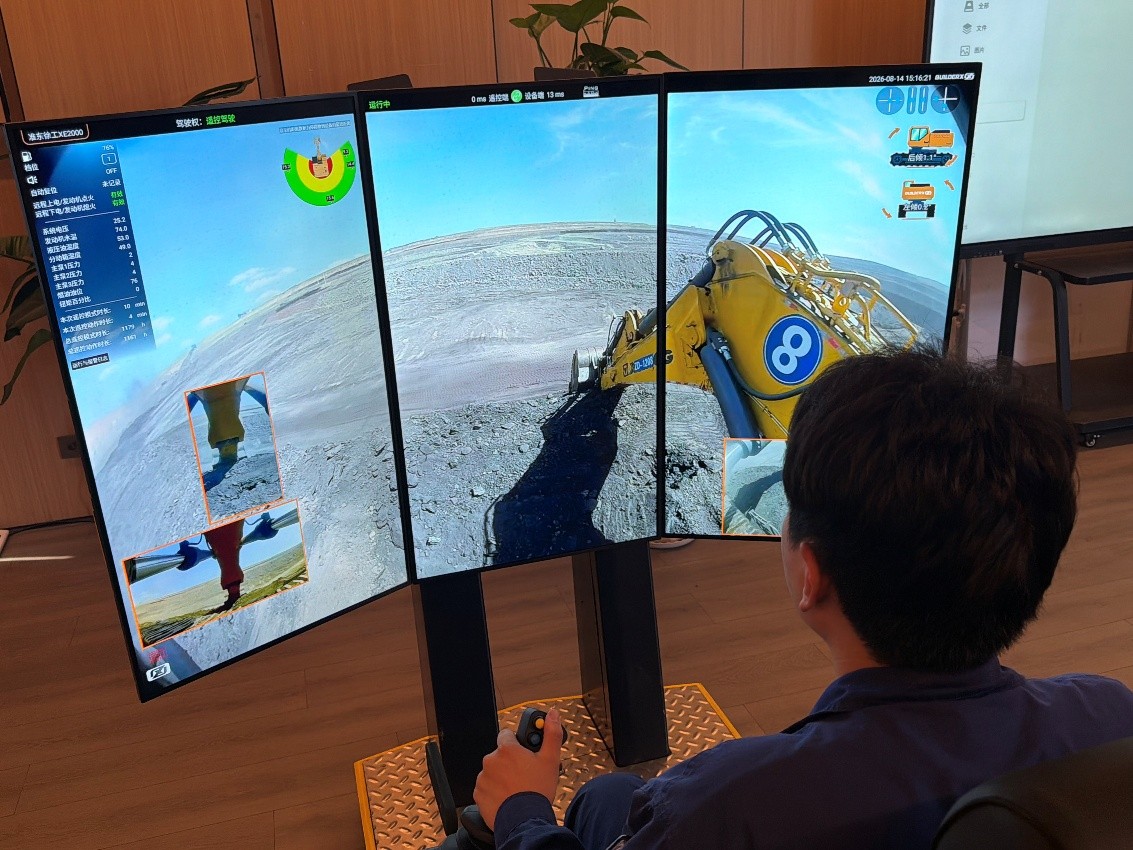
A man operates remote mining machinery at a mining operation in Zhundong, Changji, northwest China's Xinjiang Uygur Autonomous Region. (People's Daily Online/Michael Kurtagh)
It was one of those moments when technology stopped feeling like something happening in the future and started feeling like something happening right in front of me.
I had been thinking about how far the electricity from here travels. Now I was looking at another kind of distance, a person sitting in a room, moving machines hundreds of meters away as easily as if they were sitting inside them.
Then we got in the car and drove another three hours toward Jiangbulake, still without leaving Changji.
As we drove, the flatness folded itself into hills. Then the hills grew shoulders. By the time we arrived, Zhundong felt like something I had read about rather than something I had stood in that same morning.
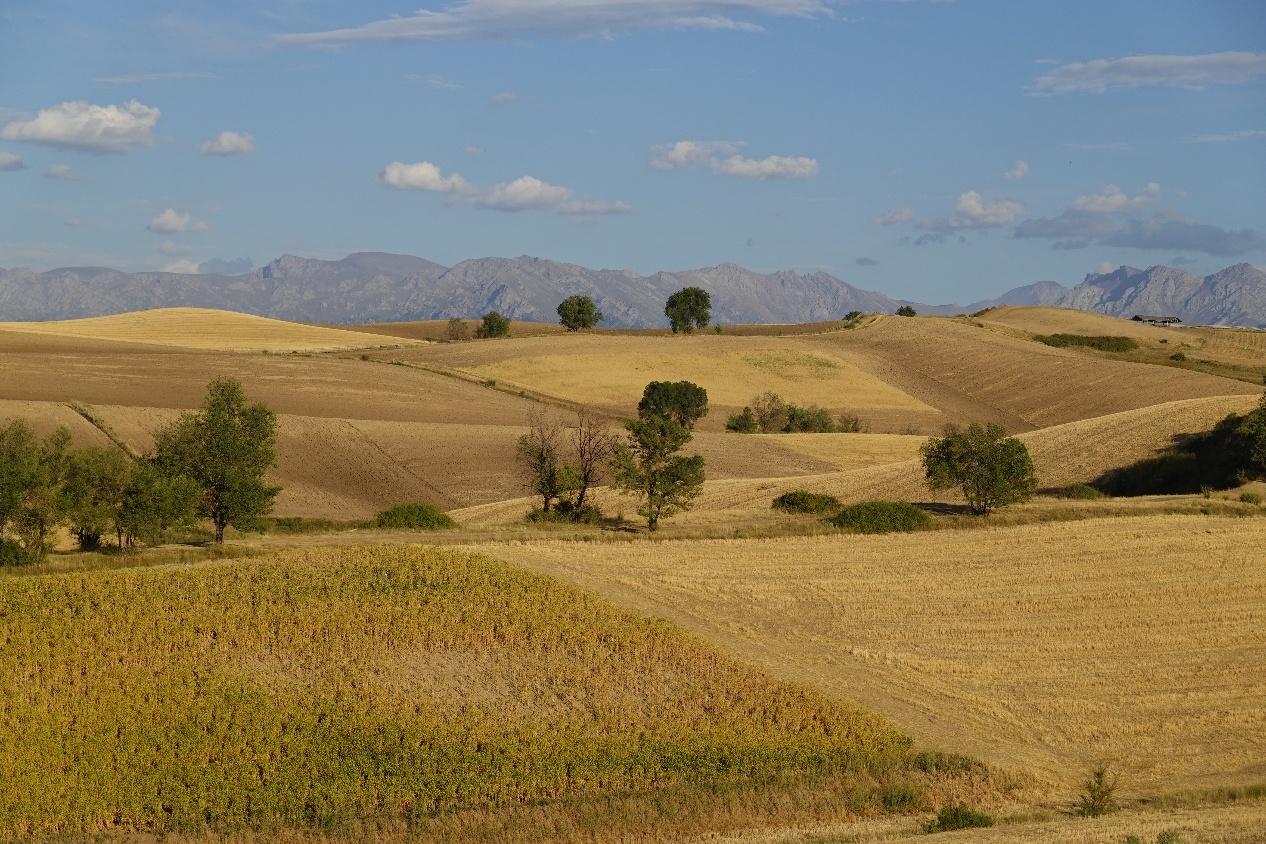
Wheat fields across hills in Jiangbulake, Qitai county, Changji, northwest China's Xinjiang Uygur Autonomous Region. (People's Daily Online/Xu Jingwen)
Jiangbulake means "source of holy water" in Kazakh, and once you're there, you stop questioning the name. It sits in Qitai county, at the northern foot of the Tianshan Mountains, and is now a national 5A scenic area.
It holds vast wheat fields that roll across the hills toward mountains where snow still clings even in August. I stood at the top of one of the wheat terraces and the wind was moving the grain in these long, slow waves, gold rolling into green rolling into the gray-blue of the mountains behind it.
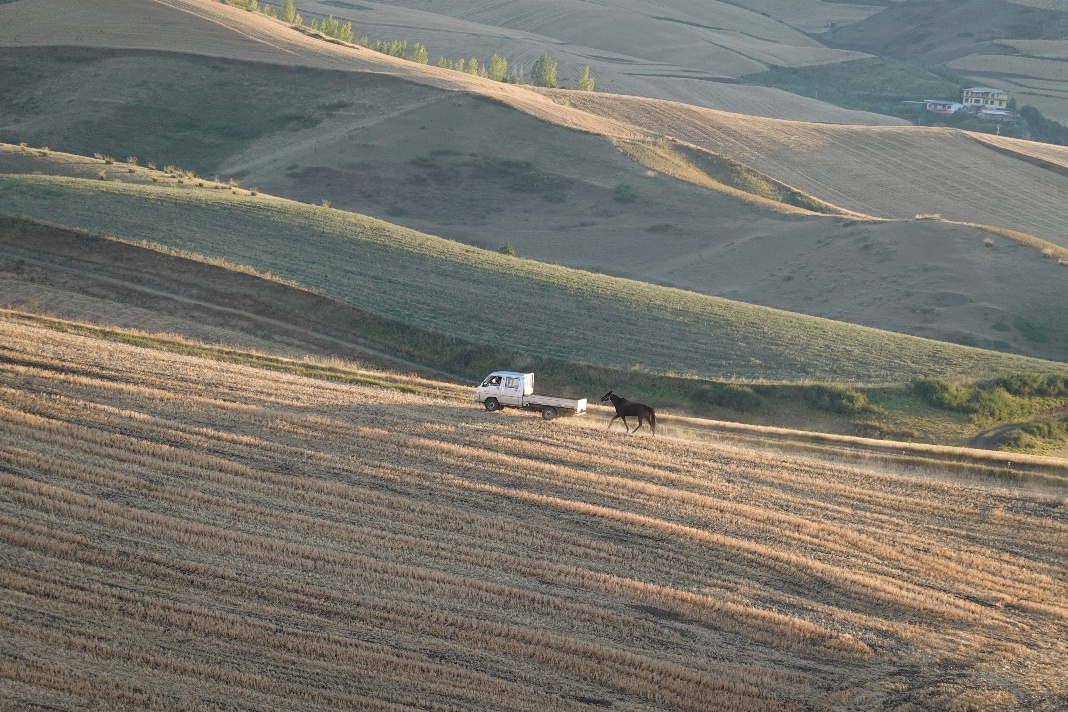
A horse follows a truck on a wheat field in Jiangbulake, Qitai county, Changji, northwest China's Xinjiang Uygur Autonomous Region. (People's Daily Online/Xu Jingwen)
What struck me hardest about Jiangbulake wasn't the beauty, though there was plenty of that. It was the shape of the exchange.
Zhundong takes something out of the ground and sends it thousands of miles east. Jiangbulake does something almost completely different. It asks people to come to it.
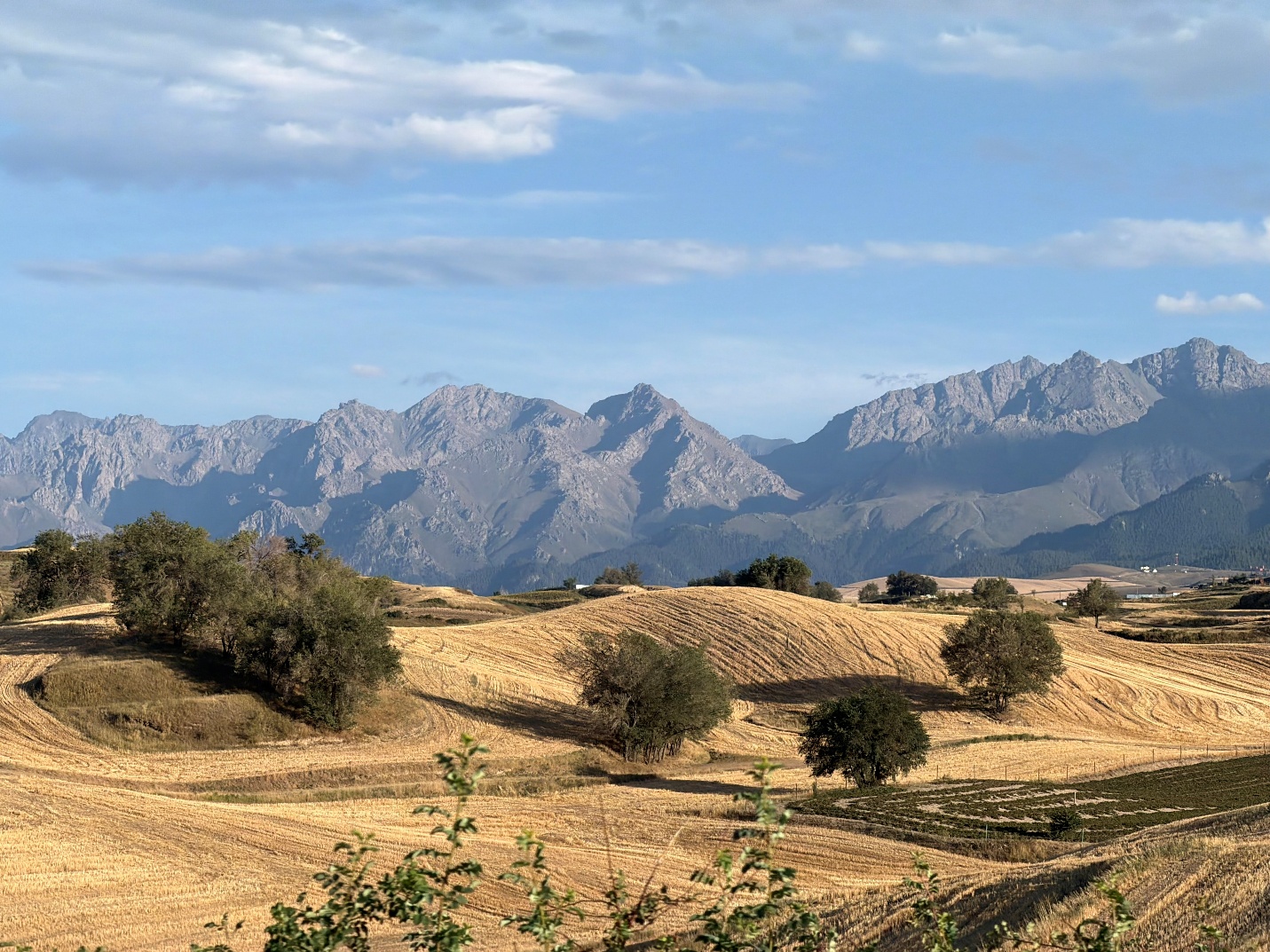
Wheat fields sit below the Tianshan Mountains in Jiangbulake, Qitai county, Changji, northwest China's Xinjiang Uygur Autonomous Region. (People's Daily Online/Michael Kurtagh)
It opens its wheat fields, its mountain water and its Silk Road history to visitors. People come here for the scenery, the fields, the old stories and, increasingly, for the chance to spend some time in a place that feels very far from the cities below.
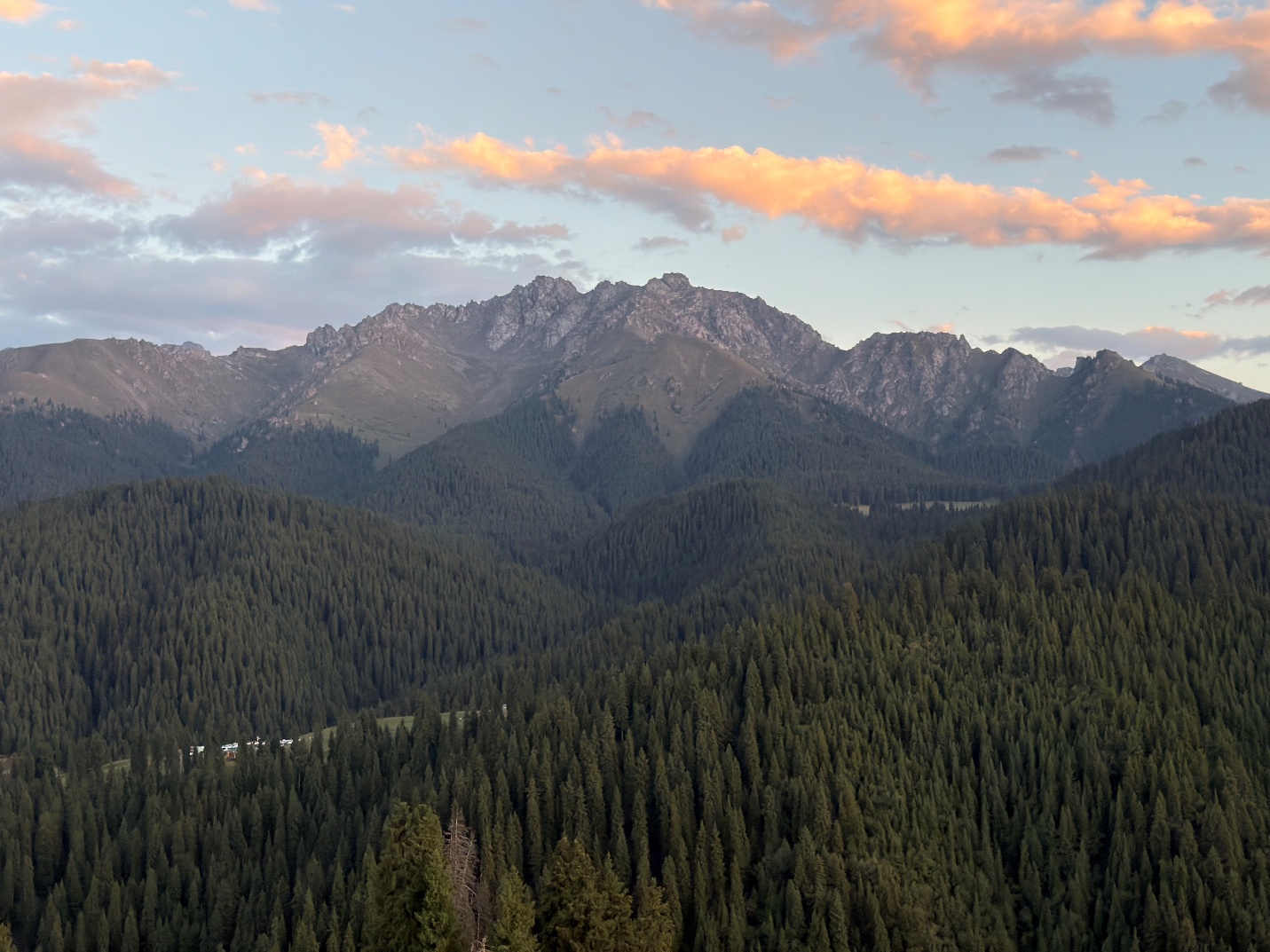
Tree covered hills sit below the Tianshan Mountains in Jiangbulake, Qitai county, Changji, northwest China's Xinjiang Uygur Autonomous Region. (People's Daily Online/Michael Kurtagh)
That night at dinner, someone set a bowl of tofu soup in front of me.
By then I had spent most of the day thinking about what this land sends away. Now I was sitting at a table in Qitai, eating something that had never needed to leave.
I was told Qitai has four famous soups, and that you haven't really been here until you've had all four. I guess have three to go.
Still, I liked how the day ended. All afternoon I had been thinking in numbers too big to hold onto, kilometers, kilowatt-hours, billions of tonnes still underground. The soup didn't ask to be understood at that scale. It was just warm, and in front of me, and felt like one more version of what Jiangbulake had been doing all afternoon: not sending anything away, just asking me to come and sit down.
I don't think you can understand Xinjiang from a highway map. You have to feel the change in the air, the way the heat lets go of your shoulders somewhere between Zhundong and the mountains, to understand that this region isn't one landscape wearing different names.
It's dozens of landscapes stacked on top of each other.
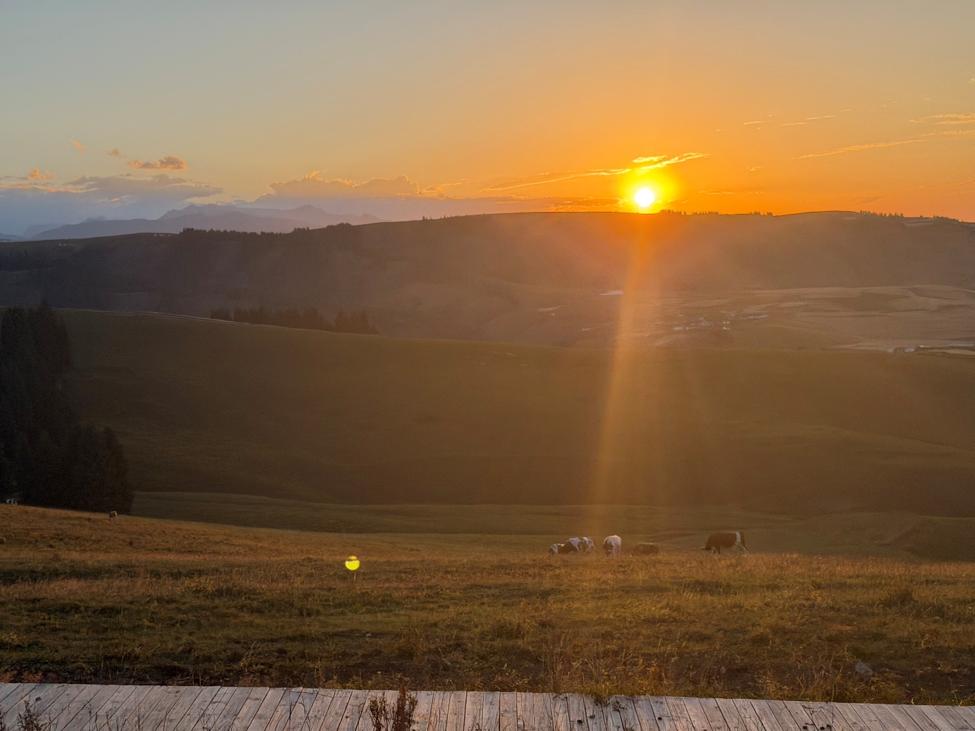
The sun sets in Jiangbulake, Qitai county, Changji, northwest China's Xinjiang Uygur Autonomous Region. (People's Daily Online/Michael Kurtagh)
Today I watched one part of Changji send electricity thousands of kilometers away and another draw people toward its mountains. Then, at the end of the day, I sat down at a table and was handed a bowl of soup.
I'm still not sure which version of what this land has to offer moved me more.
Three days to go. We start again in Changji, and who knows what surprise it has in store this time.
Photos


Related Stories
Copyright © 2026 People's Daily Online. All Rights Reserved.
