



Innovation fuels China's supercomputing rise
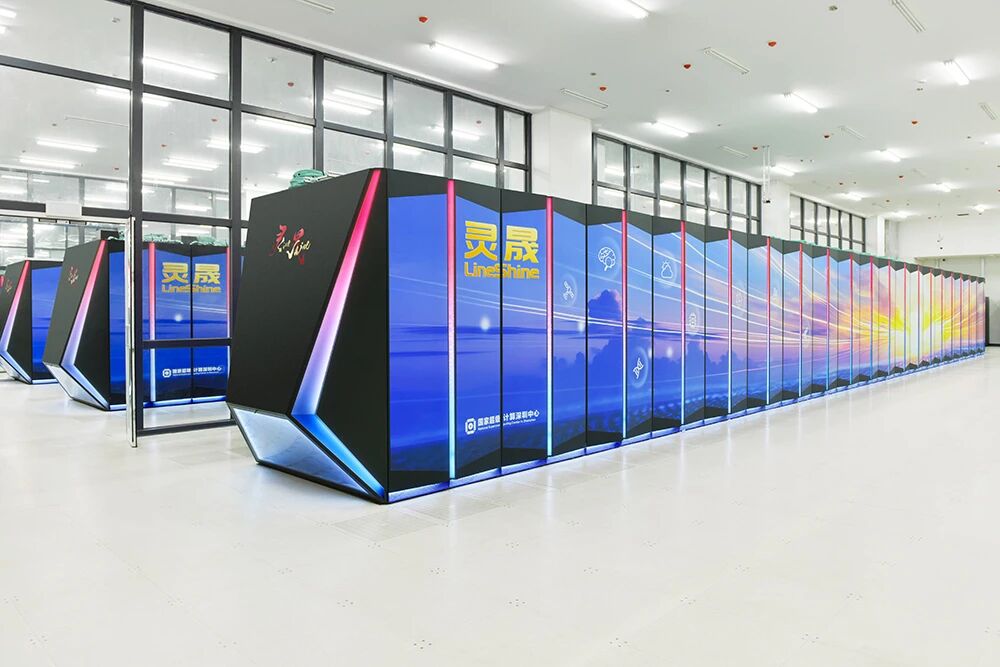
Photo shows China's domestically-developed LineShine supercomputer. (Photo courtesy of the National Supercomputing Center in Shenzhen)
China's domestically-developed LineShine supercomputer took the No. 1 spot on the 67th edition of the TOP500 list released at the International Supercomputing Conference High Performance 2026 in Hamburg, Germany. With sustained performance exceeding 2 EFLOPS, a self-developed LX2 central processing unit (CPU), and the world's first fully liquid-cooled computing cabinets, these impressive specifications mark a new benchmark for China's supercomputing capabilities.
A supercomputer is a high-performance computing system comprising thousands or even tens of thousands of processors, capable of tackling large-scale, complex computing tasks beyond the reach of conventional computers and servers.
In the 1970s, China managed to import a supercomputer through multiple channels, only to face stringent restrictions imposed by the supplier. The machine had to be housed in a transparent computer room, and the keys remained in foreign hands.
From relying on foreign technology to successive breakthroughs with the Yinhe, Tianhe, and Sunway series, and now to LineShine outperforming existing exascale supercomputers worldwide, generations of Chinese scientists have forged a path of independent innovation despite technological blockades and supply chain restrictions.
Today, most of the world's leading supercomputers use a heterogeneous CPU-GPU (graphics processing unit) architecture, boosting performance primarily by adding more GPU accelerators.
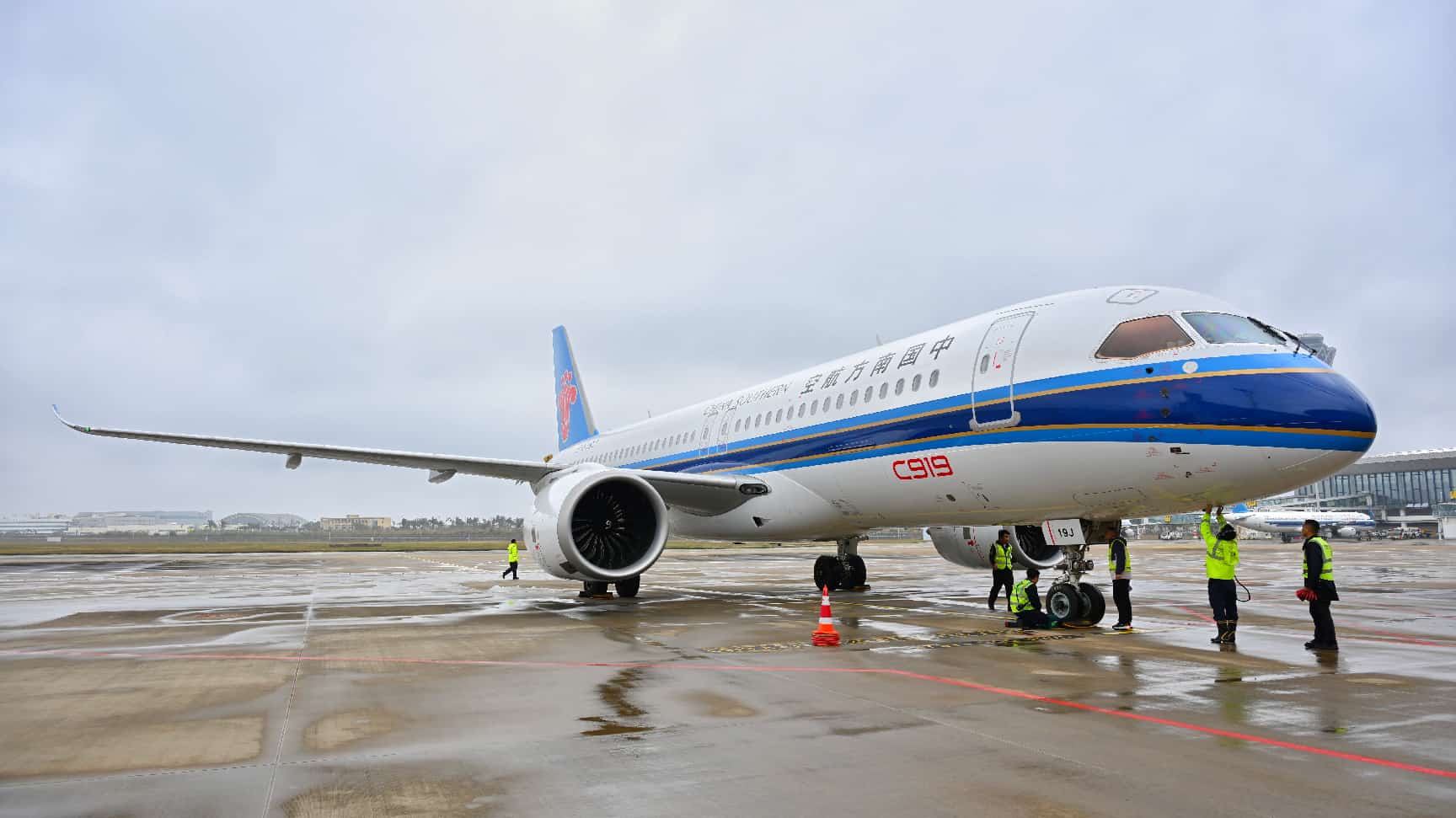
A C919 large passenger aircraft, China's first homegrown large jetliner, is pictured at Meilan International Airport in Haikou, south China's Hainan province. (Photo/Ji Qiaozhu)
LineShine, however, has taken a different path. It adopts a pure CPU architecture, integrating acceleration directly into the processor itself. By reducing the overhead of data movement between chips, it delivers greater performance with a leaner architecture. Few have attempted this approach, yet China has made it work.
Many of China's recent technological breakthroughs stem from the courage to chart a different course. DeepSeek overcame computing constraints through algorithmic innovation, breaking away from the conventional "more computing power" mindset and capturing global attention.
BYD's second-generation Blade Battery and megawatt flash charging technology have won acclaim for their charging efficiency — ready in five minutes, full in nine minutes. Huawei's proposed "Tau (τ) Law" replaces geometric scaling with "time scaling" to sustain advances in semiconductors and electronic systems. Original, disruptive innovation begins with rethinking problems at their source and opening up new paths. Relying solely on imitation makes it difficult to truly shape one's own path of development.
Pioneering new paths requires boldness, while lasting progress depends on integration. Today, supercomputing is entering a new era where supercomputing and intelligent computing are converging. At the chip level, LineShine combines high-performance computing with AI acceleration, enabling a single system to handle both scientific computing and intelligent inference. It has provided a computing foundation for a new paradigm of AI-driven scientific research. The deeper the integration, the greater the potential for future innovation.
China has led the world in new energy vehicle production and sales for years, thanks in large part to collaborative iteration across the entire industrial chain. Likewise, the C919 large passenger aircraft reached commercial service by overcoming not just individual technical hurdles but also complex system-level challenges spanning materials, avionics, flight control, and other disciplines.
Sci-tech innovation requires coordinated planning across the entire industrial chain, broad-based development across sectors, and integrated progress in education, science and technology, and talent cultivation. When different fields and links work in concert, the results far exceed what isolated efforts can achieve.
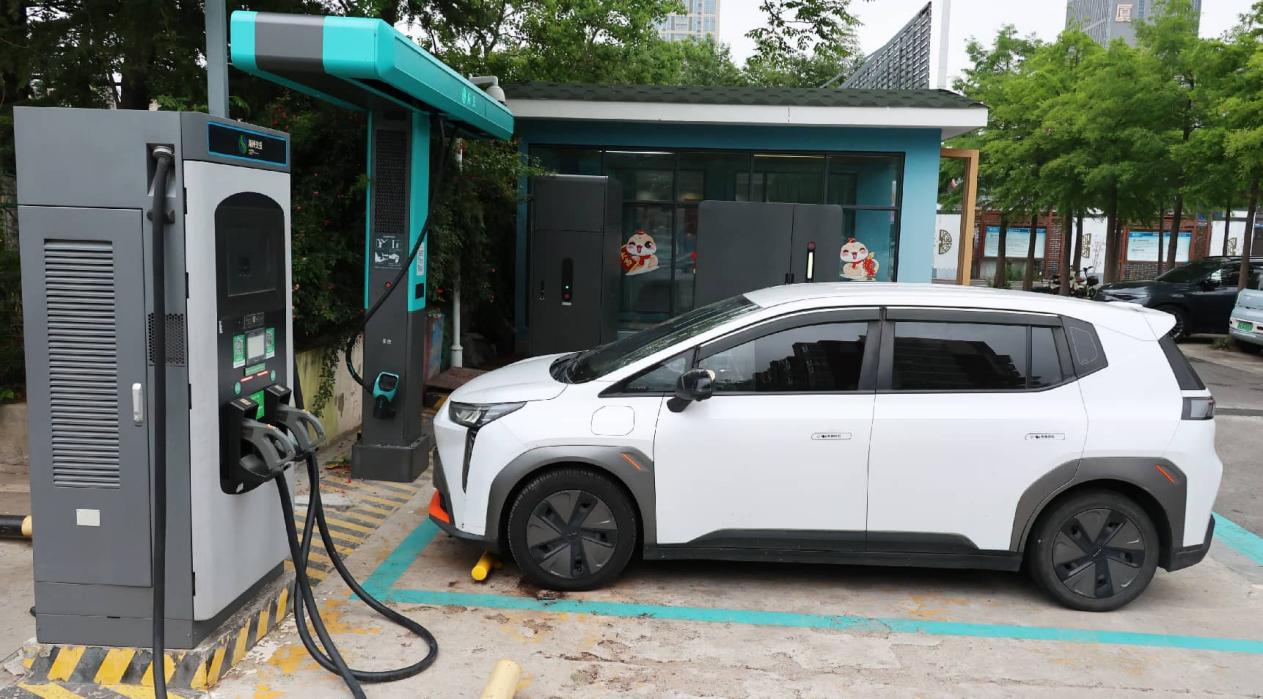
Photo shows a flash charging station at Haizhou Park in Lianyungang, east China's Jiangsu province. (Photo/Geng Yuhe)
Innovation ultimately proves its value through practical application. Since entering service, LineShine has supported research in atmospheric and ocean sciences, drug discovery, materials science, brain science, and many other fields, transforming computing power into the ability to solve real-world problems. The true value of supercomputing lies in empowering innovation across a wide range of industries.
The BeiDou Navigation Satellite System allows ocean-going fishermen to send emergency messages via short-message communication and allows farm machinery to operate autonomously with centimeter-level positioning.
Chinese-developed innovative medicines are being approved for cancer, autoimmune diseases, rare diseases, and other conditions, bringing new hope to patients. Powered by AI, the Internet of Things, and other next-generation digital technologies, cloud-based classrooms are giving children in remote mountain regions access to high-quality educational resources.
By targeting the frontiers of global science and technology, serving the real economy, meeting the country's major strategic needs, and improving people's health and well-being, China's sci-tech innovation is advancing on an increasingly solid footing.
Photos


Related Stories
- 2nd (2026) High-Tech Innovation and Development Conference held in Tianjin
- Scientists vow quicker path to applications
- Senior CPC official calls on sci-tech workers to serve country through innovation
- China honors outstanding scientists, sci-tech innovations
- In pics: Research Institute of Tsinghua University in Shenzhen, China's Guangdong
- South China's highly interconnected Greater Bay Area drives tech innovation
- How Chinese sci-tech workers drive innovation at grassroots posts
- China's innovation ecosystem creates global opportunities
- Chinese vice premier stresses deep integration of sci-tech, industrial innovation
- Innovation powers Shanghai's Changxing Island into world-class shipbuilding hub
Copyright © 2026 People's Daily Online. All Rights Reserved.
