



Embroidery improves livelihoods for rural artisans in E China's Jiangsu
In summer, 88-year-old Wang Xiuying works at a scented sachet workshop located in Mazhuang village, Jiawang district, Xuzhou, east China's Jiangsu Province.
Wang's embroidery skills were praised by Chinese President Xi Jinping when he visited the village in December 2017. Xi bought a scented sachet from Wang to show his support.
Now, more than eight years later, the annual sales of scented sachets in the village has risen from less than 2 million yuan (about $294,460) to more than 20 million yuan. In addition, a team of embroiderers with creativity, skill, and operational expertise has come together to carry the craft forward.
Among them is Sun Geyao, Wang's granddaughter, who returned to the village to start her own business after graduating from university in 2020.
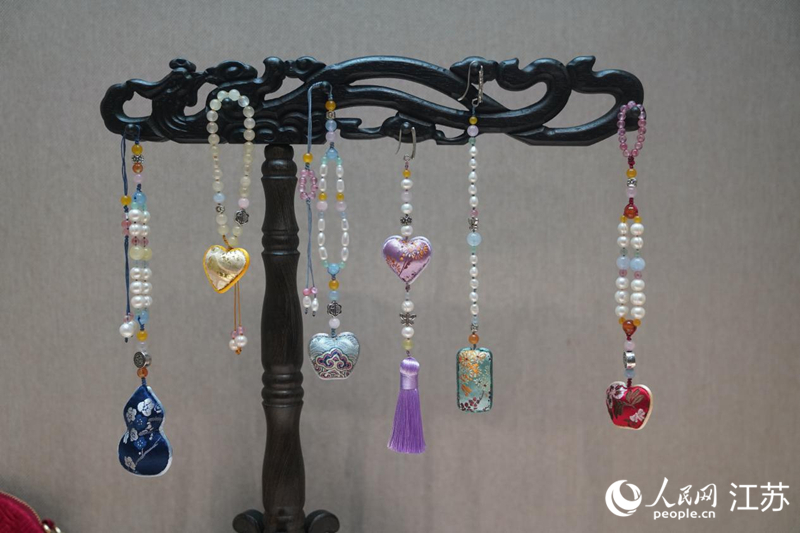
Photo shows scented sachets designed by Sun Geyao. (People's Daily Online/Ju Feng)
Over the past years, Sun has devoted much of her energy to innovation, developing scented sachets in a variety of shapes and uses, including hairpins, brooches, keychains, and phone accessories.
Since 2025, companies run by the village collective in Mazhuang village have attracted a total of six young scented sachet designers.
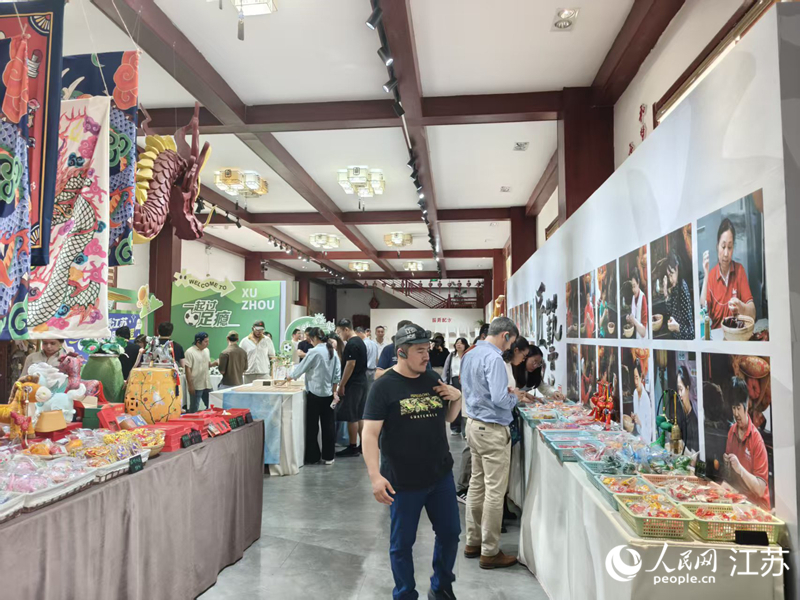
Tourists are seen at a scented sachet exhibition hall in Mazhuang village, Jiawang district, Xuzhou, east China's Jiangsu Province. (People's Daily Online/Ju Feng)
In addition to launching new designs, local companies have continuously explored "crossover" collaborations, launching co-branded products with silk companies, Zongzi (glutinous rice dumplings wrapped in bamboo or reed leaves) makers, and cultural and museum institutions, driving a surge in orders.
The scented sachet industrial park in Mazhuang village, with a total investment of around 4 million yuan, covers 6,000 square meters. Nearly 100 embroiderers work at the park.
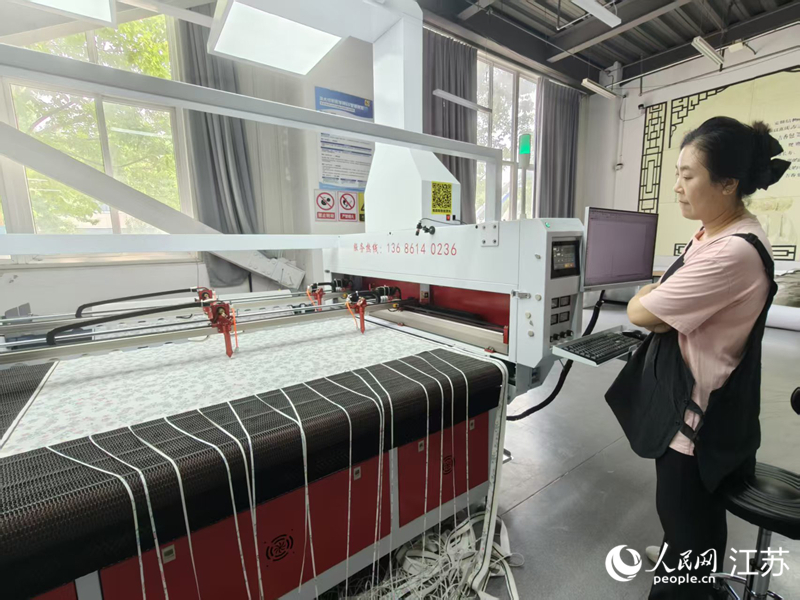
A woman operates a laser cutting machine at the scented sachet industrial park in Mazhuang village, Jiawang district, Xuzhou, east China's Jiangsu Province. (People's Daily Online/Ju Feng)
Bai Xueyan, head of the industrial park, said the industrial park operates on a model that combines machine and manual production. Fabrics are first cut and patterns are woven by machines, then embroiderers complete finishing steps such as overlocking and stuffing the sachets with herbs. In the more than half a year since the industrial park began production, it has fulfilled orders worth about 3 million yuan.
Photos
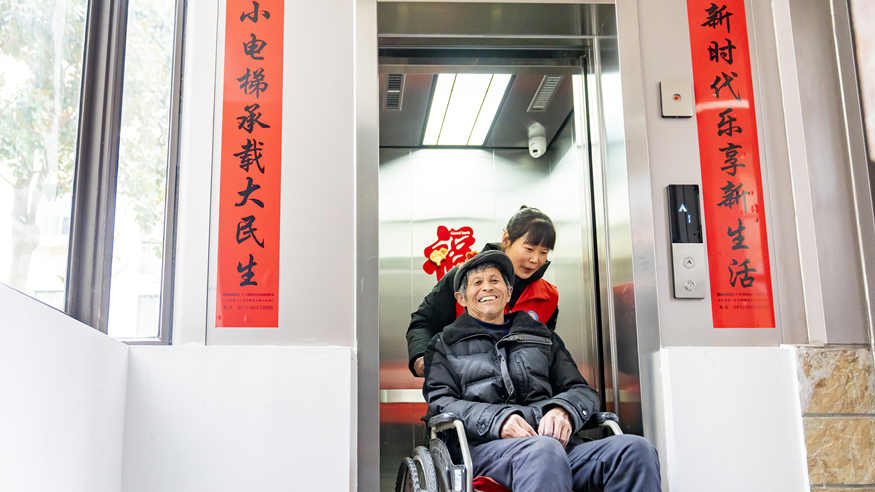 China steps up renewal of old urban residential compounds
 Night market of Xishuangbanna sees surge in visitor arrivals during summer peak tourism season
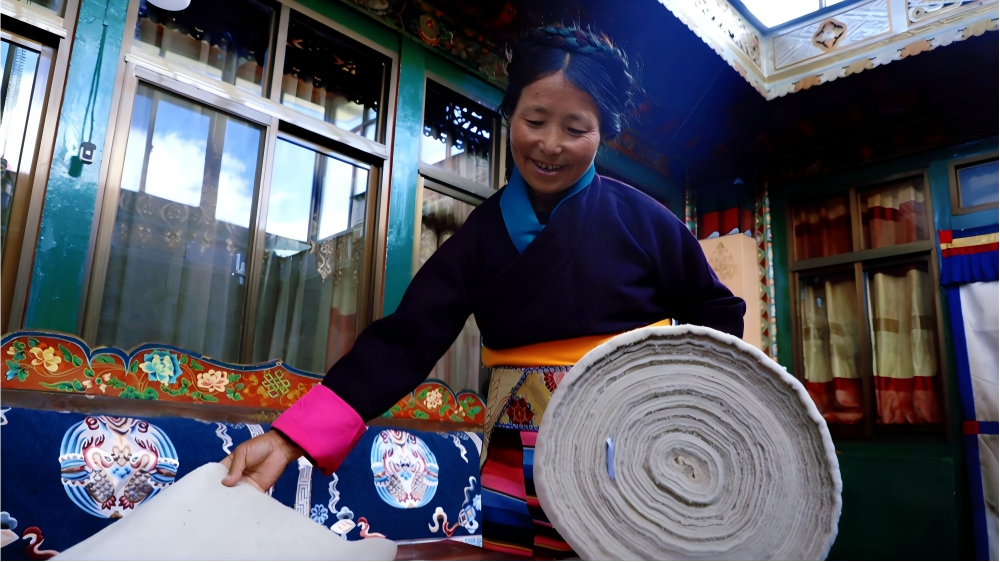 Pulu weaving tradition thrives in Kyimxi township, SW China's Xizang
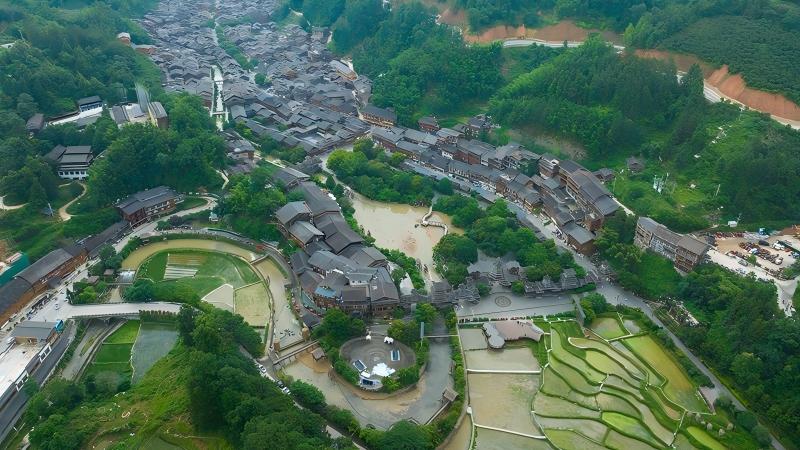 Intangible cultural heritage breathes new life into Dong village in SW China's Guizhou
Related Stories
- Pic story of Tiaohua cross-stitch embroidery in Longhui County, China's Hunan
- Handmade tiger-head bags spark demand beyond expectations in S China's Guangxi
- Dong embroidery gains nationwide recognition
- Inheritor in SW China's Yunnan breathes new life into Yi embroidery through fashion, innovation
- Yi embroidery stitches its way onto 2026 FIFA World Cup stage
- Horse tail embroidery revitalized through inheritance and innovation in China's Guizhou
- Trending in China | Tiaohua embroidery: handwoven timeless beauty
- Inheritor revitalizes Miao embroidery in SW China's Guizhou
- Ancient Yi embroidery stitches new life into rural revitalization
- Ancient Yi embroidery turns into thriving business in SW China's Yunnan
Copyright © 2026 People's Daily Online. All Rights Reserved.
