



Handmade tiger-head bags spark demand beyond expectations in S China's Guangxi
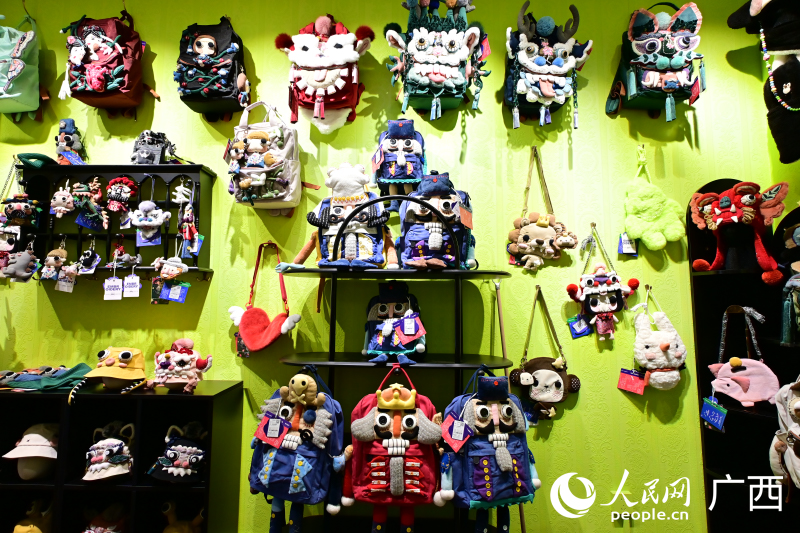
Photo shows products of the handicraft brand "Ya Xiao Qi" based in Guilin, south China's Guangxi Zhuang Autonomous Region. (People's Daily Online/Lei Qijun)
When He Jiliang, co-founder of the handicraft brand "Ya Xiao Qi" based in Guilin, south China's Guangxi Zhuang Autonomous Region, was reached for an interview, he was on the phone turning down an overseas order.
As China's mid-year "618" shopping festival swung into full swing, the brand bucked the trend and went quiet — suspending its livestreams and pausing online sales.
More than 10,000 "tiger-head bags," a traditional children's accessory reimagined as a fashion item, are still owed to customers, and the embroiderers need at least three months to work through the backlog, He said.
The craze began in May, when a tiger-head bag priced at 338 yuan (about $49.88) sold out overnight and orders stretched through September. The brand's other offerings — tiger-head hats, lion-dance helmets and embroidered backpacks — have since attracted orders from home and abroad.
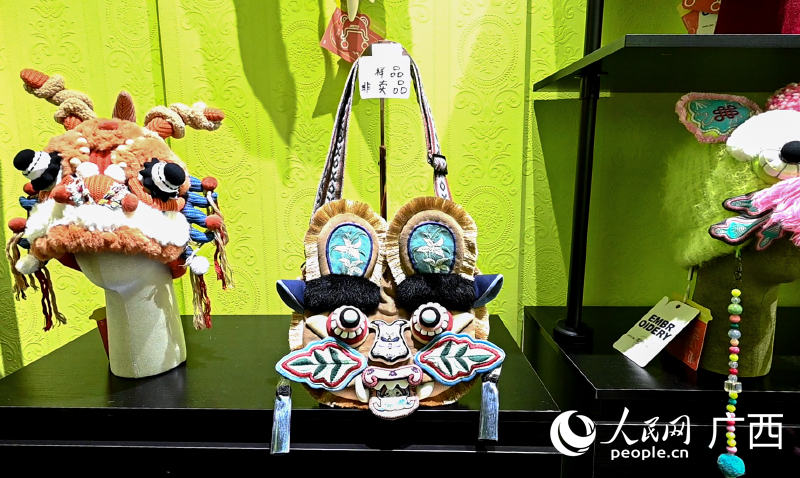
Photo shows a tiger-head bag of the handicraft brand "Ya Xiao Qi" based in Guilin, south China's Guangxi Zhuang Autonomous Region. (People's Daily Online/Lei Qijun)
The bottleneck lies in the hands of the embroiderers. "The three-dimensional structure cannot be sewn by machine — it has to be done by hand," He explained. Each bag takes an embroiderer roughly a week to complete.
The brand's more than 300 embroiderers, mostly women aged 30 to 50, including stay-at-home mothers, work in workshops across Lingchuan, Longsheng and Pingle counties in Guilin.
In one workshop, embroiderer Dou Hanfei works without a template, adjusting each stitch by feel — unpicking seams when a detail is off and adding filling when it feels loose. "If it doesn't look alive, it isn't done," she said.
For Dou, each piece needs a "soul." The work earns her around 5,000 yuan a month. "It's far better than working in a factory away from home — and, more importantly, I get to do what I love," she said.
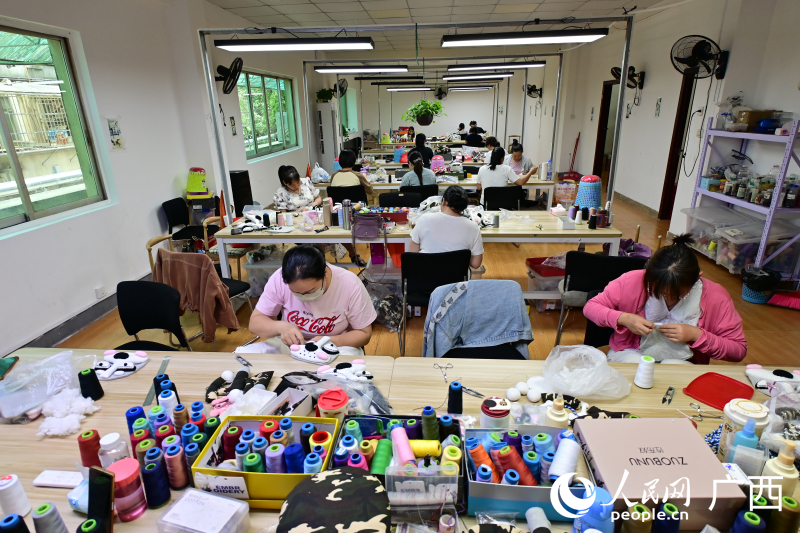
Embroiderers work on handcrafted products in a workshop in Guilin, south China's Guangxi Zhuang Autonomous Region. (People's Daily Online/Lei Qijun)
The tiger-head bag may fade from fashion, but intangible cultural heritage craftsmanship, traditional Chinese aesthetics and cultural confidence never go out of style, He said. "We're not chasing scale — we just want steady work that keeps our embroiderers employed and earning an income."
Across Guangxi, women's federations and other government bodies have been creating opportunities for women in mountainous areas to find flexible employment close to home by certifying intangible cultural heritage workshops, offering skills training and connecting artisans with e-commerce platforms.
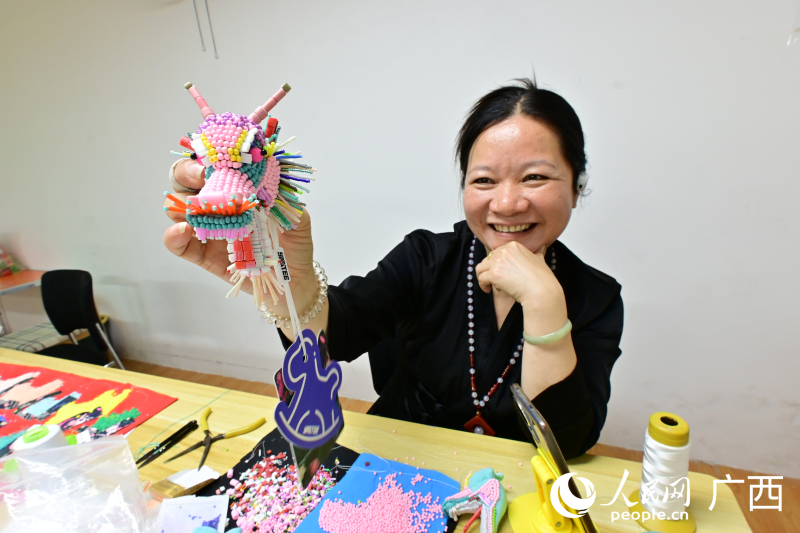
Dou Hanfei, an embroiderer, displays a dragon-head brooch in a workshop in Guilin, south China's Guangxi Zhuang Autonomous Region. (People's Daily Online/Lei Qijun)
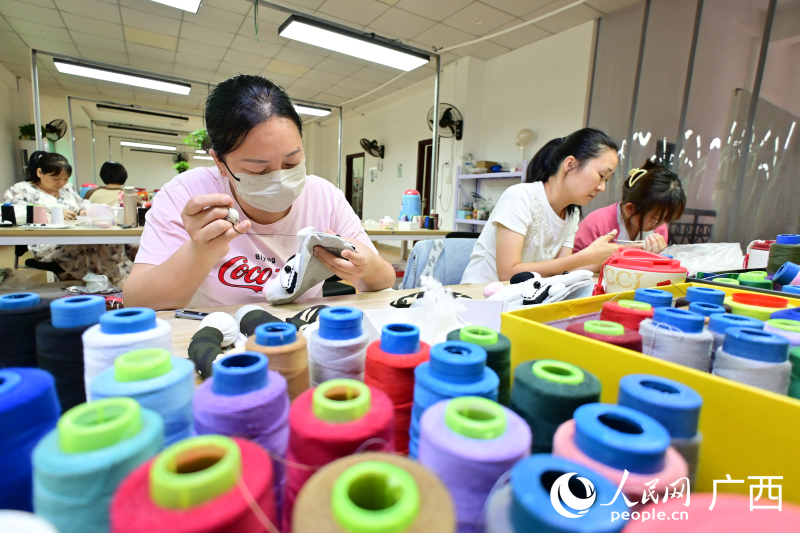
Embroiderers work to fulfill orders in a workshop in Guilin, south China's Guangxi Zhuang Autonomous Region. (People's Daily Online/Lei Qijun)
Photos




Related Stories
- Dong embroidery gains nationwide recognition
- Inheritor in SW China's Yunnan breathes new life into Yi embroidery through fashion, innovation
- Yi embroidery stitches its way onto 2026 FIFA World Cup stage
- Horse tail embroidery revitalized through inheritance and innovation in China's Guizhou
- Trending in China | Tiaohua embroidery: handwoven timeless beauty
- Inheritor revitalizes Miao embroidery in SW China's Guizhou
- Ancient Yi embroidery stitches new life into rural revitalization
- Ancient Yi embroidery turns into thriving business in SW China's Yunnan
- Artisan devoted to preserving Lu embroidery in E China's Shandong
- College students reinvigorate traditional Yi embroidery in SW China's Yunnan
Copyright © 2026 People's Daily Online. All Rights Reserved.
