Wuhu takes off: Where ancient craft meets the future of industry
By Su Yingxiang, Alvaro Lago, Zhang Kaiwei, Zhao Mengying, Aerdake (
People's Daily Online)
14:36, June 04, 2026
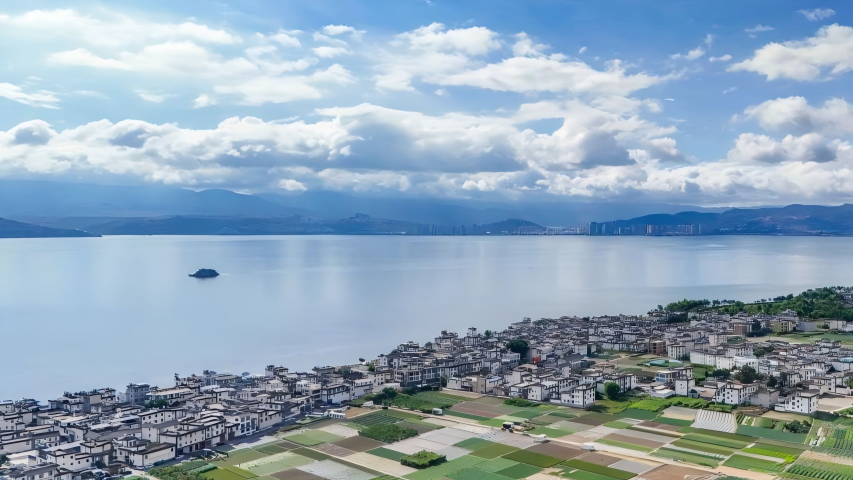
Located at the confluence of the Yangtze River and the Qingyi River, Wuhu in east China's Anhui Province has long been shaped by the culture of southern Anhui and built on a solid industrial foundation. As one of China's major industrial cities, Wuhu has undergone a remarkable transformation from traditional manufacturing to emerging modern industries. From cultural heritage to industrial innovation, "Wuhu takes off" — a Chinese internet slang phrase that sounds like cheering "Woohoo! Let's go!" and expresses excitement about things going well — perfectly captures the city's rapid rise.
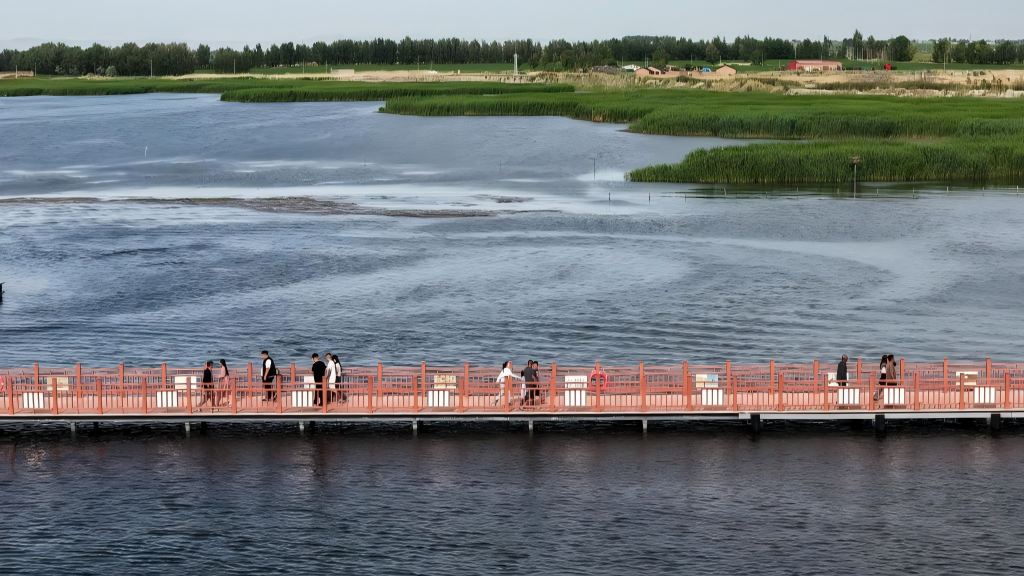
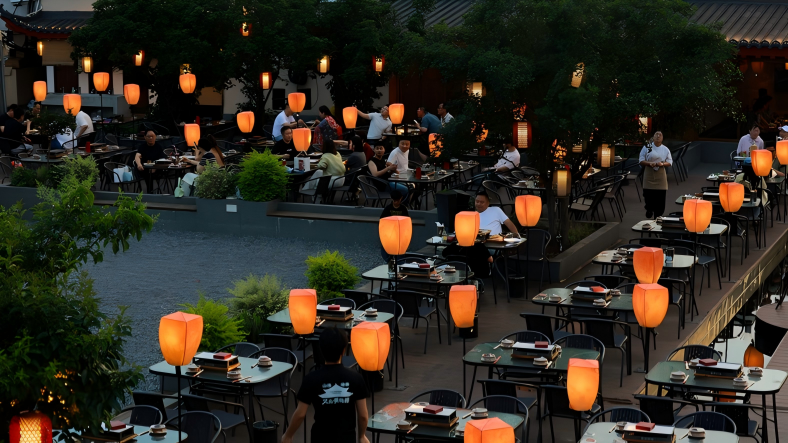
Where the city meets the water, life slows to a gentler rhythm.
On street corners, freshly roasted red-skinned duck glistens under the light. A drizzle of savory-sweet sauce brings out the rich aroma of the meat. Locals and tourists alike line up to enjoy the delicacy.
The alleys of Wuhu Ancient City are even livelier. At the stall of dough figurine artist Wang Jingyang, visitors often stop to watch. With skillful movements of his fingers, cartoon characters gradually come to life, attracting young people eager to customize their own figurines. Traditional dough modeling, an intangible cultural heritage, has found a new form of expression.
Inside an iron painting studio, Dan Weixiang, a young artisan and founder of Wuhu Huiyifang Iron Painting Crafts Co., Ltd., works carefully alongside his apprentices. In Wuhu iron painting, artisans use hammers as brushes and iron as ink. Hard sheets of iron are transformed into artworks that combine strength and delicacy, reflecting the bold yet graceful character of the people of Wuhu.
As night falls, the ancient city occasionally hosts fish lantern performances. In Wuwei, a county-level city under Wuhu's jurisdiction, Ren Juntang, 82, a national-level intangible cultural heritage inheritor, is compiling his decades of expertise into a book. Every week, he also teaches students at the fish lantern club of Wuhu Cable Industry School. He said he hopes to pass on more than 60 years of experience to younger generations. "I want generation after generation of Wuwei people to keep performing with undying passion," he said.
The city's pride and resilience extend beyond its arts.
In 1999, Chery Automobile was founded on a barren riverside plot in Wuhu. Today it is a Fortune Global 500 company with an active overseas presence. On average, a Chery vehicle is shipped abroad every 23 seconds.
"Since launching our export business in 2001, we have ranked first in exports among Chinese passenger car brands for 23 consecutive years and now serve 6 million overseas customers," said Xu Qingsong, deputy general manager of Chery International.
And it is not just automobiles. Robots developed by Chery's AiMOGA brand have also become part of daily urban life. From intersections to high-speed railway stations, intelligent robots help ensure safe travel for residents — a striking symbol of Wuhu's smart city ambitions.
Many see Shanghai as the hub for large aircraft and Wuhu as the center for smaller ones. The low-altitude economy is rapidly becoming another defining feature of the city.
From engines and propellers to aircraft manufacturing and avionics systems, Wuhu has built a complete low-altitude aviation industrial chain. "Today, a general aviation aircraft can be fully produced without leaving the industrial park," said Xiong Lingyi, deputy director of the Aviation Industry Development Service Center in Wanzhi district.
In Wuhu, even small villages have taken to the skies. Yongxing Village collectively purchased a sightseeing aircraft for tourism. Wang Yuzheng, founder of the Eastern Flight Valley aviation camp, grew up there. The first time he saw his hometown from the air, he was overwhelmed with pride. "The low-altitude economy has transformed my hometown and created new opportunities for development," he said.
Supported by that industrial foundation, Wuhu Shenshan Cultural and Technology Industrial Park is cultivating new forms of low-altitude cultural tourism. Through tourist flight routes and a range of aviation experience programs, the city is integrating the low-altitude economy with cultural and tourism consumption.
Traditional intangible cultural heritage is thriving, new energy vehicles are reaching global markets, intelligent robots are serving everyday life and rural aviation is helping dreams take flight. "Wuhu takes off" is more than an internet catchphrase — it reflects the city's comprehensive development strength. When the propellers start to spin, what rises into the sky is not only aircraft, but the dreams of countless people in Wuhu.
(Web editor: Zhang Kaiwei, Wu Chengliang)