



A Chinese professor who came to village service in rural Beijing
In late March, the hillsides around Dongshaoqu village in Beijing were blanketed with peach and apricot blossoms. Delicate pink and white petals drifted gently onto the windowsills of the village school, the quiet courtyard of an elderly woman's home, and the freshly tilled soil of the spring fields.
Yet Li Quansheng, first secretary of the village, had little time to admire the flowers. At 51, dark-skinned and slender, a man of few words, he had already spent two years in this peaceful village in Miyun district. Sent from Beijing Foreign Studies University, the villagers affectionately call him "Teacher Li." Before long, he had become one of their own.
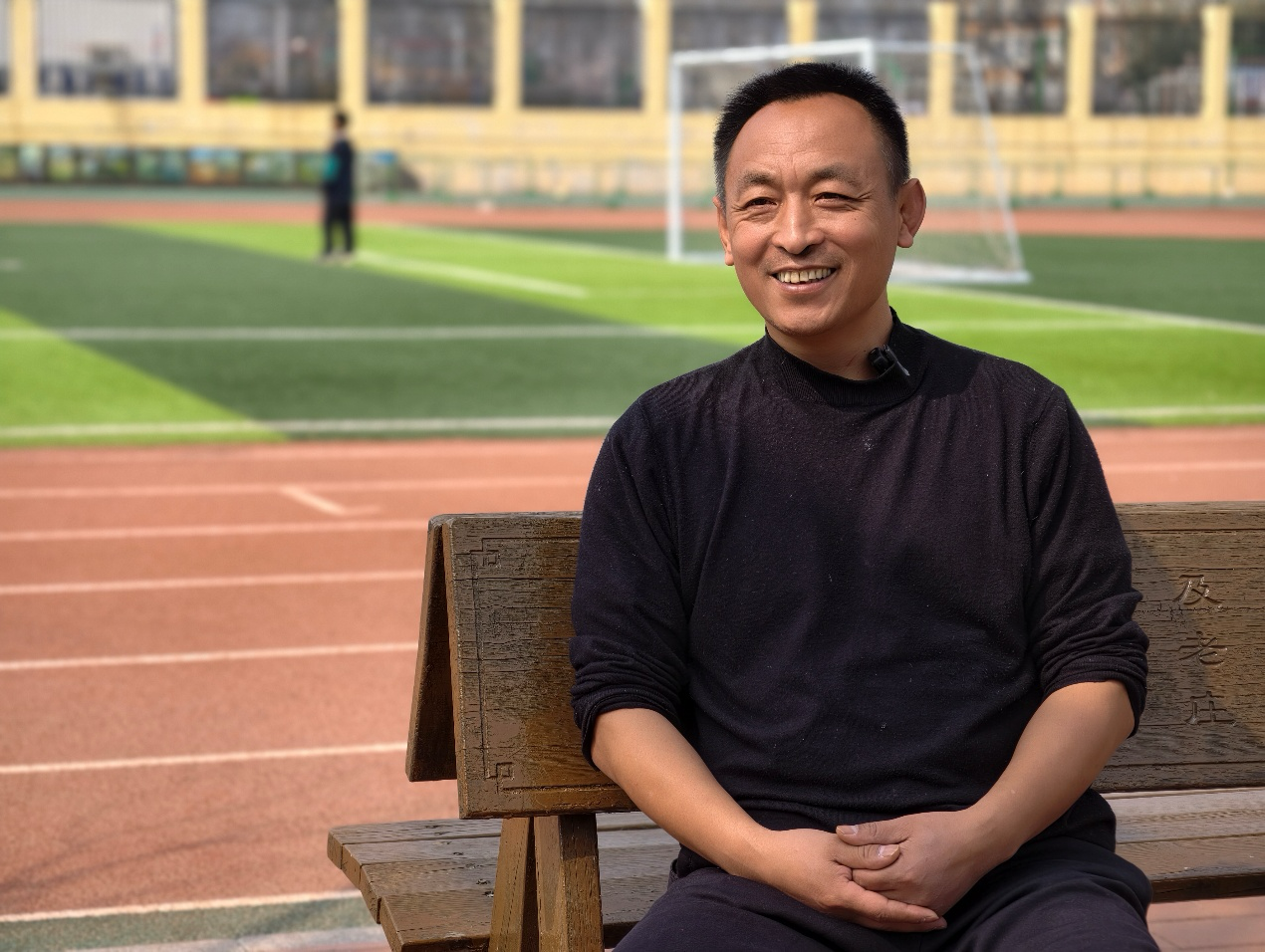
Li Quansheng is interviewed by People's Daily Online at Dongshaoqu Primary School, Miyun district, Beijing. (People's Daily Online/Chang Sha)
Across China, countless people are engaged in the same cause. They are known as "first secretaries"—dedicated cadres dispatched from government departments, universities, and state-owned enterprises to rural villages. Their mission is to help develop local industries and improve the lives of the people.
"I was born in the countryside," Li said. "My greatest wish has always been to help our fellow villagers live better lives."
Teacher Li's PE class
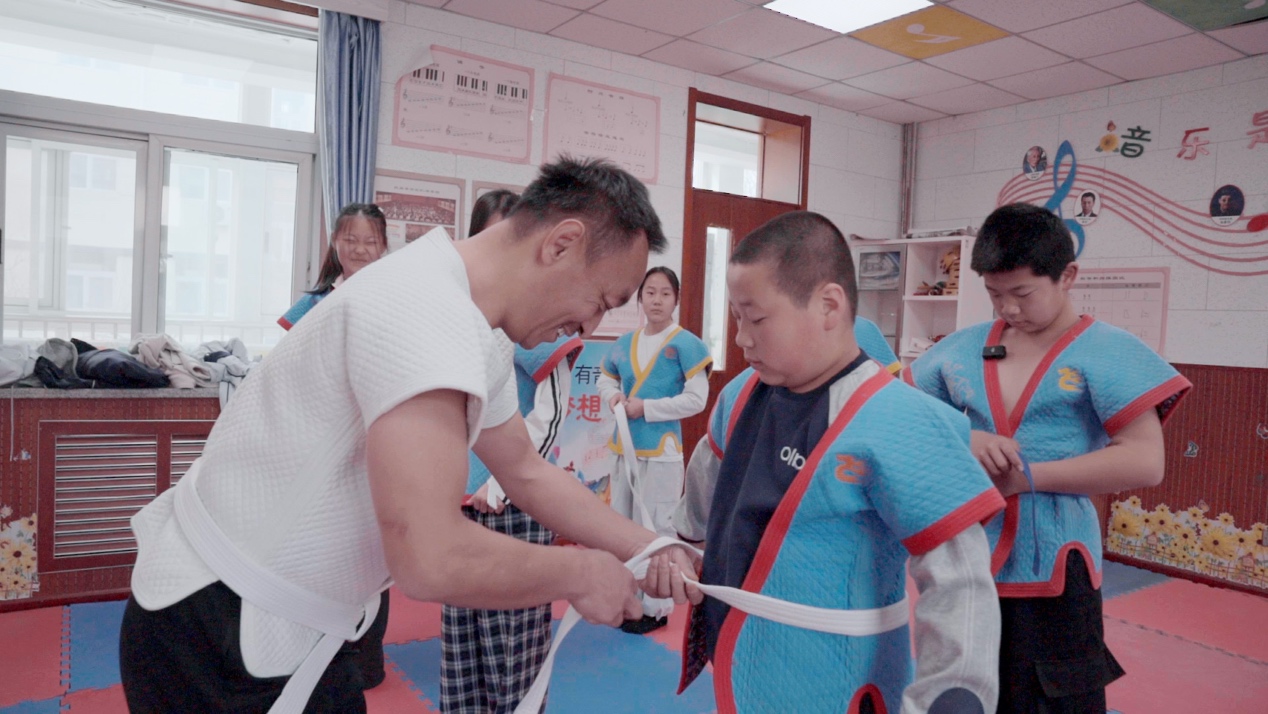
Li Quansheng teaches a Jiao Di for children at Dongshaoqu Primary School, Miyun district, Beijing. (People's Daily Online/Peng Yukai)
Li's day begins at the village primary school.
For more than 20 years, Li taught jiaodi, an ancient Chinese-style of wrestling, at Beijing Foreign Studies University. He had even introduced the traditional sport to schools in Hungary and Poland. Now he was bringing it to the children of Dongshaoqu as well.
The bell rang, and eight children in matching training suits were already waiting. The moment Li walked in, they crowded around him excitedly. 10-year-old Zhang Hongyi proudly showed off a new move, his face beaming.
"This boy used to be really shy," Li said with a smile. "Now he waves at me on the street and shouts 'Teacher Li!' whenever he sees me. That's the best part of my whole day."
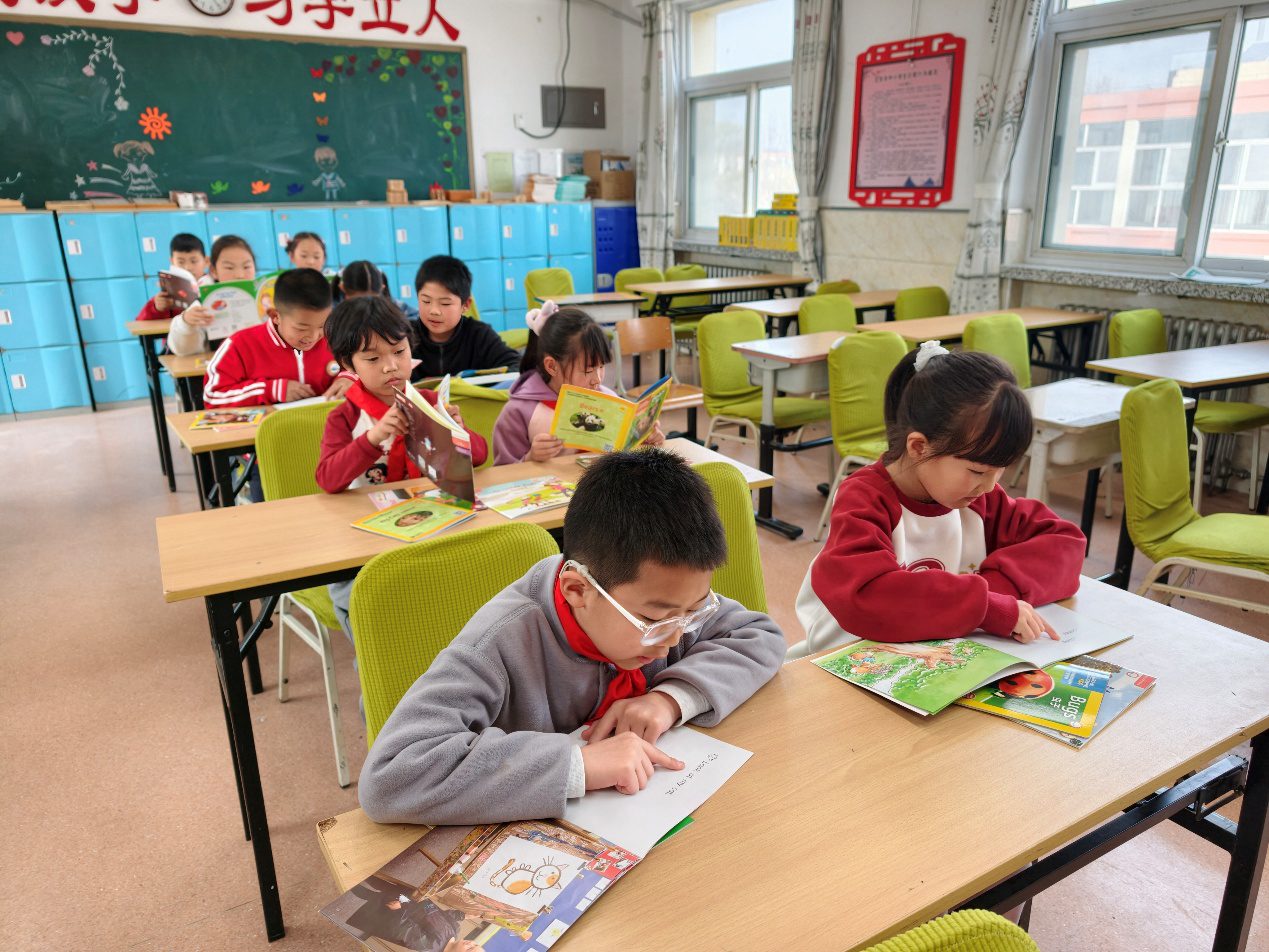
Children at Dongshaoqu Primary School read English picture books, Miyun district, Beijing. (People's Daily Online/Chang Sha)
Next door, a dozen children sat quietly reading English books donated through Li's university contacts. Guo Hongyan, vice principal of Dongshaoqu Primary School who grew up in the village and chose to stay, put it simply: "The biggest difference between city and rural children lies in the breadth of their horizons. Teacher Li has brought new ideas and a wider world to our village."
A little girl looked up from her book and said softly, "My English is getting better. One day, I'll talk to foreigners and tell them about my home."
It is people like Teacher Li—part of hundreds of thousands of first secretaries across China—who quietly bring better education and fresh opportunities to rural areas, planting seeds of hope that will one day grow strong.
A homemade lunch and a road
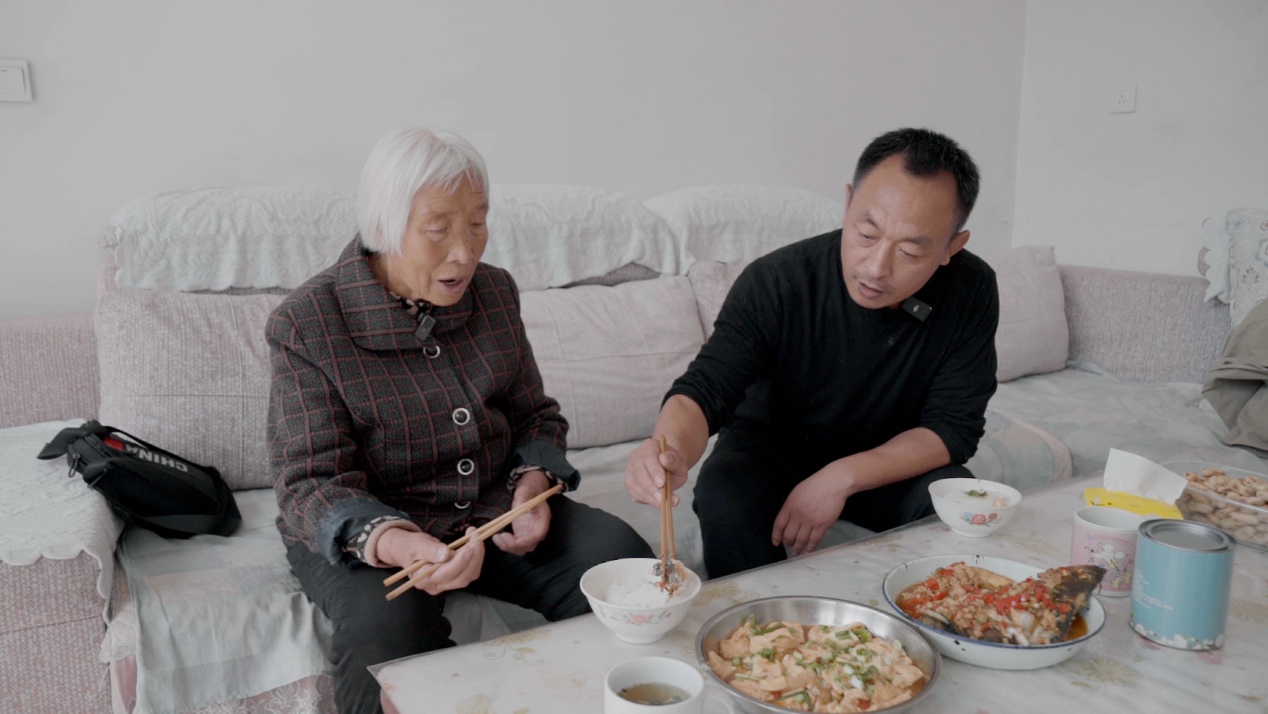
Li Quansheng visits Diao Shufang, an elderly resident living alone in Dongshaoqu village, Miyun district of Beijing, and cooks lunch for her. (People's Daily Online/Peng Yukai)
After class, Li bought a fresh fish and some tofu. He was heading to the home of 81-year-old Diao Shufang, a widow who lived alone, to cook lunch for her.
Diao has spent her entire life in the village. She especially loved the mountain apricot blossoms in spring. Her children had urged her to move to the city with them, but she couldn't bring herself to leave.
"I've lived in this house for decades," she would tell them. "If I go, who will look after it?"
Li greeted her warmly and went straight into the kitchen. Diao leaned against the doorframe, chatting with him as he worked.
"Auntie, we're fixing the village roads," Li said while cooking. "By May, they should be much smoother. Then you'll be able to get out more easily."
"What matters most to us villagers are the roads," she replied. "My children worry I'll fall. Once the roads are fixed, I won't have to stay cooped up at home."
The new road Li has planned will break ground in May. For an elderly woman with unsteady legs, it means she can finally step outside with confidence—to sit in the sunshine, visit her neighbors, or simply enjoy the blossoms once again.
They sat down together to eat. Li apologized for not visiting more often.
Diao waved her hand gently. "When you're alone, the days feel long and lonely. But when you come by, my heart feels full of joy."
"Auntie, we'll come see you more often," Li promised.
"How could I ever mind?" she said with a smile. "I hope you visit even more. Your term here is almost over, and I really don't want you to leave."
"If you miss me, I'll still come back after my term ends," he replied.
Tomatoes, videos, and spring plowing
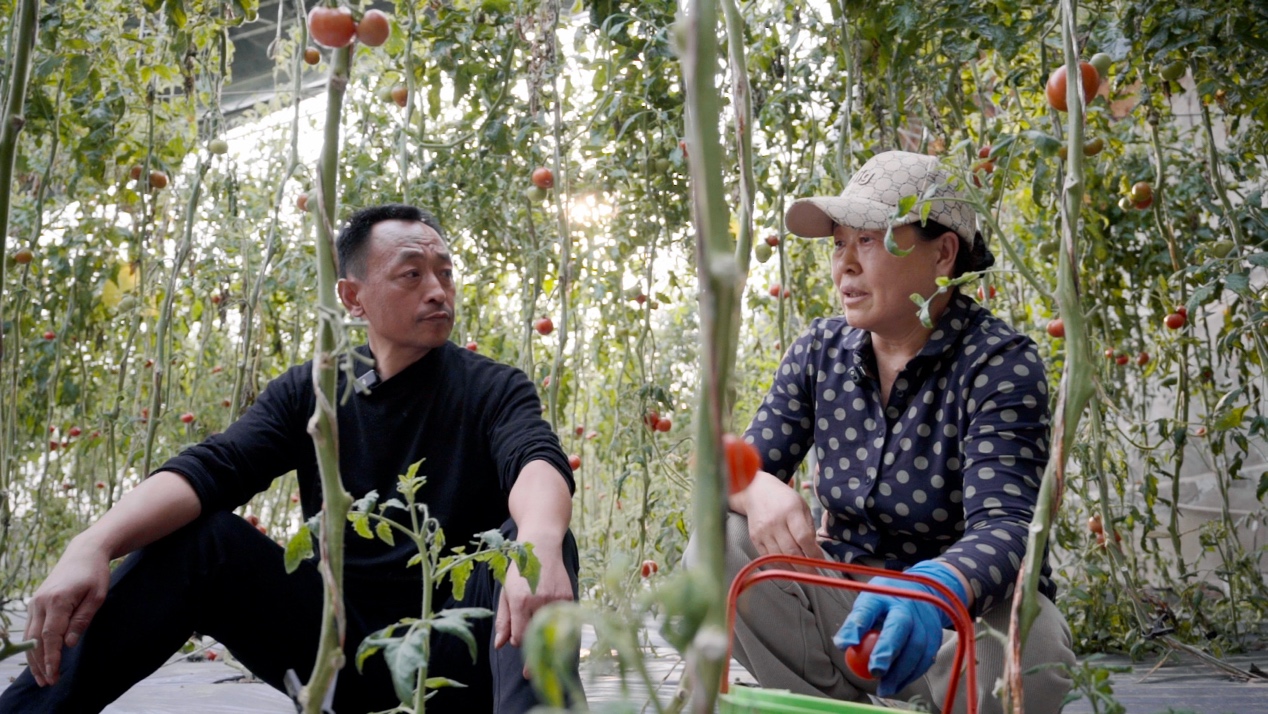
Li Quansheng discusses ways to expand tomato sales with farmer Jia Hailian in Dongshaoqu village, Miyun district, Beijing. (People's Daily Online/Zhang Rong)
That afternoon, Li made his way to the village greenhouses.
Agriculture has always been the backbone of Dongshaoqu. The tomatoes grown here are exceptional—pesticide-free and naturally pollinated by bumblebees. Yet most of the farmers are over 60 and unfamiliar with the internet, so finding buyers has long been a challenge.
Sixty-one-year-old Jia Hailian was hard at work inside her tomato greenhouse. Li squatted down beside her and began helping pick the ripe fruit.
"The yield is good this year," she sighed, "but the price just isn't there."
Li had an idea. He started making short videos: close-ups of the plump tomatoes still on the vine, bumblebees buzzing busily among the flowers, and Jia's figure bent over as she harvested. He posted the clips online. Gradually, they began to attract attention.
Even Olympic swimming champion Luo Xuejuan tried the tomatoes and helped promote them. Before long, some of Li's former students from Beijing were coming out to the village to offer advice and buy produce directly.
After leaving the greenhouse, Li walked over to a nearby field where Cheng Baijiang, a straightforward and hardworking farmer, was spreading manure. Over the past two years, Li had helped him many times, and the two had become good friends.
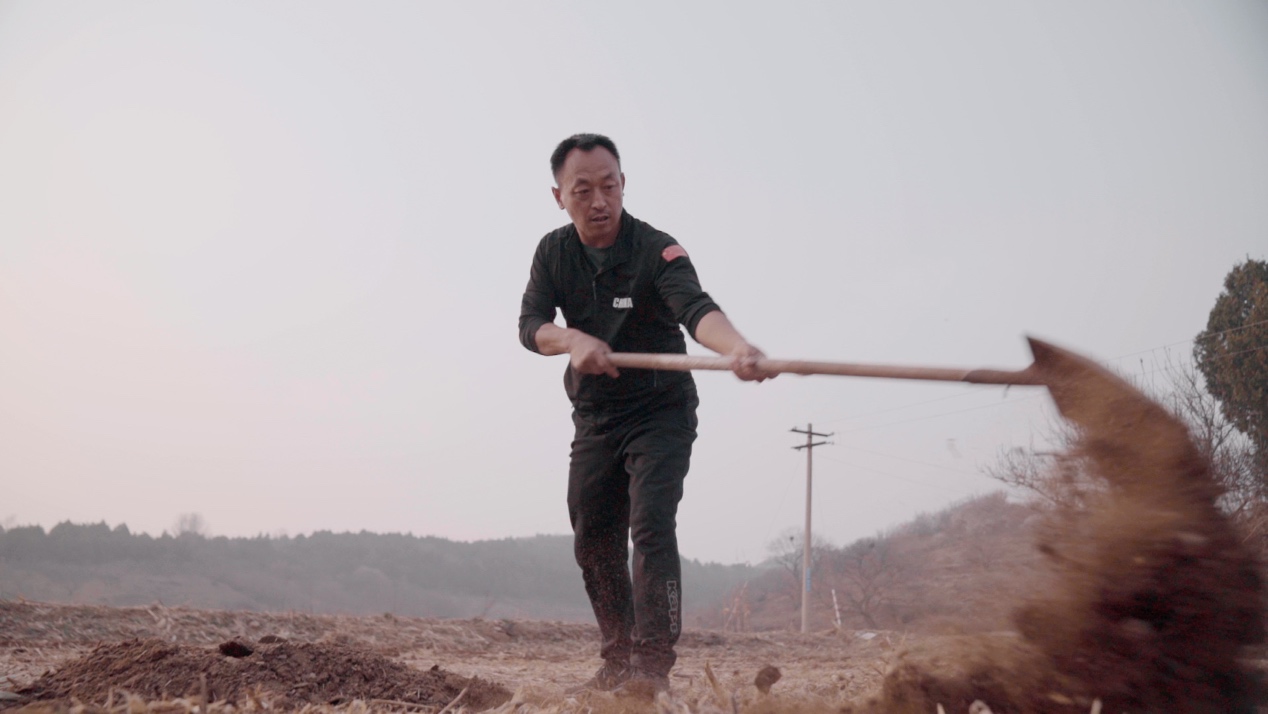
Li Quansheng participates in spring plowing and farming with villagers in Dongshaoqu village, Miyun district, Beijing. (People's Daily Online/Zhang Rong)
Li rolled up his sleeves and joined in. Side by side, they worked steadily, scattering the fertilizer evenly across the soil.
One day the previous September, while Li was working in this same field, a villager paused to watch. "Back in the old days," the man said, "cadres used to roll up their sleeves and work alongside the farmers in the fields. You don't see that much anymore."
"That comment stayed with me," Li recalled. "Village work has to be rooted in the grassroots. You have to get your hands in the soil and truly listen to the farmers. That's the only way to serve the people well."
As the afternoon sun dipped lower, it cast long shadows across the field. The rich earth lay ready, quietly waiting for the seeds of spring.
A 120,000-word answer
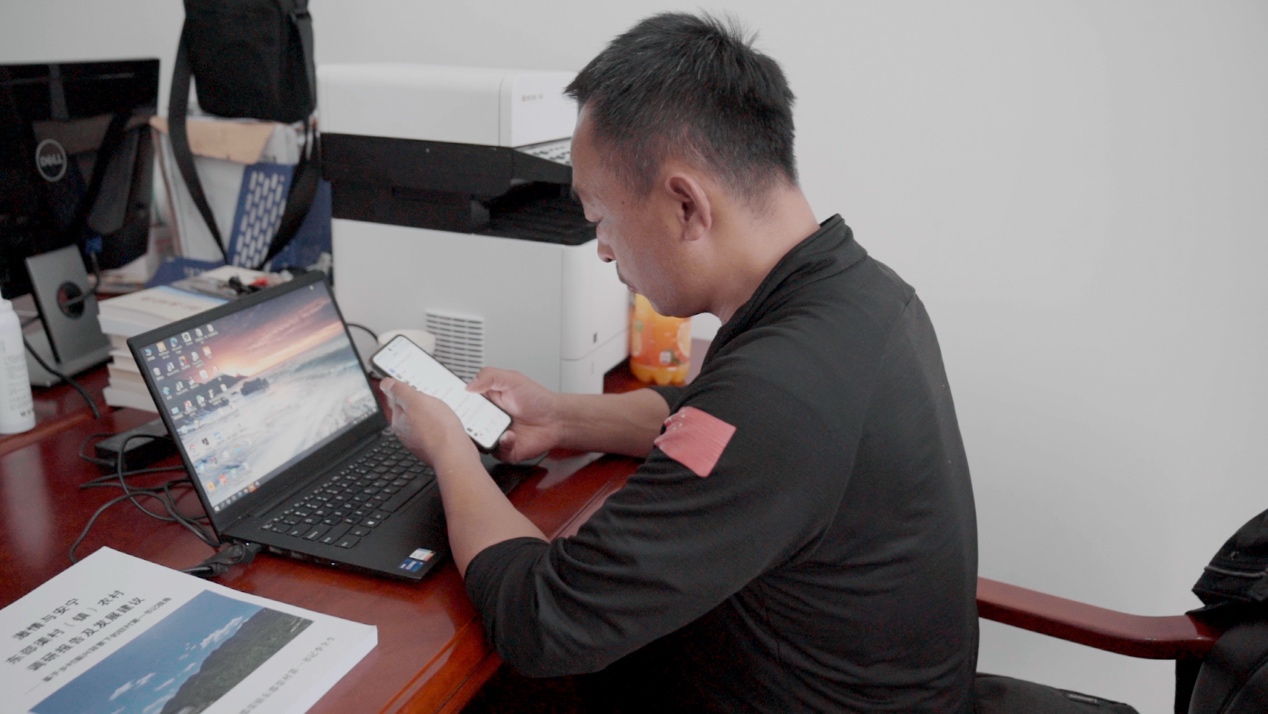
Li Quansheng compiles his two years of working experience in Dongshaoqu village, Miyun district of Beijing, into a 120,000-word research report. (People's Daily Online/Zhang Rong)
At the end of the day, Li returned to his modest office. On the desk lay a 120,000-word research report—two years of painstaking field visits, careful problem analysis, and detailed village data.
His two-year term was drawing to a close. He hoped to hand the report over to the next first secretary, so the work could continue without interruption.
"The flowers bloom every spring," he said quietly, "but ensuring that our 1,986 villagers live better lives is a responsibility that cannot wait even a single day."
As the sun set behind the hills of Dongshaoqu village, another spring was quietly taking hold across the land.
Photos
Related Stories
Copyright © 2026 People's Daily Online. All Rights Reserved.
