



Farmers market in Shandong draws over 100,000 visitors per day
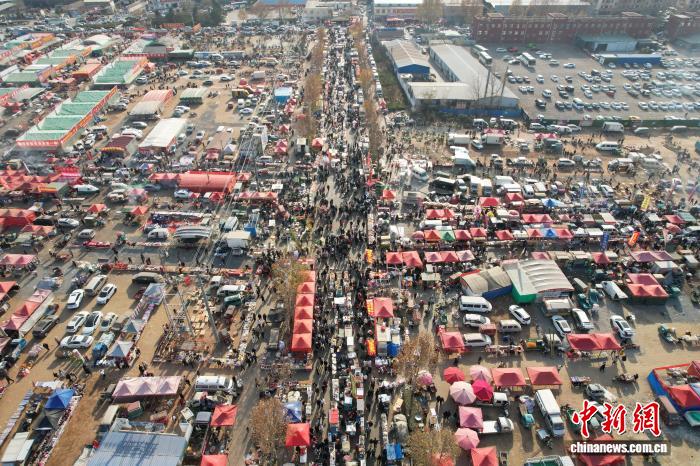
Aerial photo taken on Dec. 8, 2025 shows a bustling scene of Caowa Market in Linshu county, Linyi city, east China's Shandong Province. (China News Service/Wang Feng)
Each market day at Caowa Market, a sprawling farmers market in east China's Shandong Province, draws more than 100,000 visitors and generates over 400 million views online, with sales reaching 5 million to 6 million yuan (about $707,000 to $848,000). Tourists from provinces including Jiangsu and Anhui drive there to shop and sample local delicacies.
Caowa Market is located in Linshu county, Linyi city, in southern Shandong, adjacent to Jiangsu Province. The market has been a local tradition for over 50 years.
Covering 170 mu (about 11.3 hectares), the market is home to more than 2,000 stalls, with over 5,000 people working on site.
The food is affordable. Pan-fried buns sell for 0.5 yuan apiece, featuring golden, crispy exteriors that give way to juicy fillings. A bowl of mutton soup costs 20 yuan, and a generous serving of savory sauce pancakes goes for 5 yuan.
"I barely spent anything, yet I'm carrying more than I can handle — enough to last a week," one visitor marveled.
The dazzling array of goods, including stone-ground flour, whole grains, coarse cereals, cotton clothing and potted plants, keeps many shoppers too busy buying to bother haggling.
On social media platforms, the hashtag "experience the vitality of daily life at Linshu's Caowa Market" has trended several times. While urbanites hold up their phones, exclaiming over bubbling mutton soup and pan-fried dumplings shaped like golden ingots, vendors weigh purchases and habitually toss in an extra portion. Drawn by honest pricing and mouthwatering aromas, city dwellers are falling in love with this vibrant yet heartwarming marketplace.
At the market, the 1,400-year-old craft of willow weaving has transformed from a static museum exhibit into handcrafted baskets for daily use. Opera performances held every market day on an open-air stage turn the venue into a folk theater without walls. Revolutionary stories bring the culture of the Yimeng Mountains within reach. This has become more than a farmers market — it is a "living museum" where visitors can explore the folk culture of the Yimeng Mountains.
To accommodate the surge of cross-provincial visitors, local authorities have expanded three parking lots. Restrooms have been installed on-site, and mobile signal towers have been added. Meanwhile, staff members use megaphones to broadcast reminders about price and quality standards.
"The market has become a tourist destination," said one visitor. "The atmosphere is incredibly lively — it brings back childhood memories of going to markets," said another.
With average spending of around 50 yuan per visit, the market unlocks remarkable consumption potential.
One pan-fried bun stall sells 100 batches per market day, earning 7,000 yuan. The most popular rice cake stall sells 2 tonnes per market day, bringing in 30,000 to 40,000 yuan. A mutton vendor who opens at 3 a.m. now sells over 200 kilograms of meat daily.
Caowa Market offers a vivid model for the transformation and upgrading of farmers markets.
Late last year, the Ministry of Commerce, the All China Federation of Supply and Marketing Cooperatives and seven other departments issued guidelines calling for the renovation and upgrading of "thousands of markets and tens of thousands of stores." The plan aims to cultivate 500 leading counties in rural commerce nationwide and renovate 5,000 markets at the township and town levels.
Photos


Related Stories
Copyright © 2026 People's Daily Online. All Rights Reserved.
