



From leaders to locals, openness shapes APEC in Shenzhen
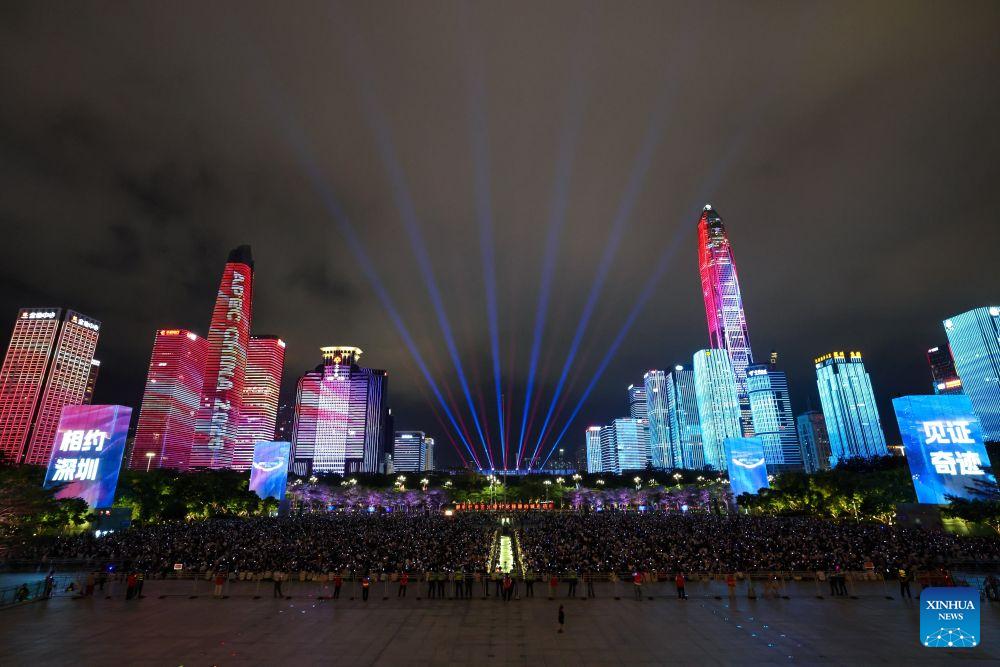
This photo taken on Nov. 15, 2026 shows a night view in Futian District of Shenzhen, south China's Guangdong Province. The city has been adorned with flowers and lush greenery, with APEC elements integrated into the cityscape. (Xinhua/Liang Xu)
On the final day of Asia-Pacific Economic Cooperation (APEC) Economic Leaders' Week, the press center was a mix of deadlines and goodbyes. Reporters bent over laptops finishing their last stories, while others stopped to say farewell to colleagues they had met only days earlier, trading contacts and promises to stay in touch. Journalists from around the world had spent the week working side by side, and the atmosphere felt a lot like the meeting itself: open, and hopeful about what talking to one another can achieve.
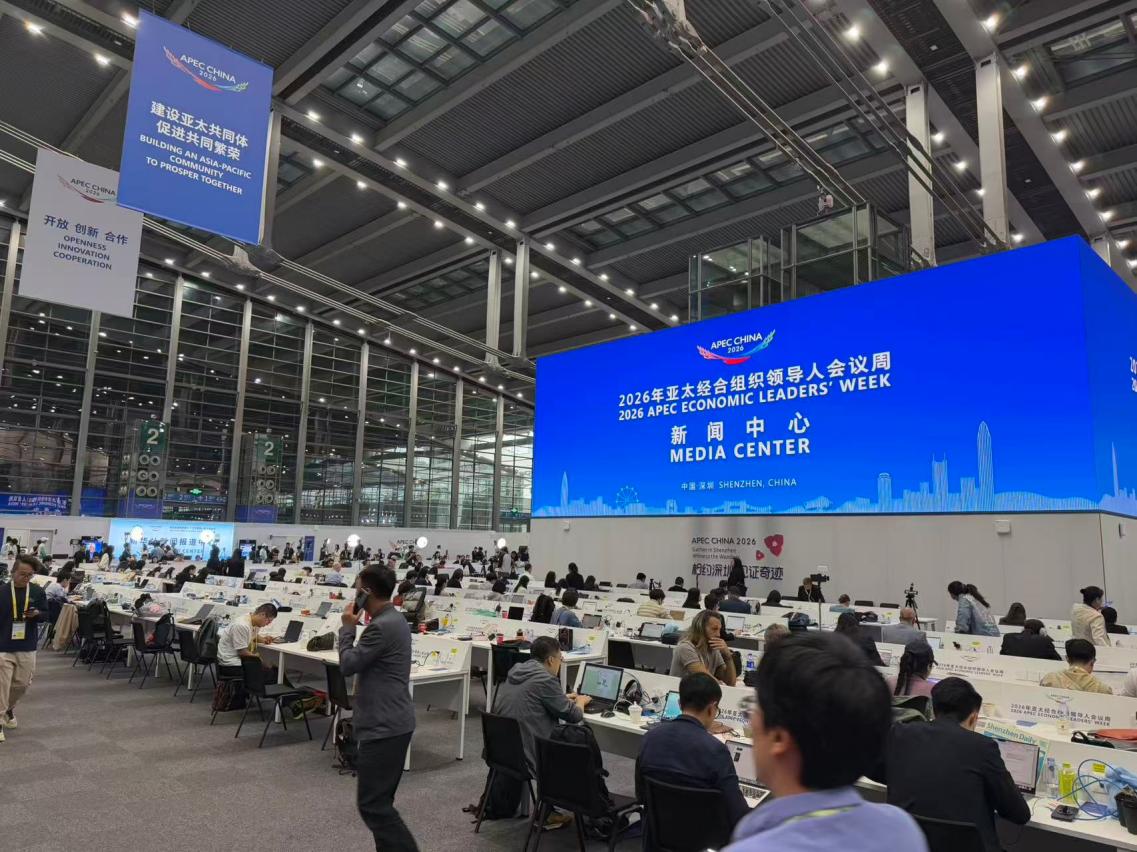
A view of the 2026 APEC Economic Leaders' Week Media Center in Shenzhen, south China's Guangdong Province, Nov. 19, 2026. (People's Daily Online/Michael Kurtagh)
This was the first time in 12 years that China had hosted the APEC Economic Leaders' Meeting. Leaders and representatives from APEC's 21 member economies gathered in Shenzhen, south China's Guangdong Province, under the theme "Building an Asia-Pacific Community to Prosper Together," with openness, innovation and cooperation as the three priorities of China's host year.
At the leaders' table, the conversation matched the theme. At a welcome banquet on Nov. 18, Chinese President Xi Jinping described openness as being "in Shenzhen's DNA," tracing the city's transformation from a remote border town into an international metropolis. At the leaders' meeting the following day, he called for upholding openness and integration in building an Asia-Pacific community, announcing that China would provide $20 million to support APEC practical cooperation and establish a center for Asia-Pacific community studies in Shenzhen.
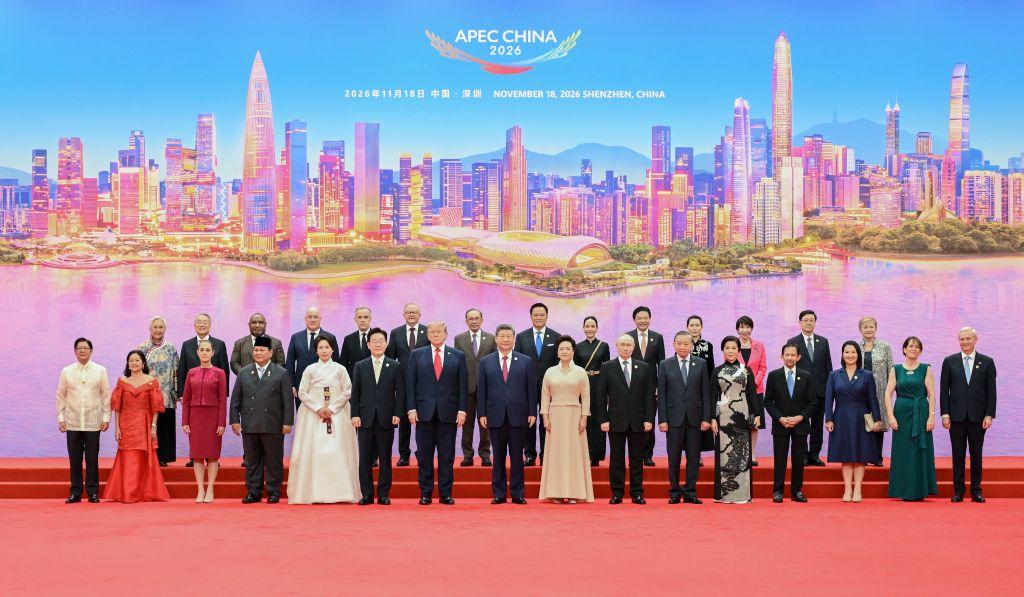
Chinese President Xi Jinping and his wife Peng Liyuan pose for group photos with guests in Shenzhen, south China's Guangdong Province, Nov. 18, 2026. Chinese President Xi Jinping and his wife, Peng Liyuan, on Wednesday hosted a banquet in Shenzhen to welcome guests who are here to attend the 33rd Asia-Pacific Economic Cooperation (APEC) Economic Leaders' Meeting. (Xinhua/Li Xiang)
Beyond the main sessions, leaders held talks of their own. Following his meeting with Xi in Shenzhen on Nov. 17, Canadian Prime Minister Mark Carney said relations between the two countries now had greater predictability and stability.
The importance of keeping those conversations going was something I had heard discussed eight months earlier. In March, at the Boao Forum for Asia (BFA) Annual Conference 2026 in south China's Hainan Province, I covered a panel titled "Revitalizing APEC: towards the Vision of an Asia-Pacific Community."
Jenny Shipley, former prime minister of New Zealand, which hosted APEC in 1999, noted that APEC is not bound by treaty-style obligations like those of the World Trade Organization or the European Union. That makes it a place for leaders to listen, respond and move forward, rather than simply deliver statements. She urged regional leaders to maintain dialogue even when they have differences. George Yeo, former foreign minister of Singapore, made a similar point, arguing that beyond the formal agenda, what matters is that leaders, ministers and officials get to know one another and build a sense of connection.
Business leaders in Shenzhen echoed that spirit. The APEC CEO Summit 2026, held Nov. 17 to 18, brought together more than 2,000 business and political representatives. In interviews with People's Daily Online, Shane Tedjarati, vice chairman of Prologis, said, "In the next 10 years, the Asia-Pacific will (remain) the biggest engine of growth for the world." Benjamin Faes, CEO of RWS, said, "Having an open message of collaboration is what leaders should do, and that's what China is doing in APEC."
Those conversations also produced a concrete outcome. On Nov. 18, the APEC CEO Summit released the Shenzhen initiative, the first outcome document issued in the form of an initiative in the summit's 30-year history. It called for deepening an open regional economy, driving innovation-led inclusive growth and strengthening regional connectivity.
What I noticed most, though, was the city itself. Shenzhen's preparations went well beyond logistics. Volunteers at the press center and across the city were always ready to help. Police officers helped us find suitable places to film. Volunteers at intersections showed us where we could safely call a cab. Even at my hotel, a member of the breakfast staff noticed I was wearing shorts, warned me that the temperature was dropping that day and suggested I dress a bit warmer.
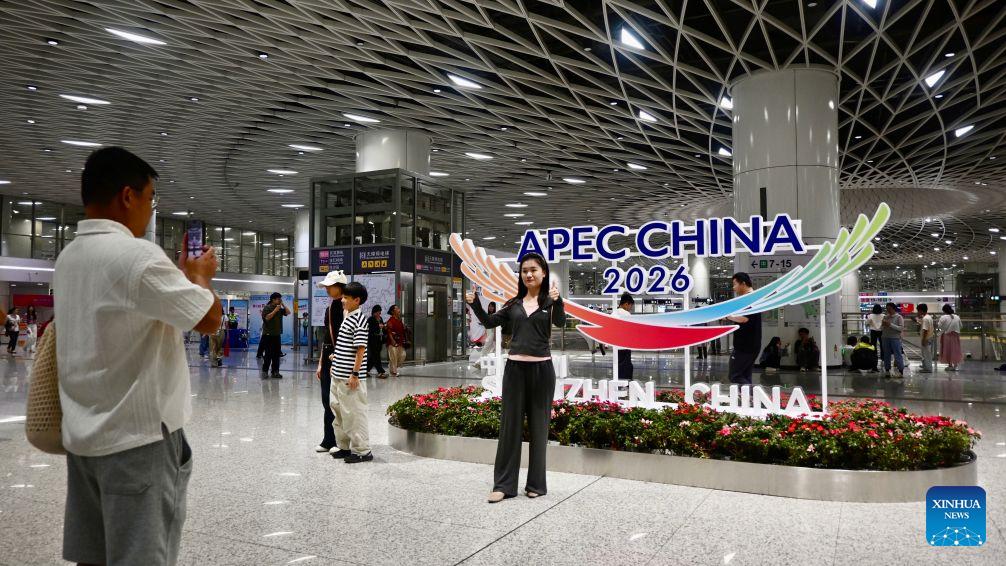
People pose for photos with an APEC-themed installation at Gangxia North Metro Station in Shenzhen, south China's Guangdong Province, Nov. 15, 2026. (Xinhua/Wu Qinghao)
One night, as I returned to my hotel, a local resident struck up a conversation with me. He asked whether I was in the media covering the event. When I said I was, he asked what I thought of the city and how I felt about China. Then he told me what he most wanted to say: welcome.
It was a short exchange, but it said something that no official program could. Behind the logistics and the high-level meetings, there was a real pride among people here in having the world come to their city, and a wish to make sure visitors felt at home.
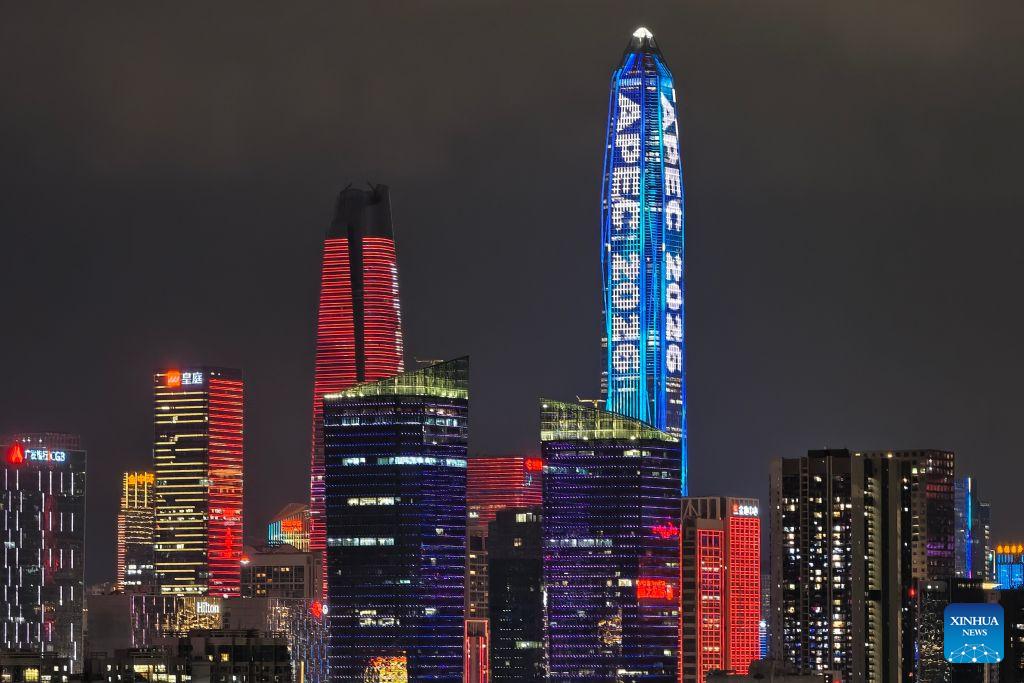
This photo taken on Nov. 15, 2026 shows a night view in Shenzhen, south China's Guangdong Province. (Xinhua/Zheng Huansong)
Looking back on the week, I found myself thinking about those conversations in Boao eight months earlier. Shipley and Yeo had spoken about the value of bringing people together, even when they disagree. In Shenzhen, I saw that same idea reflected at different levels, from exchanges between leaders and business executives to conversations between journalists and people on the street.
Photos


Related Stories
- Xi Focus: Xi chairs APEC meeting, calls for building Asia-Pacific community
- China-Russia-U.S. summit positive, constructive, fruitful: Xi
- Full text: China-Russia-U.S. Heads of State Declaration toward Peace
- Peng Liyuan, spouses of APEC economies' leaders visit cultural exhibition
- Xi says positive interaction between major countries not an option but a must
Copyright © 2026 People's Daily Online. All Rights Reserved.
