



Shenzhen opens its doors wider to the Asia-Pacific
Shenzhen, a coastal city in south China's Guangdong Province, will host the 33rd Asia-Pacific Economic Cooperation (APEC) Economic Leaders' Meeting from Nov. 18 to 19.
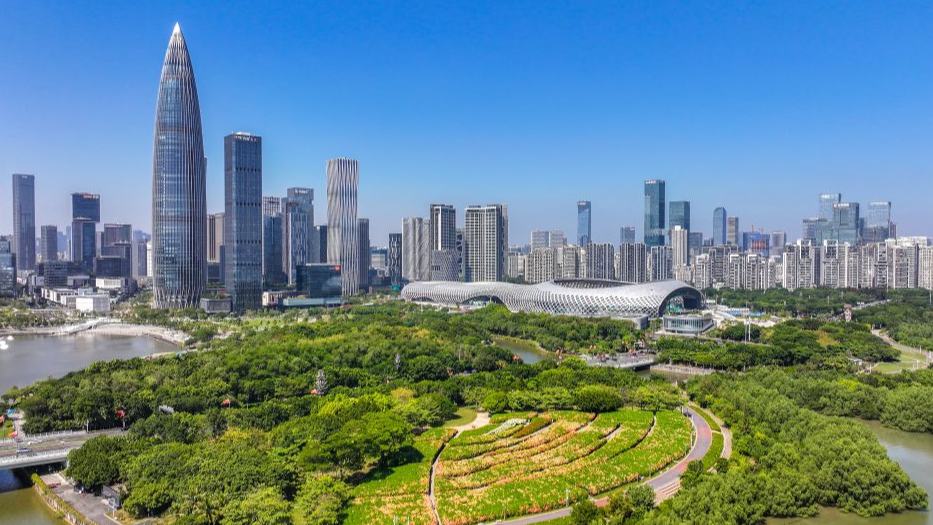
Shenzhen has grown from a fishing village into an international metropolis and much of that came from openness and cooperation across the Asia-Pacific region. Now the city is giving back, contributing to the region's development with renewed confidence.
Chinese President Xi Jinping extended an invitation to the world at the APEC Economic Leaders' Meeting in Gyeongju, South Korea, last November. "We look forward to all parties gathering in Shenzhen next year to jointly discuss development plans for the Asia-Pacific region and create a bright future for it," Xi said.
As a window into China's reform and opening up, Shenzhen offers the world a glimpse of a more open and inclusive China.

Visitors pose for photos with an APEC-themed display at Lianhuashan Park in Shenzhen, south China's Guangdong Province. (People's Daily Online/Wang Xing)
Visitors from around the world are flocking to Huaqiangbei, known as "China's No. 1 Electronics Street," to shop for products such as AI glasses, drones and 3D printers. Goods from the street now reach more than 190 countries and regions. The hub receives an average of more than 7,000 foreign visitors a day, and its annual sales exceed 400 billion yuan (about $60 billion).
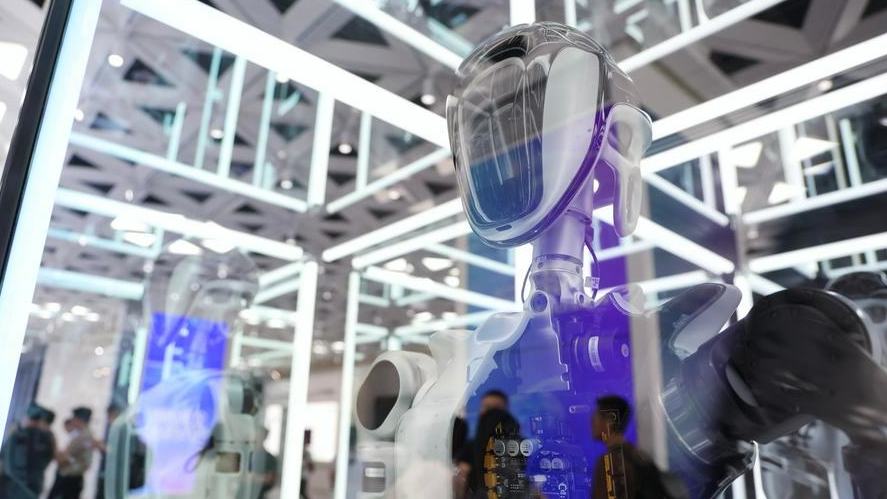
A similar scene is playing out in the robot block of Shenzhen's Longgang district. "In Shenzhen, I saw a picture of the future," said Emaunel Cardoso, a South American buyer shopping for a robot dog. He hopes to work with Chinese firms on materials and machinery.
Visa-free policies, including 240-hour visa-free transit, have boosted international travel to the city. The number of foreign nationals entering and leaving China through Shenzhen ranked second nationwide in 2025. Meanwhile, Shenzhen's ports handled 273 million passenger trips, the highest figure in the country.

APEC-themed flags hang on the robot block in Longgang district, Shenzhen, south China's Guangdong Province. (People's Daily Online/Wang Xing)
Cargo is moving faster too. At Shenzhen airport's international cargo center, customs offers advance declaration and round-the-clock clearance by appointment for time-sensitive imports. So far this year, Shenzhen Airport Customs has cleared 8,500 tonnes of fresh produce and live seafood from APEC economies, including durians from Malaysia and wax apples from Thailand.
The surge in travelers and cargo underscores the growing confidence of global investors in Shenzhen's business environment. As the global landscape shifts, Asia-Pacific economies are further opening their markets and building stronger consensus on win-win development.
At the world's first robot 6S store in Shenzhen, a Malaysian businesswoman's smart coffee machines are popular among consumers. Drawn by China's incentives for foreign investment, she set up business in Shenzhen. Strong sales of her smart office products highlight the appeal of the Chinese market, and several Asia-Pacific firms have established operations in the city since the start of this year.
Chinese companies are expanding overseas as well. The Longgang Enterprise Internationalization Service Base has served 9,494 companies looking to grow abroad, releasing orders worth more than 13.5 billion yuan (about $1.9 billion) and facilitating intent agreements worth a further 1 billion yuan, according to Li Qun, deputy general manager of Shenzhen Longgang Industrial Investment Service Group Co., Ltd.

Photo shows APEC-themed displays on Shennan Avenue in Shenzhen, south China's Guangdong Province. (People's Daily Online/Wang Xing)
China's trade with other APEC economies rose 23.9 percent year on year to 24.07 trillion yuan in the first three quarters of 2026. As of 2025, China had become the largest trading partner of 13 APEC economies. During the 2026 APEC "China Year," some 300 events are expected to take place across multiple cities in China, underscoring the country's commitment to multilateralism and regional economic integration.
Across the Asia-Pacific, the benefits of greater openness are spreading further and faster. The Regional Comprehensive Economic Partnership (RCEP) is now in force for all 15 members, with tariffs on more than 90 percent of goods traded within the region due to be eliminated over the coming decades. The China-ASEAN Free Trade Area 3.0 Upgrade Protocol was signed in October 2025.
Openness is a sure path for Asia-Pacific countries to achieve common prosperity. Amid global turbulence, only by expanding opening up and deepening cooperation can regional economies provide greater certainty and create new opportunities for the Asia-Pacific and the world.
"Only by working together can Asia-Pacific countries, like passengers on the same boat, sail toward a better future," said Rinaldo Hartanto, a young Indonesian artist working in Shenzhen.
Photos

Related Stories
- Shenzhen embraces high-quality green development path
- Explainer: APEC comes to Shenzhen: where "China Opportunity 2.0" meets the world
- Interview: China's development experiences offer practical lessons for regional transformation, says APEC official
- From Beijing to Shenzhen: China's push for a more connected, dynamic Asia-Pacific
- APEC Primer in Four Words | Building: Why Shenzhen is hosting APEC 2026
- APEC Primer in Four Words | Prosper: Decoding the APEC 2026 theme
- Chinese vice premier addresses opening ceremony of 4th APEC Business Advisory Council meeting
- 12 leaders of APEC economies to attend APEC CEO Summit 2026
- Representatives from 115 Fortune Global 500 companies to attend APEC CEO Summit 2026
- How Chinese innovation drives shared growth from Shenzhen to Asia-Pacific
Copyright © 2026 People's Daily Online. All Rights Reserved.
