



AI tokens go on sale on China's e-commerce platforms during Singles' Day shopping festival
In China, consumers can now drop AI tokens into their shopping carts alongside everything else.
During this year's Singles' Day shopping festival, also known as Double 11 because it falls on Nov. 11, e-commerce platforms rolled out dedicated AI token sections, gathering offerings from providers including Zhipu, MiniMax, Alibaba Cloud and its Qwen models.
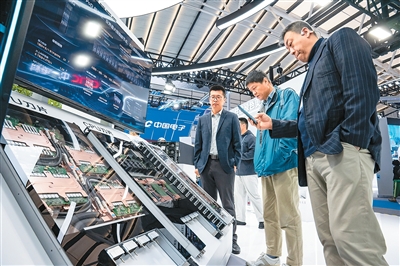
Visitors view computing equipment at the Light of the Internet Expo during the 2026 World Internet Conference in Wuzhen town, Jiaxing city, east China's Zhejiang Province. (Photo/Zhai Weikai)
Buying tokens used to be largely the domain of professional developers, who had to grasp concepts such as API keys and place orders on each provider's platform.
E-commerce platforms have made the process more accessible. On Tmall and JD.com, users can simply search for "Token" to compare offerings from major developers.
Tmall launched a token top-up center on Sept. 3, featuring services from DeepSeek, Alibaba Cloud, Zhipu and Moonshot AI's Kimi. Consumers can pay as they go, much like topping up phone credit, or subscribe monthly or annually for a set amount.
"We want consumers to buy tokens as conveniently as topping up phone credit or buying a membership," said Si Dengyu, general manager of Tmall's 3C digital division.
Discounts add to the appeal. On Nov. 5, a monthly Qwen AI Lite card was listed at 60 yuan (about $8.45) on Qwen's official website but sold for 19.5 yuan on an e-commerce platform during a promotion. On the first day of the Singles' Day shopping festival, transaction value in Taobao's token category rose 450 percent from the previous period.
On Nov. 2, a livestream hosted by JD.com's consumer electronics division offered more than 10 token packages, with models from JD Cloud, DeepSeek, Zhipu and MiniMax. More than 1 billion tokens were given away in the first hour, and within two hours sales of token packages had risen 20-fold.
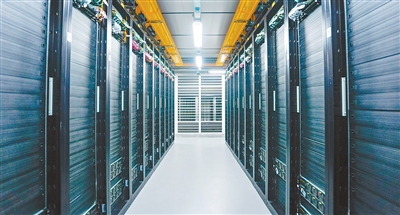
Photo shows computing facilities at a token factory in a China Mobile data center in Zhongwei city, northwest China's Ningxia Hui Autonomous Region. (Xinhua/Yang Zhisen)
The fact that AI tokens are now sold on e-commerce platforms suggests that demand from individual consumers is beginning to emerge alongside business demand, said Pan Helin, a member of the Ministry of Industry and Information Technology's Expert Committee for Information and Communication Economy.
Tmall's token buyers are mostly individuals and small businesses with specific needs — students, researchers, solo operators. They pay because free model tiers only go so far: simple tasks like searching or editing text are covered, but video generation, data processing and other heavy workloads need paid credits.
Demand is growing rapidly. China's daily token usage exceeded 140 trillion in March 2026, more than 1,400 times the 100 billion recorded in early 2024, according to the National Data Administration. By June, a report from the China Academy of Information and Communications Technology and other institutions put daily consumption at about 500 trillion, roughly 3.5 times the March figure.
"I subscribe to several large models, which costs 1,000 to 2,000 yuan a month," said a man surnamed Ding, a doctoral student at a university in Wuhan, central China's Hubei Province. He uses AI to write code, noting that tasks that once took a month can now be completed in just a few days.
Liu Liehong, head of the National Data Administration, said tokens serve as a "settlement unit" that links technology supply with business demand.
For large model developers, e-commerce platforms offer a new channel to reach consumers. For e-commerce platforms, tokens represent a new product category, turning computing quotas that were once accessible only through developers' back-end systems into services consumers can purchase directly. For consumers, access to AI tokens is becoming increasingly convenient.
Obstacles remain. Pan said widespread adoption of tokens among individual consumers will take time, and free and paid tiers will coexist for years to come. Industry insiders added that most AI firms still rely on business clients for revenue.
Photos



Related Stories
Copyright © 2026 People's Daily Online. All Rights Reserved.
