Georgina Kakoudaki: Collaborating as a community through theater
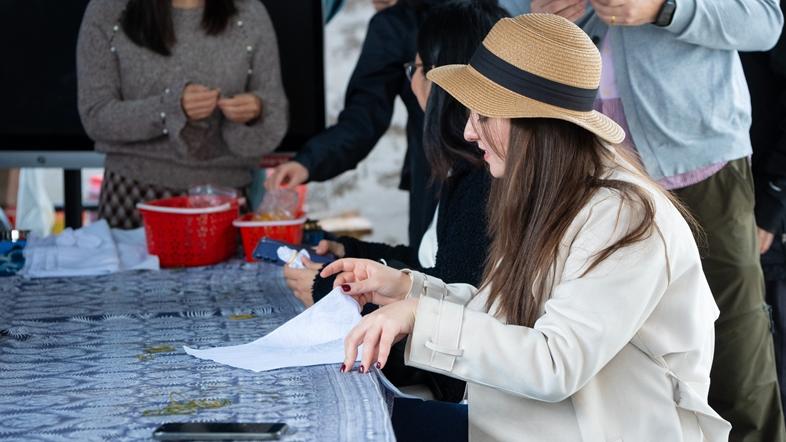
At the Municipal Regional Theatre of Kozani, a lively workshop was underway as Georgina Kakoudaki engaged with young members of the local community. An experienced theater educator and director, Kakoudaki has devoted much of her career to bringing the performing arts closer to young people. Today, her work extends beyond Greece to China, where she continues to explore how theater can connect, educate and inspire younger generations across cultures.
Growing up, Kakoudaki was always a very communicative person and enjoyed observing people and different life scenarios. This, alongside her love of the creative arts, eventually led her to study theater and undertake formal training at drama school. She is particularly drawn to the enduring relevance of ancient Greek drama.
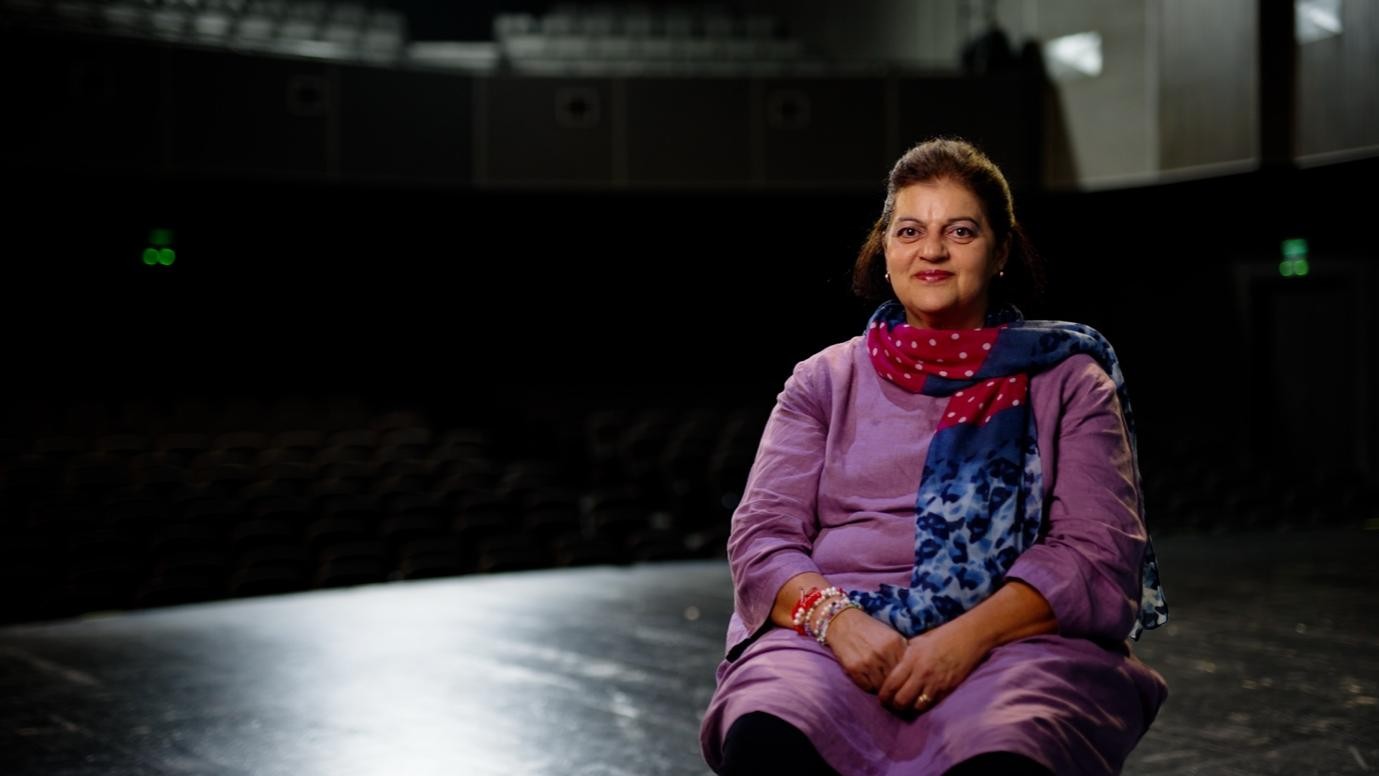
Georgina Kakoudaki, a Greek theater educator and director, sits for an interview with People's Daily Online. (Photo/Patrick Shead-Simmonds)
"It raises timeless questions about the creation of Greek civilization," she said. "I concentrated a lot on how to read ancient texts and how their meanings have been reinvented today."
Kakoudaki believes China and Greece share a unique bond because both countries have an ancient past. She places particular emphasis on the need to engage with ancient theater traditions. "It is important not to forget about the DNA of your historical self," she said. "The past helps us to understand the present."
Between 2016 and 2019, Kakoudaki was head of the Epidaurus Lyceum and curator of educational programs at the Athens & Epidaurus Festival, one of Europe's oldest performing arts festivals. The programs were created with the goal of bringing new perspectives to Greek theater by exploring and comparing different theatrical traditions. Theater practitioners and actors from all over the world were invited to learn from and exchange ideas with each other.
In 2018, 26 academics, artists and teachers from the Shanghai Theatre Academy visited the Athens & Epidaurus Festival. "They gave workshops related to facial expressions and masks in Sichuan Opera," Kakoudaki said. "They also demonstrated movements from Peking Opera."
She also became the unofficial tour guide for her Shanghai friends on a visit to Delphi, where they met the renowned Greek director Theodoros Terzopoulos. The exchange ended with a roundtable discussion on contemporary perceptions of Greek drama and the arts. Kakoudaki was especially pleased to discuss whether ancient cultures can stimulate new ideas or instead inhibit creative processes.
Kakoudaki's own research also draws deeply on Chinese theater. She described her visit to the Shanghai Theatre Academy as a gift. "In Greek theater, a thread has been cut, and we have lost the knowledge of how theater was performed on stage in ancient times," she said. "Chinese theater, however, has retained this continuity."
By attending classes on traditional Chinese theater, Kakoudaki began to reimagine ancient Greek theater.
In 2024, Kakoudaki traveled to Chengdu, southwest China's Sichuan Province, for the China-Europe Humanities and Arts Education Forum. There, she exchanged ideas with Chinese theater practitioners about different approaches to teaching theater. As one example, she pointed to the practice of forming a circle so that everyone feels equal to their peers on stage.
"Maybe some ideas are described differently between the West and the East, but at the core is the idea of working as a community," she said.
Her collaboration with Chinese young people has also continued in Greece. At the Messini Festival, Kakoudaki worked with Chinese primary school students on "The Spark," a performance inspired by the myth of Prometheus and its parallels with AI. She contributed to the dramaturgy and content of the production, which explores both the opportunities and risks of technological progress. "We need to retain the ability to listen to and work with each other," she said.
Most recently, Kakoudaki returned to China in August this year, when she was invited to Huanglongxi village near Chengdu for the Fire Dragon Festival. The story of the dragon was retold through a promenade performance around the village, with local villagers taking part. She also produced a theater piece for the occasion, performed by children aged 6 to 12. Coming from Greece, a country with a rich mythological tradition, Kakoudaki was particularly interested in exploring the similarities and differences between Western and Chinese dragons.
For Kakoudaki, "Theater offers the freedom to express feelings and thoughts, whether that is through language or the body. When you are on stage, you are playing a role, and that gives you space to breathe."
Whether working with students in Greece or China, Kakoudaki sees theater not simply as a form of performance, but as a space where people learn to listen, collaborate and work as a community.
(Web editor: Hongyu, Du Mingming)