



China strengthens global supply chain cooperation to bolster economic certainty
XIAMEN, Sept. 8 (Xinhua) -- From building new trade routes to reinforcing overseas supply chains, Chinese companies are helping sustain cross-border flows of goods and resources while enabling partners in other countries to build more resilient supply chain networks.
At the 26th China International Fair for Investment and Trade (CIFIT) in Xiamen, a coastal city in east China's Fujian Province, company executives told Xinhua that China's growing role in global supply chains is opening new channels for trade, investment and industrial cooperation. This is helping connect resources, production and markets across different regions.
For many foreign participants, this means China is no longer just a major market. It is becoming a key anchor in global supply chains, especially amid geopolitical headwinds. Their deepening engagement with China was on display at this year's CIFIT, which is often seen as a barometer of China's outbound investment and foreign investment inflows.
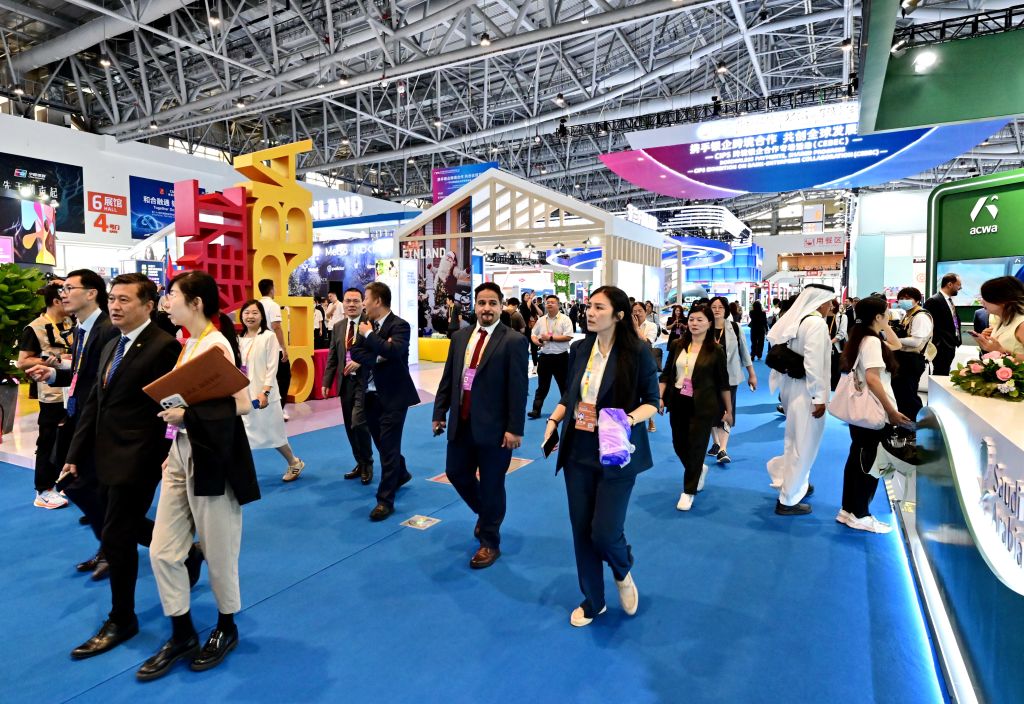
People visit the 26th China International Fair for Investment and Trade in Xiamen, Sept. 8, 2026. This year's event has drawn registrations from more than 1,200 official government institutions and business delegations representing 129 countries and regions as well as 30 international organizations. (Xinhua/Lin Shanchuan)
The fair attracted delegations from 129 countries and regions, with 60 setting up exhibition areas. Its exhibition space expanded to 200,000 square meters from 120,000 square meters last year, according to the Xiamen Municipal Bureau of Commerce. The figures offer tangible signs of growing international interest in China as a partner in trade, investment and supply chain cooperation.
CHINA COMMENDED FOR STABILIZING GLOBAL SUPPLY CHAINS
About 100 km south of Xiamen, the Sino-Saudi Gulei Ethylene Complex Project is in its final stage before full operation.
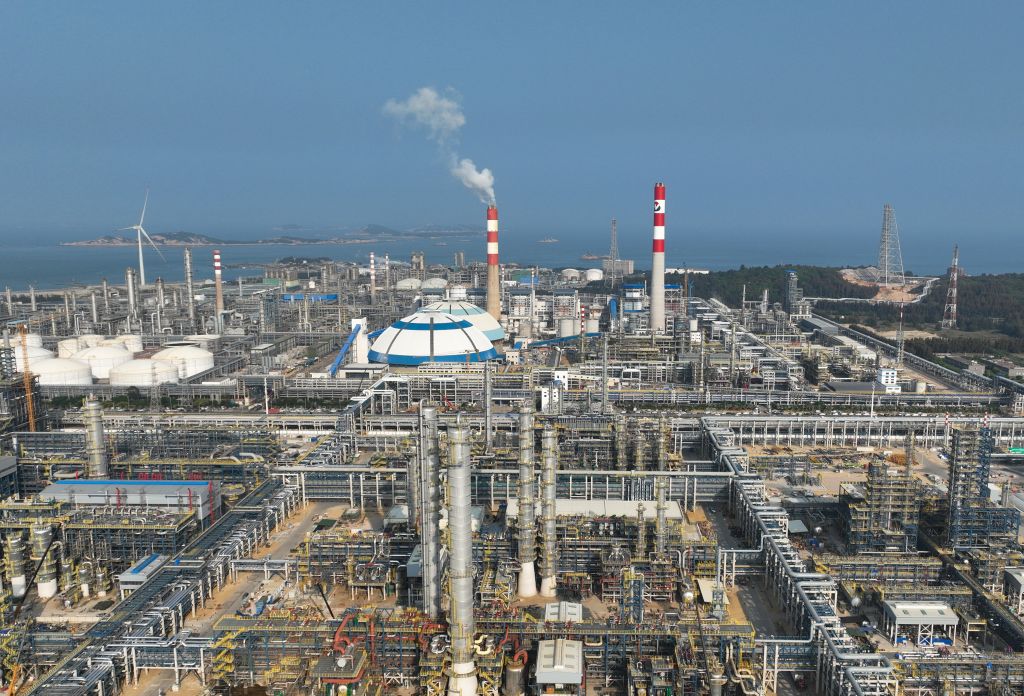
An aerial drone photo taken on April 19, 2026 shows a view of the Sino-Saudi Gulei Ethylene Complex Project in Zhangzhou City, Fujian Province. (Xinhua/Lin Shanchuan)
The 44.8-billion-yuan (6.5 billion U.S. dollars) joint venture between Saudi Basic Industries Corporation (SABIC) and China's Fujian Energy Petrochemical Group is the largest single Sino-foreign joint venture in Fujian Province. With annual ethylene capacity of up to 1.8 million tonnes, the project is expected to generate nearly 200 billion yuan in additional investment across downstream industries and related services once operational.
Its scale tells a bigger story: foreign companies are not only tapping China's market, but increasingly embedding themselves in its extensive industrial and supply chain networks.
"We do not simply view China as a sales market, but rather as a long-term growth partner and a leading innovation hub. The dynamic growth of Chinese companies has shown us the tremendous opportunities for deeper collaboration across the entire industrial value chain," said Faisal Mohammed Alfaqeer, SABIC's chief executive officer.
With geopolitical tensions, trade barriers and infrastructure bottlenecks on the rise, global supply chains are under increasing pressure. Still, China is helping to keep goods, resources and markets moving, and making supply chains more diverse and resilient, company executives attending CIFIT told Xinhua.
A 6,000-km freight rail service linking Fuzhou with Tashkent offers a case in point. Launched in May 2025, the 12-day service has halved the transit time for Uzbek yarn to China's eastern textile hubs compared with the previous sea-rail route, while giving Uzbek traders greater control over their supply routes.
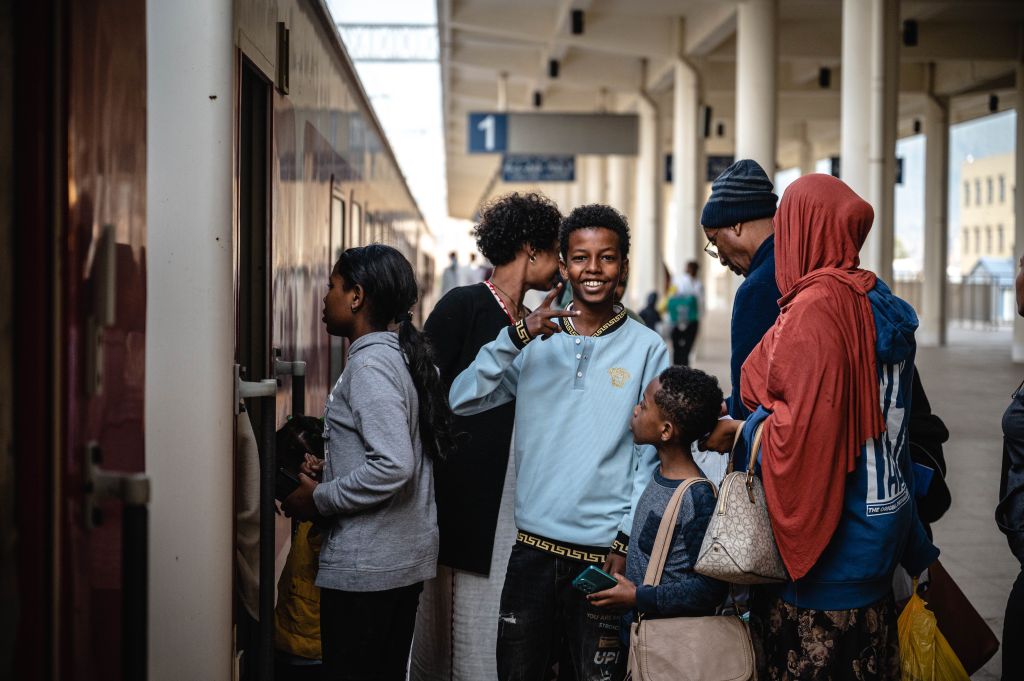
Passengers board a train at the Lebu Railway Station in Addis Ababa, Ethiopia, Sept. 9, 2023. The Chinese management contractors of Ethiopia-Djibouti standard gauge railway on Friday officially handed over the railway's management and operation to Ethiopia and Djibouti after six years of successful operation. (Xinhua/Wang Guansen)
"China builds for us a railway and a highway. It makes our communities much closer," said Keno Ashabir Tesfaye, head of innovation infrastructure at Ethiopia's Ministry of Innovation and Technology. China's experience in localization, he added, has played a major role in supply chain development.
"China plays a really big role in international trade in general, and also in keeping the international market very, very stable," said Jose Eneme Oyono, technical advisor at the Prime Minister's Office of Equatorial Guinea.
For European companies, China's supply chain strength can also complement Western capabilities. Michael Girel, founder and CEO of European company VIOOME, said combining China's supply-chain capabilities with Europe's strengths in technology and branding could create new opportunities for innovation and commercialization.
HELPING FOREIGN COUNTRIES BUILD RESILIENT SUPPLY CHAINS
Chinese companies are increasingly helping overseas partners build more resilient supply chains by securing reliable raw materials, streamlining logistics and expanding access to global markets.
Bahru Stainless SDN. BHD, a leading Malaysian stainless steel producer, relies on exports for about 80 percent of its output. But intensifying global competition, shifting trade policies and carbon tax rules have recently put pressure on its supply chain, from shortages of hot-rolled raw materials to the need to expand its overseas customer base.
That is where Xiamen-based Jianfa Group stepped in, sourcing hot-rolled steel from China and Indonesia and providing it with end-to-end services covering imports, customs clearance, warehousing and distribution. It also leveraged its global network to help Bahru Stainless expand into markets like Europe, India, Japan and the Republic of Korea.
"As more Chinese companies go global, they are moving beyond simply sourcing raw materials from local partners to helping them build and strengthen overseas supply chains," said Gao Shaoyong, general manager of Xiamen ITG Holding Group Co., Ltd.
In Guinea, Xiamen Xiangyu Co. Ltd., a Chinese supply chain management and logistics company, tackled a different bottleneck: poor transport infrastructure that had constrained bauxite exports. It developed a logistics corridor linking mines and ports by road, barge and ocean-going vessels, and this year added a bonded warehouse at the port to cut costs and boost export efficiency.
"From the mine to the port, we have built a land-sea multimodal logistics channel," said Wu Jie, chairman of the board of Xiamen Xiangyu Co. Ltd.
The cooperation goes beyond trade and logistics to local industrial upgrading. In recent years, more Chinese manufacturers have set up factories in Southeast Asia, Africa and other regions to process local mineral resources.
In Indonesia's Southeast Sulawesi Province, for instance, Xiangyu's 2.5-million-tonne stainless steel project has created more than 12,000 jobs since 2020 and helped develop surrounding industries, according to the company. It has also built roads and bridges, provided clean water and supported local education.
At CIFIT, several company executives told Xinhua that such projects are helping address local needs ranging from tax revenues and employment to infrastructure development, while bringing tangible benefits to local communities.
By processing resources locally rather than simply exporting raw materials, Chinese companies are helping resource-rich countries move further up the industrial chain, creating jobs, improving infrastructure and giving local economies new momentum, they added.
Photos



Related Stories
- Global supply chain cooperation remains overarching trend
- Turning the GEAR: How China drives global supply chains upgrading
- 'Handcrafted' hardware scales up as China's supply chain backs DIY innovators
- In pics: exhibition area of Healthy Life at 4th China International Supply Chain Expo
- All countries responsible for keeping global supply chain safe, stable, unimpeded: Chinese foreign ministry
Copyright © 2026 People's Daily Online. All Rights Reserved.
