



Grassroots football league energizes the Greater Bay Area
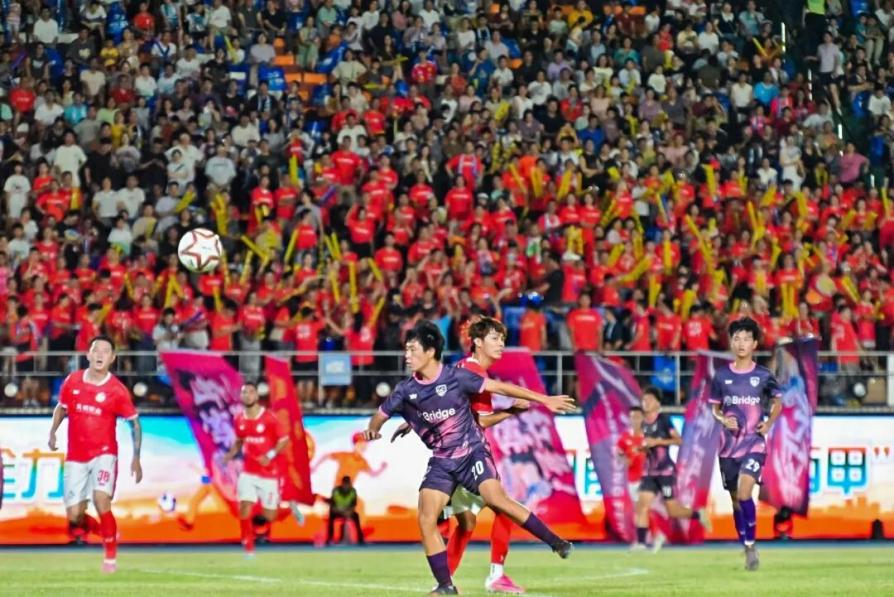
Photo shows a game of the 20th Foshan Xijia Football League at the Yunxiu Mountain Stadium in Sanshui district, Foshan, south China's Guangdong province. (Photos courtesy of the Foshan Football Association)
On August 23, the final of the 20th Foshan Xijia Football League drew a roaring crowd of 20,000 spectators to Yunxiu Mountain Stadium in Sanshui District, Foshan, Guangdong Province. In a thrilling match, Tanwan Youxi defeated Budweiser-Huaxing 4-2 to claim the championship trophy.
The tournament spanned 45 days and featured 104 matches, involving 1,056 players from 48 elite teams across the Guangdong-Hong Kong-Macao Greater Bay Area (GBA).
First held in 2002, the Foshan Xijia Football League has run for 24 years and grown into a signature sporting event in the region. What explains the enduring appeal of this amateur league? People's Daily spoke with organizers, players, and fans to find out.
Foshan is a typical manufacturing city, home to 10,600 industrial enterprises above the designated size and more than 3 million industrial workers.
The Foshan Xijia Football League originated in Xinan subdistrict, Sanshui district, as a grassroots tournament created by local factory workers and residents from neighboring communities.
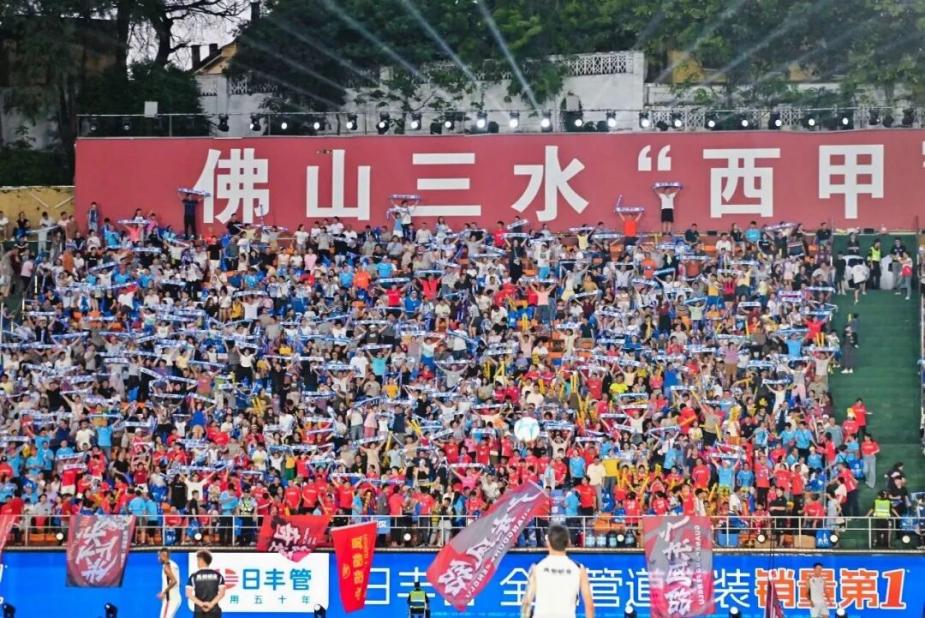
Fans cheer for their teams at a game of the 20th Foshan Xijia Football League at the Yunxiu Mountain Stadium in Sanshui district, Foshan, south China's Guangdong province. (Photos courtesy of the Foshan Football Association)
Its Chinese name, "Xijia," is short for "Xinan Subdistrict First Division." Coincidentally, the pronunciation is identical to the Chinese name for Spain's top-flight football league, known internationally as La Liga. Hoping their own neighborhood tournament would become just as popular, local fans jokingly dubbed it "Xijia," and the name stuck.
As early as the 1950s and 1960s, Xinan township, now Xinan subdistrict, was known for a familiar scene: "a farmers' market in the morning, a football pitch in the afternoon." Once vendors had packed up for the day, people would move a few bricks into place as goalposts, turning the market into a football field.
In 2002, the first Foshan Xijia match kicked off at Yunxiu Mountain Stadium. From a humble farmers' market to a stadium packed with tens of thousands of spectators, the league has now reached its 20th edition.
"About 1/3 of our players work in sales or on the production lines of the two companies," said Feng Bingjin, news officer for Budweiser-Huaxing and marketing director of Huaxing Glass.
Budweiser APAC and Huaxing Glass have been strategic partners for 20 years. One makes beer, and the other makes bottles. This year, the two companies formed a joint football team. In its debut appearance, the team, made up largely of industrial workers, narrowly advanced from the group stage in third place and went on to reach the final.
"During the day, the players are production-line operators and salespeople. At night, they put on their jerseys and become stars on the pitch, enjoying the games," Feng said.
Every ordinary person's football dream has a place to take root. That, perhaps, is the most moving aspect of Foshan Xijia.
The league has earned the nickname "GBA World Cup." This year, for the first time, the tournament covered all 11 cities in the GBA. A total of 125 foreign players from more than 10 countries and regions, including Brazil, France and Greece, took to the pitch alongside their Chinese counterparts. People of different skin colors, accents, and professions came together through football, competing across 104 matches.
Among the 48 teams this year, six were youth teams, with the youngest player just 15 years old. Many of these young players had watched Foshan Xijia matches at the stadium with their parents when they were children. Now, they have taken up the baton from an earlier generation of grassroots players, making the journey from the stands to the pitch.
The tournament has also spurred the development of local sports facilities. By 2025, Sanshui had 159 football fields, or 1.8 fields per 10,000 people, well above the national average. The district has also become one of the winter training bases for professional football clubs from across China, attracting about 70 teams each year.
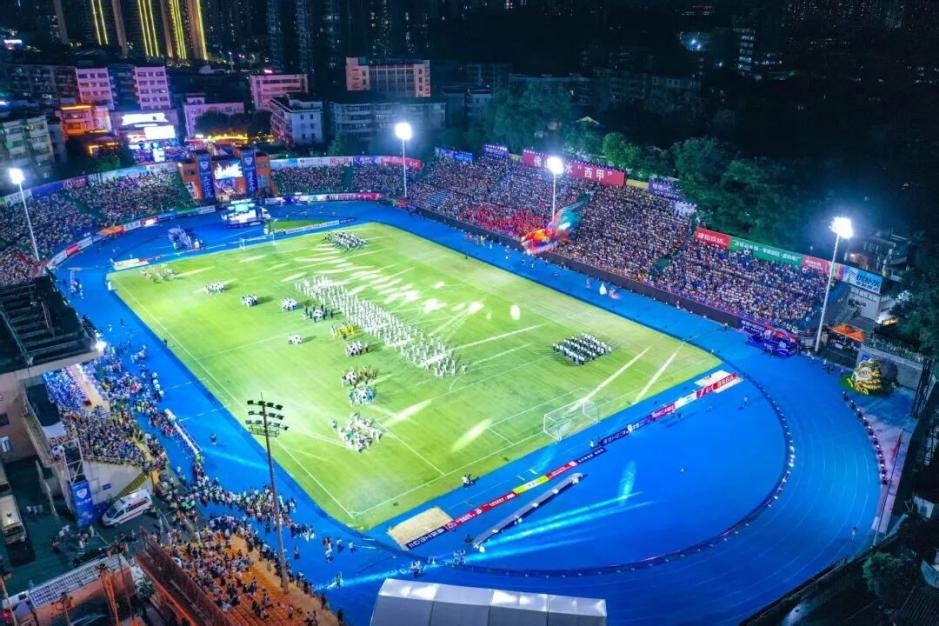
The 20th Foshan Xijia Football League kicks off at the Yunxiu Mountain Stadium in Sanshui district, Foshan, south China's Guangdong province, July 10. (Photos courtesy of the Foshan Football Association)
One of the biggest talking points surrounding this year's Foshan Xijia has been the "ticket-stub economy." A single digital ticket can unlock discounts and special offers at 1,400 businesses across the city, covering dining, accommodation, and tourist attractions.
The tournament has drawn 2 million visits from fans and tourists and generated more than 250 million yuan ($37.25 million) in additional consumption. Spending at the Jiangbiancang night market near the stadium rose 187 percent month on month, while the occupancy rate of accommodation businesses across the district increased by 8 percentage points.
"This tournament has set the city buzzing," said Deng Yanyan, deputy director of the Sanshui district bureau of culture, radio, television, tourism and sports. "Culture and tourism provide the platform, while the economy takes center stage, creating a close connection between the tournament and the city's development."
The excitement goes well beyond the pitch. Twenty-one Xijia-themed events have brought distinctive local products such as Xuwen pineapples and Gaozhou longans into the spotlight. Matches were livestreamed at more than 20 "second viewing venues", including Wanda Plaza, bringing the excitement of the tournament to shopping districts and neighborhood streets.
Lu Yongxian, 50, has run a Cantonese restaurant in Sanshui for 28 years. In 2011, a group of students from a sports school could not afford to enter the tournament. Lu not only sponsored them financially but also took on the roles of coach and team manager, becoming the team's all-around support. In 2019, the team he formed, Leminxing, finished as runner-up in its first Foshan Xijia appearance. Today, his son, Lu Yongquan, takes to the pitch wearing the Leminxing jersey. The joy and passion for football have quietly passed from father to son.
There are no strict restrictions on venues or scheduling for the games, and the spectators are simply neighbors and friends from the community. Stepping onto the pitch means following what they love. This football celebration for ordinary people is far from over.
Photos
Related Stories
Copyright © 2026 People's Daily Online. All Rights Reserved.
