



Ancient alley in NW China's Xinjiang revitalized through targeted assistance
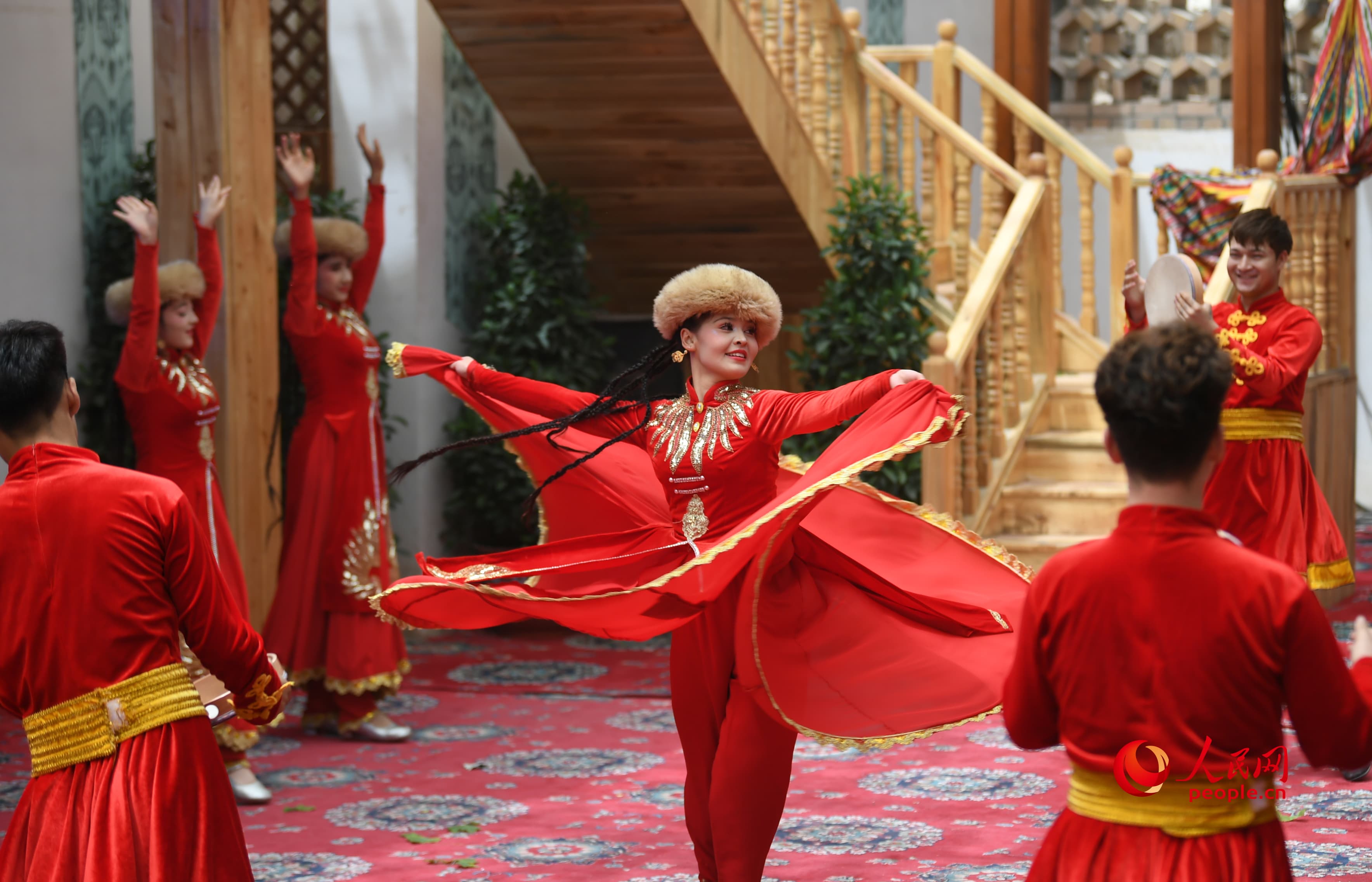
A folk artist performs an ethnic dance for visitors at Qiuci Alley in Kuqa city, northwest China's Xinjiang Uygur Autonomous Region. (People's Daily Online/Li Long)
Qiuci Alley in Kuqa city, northwest China's Xinjiang Uygur Autonomous Region, has been transformed from a dilapidated lane into a popular tourist destination featuring distinctive local residences and folk culture.
This summer, the alley is crowded with visitors, while elderly local residents are often seen enjoying casual chats over tea with friends.
Yet just three years ago, the scene was very different. The alley was once known as a muddy passage, with aging houses, damaged roads and many residents moving away.
The transformation began in 2023 with targeted assistance from Ningbo city in east China's Zhejiang Province as part of the country's "pairing assistance" program.
Through improvements to the street environment, the introduction of cultural and tourism activities, and the restoration of historical sites, Qiuci Alley has been revitalized.
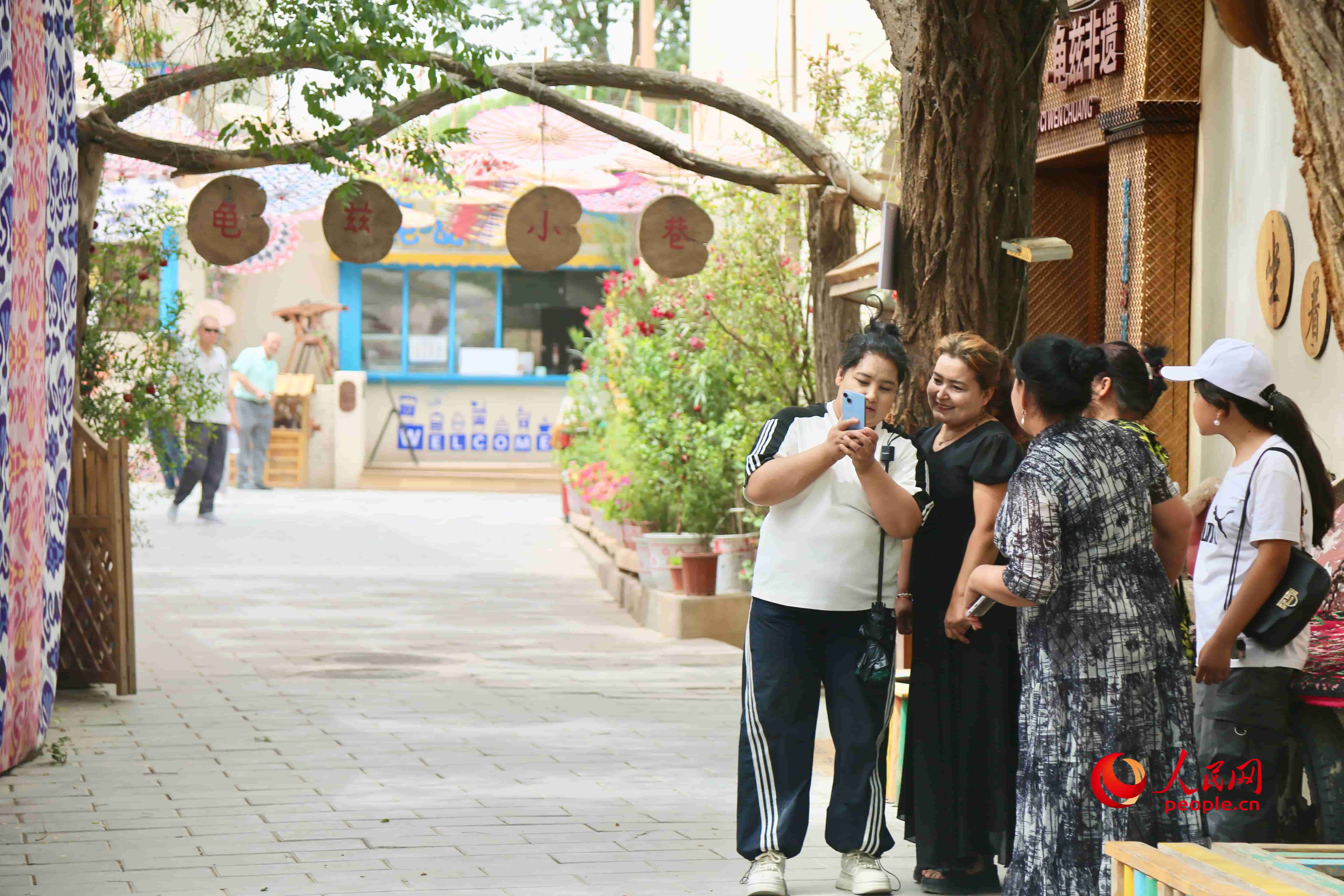
Visitors stroll along Qiuci Alley in Kuqa city, northwest China's Xinjiang Uygur Autonomous Region. (People's Daily Online/Li Long)
The original lane, which was less than 200 meters long, has been expanded into a 1,200-meter cultural block, evolving from an old neighborhood cluttered with debris into a showcase of ethnic solidarity.
The renovation followed the principle of restoring the old while preserving its original appearance, avoiding large-scale demolition and reconstruction.
As a result, the ancient alley is now lined with distinctive traditional residences, homestays filled with local cultural elements, and various lively shops.
While preserving the traditional layout of the ancient city of Kuqa, the restoration and renovation project has also integrated cultural elements from Zhejiang and Qiuci, creating a unique blend of Zhejiang-style courtyards and Uygur-style flower corridors.
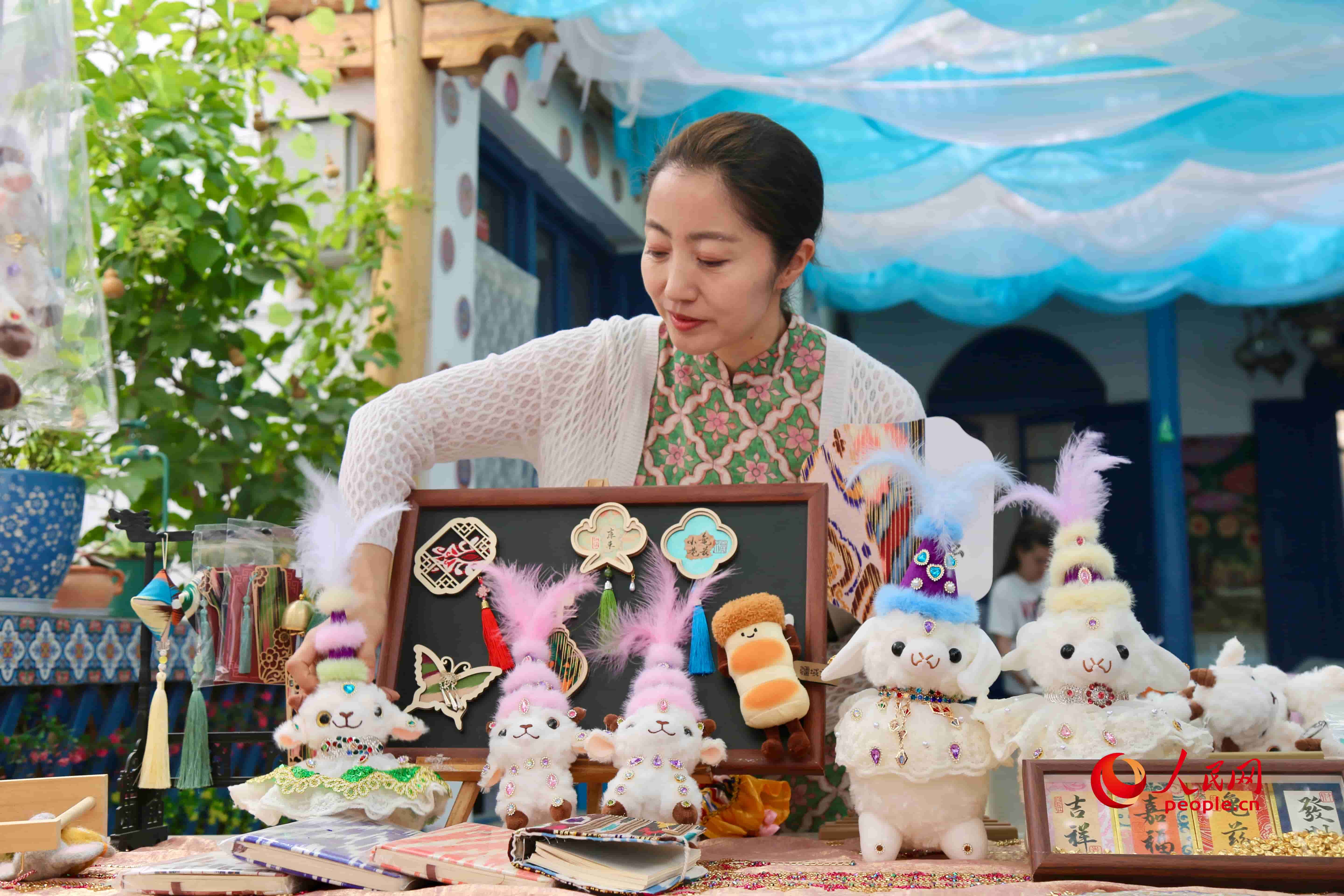
Photo shows a woman arranging the viral "Xinjiang sheep" plush dolls displayed at a workshop in Qiuci Alley in Kuqa city, northwest China's Xinjiang Uygur Autonomous Region. (People's Daily Online/Li Long)
"The people of Ningbo and Kuqa have developed a deep bond. Walking through Qiuci Alley, people can truly feel the close connection between the two cities," said Shao Chen, deputy director of the office of the command center of Ningbo's targeted assistance for Xinjiang.
As one of the best-preserved historic streets in the ancient city of Kuqa, Qiuci Alley retains the spatial layout dating back to the period between the late Qing Dynasty (1644-1911) and the early Republic of China period (1912-1949).
The block now hosts 60 businesses. It has attracted 110 million yuan ($16.29 million) in investment, created jobs for more than 360 local residents, and supported entrepreneurship among 22 college students.
As of April 2026, Qiuci Alley had received 4 million visitors and generated 210 million yuan in tourism revenue. From January to June this year, it received about 800,000 visitors.
Visitors can be seen photographing traditional houses, exploring historic buildings, and enjoying Qiuci music and dance performances throughout the alley.
Wang Wenjiao, a tourist from central China's Hunan Province, said the unique architecture and rich colors allowed her to experience the charm of millennia-old Qiuci culture up close.
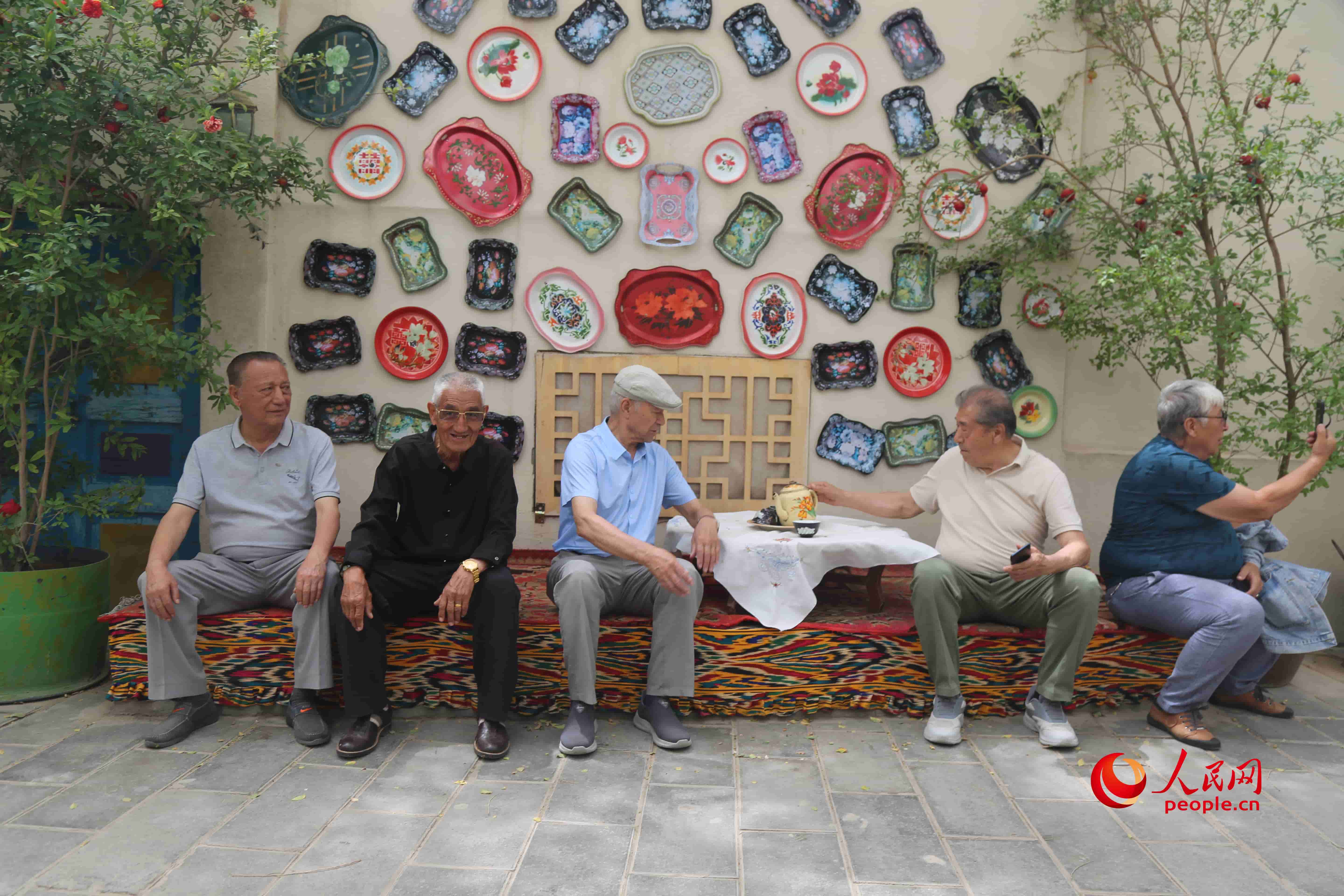
Visitors rest and chat at Qiuci Alley in Kuqa city, northwest China's Xinjiang Uygur Autonomous Region. (People's Daily Online/Li Long)
"With support from Ningbo, traditional crafts hidden in deep alleys have reached a wider audience," said Ma Xiaoyan, head of a workshop in Qiuci Alley.
The workshop, which was established by the command center of Ningbo's targeted assistance for Xinjiang, provides embroidered handicrafts, accessories with ethnic cultural elements, and creative ornaments.
The workshop has developed more than 70 intangible cultural heritage experience programs and over 1,000 cultural and creative products, with locally made souvenirs sold across China, according to Ma.
Aliya Qahharjan, who returned to her hometown in 2025, now makes and sells handicrafts with ethnic cultural elements at the workshop. She has witnessed the growing popularity of Qiuci Alley firsthand.
"Many local people who once worked elsewhere have returned home to become tour guides or run specialty shops. Now that we can increase our incomes near home, no one wants to leave," she said.
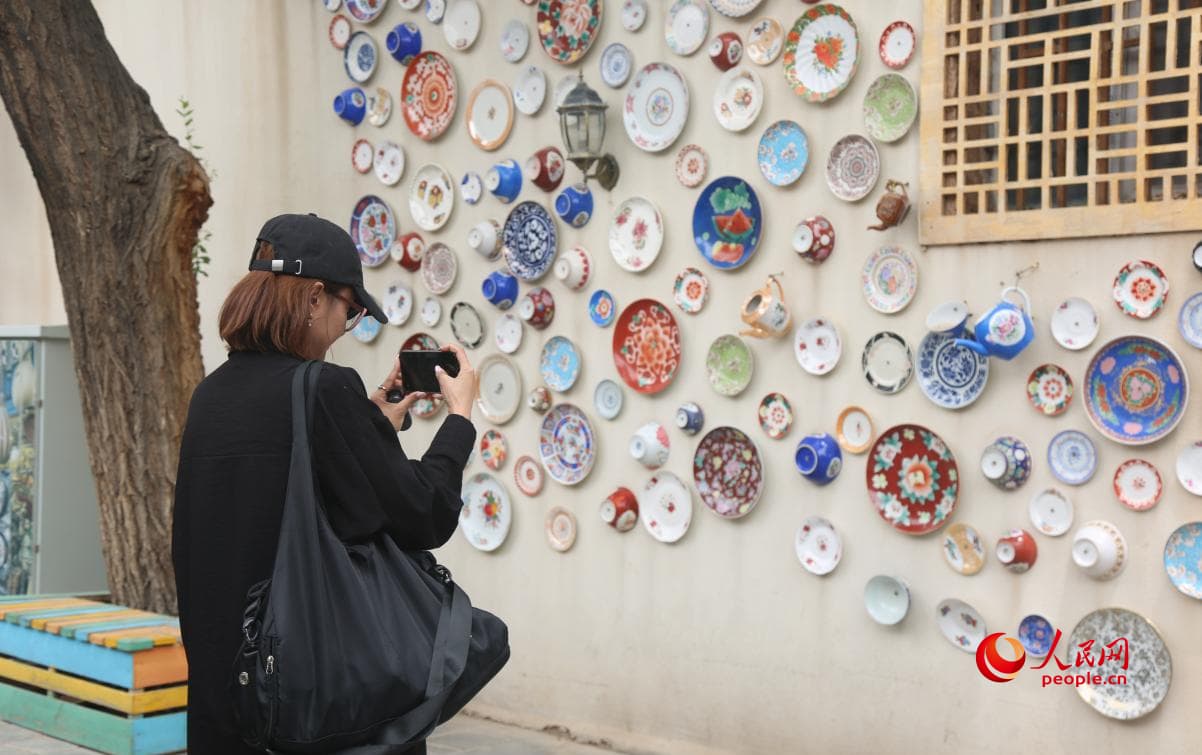
A visitor takes photos of a wall decorated by various plates at Qiuci Alley in Kuqa city, northwest China's Xinjiang Uygur Autonomous Region. (People's Daily Online/Li Long)
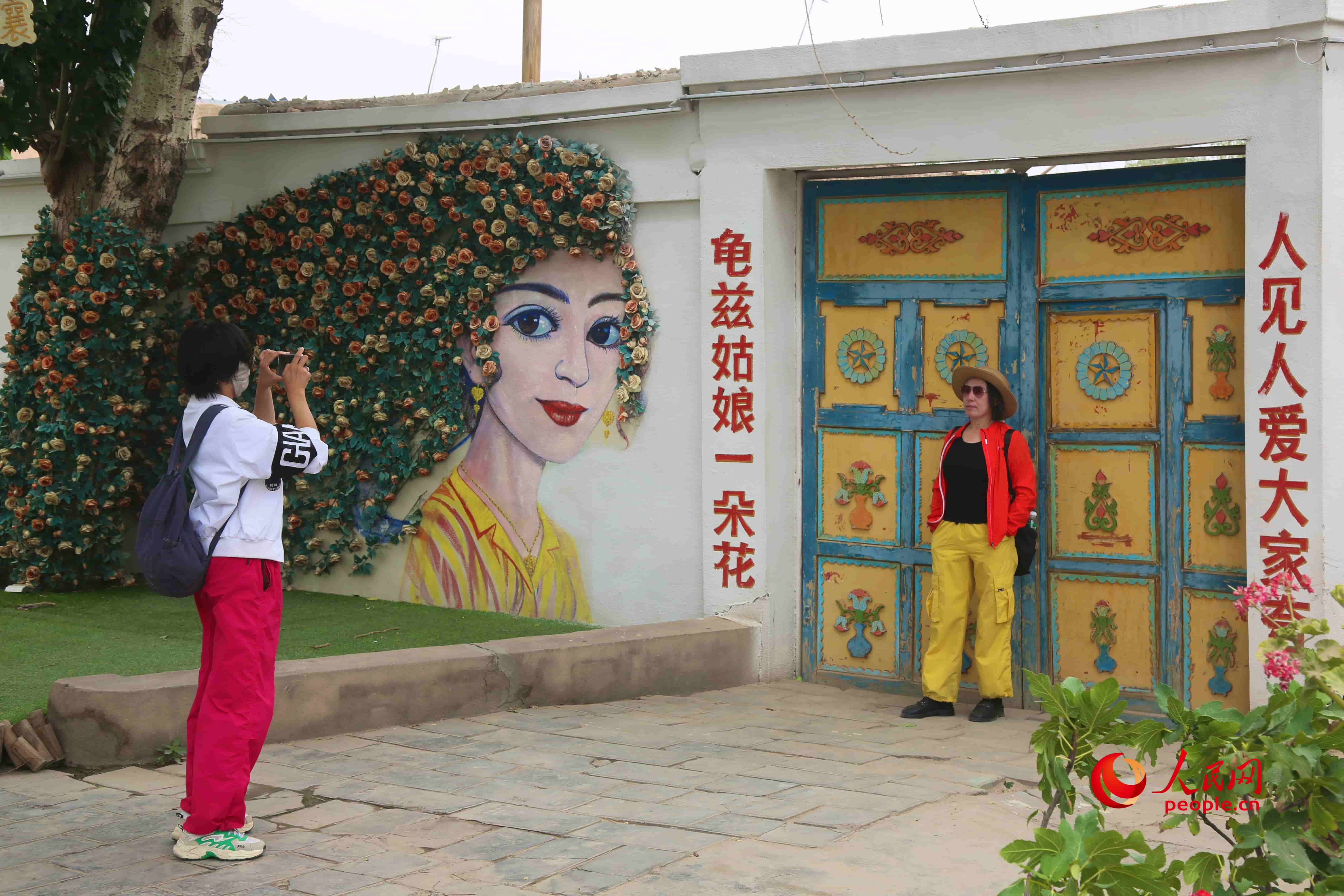
A visitor poses for photos at Qiuci Alley in Kuqa city, northwest China's Xinjiang Uygur Autonomous Region. (People's Daily Online/Li Long)
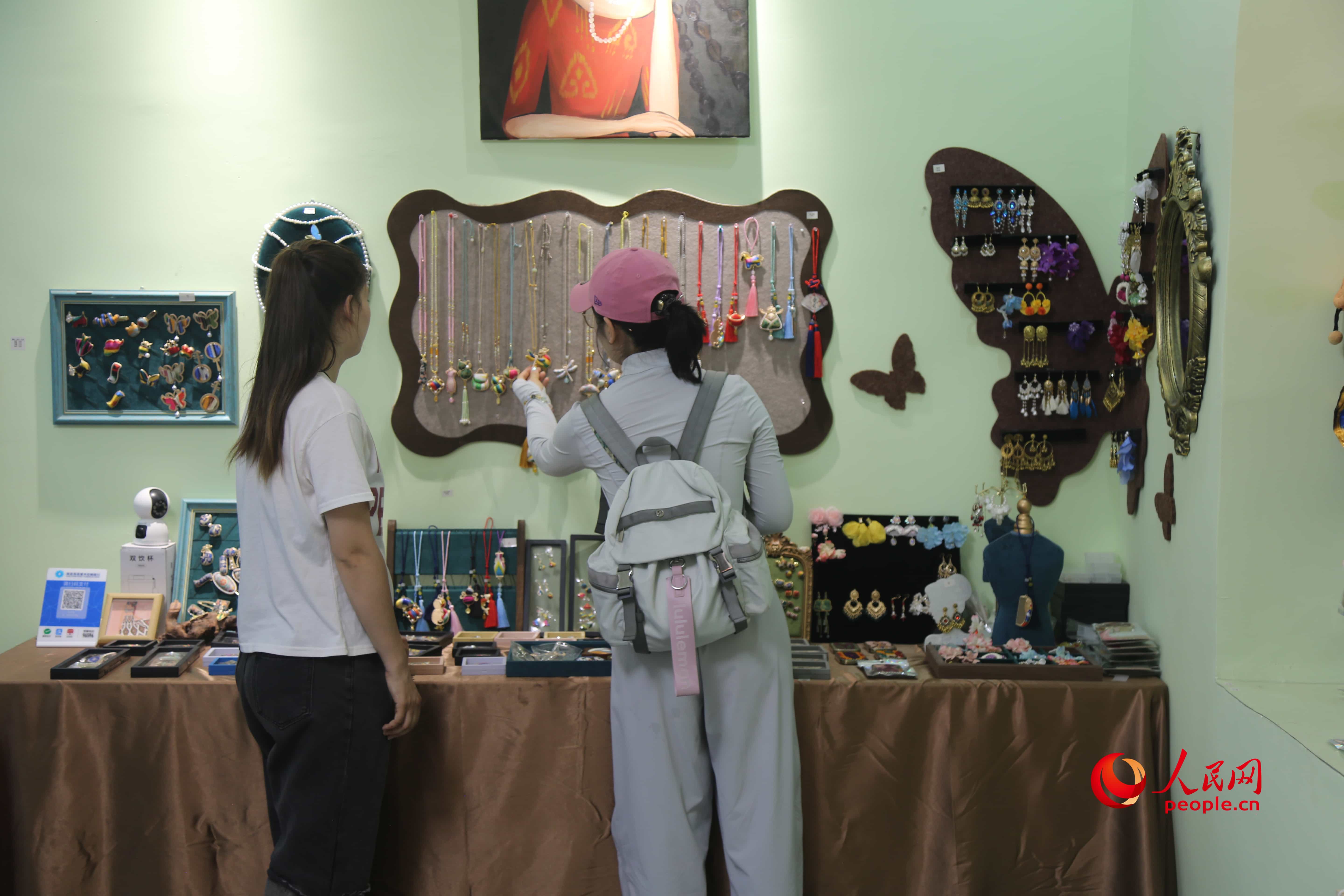
Visitors buy handicrafts at a shop in Qiuci Alley, Kuqa city, northwest China's Xinjiang Uygur Autonomous Region. (People's Daily Online/Li Long)
Photos
 World's highest-altitude solar thermal power plant completes heliostat installation in SW China's Xizang
 Immersive experiences increasingly popular amid China's summer travel boom
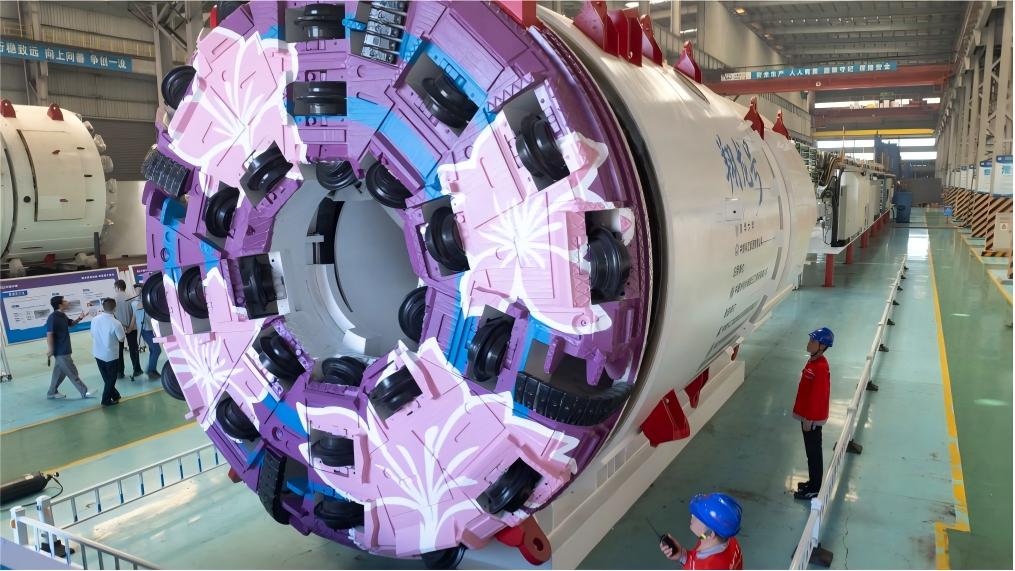 China's first boring and blasting machine rolls off production line in Wuhan, China's Hubei
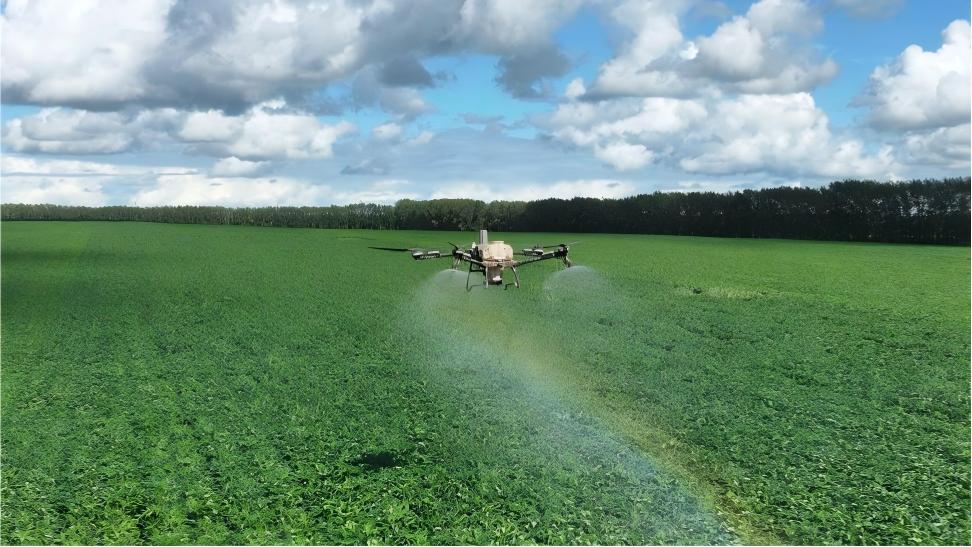 Aerial crop protection operations launched in fields of NE China's Heilongjiang
Related Stories
- Silkworms from E China's Jiangsu spin 'golden threads' in NW China's Xinjiang
- China cotton association opposes U.S. suppression of firms over forced labor claims
- Turpan in NW China's Xinjiang turns scorching heat into asset
- Xinjiang deploys 108-arm robot for cotton topping, slashes labor costs
- 12th Manas international cultural tourism festival held in China's Xinjiang
- Endless grasslands roll across Jiangbulake in NW China's Xinjiang
- Harvesters carve geometric patterns in NW China's Xinjiang
- Xinjiang records surging entry-exit trips in first half of year
- In Xinjiang, visiting int'l media leaders see a region in motion
- Museum of winged reptiles set to open in China's Xinjiang
Copyright © 2026 People's Daily Online. All Rights Reserved.
