



Museum of winged reptiles set to open in China's Xinjiang
BEIJING, July 4 (Xinhua) -- A museum themed on pterosaurs, a winged reptile closely related to dinosaurs, will open in September in northwest China's Xinjiang Uygur Autonomous Region.
According to Wang Xiaolin, a researcher at the Institute of Vertebrate Paleontology and Paleoanthropology of the Chinese Academy of Sciences, the museum is currently under construction in a national geopark in Hami City, a place renowned for its abundant pterosaur fossil discoveries.
"The museum will be the world's first of its kind," said Wang, whose research team is currently engaged in restoring pterosaur fossils unearthed on the museum site.
Pterosaurs, or cousins of dinosaurs, were the first vertebrates to achieve powered flight. They fly using four extremely enlarged ring finger phalanges to support their membranes.
Wang explained that the burial environment of the Hami pterosaur fossils was highly unusual. Excavations and research suggest the area was once a vast ancient lake. Massive super-storms likely killed large numbers of pterosaurs, whose bodies were torn apart and quickly buried, leaving their remains jumbled chaotically within hard rock.
Pterosaur eggs are especially delicate, with eggshells only a few dozen micrometers thick. They must be carefully restored piece by piece under a microscope, as even slight pressure from a hand can cause them to break.
"Sometimes we can only restore one or two bones in a month," Wang said.
The Hami national geopark is the world's largest and most densely concentrated pterosaur fossil site. Preliminary estimates suggest that, on average, one pterosaur individual is buried per square meter across the area, amounting to at least 80 million pterosaurs and other ancient vertebrate fossil specimens.
The world's first 3D preserved pterosaur egg and embryo fossils were both unearthed here.
In addition to paleontological resources, the geopark also features the world's largest, most developed, and visually striking yardang landform, irregular ridges of compact sand eroded by the wind. It is also the only yardang complex along the ancient Silk Road that retains traces of human habitation.
Photos
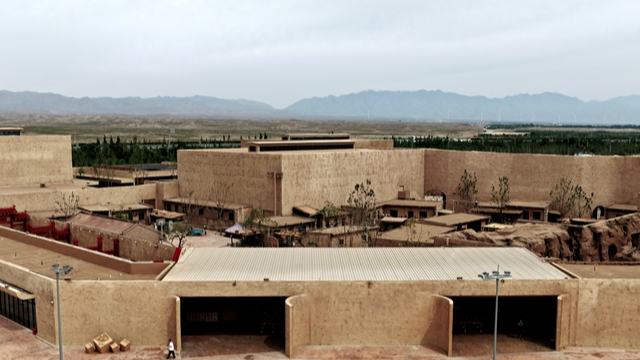 Immersive theater village inspired by poverty alleviation story opens in NW China's Ningxia
 Night scenery of Huishan Yingyueli area in China's Jiangsu
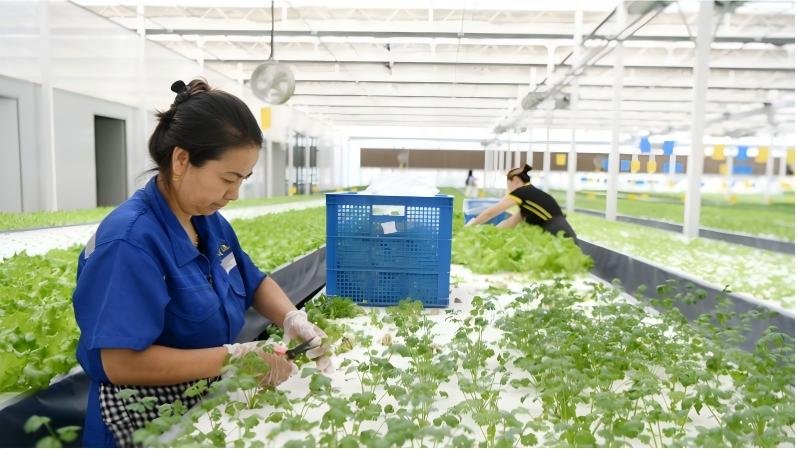 Smart plant factory produces high-quality vegetables, creates jobs in Kuqa, NW China's Xinjiang
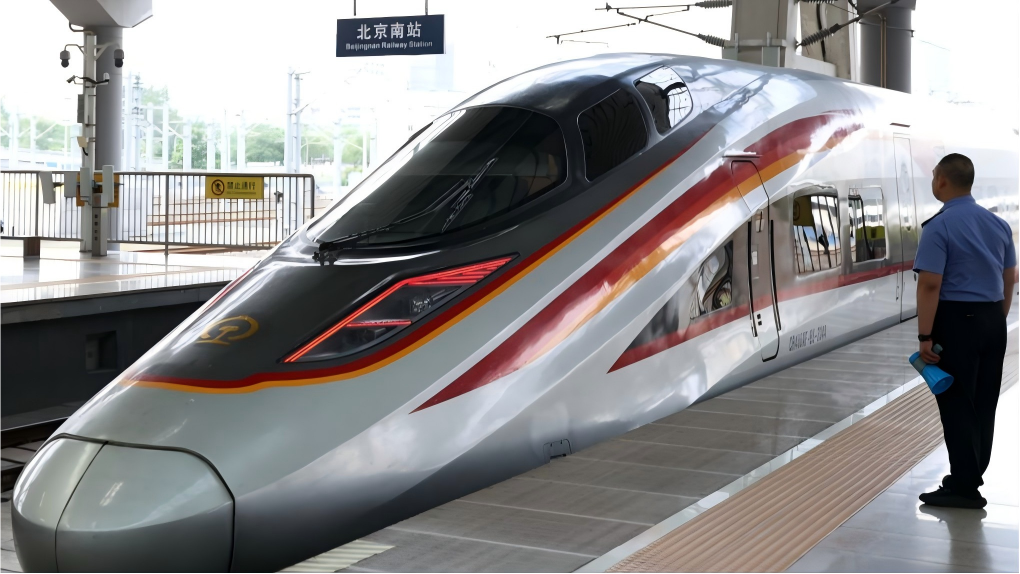 Beijing-Shanghai High-speed Railway marks 15th anniversary of operation
Related Stories
- Hybrid wheat yields robust harvest near NW China desert
- Letter from China: Xinjiang cotton demonstrates vitality, resilience
- How Xinjiang's 'money-losing' train market delivers warmth and hope across the Gobi
- Smart plant factory produces high-quality vegetables, creates jobs in Kuqa, NW China's Xinjiang
- New railway connecting northern, southern Xinjiang starts full construction
- A doctor's lifelong commitment to remote herders in Xinjiang
Copyright © 2026 People's Daily Online. All Rights Reserved.
