



Clued-in | New U.S. tariffs under Section 301 investigations are misguided
The United States has imposed another round of tariffs covering 99.4 percent of U.S. imports, marking the latest escalation of Washington's protectionist trade policy agenda.
On July 23, the Office of the U.S. Trade Representative (USTR) announced that it would levy additional tariffs of 10 to 12.5 percent on imports from 60 economies, including China, under Section 301 of the Trade Act of 1974, citing the alleged "failure to impose and effectively enforce a prohibition on the importation of goods produced with forced labor" as the reason.
The move seriously undermines the stability of global supply chains, disrupts the international trade order, and has won little support either at home or abroad.
The new tariffs show that the U.S. is increasingly allowing domestic laws to override international rules, pushing unilateralism further.
This is not the first time Washington has resorted to such measures. Since 1974, the U.S. has launched more than 130 investigations under Section 301, leaving many countries to bear the consequences.
From the establishment of the WTO in 1995 to 2017, the U.S. at least largely operated within established rules and procedures, using Section 301 investigations mainly as a stepping stone before bringing disputes into the WTO framework for negotiations.
However, since shifting toward an "America First" approach, the U.S. has gradually shed its multilateral facade and increasingly pursued unilateral actions.
The latest tariff measures mark another step in the shift of the U.S. trade strategy from multilateral coordination toward unilateral action.
The legal tools may change, but the underlying strategy remains the same.
Earlier this year, the U.S. Supreme Court ruled that the International Emergency Economic Powers Act (IEEPA) did not authorize the president to impose sweeping tariffs. The White House then swiftly turned to the Section 122 tariffs as a stopgap measure.
When the Section 122 tariffs expired on July 24, Washington seamlessly switched to the Section 301 tariffs.
From the IEEPA to the Trade Act of 1974, the legal cover keeps changing, but the core instrument, the big stick of tariffs, remains unchanged.
As U.S. Trade Representative Jamieson Greer said, "The specific authorities this administration is using have changed, but the trade strategy has not."
The U.S. is using "forced labor" as a pretext to accuse others of what it has failed to address itself.
Washington claims that certain economies have failed to impose and effectively enforce a prohibition on the importation of goods produced with forced labor. The implication is that the U.S. is the only country in the world that has "imposed and effectively enforced" such restrictions and therefore has the right to impose tariffs on others.
Such an argument has been questioned even within the U.S.
Desiree LeClercq, former director of labor affairs at the USTR, has noted that unlike U.S. forced labor ban procedures, relevant procedures of the European Union (EU) uphold strict evidentiary standards.
Among the 187 member states of the International Labour Organization (ILO), the U.S. is one of only six countries that have yet to ratify the Forced Labour Convention, 1930.
Rejecting international rules while positioning itself as a global arbiter, the U.S. can hardly justify its actions.
More ironically, the U.S. itself continues to face serious forced labor concerns.
According to the Global Slavery Index released by international human rights organization Walk Free, about 1.1 million people in the U.S. were estimated to be living in modern slavery in 2021.
The report "Captive Labor: Exploitation of Incarcerated Workers," released by the American Civil Liberties Union and the University of Chicago, said, "There are roughly 800,000 people working while incarcerated in state and federal prisons in the United States."
Ultimately, the U.S. is not genuinely seeking to eliminate forced labor through these tariffs. Rather, it is using forced labor allegations to label trade partners and provide a veneer of legitimacy for its unilateral actions.
The latest tariffs represent a self-defeating move that hurts others without benefiting the U.S.
The tariff measures have injected greater uncertainty into global trade and increased costs across the global economy, with developing countries bearing the heaviest burden.
In today's interconnected global economy, a single product often involves components and production processes spanning multiple countries. Washington's approach will only make trade disputes more complicated and harder to resolve.
Unsurprisingly, the measures have drawn firm opposition from China and several U.S. allies, including Brazil, both during their formulation and after their implementation.
The U.S. itself will also pay a price.
The U.S. think tank Progressive Policy Institute estimates that the tariffs could cost U.S. consumers and businesses around $100 billion annually.
Research by the Federal Reserve Bank of New York shows that nearly half of the companies subject to tariffs pass the additional costs on to consumers.
On July 24, two small U.S. businesses filed lawsuits challenging the measures.
Washington's promised reindustrialization has also failed to materialize. Data from the second quarter of 2026 shows that while artificial intelligence-driven advanced manufacturing has expanded, other manufacturing sectors have remained stagnant, and factory construction spending and manufacturing employment have declined.
Rather than making U.S. industry "great again," tariffs have instead become a burden on American businesses and consumers.
In essence, the latest tariff measures represent economic exploitation and political bullying wrapped in the language of law.
The "America First" agenda is unlikely to end, and the playbook of using tariffs as a weapon against the world will continue.
Meanwhile, the U.S. is still conducting Section 301 investigations into alleged "overcapacity" involving 16 economies.
Building a more equal and orderly multipolar world and achieving a more inclusive economic globalization will require a long journey. But one thing is becoming increasingly clear: more and more countries are seeing through Washington's tariff tactics.
The author is an associate research fellow at the Department for American Studies, China Institute of International Studies.

Photos
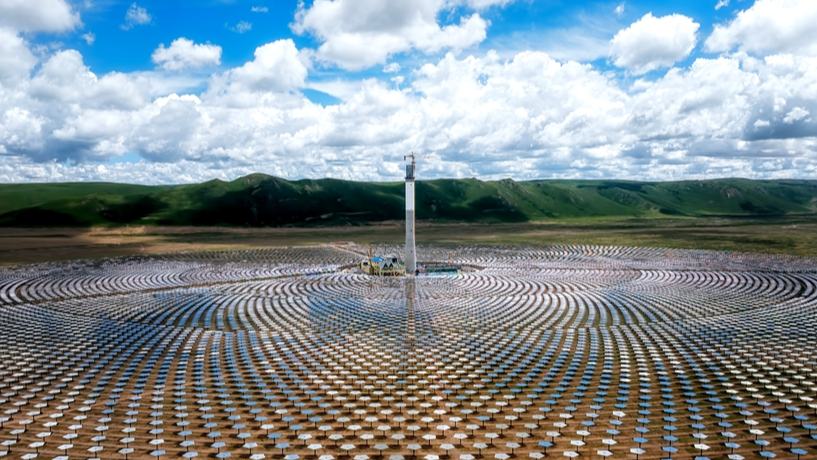 World's highest-altitude solar thermal power plant completes heliostat installation in SW China's Xizang
 Immersive experiences increasingly popular amid China's summer travel boom
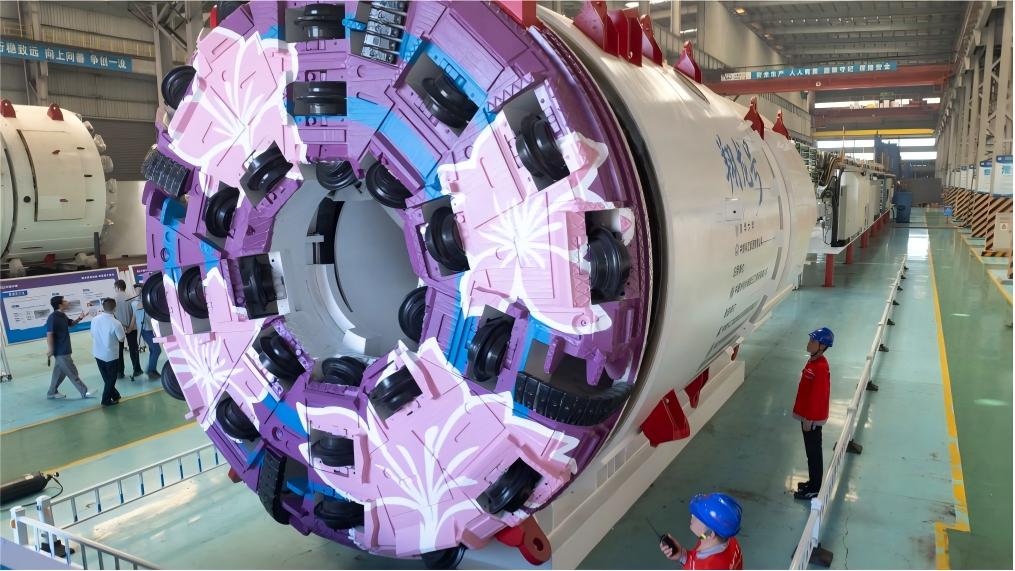 China's first boring and blasting machine rolls off production line in Wuhan, China's Hubei
 Aerial crop protection operations launched in fields of NE China's Heilongjiang
Related Stories
- U.S. federal judge allows Trump administration to terminate TPS for about 350,000 Haitians
- Mass shooting in rural North Carolina leaves multiple dead
- Poland, U.S. hold talks on establishing permanent American military bases
- Clued-in | Guilty of being anything
- Clued-in | U.S. can't account for $1.2 bln spent on anti-China projects
- 14 injured in New York subway fire
- Armed man arrested at Trump golf club in California ahead of presidential visit
- U.S. appeals court blocks Trump administration's cancellation of billions of dollars in climate grants
- Clued-in | New Section 301 tariffs pass off U.S. standards as international rules
- 25 U.S. states sue Trump administration over Section 301 tariffs
Copyright © 2026 People's Daily Online. All Rights Reserved.
