



Europe's heatwave highlights value of China-Europe economic, trade cooperation

An Austrian consumer shares how he purchased a Chinese air conditioner on social media. (Internet photo)
This summer, brutal heatwaves have engulfed Europe, smashing temperature records nationwide. France registered its highest temperature since 1947, while the UK issued its first-ever red alert for extreme heat. The World Health Organization confirmed over 1,300 heat-related fatalities in just one week.
Cooling appliances have rapidly shifted from optional household items to everyday necessities. As demand skyrockets, Chinese fans and portable air conditioning units have become Europeans' top pick to escape sweltering temperatures.
In Belgium, Chinese-made cooling appliances have virtually sold out in some brick-and-mortar stores, while many products on major online platforms were also listed as out of stock. Media reports indicate that similar scenes are playing out across other European countries.
Behind the sales boom lies the most authentic response from consumers and a simple truth once again brought into focus: China-Europe economic and trade cooperation is fundamentally mutually beneficial, and the root causes of Europe's industrial challenges do not lie in China.
In recent years, some voices in Europe have attributed the continent's lack of competitiveness to external competition. The European Union has rolled out a string of industrial protectionist policies, seeking to shore up domestic supply chains by erecting trade barriers. Yet the current heatwave-driven consumption boom has offered a vivid rebuttal to this narrative.
Europe's insufficient supply of cooling equipment mainly roots in lagging local industrial layout and sluggish product iteration, leaving domestic offerings ill-matched against construction scenarios and people's everyday needs. When local manufacturers cannot meet market demand, affordable Chinese products designed around real consumer needs naturally become the preferred alternative.
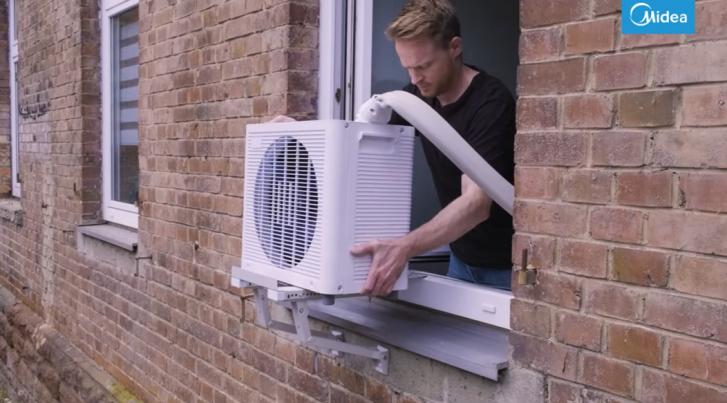
Photo shows the PortaSplit portable air conditioner manufactured by Chinese company Midea. The model is specifically designed to suit the window structures of aged buildings in Europe. (Photo courtesy of Midea)
Chinese cooling appliances have become runaway bestsellers across Europe, thanks to sharp market insights and robust smart manufacturing strength.
Europe is home to a large stock of aging buildings that are difficult to retrofit. Conventional air conditioners involve cumbersome installation, while portable units tend to be noisy and energy-inefficient.
In response to these pain points, Chinese appliance makers have introduced split portable air conditioners that require no installation, generate less noise, and offer high energy efficiency, delivering comfortable cooling without the need to modify existing buildings.
These products have always been out of stock in France, Belgium and other European nations, underscoring their remarkable popularity.
A single cooling appliance is, in fact, a microcosm of deeply integrated global industrial chains. From research and component production to final assembly and cross-border distribution, the international success of Chinese products brings together industrial strengths from many countries and reflects the achievements of globalization and international division of labor.
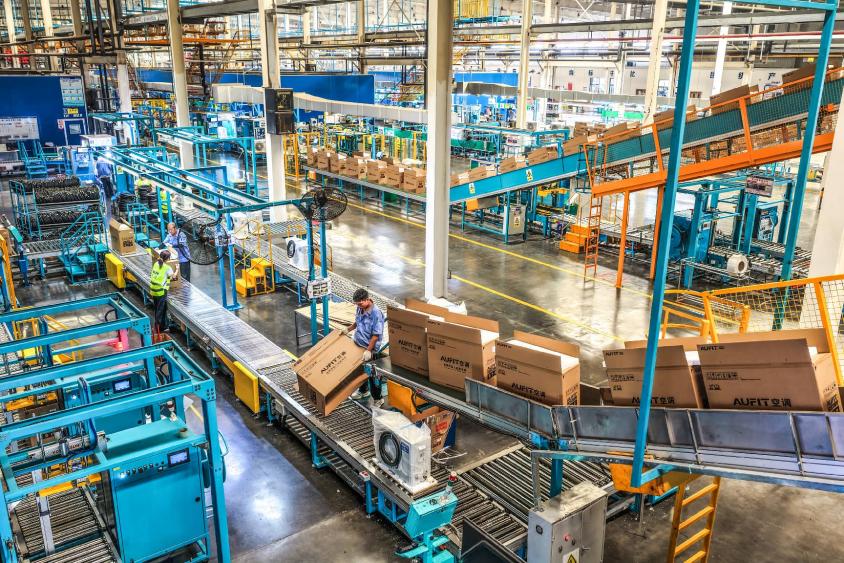
Air conditioners are manufactured in a workshop of Chinese household appliance manufacturer AUX in Ma'anshan, east China's Anhui province. (Photo/Wang Wensheng)
The resilience of China-Europe economic and trade cooperation has remained undiminished over decades. Both sides possess distinct strengths in areas such as high-end manufacturing, new energy, household appliances, and digital economy, and their industrial structures have become deeply intertwined. This cooperative ecosystem, formed through market law, cannot be easily shaken by policy disruptions in individual sectors.
The market is the fairest judge. Consumers' purchasing decisions carry far more weight than official policies or protectionist rhetoric. Man-made trade barriers and attempts to sever industrial chains run counter to the law of economic globalization and will ultimately lead to missed opportunities for transformation and undermine people's well-being.
In the long run, China and Europe have highly compatible development goals. Europe is pushing forward green, digital, and artificial intelligence-driven transitions, while China is fostering new quality productive forces and expanding high-standard opening up. The two sides enjoy broad prospects for cooperation in areas such as green home appliances, new energy, and intelligent equipment.
Joint cultivation of open innovation ecosystems and deepened industrial complementarities remains fundamental to sustaining shared economic dynamism while building collective resilience against transnational risks.
The heatwave will eventually subside, but the lessons left by the market will become ever clearer: trade protectionism offers no way forward, while openness and cooperation remain the right path. Barriers that run counter to market principles cannot stop the fundamental forces of supply and demand, nor can they stand in the way of consumers' choices.
Photos
 Residential community activates misting system amid hot weather in China's Shanxi
 Immersive theater village inspired by poverty alleviation story opens in NW China's Ningxia
 Night scenery of Huishan Yingyueli area in China's Jiangsu
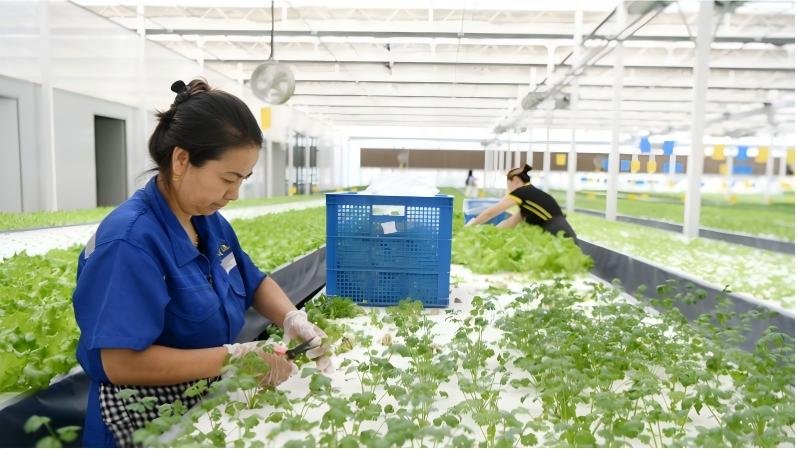 Smart plant factory produces high-quality vegetables, creates jobs in Kuqa, NW China's Xinjiang
Related Stories
- Commentary: Europe's air-conditioner shortage sheds light on China-EU trade potential
- China slams U.S., EU's so-called concern over China's new law on ethnic affairs
- China, EU to hold second meeting of trade, investment consultation mechanism this autumn
- Chinese firms urge dialogue to resolve trade issues with EU: CCPIT
- China says key to addressing economic, trade concerns with EU lies in deepening cooperation
- China, EU officially launch trade, investment consultation mechanism
- Commentary: Cooling the heat in China-EU trade
- China Chamber of Commerce to EU warns of additional uncertainty from EU's plan to develop so-called new trade defense tools
- The world does not need a new 'Plaza Accord'
- China, EU to work for practical outcomes from trade, investment consultation mechanism
Copyright © 2026 People's Daily Online. All Rights Reserved.
