



Mountain coffee paradise: The remarkable dream blooming in Menglian
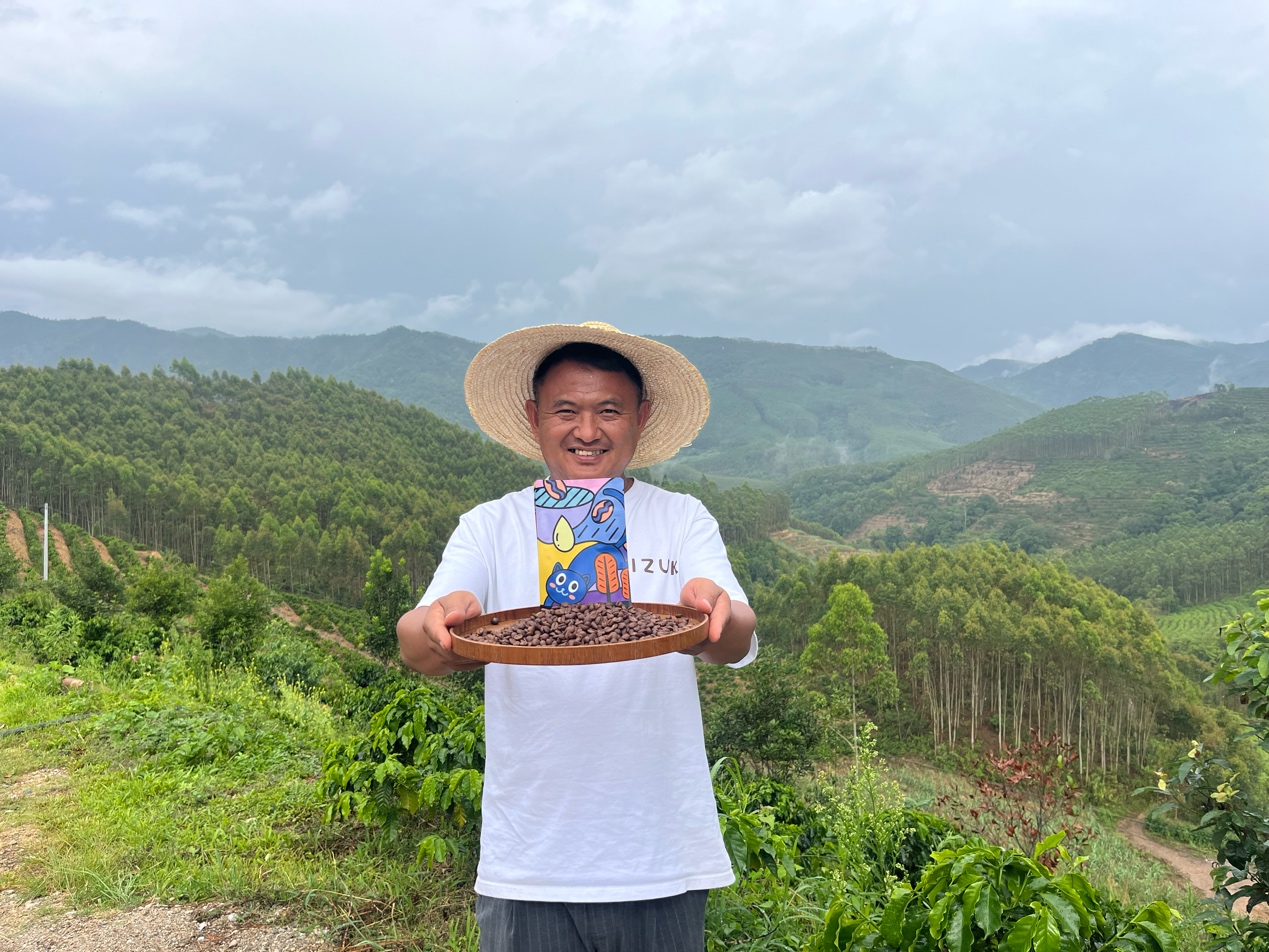
Guan Yong's Lizuk Coffee Estate in Menglian county, southwest China's Yunnan Province, has become a popular destination on Xiaohongshu and other social platforms. Its pristine mountain scenery and exceptional coffee are drawing more and more city dwellers to this remote borderland, where they can experience a completely different way of life. (People's Daily Online/Kou Jie)
The summer rain had just passed, leaving the mountains of Menglian county, southwest China's Yunnan Province, wrapped in drifting mist. Across the hills, coffee trees glistened a fresh, vibrant green, with raindrops sliding lazily from leaf to leaf. The air carried the rich scent of wet earth and wild greenery.
At Lizuk Coffee Estate, Guan Yong's wife stood in front of her phone, smiling as she showcased the latest batch of coffee beans to her livestream audience. Orders kept pouring in. Comments flooded the screen: "Do you still have any 'Red Makeup' coffee beans left?" "When's your Gesha back in stock?" Last year alone, their Douyin store sold more than 50,000 orders.
Guan watched quietly from the side, reflecting on the transformation of this abandoned primary school into a thriving coffee estate. The basketball court had become a sun-drying terrace, classrooms turned into processing workshops, and all around stood rows of coffee trees. In the local Lahu language, "Lizuk" means "the mountain that hides gold and silver treasures."
And Guan believes his mountain truly does.
From one cup of coffee to an entire estate
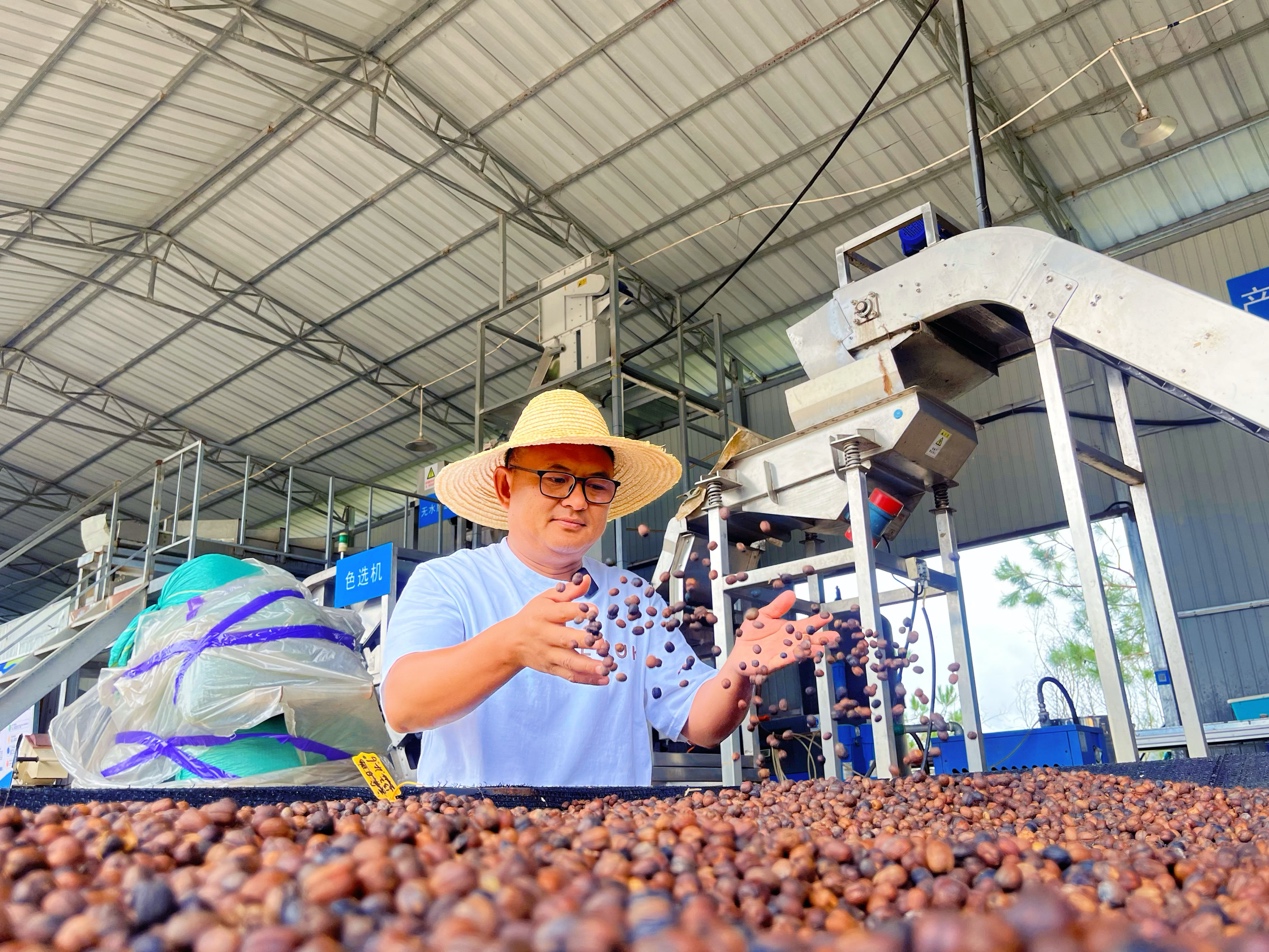
The abandoned primary school has been transformed by Guan Yong into Lizuk Coffee Estate — a space combining coffee cultivation, tasting, eco-tourism and cultural experiences, while creating new income opportunities for local farmers. (People's Daily Online/Kou Jie)
A lifelong Menglian local, Guan grew up in a family of farm workers. Like so many coffee-farming families here, his parents had grown coffee their entire lives but had never truly tasted it. As a boy in the late 1980s, he watched coffee planting begin in his hometown, yet to him it was just another cash crop — harvested, packed and shipped away in clouds of dust.
He left home young and wandered for years, running computer training classes, building websites, selling jade, dealing in agricultural supplies, trading rosewood and even serving as deputy manager of a rubber company. In 1999, he opened a small café in Menglian called "Ice Rain," selling instant iced coffee. For many locals, it remains their first memory of drinking coffee.
Everything changed in 2011. While working in Kunming, he stepped into a café and ordered a fresh pour-over. The moment the beans were ground and the fragrant notes of fruit and flowers hit him, he was stunned. Coffee could taste like this? In that instant, he thought of the vast coffee forests back home and his parents who had tended those trees for decades without ever knowing their true flavor.
In 2017, he made the decision to return and build something real. "At first, I just wanted a good place for me and my friends to drink coffee," he recalled. "But once you're in your hometown, you start thinking bigger — what if we could make truly excellent coffee right here at the source?"
He started with a small shop, then moved upstream: building a roasting facility, setting up processing and eventually creating his own estate and plantations. "First understand what the market wants, then grow it — that's the smarter path," he said.
Turning an abandoned school into a dream
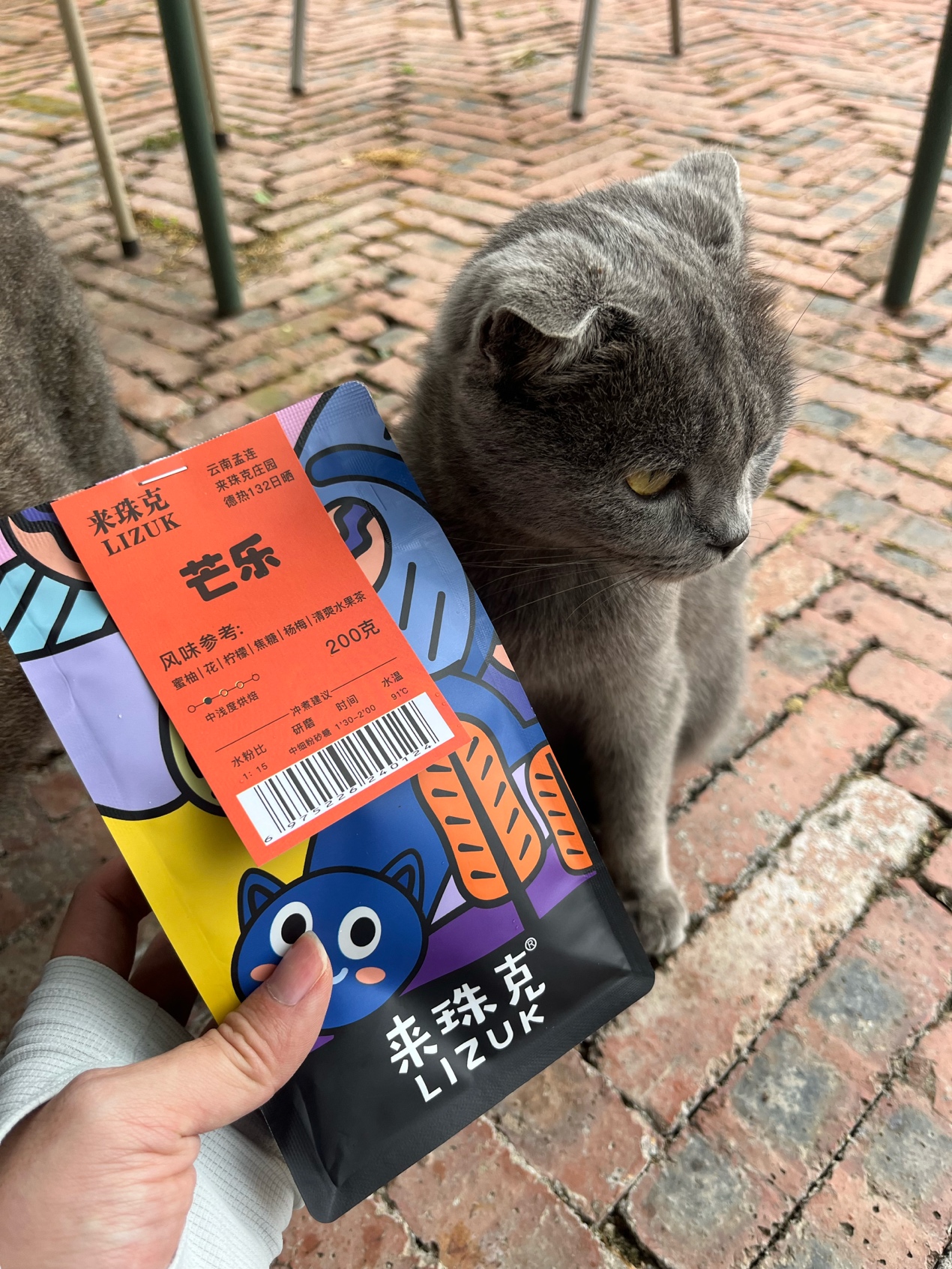
The trademark of Lizuk Estate is a charming little blue cat. Guan Yong, his wife and sister once stayed up all night painting its image on the estate wall. Today, both the real cat and the mural have become popular photo spots for visitors. (People's Daily Online/Kou Jie)
The birth of Lizuk Estate came partly by chance. One day, while eating in the mountains, villagers mentioned a long-abandoned primary school. When Guan visited, he found crumbling walls, broken windows and weeds everywhere. Instead of walking away, he felt a pang of nostalgia. "At least the people who studied here can come back and see their childhood memories again," he thought to himself.
Renovation was slow and done mostly by hand. With limited funds, he and his family did much of the work themselves. When local authorities saw the changes, they stepped in, bringing water, electricity and roads to the remote mountain.
A special team member also joined along the way. Early on, they used plastic bags to pack fresh coffee cherries, but mice kept chewing through them, causing serious losses. Then a stray grey cat wandered in, and the mice disappeared. Guan, his wife and sister stayed up all night painting a mural of the cat, later turning it into the brand's mascot and naming it "Wangcai," meaning "Fortune." Today, that same cat still patrols the estate.
As the infrastructure improved, Guan built more experiences around coffee: a forest café, restaurant, guesthouses and an e-commerce platform. Last year, the estate welcomed over 30,000 visitors and became one of Menglian's first official coffee tourism destinations.
"Friends used to ask me what was so great about developing this wild land," Guan said with a laugh. "Now they call it a blessed place."
Government support meets entrepreneurial drive
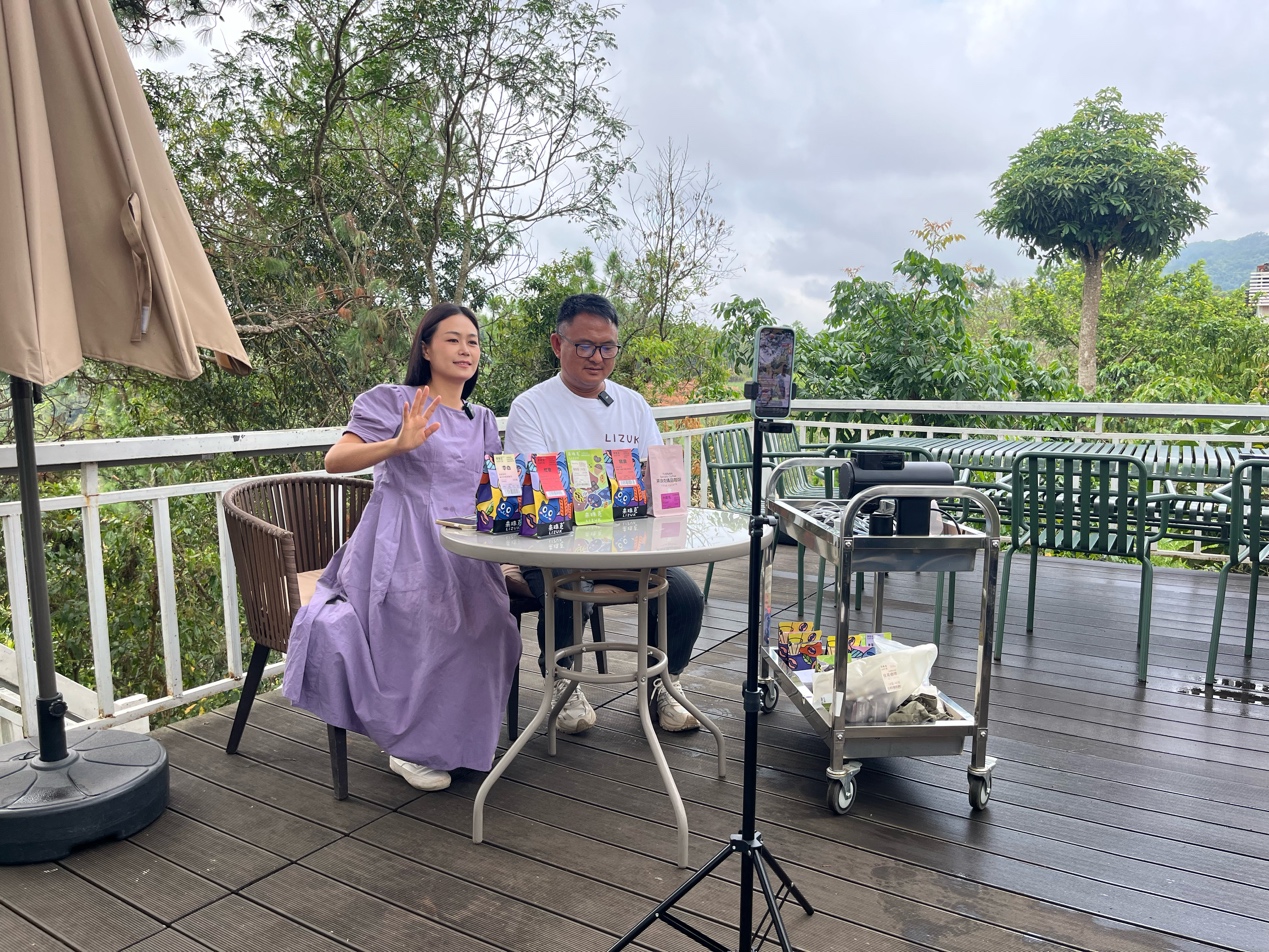
What began as one man’s passion has grown into a full-family effort: Guan Yong's wife handles e-commerce livestreams, while his sister manages daily estate operations. Coffee has become the strongest bond holding this family together. (People's Daily Online/ Kou Jie)
Guan said that government support and personal success go hand in hand. "When the government gives us a push while we're growing, we'll be able to give back to our hometown once we succeed," he said.
The water-fertilizer irrigation system is a case in point. Yunnan's dry springs and winters make traditional fertilizing inefficient, especially for delicate varieties like Gesha. After visiting flower plantations, he decided to introduce smart precision irrigation technology. The government provided 400,000 yuan ($59,000) in funding and he invested some of his own. The result: over 300 mu (20 hectares) of high-standard plantations that can be remotely monitored. The technology has since been shared across Yunnan.
"With this system, we finally dared to grow Gesha — and it's selling extremely well both online and offline," he said.
From infrastructure to funding and market promotion, government assistance has been present throughout. "We explore new paths, the government supports us when they see potential, and when we succeed, we help drive the local economy — it's a virtuous cycle," he said.
Thanks to sharp market insight and strict quality control, their signature "Red Makeup" beans became a runaway hit. Double anaerobic fermentation gives them a vibrant tropical fruit wine aroma that suits southern Chinese palates well.
A family dream taking root
Coffee has brought the whole family together. Guan drives the vision, his wife handles the livestreams and his sister manages day-to-day estate operations.
What delights him most is being able to lift up his fellow villagers. The estate works with 86 households and 286 people. In the 2022-2023 season alone, it distributed 6.5 million yuan for fresh cherries, bringing each household an average extra income of 75,600 yuan.
"Many farmers have grown coffee their whole lives but never drunk their own beans," he said. "When I opened the café, I dreamed of letting them taste what they grew. Later, the dream grew bigger — sell the coffee far and wide so everyone can earn from it."
That dream is steadily becoming reality. Through equipment upgrades and standardization, the estate's coffee now ships to Beijing, Shanghai, Guangzhou, Shenzhen and beyond.
For Guan, growing great coffee is only the beginning. He wants to create a true Menglian coffee culture, blending Wa ethnic brocade, Lahu firepit traditions, misty rain forests and the cats roaming the estate. "Coffee isn't just a drink," he said. "It's a way of life. We want people outside to drink our coffee and fall in love with the Menglian lifestyle."
With that vision, he plans to extend the industry chain further and invest in deep processing. "Use overseas markets to boost the domestic one. We've already been to Japan and Thailand — next we want to reach Europe and the Middle East, so the world can discover Menglian's coffee culture," he said.
As the rain clouds lifted and sunlight bathed the drying yard, Guan stood at the edge of the coffee forest. In the distance, his wife's bright laughter rang out from her livestream. The mountain that hides gold and silver treasures is finally being seen by more and more people.
Photos



Related Stories
Copyright © 2026 People's Daily Online. All Rights Reserved.
