



Turning bitter roots to global brews: A young Wa woman's coffee dream
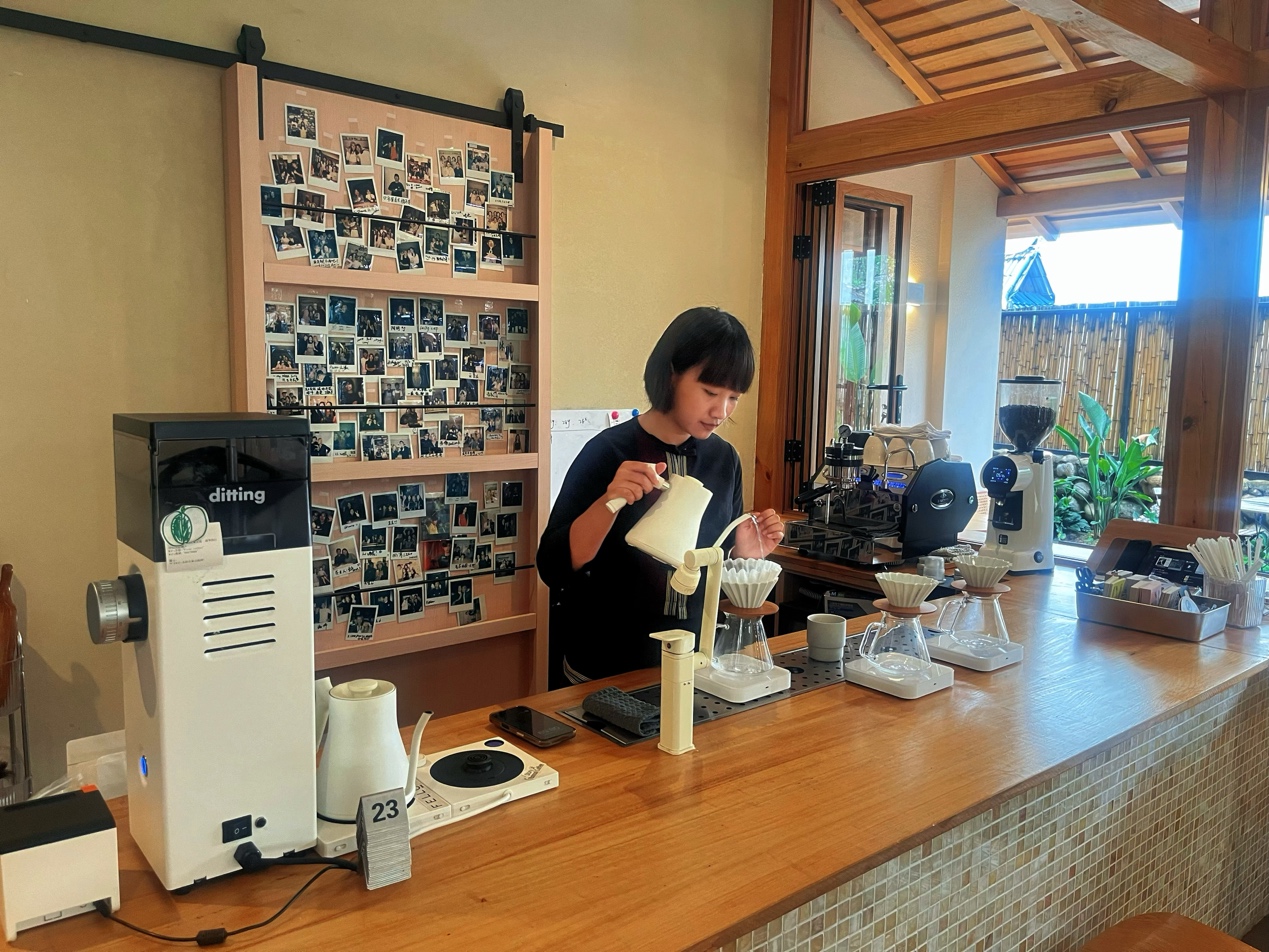
Zhao Hua begins her day the way she always does, carefully brewing coffee for her customers using beans grown on her family's farm in Menglian county, southwest China's Yunnan Province. (People's Daily Online/Kou Jie)
Deep in the misty hills of Menglian county, southwest China's Yunnan Province, a white pickup truck bounced along a red dirt road. Zhao Hua, a spirited young Wa woman, sat in the passenger seat, her short hair whipping in the wind.
Beyond the window, coffee trees blanketed the slopes, their ripe cherries filling the air with sweet, earthy perfume. She and her sister were heading out to collect seedlings, retracing the same rugged path her father had driven countless times when she was a child.
"I used to sit in the back," Zhao recalled with a warm smile, "bouncing along these same roads."
Menglian hugs the border with Myanmar, its steep mountains covered in coffee groves. Zhao's parents were among the first locals to plant it. To her as a child, however, coffee tasted only of hardship: backbreaking labor, calloused hands and beans that vanished into the outside world, leaving little behind. She left for the city, became a kindergarten teacher and tried to forget the fields.
From bitter to sweet
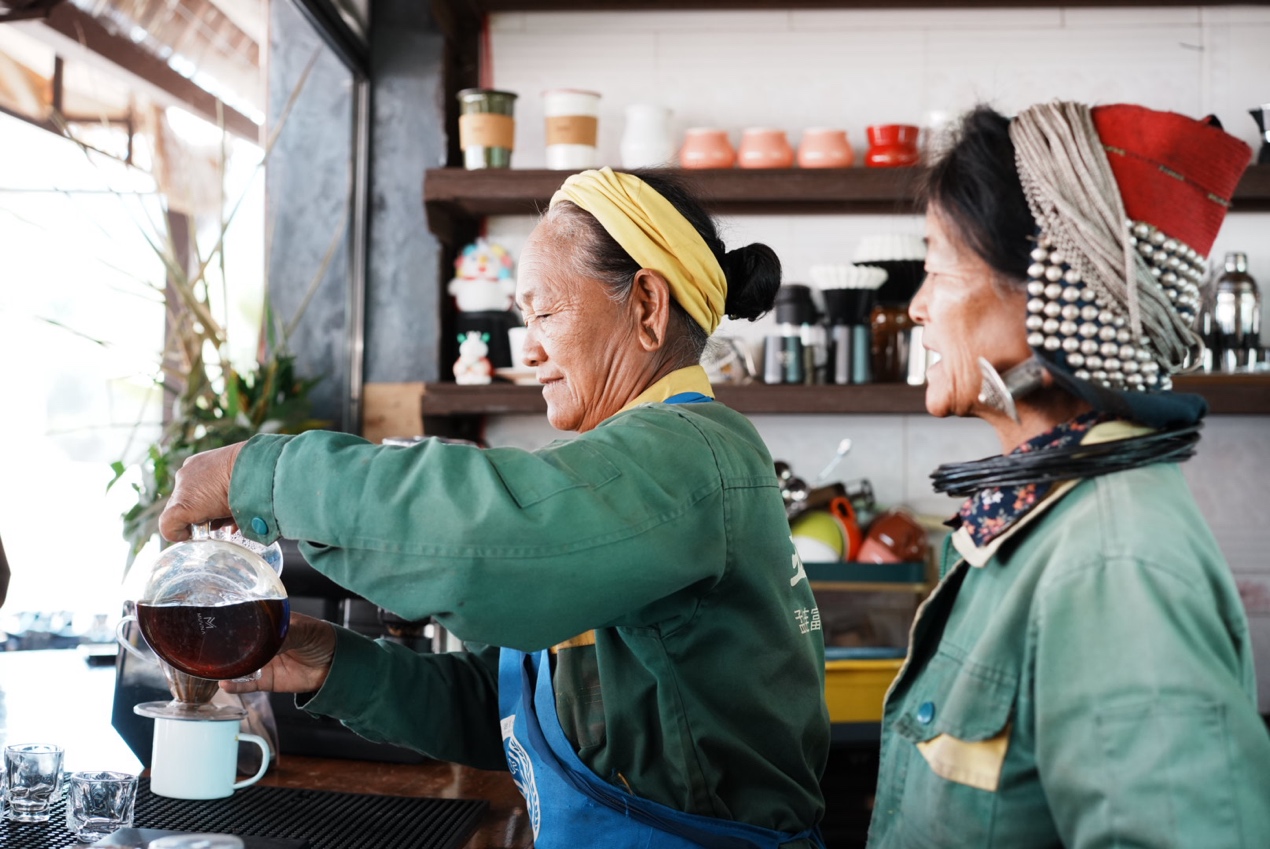
Wa women at Picar Coffee in Menglian county, southwest China's Yunnan Province, making fresh pour-over coffee, a daily ritual they've come to love. (Photo provided by Zhao Hua)
Then one ordinary day in the city, she sipped a cup brewed from African beans. Bright fruit notes, silky sweetness and delicate floral aromas unfolded across her tongue. She froze. Coffee could taste like this? That single sip cracked open a door. Suddenly she needed to know: where had her father's beans gone, and what had they become?
Later, while visiting an elder who studied Menglian culture, she listened for hours and felt a quiet wave of shame.
"I realized I knew almost nothing about my own hometown," she said. Inspired by that African cup, she quit her teaching job and returned to the mountains with a clear purpose: to tell Menglian's story through a single coffee bean.
She named her café Picar Coffee, a heartfelt tribute to the white truck that carried her father's labor and her happiest childhood memories.
The early days were tough, but county officials reached out like family, offering policy support and encouragement. When a specialty coffee street opened, her shop quickly became its most vibrant spot. Local officials invited her to exhibitions and were always the first to clap and cheer her storytelling. "They treated me like a younger sister," she said.
Zhao began hosting tasting sessions where older Wa women sat beside city customers, cups in hand, swapping stories. On social media, she posted videos in traditional Wa dress, brewing coffee while sharing her tales from her homeland.
She also brought Wa brocade weaving into the café, creating a living gallery where guests could watch ancient cultural patterns take shape and touch the handwoven fabrics as they sipped.
Today, her family's beans ship to international markets, including Japan and Australia. A Japanese coffee master once flew to Menglian just to spend an afternoon in her shop.
"Yunnan coffee only needs time," Zhao said. "It will prove itself."
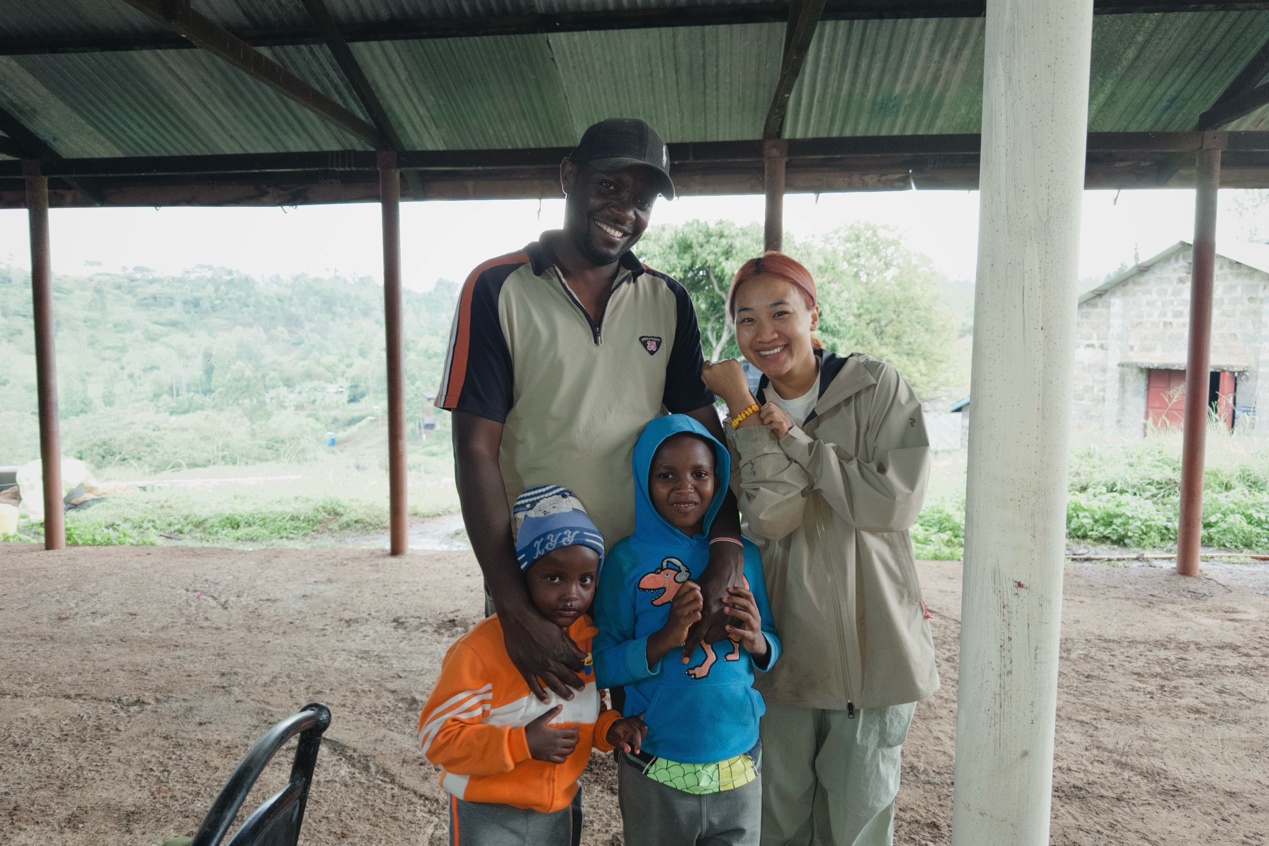
Zhao Hua visits a coffee farm in Kenya, meeting local farmers whose beans first inspired her return to Menglian. (Photo provided by Zhao Hua)
In 2024, she traveled to Kenya and tasted the very coffee that had changed her life — the same bright fruit, the same deep sweetness. This time, she arrived not as a seeker, but as a brand founder, carrying her own Yunnan beans across the oceans. In Kenyan villages, she sang and danced with local farmers, planting coffee side by side. When words failed, laughter and gestures bridged the gap. Village children braided her a lucky bracelet that she still wears.
The sun-weathered faces and calloused hands looked strikingly like those back home. In that moment, she understood: coffee is more than a crop. It is a bridge between people. Her father's generation planted without ever knowing who would taste their harvest.
She is now reconnecting those broken threads.
A new path for Wa women
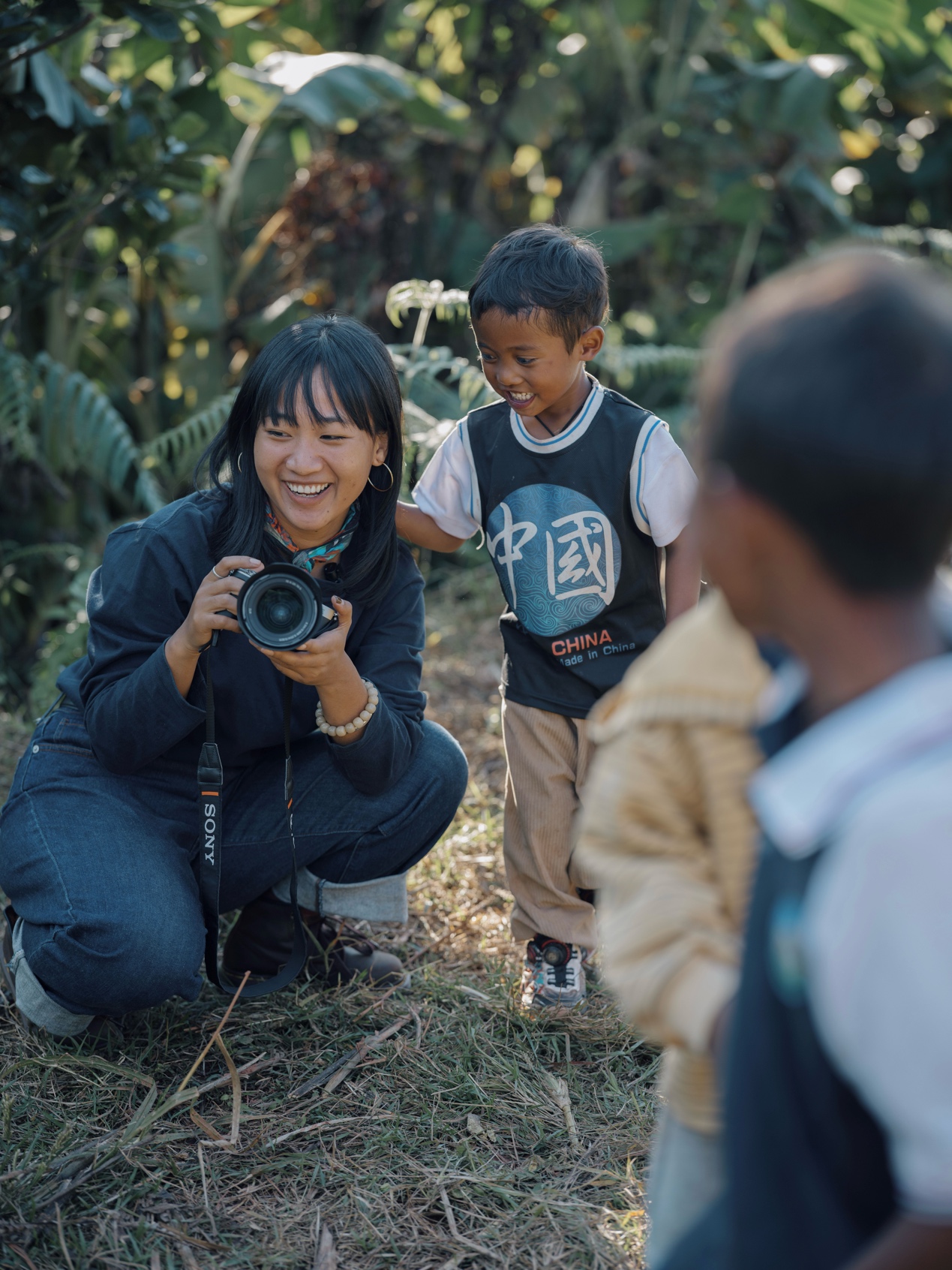
Zhao Hua shares her hometown's stories and culture with the world as both a barista and content creator. (Photo provided by Zhao Hua)
Zhao quietly broke tradition, too. In Wa culture, girls traditionally kept long hair and avoided bold changes. The day she returned home, she cut her hair short and dyed it a color she loved. The older village women shook their heads at first, but her confidence soon proved contagious.
Her farm now employs more than 20 Wa women, many of whom had grown coffee for decades yet had never truly tasted it. Zhao handed them their first cups. They wrinkled their noses. "Too harsh!" they said. But she only smiled: "Give it time."
Before long, the older women were brewing pour-over themselves — before work, during afternoon breaks — picking out flavors with delight: "This one is bright and acidic," "That batch is sweeter." At weddings, they now proudly wear café aprons over their traditional skirts. "It shows I have real work," one of them said.
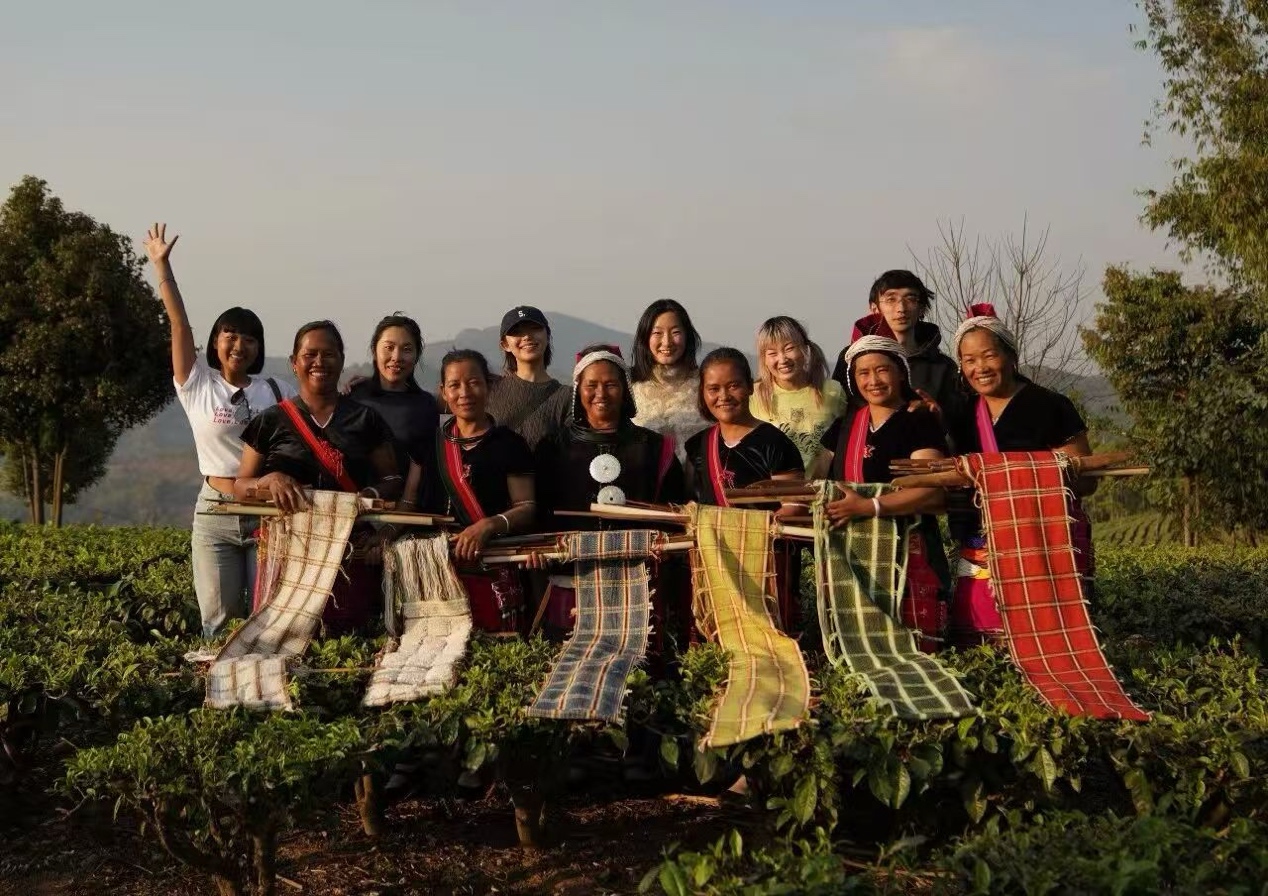
Zhao Hua and fellow Wa women proudly wear their traditional skirts, showing the blend of heritage and new opportunities. (Photo provided by Zhao Hua)
These women had always dreamed of seeing more of the world. Last year, Zhao and her sister took them to Shangri-La, Lijiang and Dali — their first real journey beyond the mountains. When the snow-capped peaks came into view, some stood speechless, then broke into laughter.
"Wa women are like the wildflowers on our cliffs," Zhao said. "No matter how hard the wind and rain beat down, we don't fall." When she faces difficulties, she remembers her grandmother's smile.
To Zhao, every cup tells the same story: bitter first, then sweet. "Everything worthwhile is bitter first, sweet later," she said. "Just keep going."
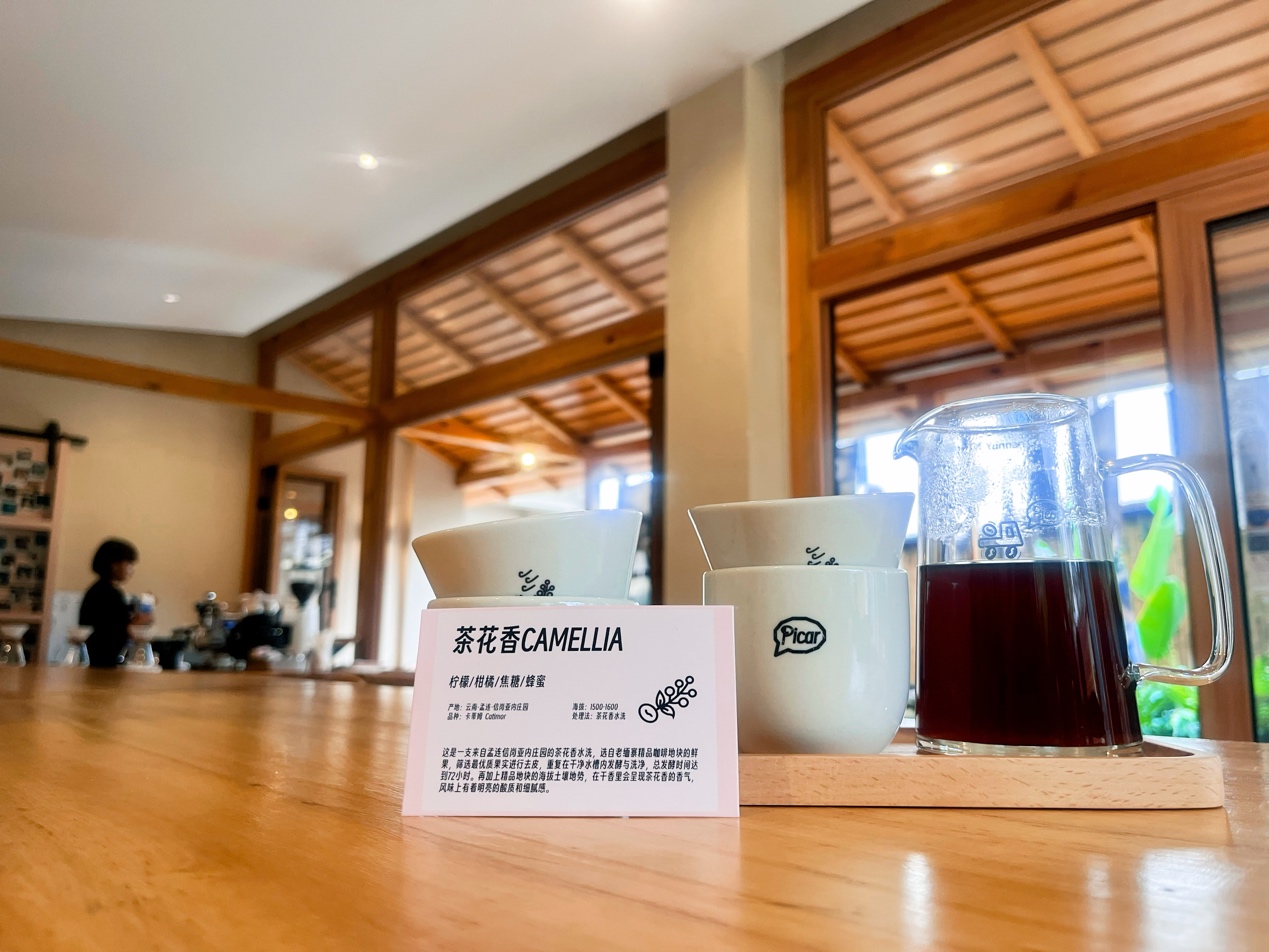
Zhao Hua and her team grow their own coffee beans on the family farm, carrying the flavors of Menglian to the world. (People's Daily Online/Kou Jie)
As the interview ended, Zhao climbed back into the white pickup. Her sister took the wheel. Wind rushed through the open windows, lifting her dyed short hair. Seedlings rattled in the back, just as they always had. Only now the road stretched far beyond the mountains.
"I'll keep driving this pickup," she said, "carrying Menglian's coffee story to the world."
Photos



Related Stories
Copyright © 2026 People's Daily Online. All Rights Reserved.
