



Traditional industries resurgent: emerging demand sparks new life
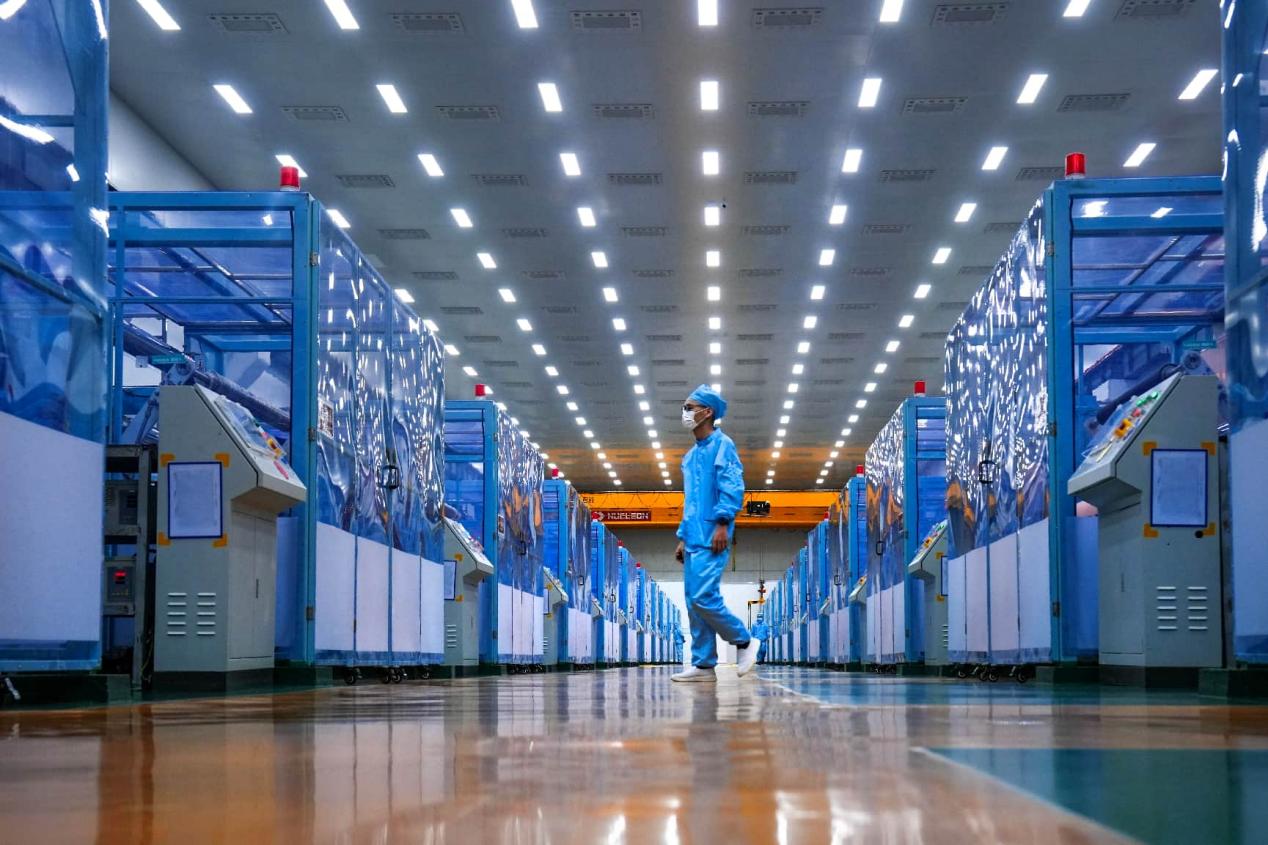
A man works in a copper foil manufacturing workshop of a new energy enterprise in Dongyang, east China's Zhejiang province. (Photo/Pan Xuekang)
Once a niche concern primarily for industry professionals, tin—a fundamental non-ferrous metal—has surged to prominence. Its price has skyrocketed nearly 40 percent in just half a year, while smelters report robust production and strong sales.
This revival stems from a critical new application: tin has become indispensable in advanced semiconductor packaging. The ever-growing demand for computational power requires increasingly densely stacked chips, directly driving up tin consumption. As artificial intelligence (AI) rapidly advances, tin is now hailed as a sought-after "essential constituent of the computational era."
This trend extends far beyond tin, permeating the broader non-ferrous metals sector. Propelled by surging demand from cutting-edge industries, production of essential battery components like nickel, cobalt, and lithium, along with copper and aluminum foils, high-end copper products, and rare and rare-earth metals, continues to climb. This resurgence saw China's non-ferrous metals industry profits surge by an impressive 117.8 percent year-on-year during the first four months of 2026.
Long viewed as cyclical and traditional, this sector is now achieving concurrent growth in both output and profitability by capitalizing on waves like AI computing. Simultaneously, its transition towards intelligent, sustainable (smarter and greener) production methods is accelerating.
This is not an isolated phenomenon. It vividly demonstrates how innovation-driven forces invigorate the real economy. The impact extends well beyond metals.
Mass production and deployment fuel demand for specialty steels, bearings, and general-purpose rubber components.
Rapid expansion in new energy storage reinvigorates markets for traditional chemical materials like soda ash, electrolyte solvents, and separator substrates.
The emergence of drone-based applications (the low-altitude economy) generates steady demand for aluminum alloys, carbon-fiber composites (feedstocks), and standard cabling.
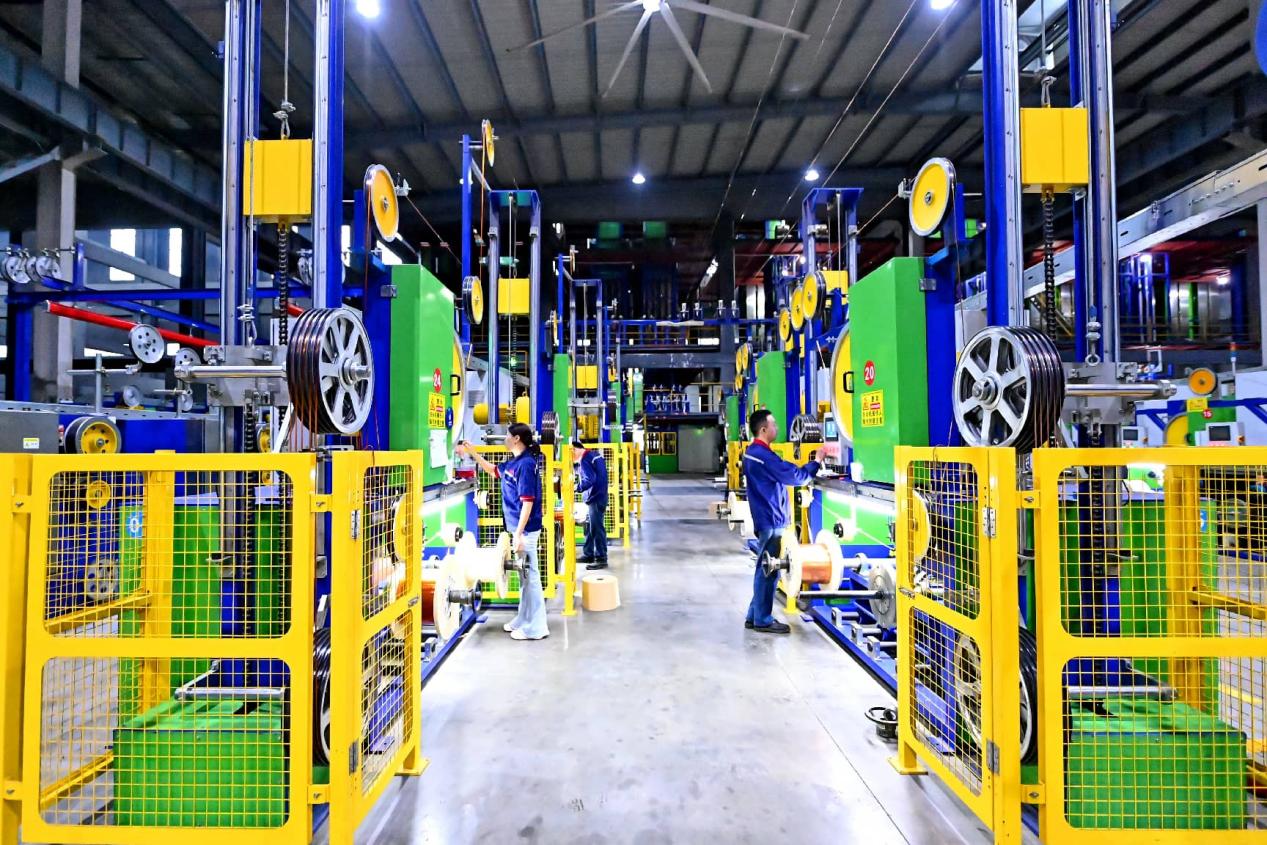
Electromagnetic wires are manufactured in a workshop of an enterprise in Fuzhou, east China's Jiangxi province. (Photo/Zhu Haipeng)
As new technologies, applications, and market demands continue to spread throughout the economy, many industries once considered mature or saturated are breaking through growth constraints and moving beyond long-established development paths. In doing so, they are discovering fresh opportunities for transformation and upgrading.
For years, many traditional industries grappled with rigid demand structures and limited prospects, often finding themselves trapped in cycles of periodic fluctuations and homogeneous competition. The recent tin boom, ignited by the computational demand surge, exemplifies how rising industries generate entirely new sources of structural demand.
Through this process, a standard industrial raw material has fundamentally transformed into a strategically vital input for the digital economy and intelligent industries, leading to a complete revaluation of its inherent worth.
The lesson is evident: No industry is inherently obsolete—only applications remain undiscovered. No industrial capacity is truly outdated—only unrealized value awaits release.
For traditional industries, the greatest opportunities lie not in fierce battles over shrinking existing markets, but in ambitious expansion into new frontiers. By proactively aligning with digitalization and sustainability (the digital and green economies), exploring innovative cross-sector applications, and broadening industrial boundaries, companies can leverage established capacities to meet novel demands. This enables the transformation of existing resources into competitive advantages, achieving the twin goals of enhanced (dual leap in) product value and expanded market potential.
Technological innovation stands at the core driver behind the transformation and upgrading of traditional industries and is the prime engine for quality and efficiency growth.
Consider tin: Midstream and downstream producers of tin powder, solder paste, and solder balls have overcome technical barriers to develop ultra-fine, ultra-high-purity, and ultra-precision products. This breakthrough significantly boosts the value (lifts the added value) of their output, transforming their business focus from bulk commodity sales to high-margin specialty products (sales by single particle).
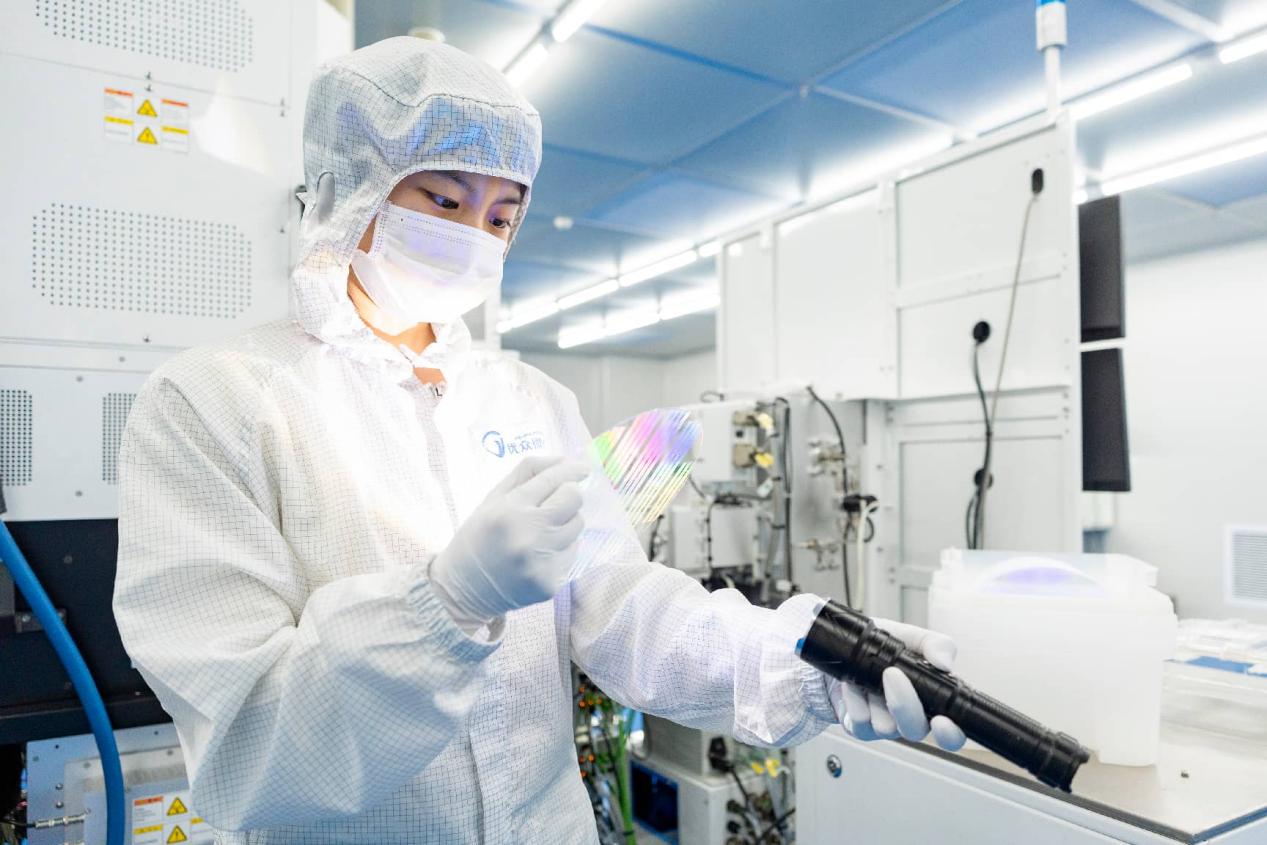
Semiconductor micro-nano devices are manufactured at a workshop of a semiconductor enterprise in Nantong, east China's Jiangsu province. (Photo/Zhai Huiyong)
Upgrading traditional industries cannot hinge solely on capacity expansion or gradual (incremental) process tweaks. It demands a strategic climb up the value chain: harnessing digital tools for efficiency gains, prioritizing eco-friendly practices (green development) to refine the industrial structure, and embracing high-value manufacturing to elevate product excellence.
Only by deploying technological innovation to dismantle systemic bottlenecks can traditional industries achieve substantive and sustainable renewal.
Across China, an increasing number of traditional sectors are cultivating new growth drivers through innovative business models and industrial formats.
The new energy vehicle industry, for example, has expanded beyond the traditional boundaries of manufacturing, evolving from simply producing quality vehicles to building entire industrial ecosystems.
The textile and apparel industry has moved beyond low-end processing and developed new segments such as functional fabrics, smart textiles, and high-end customization.
The construction machinery sector has established systems for remote maintenance, intelligent dispatching, and equipment-sharing services, transforming itself from a seller of products into a provider of integrated services.
These examples point to a shared pathway for traditional industries: through factor reorganization, technological integration, and institutional coordination, industries can promote cross-sector convergence, nurture new business models and operating formats, and ultimately drive industrial upgrading and structural optimization.
Those who adapt thrive; those who embrace transformation move forward. New quality productive forces are opening up vast opportunities for development.
As more traditional industries seize these changes, they can unlock existing asset potential, cultivate new competitive strengths, and create fresh sources of growth and value.
Photos



Related Stories
- Profits of China's major industrial firms up 18.8 pct in first five months
- China's shipbuilding industry charts greener, smarter course: report
- Chinese umbrella industry ascends the global value chain
- China's industrial "smart brains" gain global momentum
- Why multinationals still see China as a long-term industrial bet
- Trillions in credit flow to back quality growth
- Future industries top priority in 2026
- China reports over 1 million new firms in emerging, future industries in Jan.-Nov.
- From industry to itinerary: China taps manufacturing strengths for tourism growth
- China's display industry rises on global stage
Copyright © 2026 People's Daily Online. All Rights Reserved.
