



Chinese-developed artificial heart advances into global markets
In a showroom at Suzhou Industrial Park in east China's Jiangsu Province, a metal pump about the size of a table tennis ball operates quietly. Connected to a power source and biomimetic tubes, its metallic impeller levitates steadily at the center, spinning at high speed.
The device is BrioVAD, a fully magnetically levitated artificial heart independently developed in China. Since its creation, it has operated continuously and simulated billions of heartbeats, offering new hope to patients suffering from end-stage heart failure.
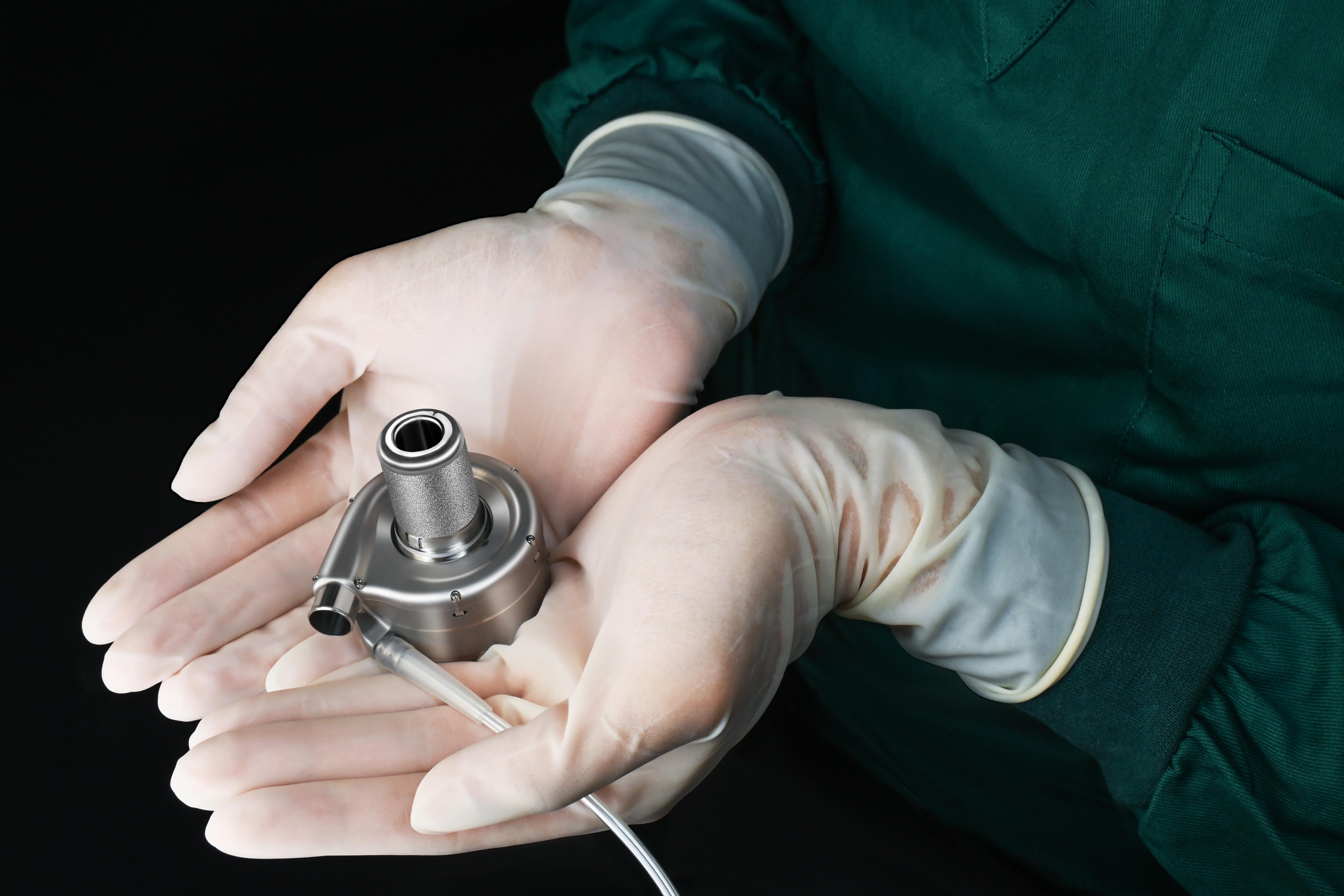
(Photo provided to stdaily.com)
By utilizing a design that separates the motor from the magnetic levitation unit, the device achieves a smaller overall size alongside a larger rotor diameter and lower operating speeds. This configuration improves blood compatibility and significantly reduces the risk of complications.
Following approval to enter clinical trials in the United States, BrioVAD expanded its reach to Europe. On June 2, it was successfully implanted into a patient at the University Medical Center Utrecht hospital in the Netherlands, marking its official entry into the European market.
This achievement is the result of years of dedicated collaboration among government agencies, hospitals, universities, and industry partners.
Heart failure affects tens of millions of people worldwide. In China alone, approximately 13.7 million people over the age of 35 suffer from the condition, including more than 1 million patients with end-stage disease. Yet, with just over 1,000 heart transplant surgeries performed nationwide each year, many patients are left with limited treatment options.
Often described as the "crown jewel" of medical devices, artificial hearts are widely regarded as the most practical solution for treating large numbers of severe heart failure patients. However, developing this technology has proven immensely challenging.
In the early 2000s, Chen Chen led a U.S.-based team that developed Levacor, the first fully magnetically levitated artificial heart to enter clinical trials in the U.S. Although the product ultimately failed to gain market acceptance because of its size and implantation challenges, Chen became increasingly convinced that magnetic levitation represented the future of the technology.
With investors pulling back from the field, Chen returned to China to pursue his vision in Suzhou. At the time, hydrodynamic suspension was the dominant approach worldwide, a field where Chinese researchers were already seeing promising results.
Rather than following the prevailing path, Chen proposed bypassing hydrodynamic suspension altogether and moving directly toward the more challenging fully magnetic levitation technology. This bold proposal was presented to leading experts at a Ministry of Science and Technology meeting in Beijing in 2009.
The technology eventually progressed from laboratory research to clinical application. In 2017, a critically ill patient received a BrioVAD artificial heart developed by BrioHealth Solutions, marking a key milestone in China's development of the technology.
To date, the company's fully magnetically levitated artificial hearts have been used to treat more than 1,000 patients.
The company's BrioVAD entered U.S. clinical trials in February 2024 after receiving approval from the U.S. Food and Drug Administration, becoming the first active implantable medical device from China to reach this milestone.
In November 2024, the device was successfully implanted for the first time in the United States at Emory University Hospital. By April 2026, more than three-quarters of the top 30 U.S. hospitals by artificial-heart implantation volume had joined the trial program.
Photos




Related Stories
Copyright © 2026 People's Daily Online. All Rights Reserved.
