



East China coastal city revitalizes coastline through ecological restoration
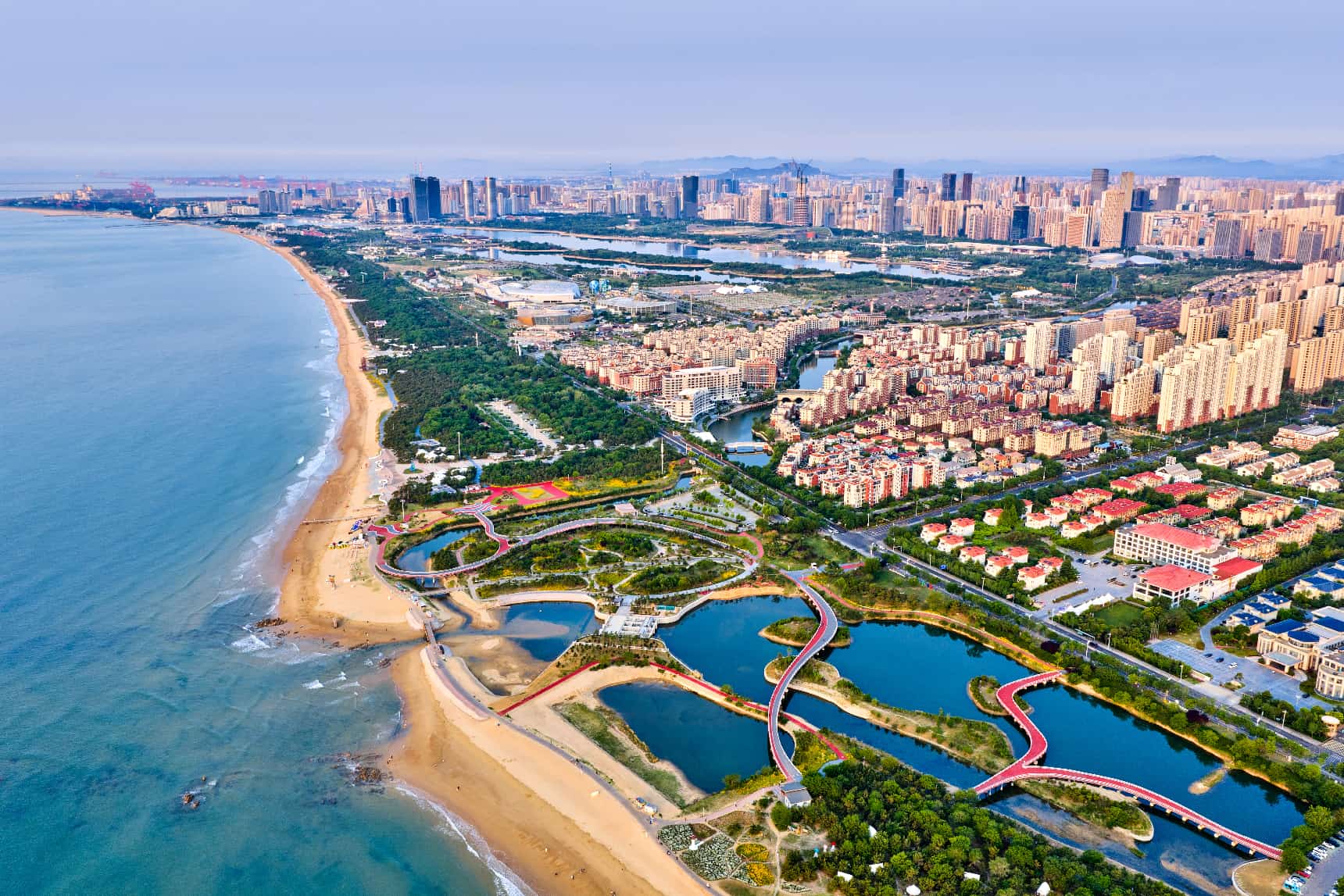
Photo shows the Sunshine Greenway in Rizhao, east China's Shandong province. (Photo/Shi Jiamin)
Nestled along the Yellow Sea coastline, Rizhao, a vibrant coastal city in east China's Shandong province, boasts a 226-kilometer shoreline dotted with a string of bays, glistening like a strand of natural pearls.
In 2024, Rizhao was designated as one of China's national-level pilot cities for comprehensive beautiful bay development, marking a pivotal turning point in the ecological and economic renewal of this beloved blue coastal homeland.
At Sunshine Coast in Zhangbei Bay, tourists can be seen everywhere strolling, cycling and taking photos. Nearby, drones patrol the coastline from the air. Once environmental issues are detected along the shore, volunteers quickly move in to address them.
"This stretch used to be desolate tidal flats," recalled a local fisherman surnamed Zhang. "Now a 28-kilometer greenway winds through here, transforming it into a major tourist attractio. The transformation is simply remarkable."
When coastal greenway plans were first announced, Zhang expressed concerns: "Would the black pine forest be affected?"
His worries were justified. Since the 1950s, black pines have formed the first ecological barrier along the coast, their evergreen canopy defining the regional landscape. During restoration, Rizhao implemented a "four-no" principle: no felling of black pines, no disturbance to reefs, no alteration of beaches, and no deployment of heavy machinery -- minimizing ecosystem disruption.
The coastal renewal extends beyond Zhangbei Bay. At Hailong Bay, shoreline restoration has reclaimed industrial port areas for nature. After renovating 1,882 meters of coastline and creating 460,000 square meters of new beaches, former coal yards now feature crystal-clear waters and golden sands.
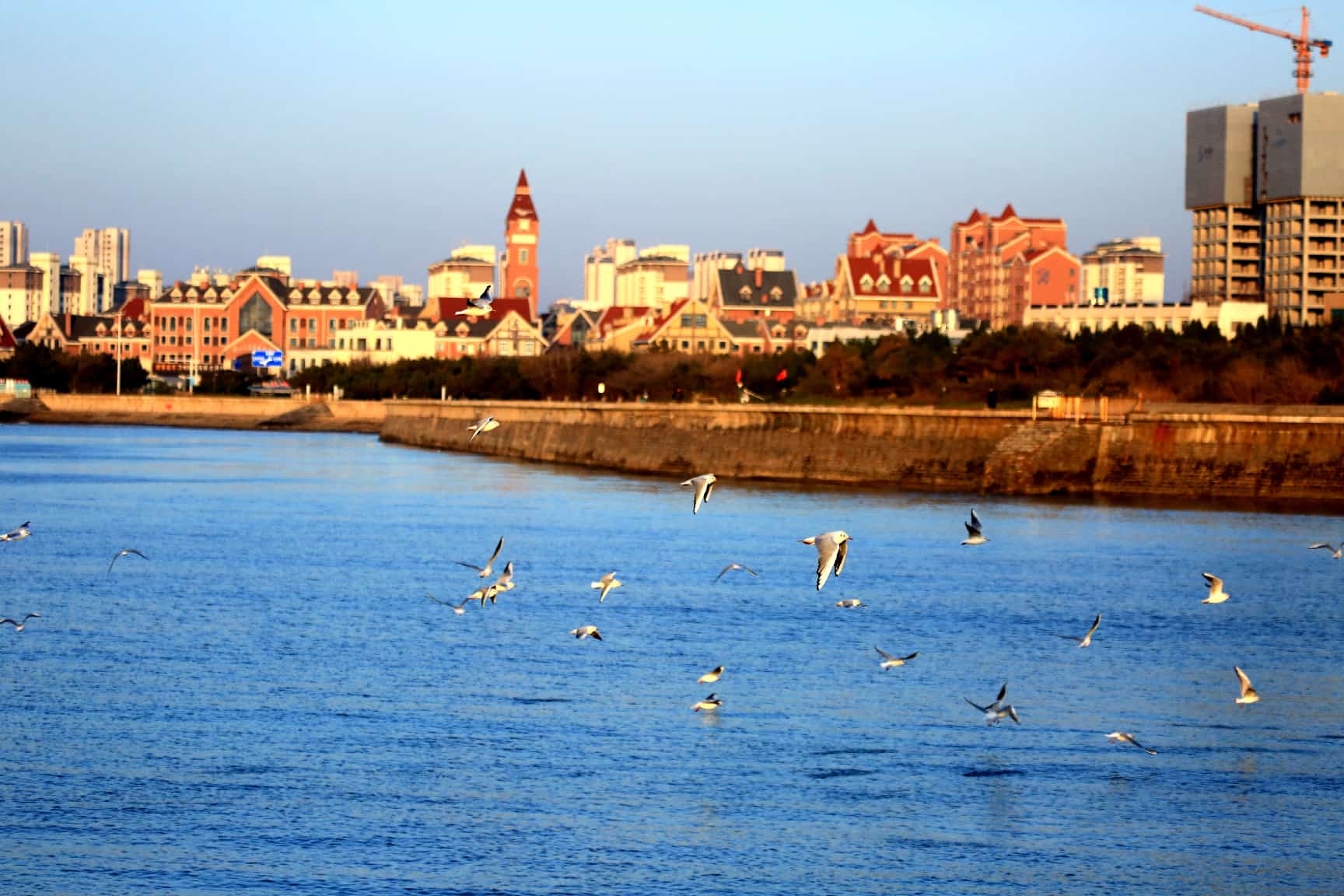
Seagulls fly over a fishery harbor in Rizhao, east China's Shandong province. (Photo/An Baiming)
In recent years, Rizhao has adhered to the principle of prioritizing ecology and pursuing green development. During the 14th Five-Year Plan period (2021-2025), the city carried out 5,903 bay patrols covering more than 10,500 kilometers, and steadily advanced marine environmental improvement drives.
"We divided the entire coastline into 55 sections and implemented targeted management solutions tailored to each," said Song Jun, director of Rizhao's ecology and environment bureau. "We have strengthened tracing and remediation efforts for sewage outlets entering the sea and established a smart marine supervision platform that enables online inspection and handling of marine waste issues, significantly improving efficiency."
Over the same period, Rizhao established 27 monitoring sites to conduct on-site monitoring and laboratory analysis of coastal seawater quality, plankton and other marine indicators. In Zhangbei Bay, the proportion of coastal waters rated as excellent has remained at 100 percent for consecutive years, with water quality consistently meeting excellent standards for five straight years.
Further north along the Sunshine Coast sits Qiaojiadunzi village. Jin Fei runs a homestay there, and replying to customer messages on her phone has become part of her daily routine.
"Our homestays are fully booked nonstop," Jin said. "On weekends and holidays, cars line up endlessly as visitors pour into the village."
Twenty years ago, Qiaojiadunzi village launched some of Rizhao's earliest family-run seaside guesthouses. Later, the village was incorporated into an upgrading plan for the Shanhaitian Tourism Resort area, which renovated homestays and newly developed commercial streets. In recent years, the completion of a Sunshine Greenway has brought even more visitors to the village.
"With blue seas and clear skies right outside our door, tourism has become our livelihood," Jin said. "Visitors can enjoy the sea, explore tidal flats, cycle, visit night markets, watch performances and attend sporting events -- there is always something fun to experience."
Sea breezes swept across the shoreline as waves rolled into Lanshan Bay, where families strolled through a coastal recreation park themed around traditional seaside activities. A local resident surnamed Zhang was walking along the shore with his child.
"In recent years, the sea in Rizhao has become bluer and the water clearer," he said. "We often bring our children here to enjoy the coastline and experience nature. It feels wonderful."
Further along the coast in Zhangbei Bay, scattered tents dotted a camping park, and cheerful children's voices rang out from a marine-themed complex. An eco-friendly study tour was in full swing here.
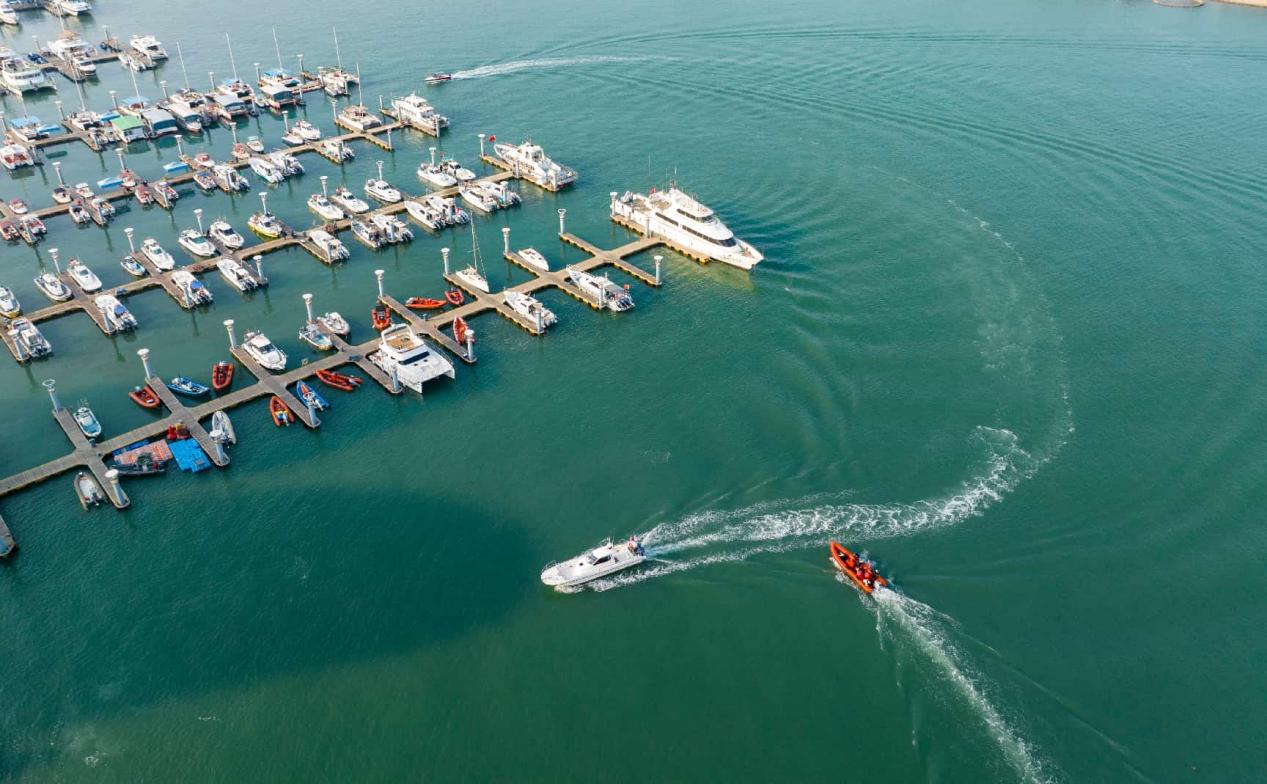
Tourists take speed boats in Rizhao, east China's Shandong province. (Photo/Liu Yucai)
Once an abandoned seedling nursery, the site was revitalized during coastal renovation. It now houses homestays, bookstores and cafes, emerging as a popular tourist spot. Regular science education activities are also held here for young visitors.
As the bays have grown more beautiful, cultural tourism has flourished as well.
In 2025, tourist numbers and tourism-related spending during the high season rose by 31 percent and 39 percent year on year, respectively. Throughout the year, Rizhao recorded 43.91 billion yuan ($6.45 billion) in domestic tourism revenue and welcomed more than 68 million domestic tourist visits, up 11.8 percent and 10.3 percent year on year.
Over the years, Rizhao's primary, secondary and tertiary industries have all embraced greener development.
Along Lanshan Bay, "green steel" has become a new driver of industrial upgrading. The steel industry has comprehensively implemented ultra-low-emission transformation projects, and both Shandong Iron and Steel Group Rizhao Co., Ltd. and Rizhao Steel Holding Group Co., Ltd. have been rated Class A enterprises for environmental performance.
Meanwhile, the city's "blue granary" is expanding further into deep-sea aquaculture, with salmon fry breeding helping stimulate related marine industries.
"Building beautiful bays means generating benefits through green development and gathering momentum via ecological protection," Song said. "We are turning marine ecological conservation and restoration into valuable opportunities for cultivating new quality productive forces and expanding new development space. We strive to forge a new path where ecology and economy complement one another, and protection and development advance hand in hand."
Photos
Related Stories
- Industrial tourism turns China's factory floors into travel destinations
- China's tourism boom blends culture, innovation and livelihoods
- 16th China Tourism Day marked across China
- From sightseeing to self-discovery: Young Chinese travelers redefine outbound tourism
- Beer museum refreshes China's summer tourism experience amid cultural travel surge
Copyright © 2026 People's Daily Online. All Rights Reserved.
