



Shenzhen leads China's low-altitude economy development

This photo taken on May 6, 2026 shows a drone delivering takeout food in Shenzhen, south China's Guangdong Province. South China's tech hub of Shenzhen now stands as a leading manufacturing base for unmanned aerial vehicles, producing 70 percent of China's consumer drones and 50 percent of its industrial drones.
The expansion of Shenzhen's low-altitude sector is fueled by the city's increasing investment in sci-tech innovation. From 2020 to 2024, Shenzhen's total R&D investment grew from 151.08 billion yuan to 245.31 billion yuan, representing an average annual growth of 12.9 percent.
China's low-altitude economy has gained substantial momentum since being recognized as a new growth driver in the 2024 government work report.
The outline of the 15th Five-Year Plan (2026-2030) calls for the healthy and orderly development of the low-altitude economy, improved precision in low-altitude airspace management, and proactive efforts to expand low-altitude consumption. (Xinhua/Mao Siqian)
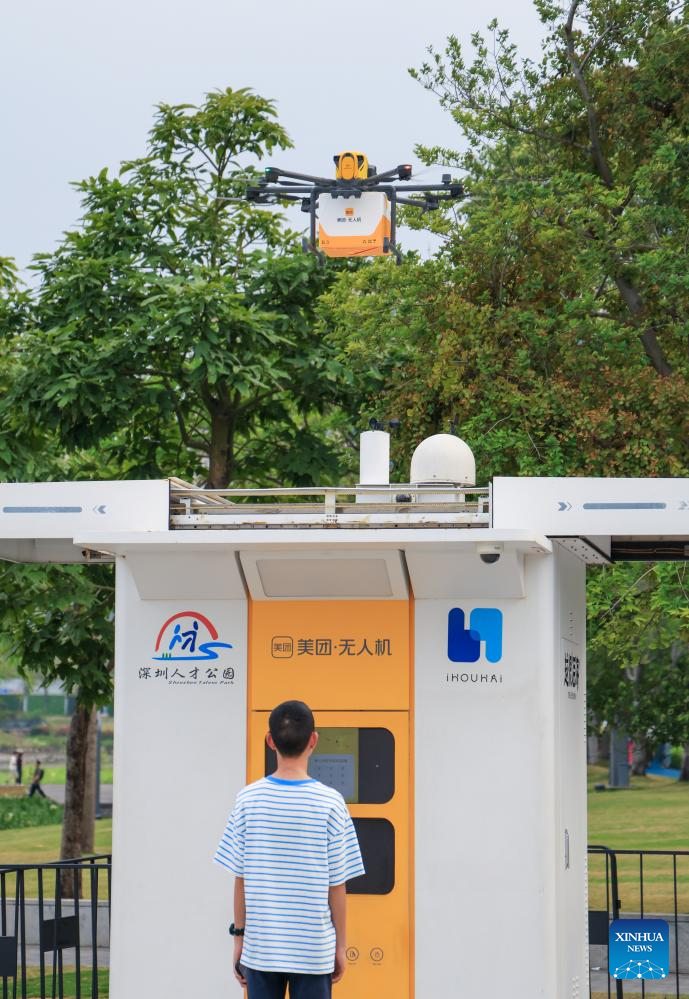
A tourist waits for takeout food delivered by a drone in front of a pickup kiosk in Shenzhen Talent Park in Shenzhen, south China's Guangdong Province, April 1, 2026. South China's tech hub of Shenzhen now stands as a leading manufacturing base for unmanned aerial vehicles, producing 70 percent of China's consumer drones and 50 percent of its industrial drones.
The expansion of Shenzhen's low-altitude sector is fueled by the city's increasing investment in sci-tech innovation. From 2020 to 2024, Shenzhen's total R&D investment grew from 151.08 billion yuan to 245.31 billion yuan, representing an average annual growth of 12.9 percent.
China's low-altitude economy has gained substantial momentum since being recognized as a new growth driver in the 2024 government work report.
The outline of the 15th Five-Year Plan (2026-2030) calls for the healthy and orderly development of the low-altitude economy, improved precision in low-altitude airspace management, and proactive efforts to expand low-altitude consumption. (Xinhua/Mao Siqian)
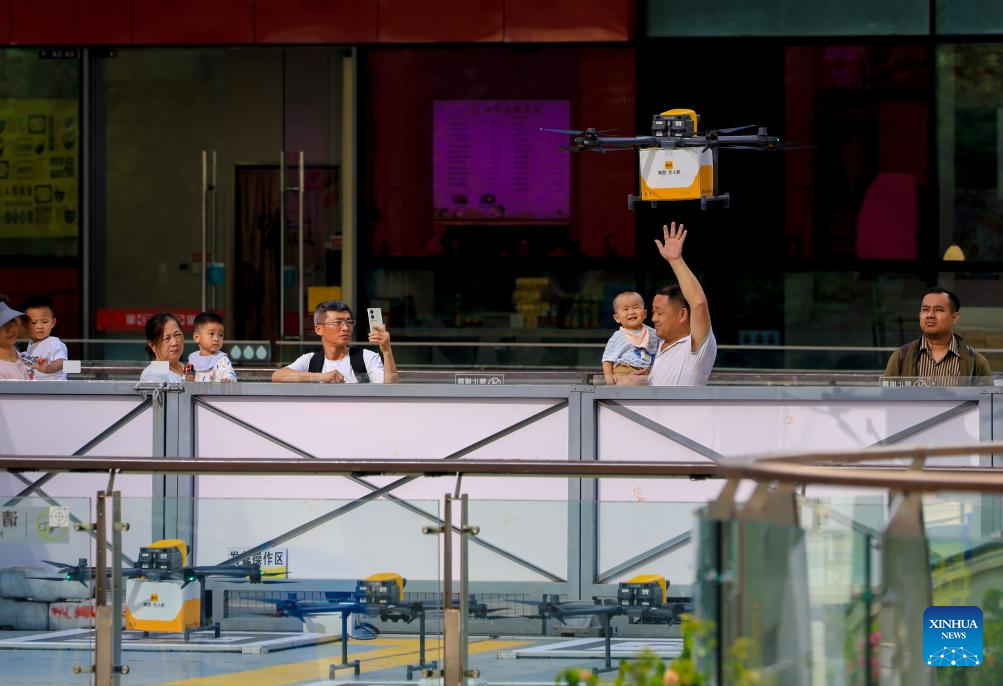
People watch a drone delivering takeout food at a drone takeoff point of Meituan, a major online lifestyle platform in China, in Shenzhen, south China's Guangdong Province, May 6, 2026. South China's tech hub of Shenzhen now stands as a leading manufacturing base for unmanned aerial vehicles, producing 70 percent of China's consumer drones and 50 percent of its industrial drones.
The expansion of Shenzhen's low-altitude sector is fueled by the city's increasing investment in sci-tech innovation. From 2020 to 2024, Shenzhen's total R&D investment grew from 151.08 billion yuan to 245.31 billion yuan, representing an average annual growth of 12.9 percent.
China's low-altitude economy has gained substantial momentum since being recognized as a new growth driver in the 2024 government work report.
The outline of the 15th Five-Year Plan (2026-2030) calls for the healthy and orderly development of the low-altitude economy, improved precision in low-altitude airspace management, and proactive efforts to expand low-altitude consumption. (Xinhua/Mao Siqian)
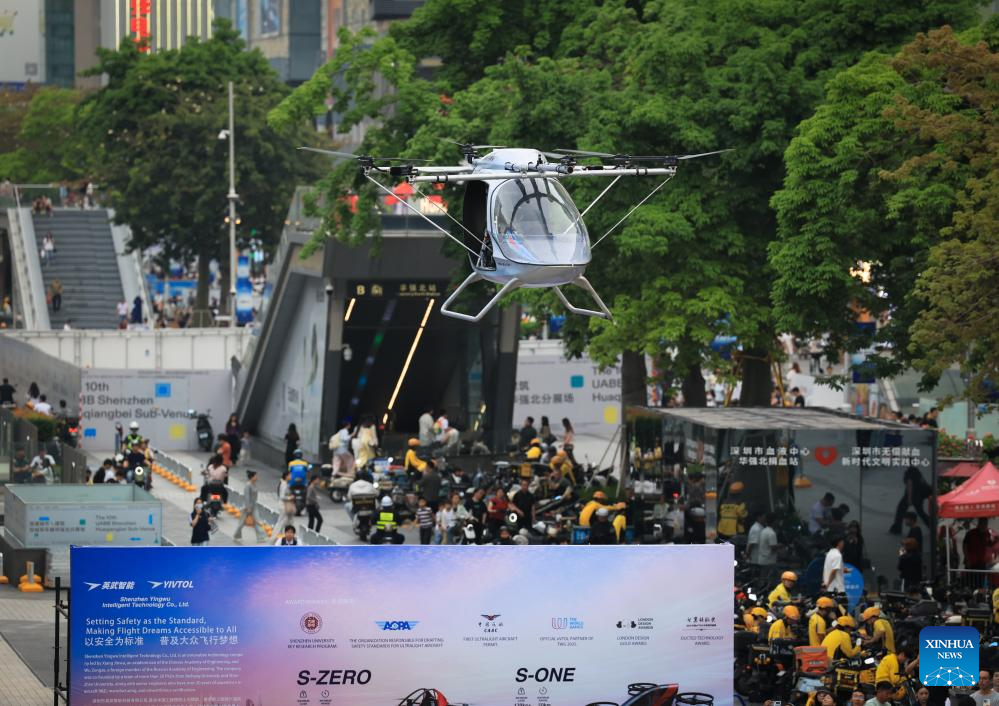
People watch a demonstration flight of Smart Drone's ultra light eVTOL on a street in Huaqiangbei of Shenzhen, south China's Guangdong Province, May 2, 2026. South China's tech hub of Shenzhen now stands as a leading manufacturing base for unmanned aerial vehicles, producing 70 percent of China's consumer drones and 50 percent of its industrial drones.
The expansion of Shenzhen's low-altitude sector is fueled by the city's increasing investment in sci-tech innovation. From 2020 to 2024, Shenzhen's total R&D investment grew from 151.08 billion yuan to 245.31 billion yuan, representing an average annual growth of 12.9 percent.
China's low-altitude economy has gained substantial momentum since being recognized as a new growth driver in the 2024 government work report.
The outline of the 15th Five-Year Plan (2026-2030) calls for the healthy and orderly development of the low-altitude economy, improved precision in low-altitude airspace management, and proactive efforts to expand low-altitude consumption. (Xinhua/Mao Siqian)
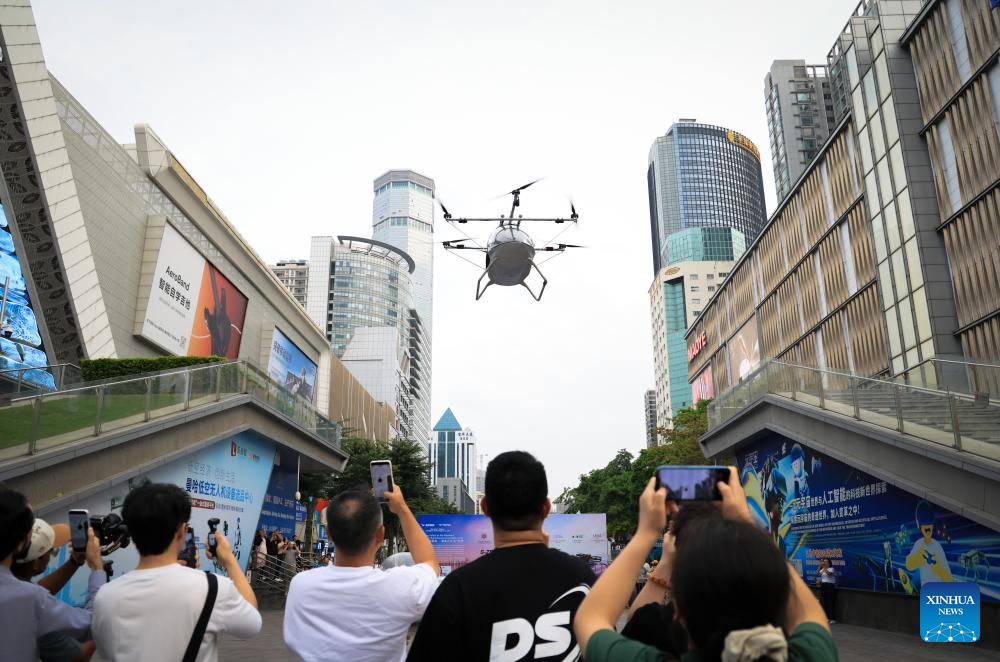
People watch a demonstration flight of Smart Drone's ultra light eVTOL on a street in Huaqiangbei of Shenzhen, south China's Guangdong Province, May 2, 2026. South China's tech hub of Shenzhen now stands as a leading manufacturing base for unmanned aerial vehicles, producing 70 percent of China's consumer drones and 50 percent of its industrial drones.
The expansion of Shenzhen's low-altitude sector is fueled by the city's increasing investment in sci-tech innovation. From 2020 to 2024, Shenzhen's total R&D investment grew from 151.08 billion yuan to 245.31 billion yuan, representing an average annual growth of 12.9 percent.
China's low-altitude economy has gained substantial momentum since being recognized as a new growth driver in the 2024 government work report.
The outline of the 15th Five-Year Plan (2026-2030) calls for the healthy and orderly development of the low-altitude economy, improved precision in low-altitude airspace management, and proactive efforts to expand low-altitude consumption. (Xinhua/Mao Siqian)
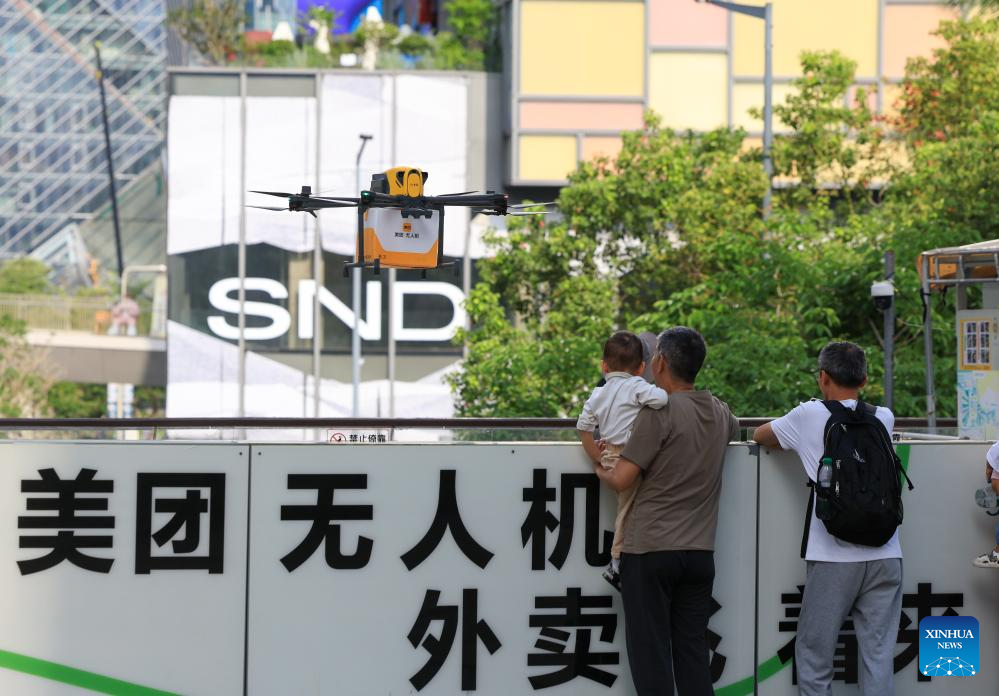
People watch a drone delivering takeout food at a drone takeoff point of Meituan, a major online lifestyle platform in China, in Shenzhen, south China's Guangdong Province, May 6, 2026. South China's tech hub of Shenzhen now stands as a leading manufacturing base for unmanned aerial vehicles, producing 70 percent of China's consumer drones and 50 percent of its industrial drones.
The expansion of Shenzhen's low-altitude sector is fueled by the city's increasing investment in sci-tech innovation. From 2020 to 2024, Shenzhen's total R&D investment grew from 151.08 billion yuan to 245.31 billion yuan, representing an average annual growth of 12.9 percent.
China's low-altitude economy has gained substantial momentum since being recognized as a new growth driver in the 2024 government work report.
The outline of the 15th Five-Year Plan (2026-2030) calls for the healthy and orderly development of the low-altitude economy, improved precision in low-altitude airspace management, and proactive efforts to expand low-altitude consumption. (Xinhua/Mao Siqian)
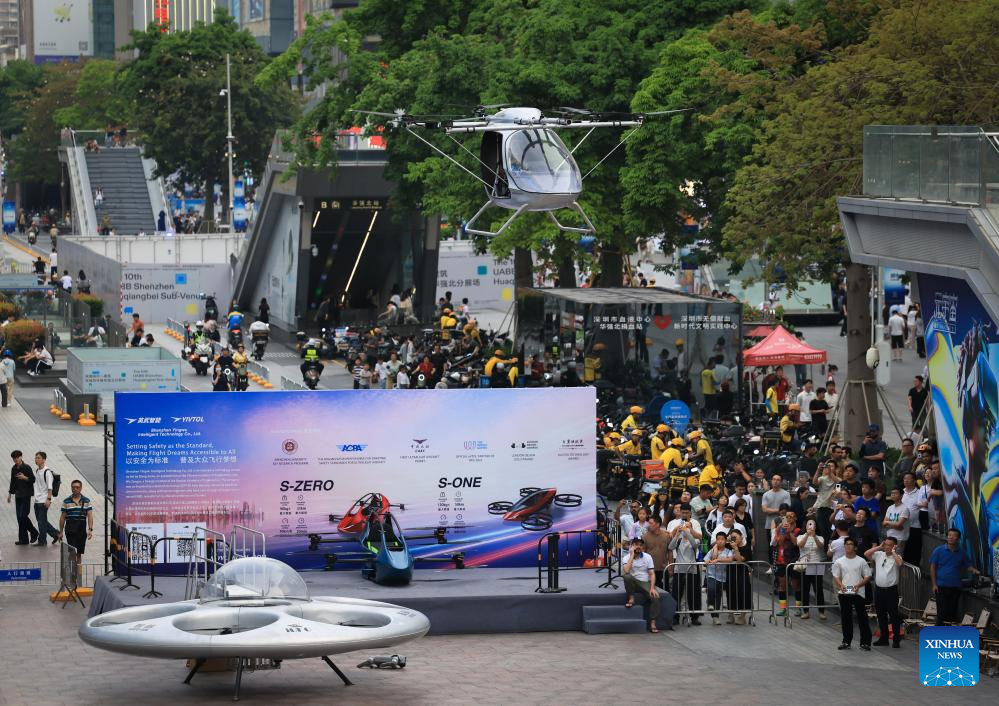
People watch a demonstration flight of Smart Drone's ultra light eVTOL on a street in Huaqiangbei of Shenzhen, south China's Guangdong Province, May 2, 2026. South China's tech hub of Shenzhen now stands as a leading manufacturing base for unmanned aerial vehicles, producing 70 percent of China's consumer drones and 50 percent of its industrial drones.
The expansion of Shenzhen's low-altitude sector is fueled by the city's increasing investment in sci-tech innovation. From 2020 to 2024, Shenzhen's total R&D investment grew from 151.08 billion yuan to 245.31 billion yuan, representing an average annual growth of 12.9 percent.
China's low-altitude economy has gained substantial momentum since being recognized as a new growth driver in the 2024 government work report.
The outline of the 15th Five-Year Plan (2026-2030) calls for the healthy and orderly development of the low-altitude economy, improved precision in low-altitude airspace management, and proactive efforts to expand low-altitude consumption. (Xinhua/Mao Siqian)
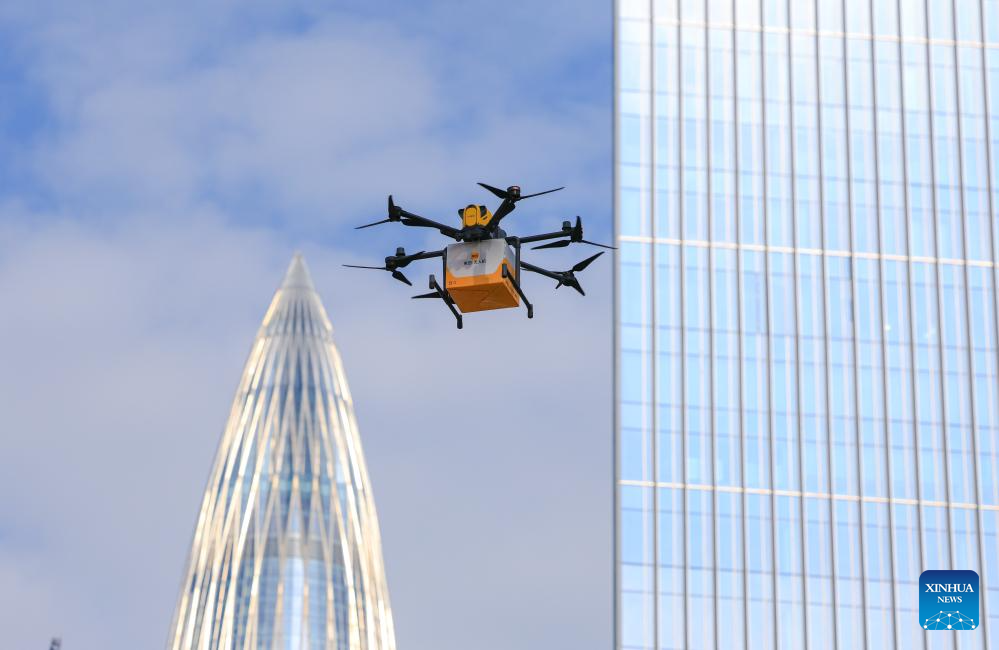
This photo taken on May 6, 2026 shows a drone delivering takeout food in Shenzhen, south China's Guangdong Province. South China's tech hub of Shenzhen now stands as a leading manufacturing base for unmanned aerial vehicles, producing 70 percent of China's consumer drones and 50 percent of its industrial drones.
The expansion of Shenzhen's low-altitude sector is fueled by the city's increasing investment in sci-tech innovation. From 2020 to 2024, Shenzhen's total R&D investment grew from 151.08 billion yuan to 245.31 billion yuan, representing an average annual growth of 12.9 percent.
China's low-altitude economy has gained substantial momentum since being recognized as a new growth driver in the 2024 government work report.
The outline of the 15th Five-Year Plan (2026-2030) calls for the healthy and orderly development of the low-altitude economy, improved precision in low-altitude airspace management, and proactive efforts to expand low-altitude consumption. (Xinhua/Mao Siqian)
Photos


Related Stories
- Shenzhen explores distinctive path for biodiversity conservation in urban areas
- Shenzhen school turns a "birdcall complaint letter" into a life education lesson
- Shenzhen launches "Park BOX" project to enrich citizens' park experience
- 108 startups selected for Hong Kong-Shenzhen I&T Park incubation scheme
- Shenzhen airport opens first direct passenger route to Central Asia
Copyright © 2026 People's Daily Online. All Rights Reserved.
