



Musical instrument manufacturing drives industrial upgrading in county in N China's Hebei
In north China's Hebei Province, county-level industries are a cornerstone of economic growth and rural revitalization. In Suning county, Cangzhou city, Hebei Province, one such industry—musical instrument manufacturing—has evolved from small workshops into a nationally dominant industrial cluster.
A single pluck of a pipa string signals completion for luthier Song Jinhui of Yuehai Musical Instruments Co., Ltd. Nearby, in the company's smart computer numerical control (CNC) steam drying room, wooden planks are being treated. At 65 degrees Celsius and 80 percent humidity, the process stabilizes wood in just days, replacing the years once required for natural drying.
"In the past, wood had to sit out for years. Now, after a few days in the steam drying room, it becomes more stable," said Zhang Tiewei, head of the semi-finished products workshop at the company.
This blend of tradition and technology defines Suning's transformation.
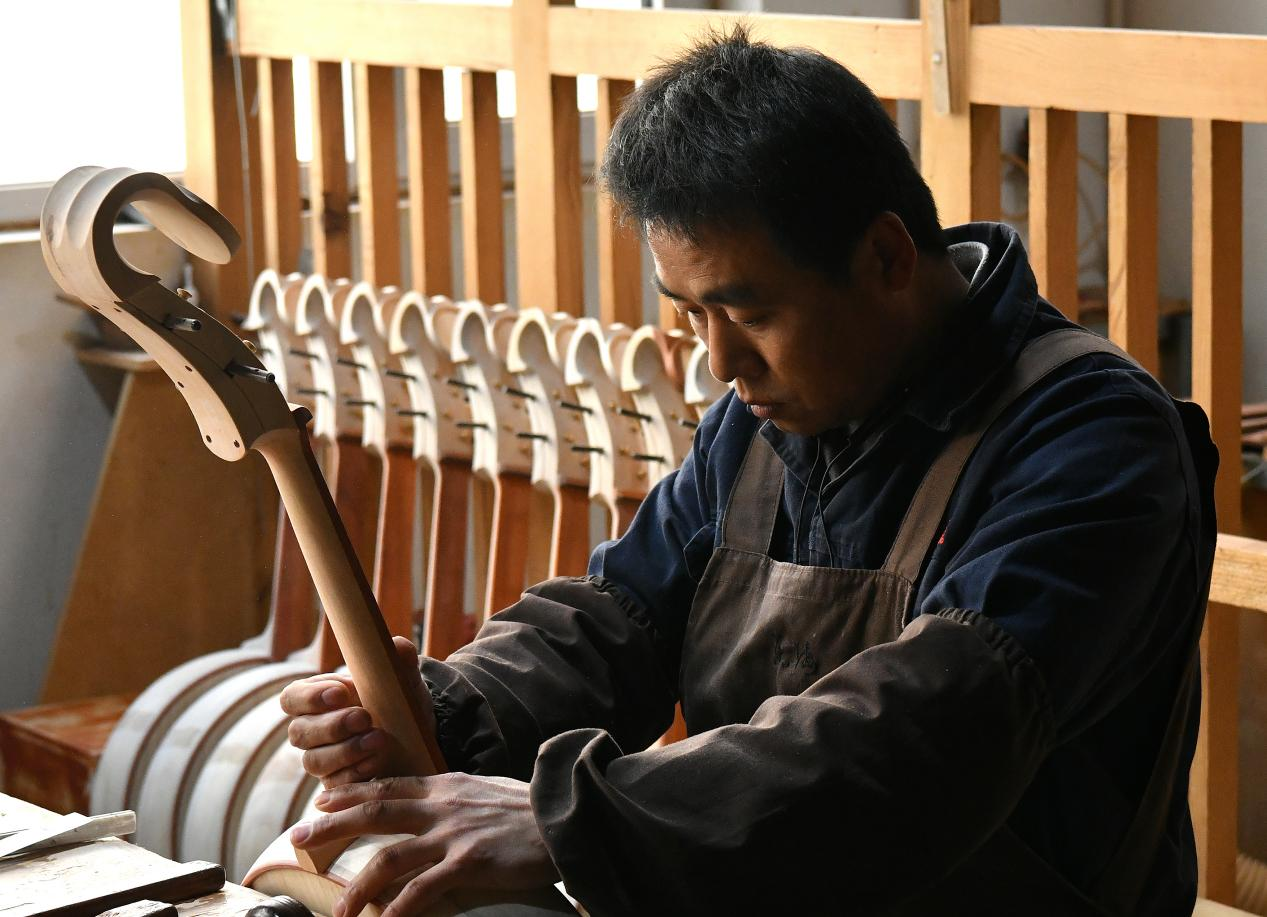
A worker makes the ruan, a traditional musical instrument, in the workshop of Yuehai Musical Instruments Co., Ltd. in Suning county, Cangzhou city, north China's Hebei Province. (Photo/Yuan Liwei)
In the production workshop of Yuehai Musical Instruments Co., Ltd., a CNC machine carves instrument components with speed and precision.
"Master craftsmen used to spend a whole day carving a few patterns. Now machines handle the toughest parts. They are faster and more accurate," said Song Jinhui.
Yet automation has not replaced craftsmanship. "Machines solve the 'form,' but not the 'spirit,'" Song Jinhui explained. The final adjustments—fine-tuning thickness and tone—still rely on a trained ear and touch. "Even a fraction of a millimeter affects the sound," he said, adding that that's something only experience can judge.
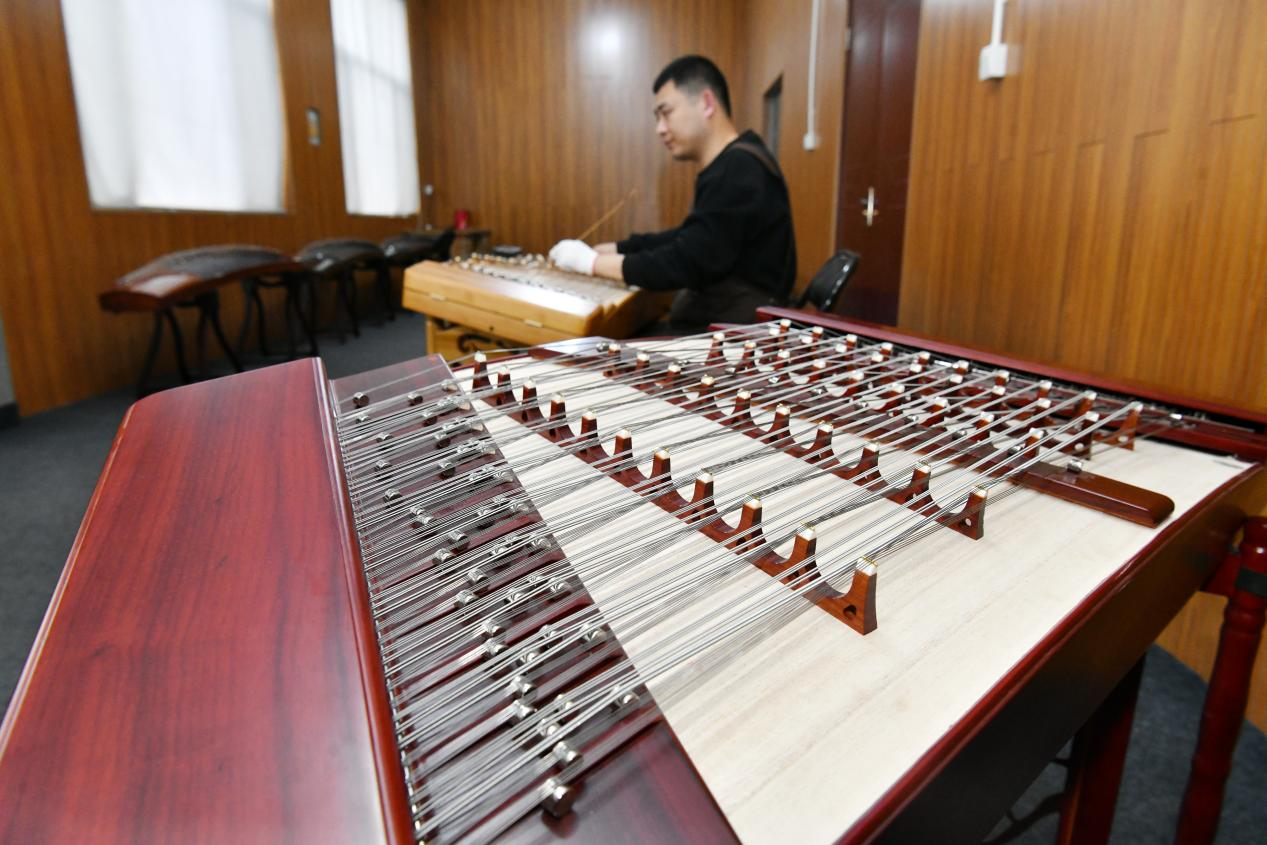
A tuner adjusts and fine-tunes the yangqin, a traditional musical instrument, in the workshop of Yuehai Musical Instruments Co., Ltd. in Suning county, Cangzhou city, north China's Hebei Province. (Photo/Yuan Liwei)
This hybrid model that combines machine processing with manual finishing has enabled Suning to scale production while preserving quality.
Suning now hosts more than 300 musical instrument and accessory companies, employs 15,000 people, and produces over 1 million instruments and accessories annually. In 2021, it was officially named "a musical instrument capital in northern China," with annual output value nearing 1 billion yuan (about $146 million).
As the industry matures, companies are shifting beyond manufacturing.
"In the past, we just made instruments and sold them wholesale. Now we need to focus on education and culture," said Song Wei, deputy general manager of the human resources and administration center at Yuehai Musical Instruments Co., Ltd.
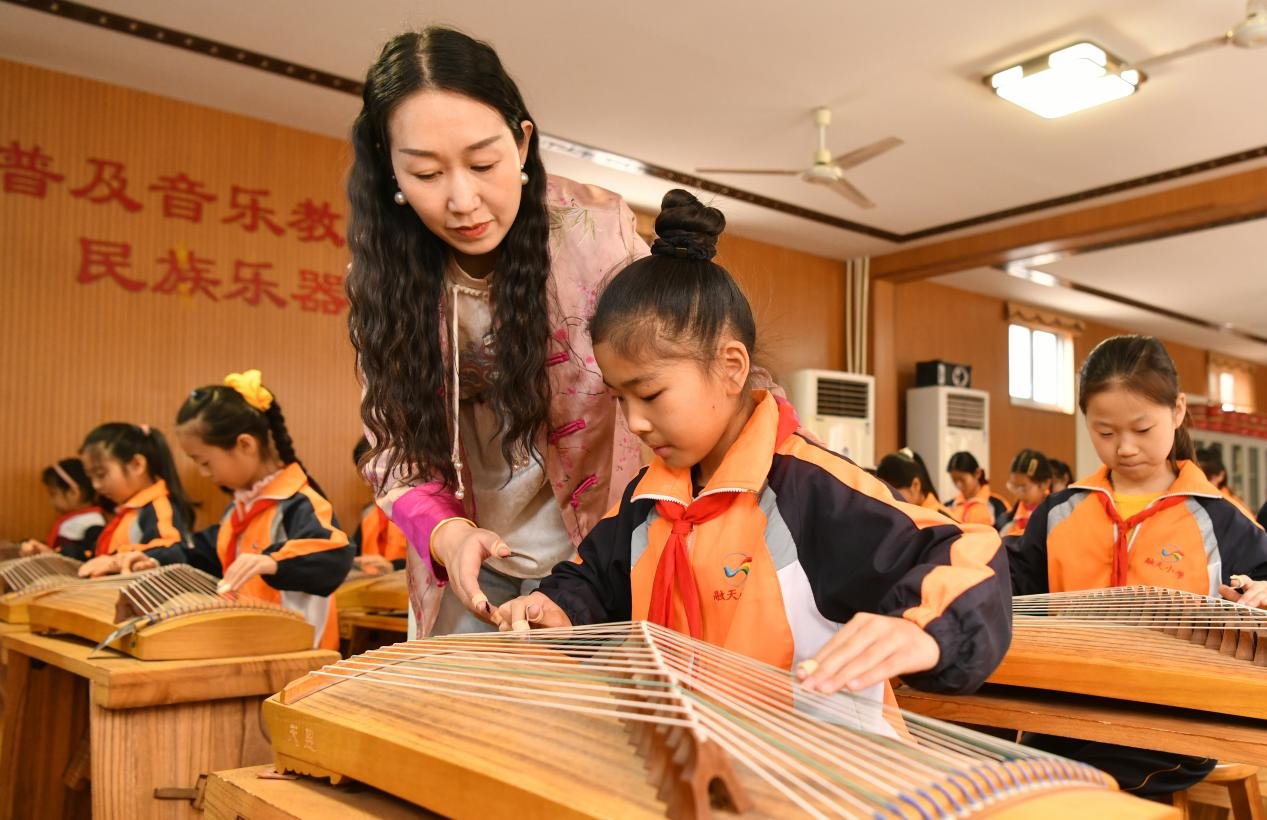
A music teacher teaches a student to play the guqin, a traditional musical instrument, at a primary school in Suning county, Cangzhou city, north China's Hebei Province, on April 3, 2026. (Photo/Yuan Liwei)
Local manufacturers are also partnering with leading music institutions to improve design and tapping into e-commerce and livestreaming. Data shows that over 40 percent of total sales in the musical instrument industry of Suning now come from e-commerce.
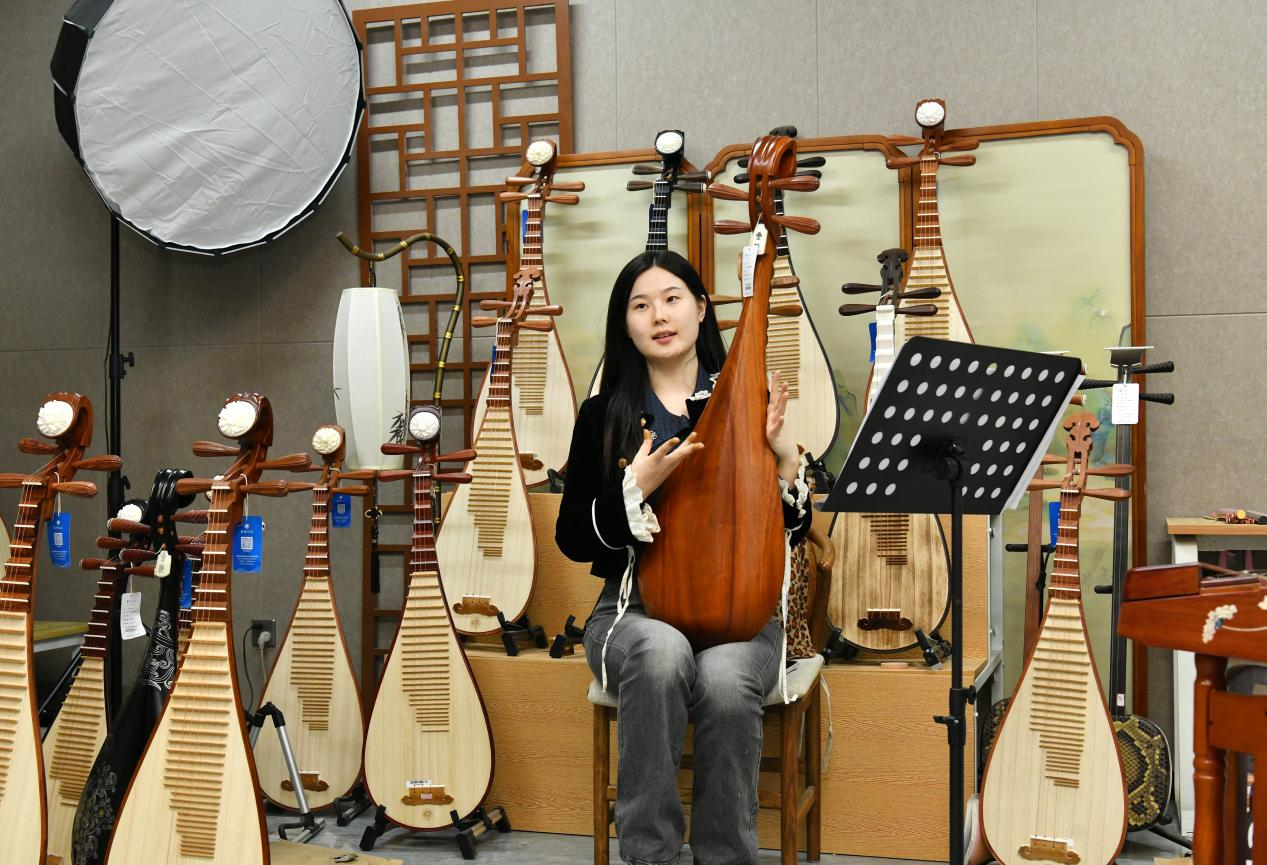
A staff member promotes traditional musical instruments during a live-streaming session at an incubation base in Suning county, Cangzhou city, north China's Hebei Province, on April 9, 2026. (Photo/Yuan Liwei)
Photos



Related Stories
- Musical instrument manufacturing leads way towards high-quality economic development in Suning, N China’s Hebei
- Musical instrument production thrives in Lankao county, C China's Henan
- Village in C China's Henan cultivates thriving musical instrument industry
- 2,400-year-old chime bells glows with new vigor in modern world
- Small village in China's Tianjin produces more than half of world's saxophones
- Inheritor of intangible cultural heritage recreates thousand-year-old sounds of ancient musical instrument
- Corner street musical instrument repair shop becomes a popular site for visitors in Shanghai
- China discovers earliest musical instruments
- China becomes largest musical instrument market
- Musical instruments made with bamboo in E China
Copyright © 2026 People's Daily Online. All Rights Reserved.
