



Fujian abalones shipped north to Shandong to beat the summer heat
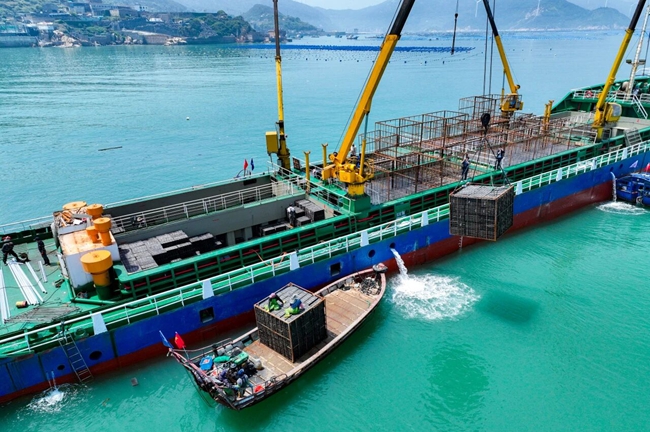
Workers haul up abalone cages belonging to a company at an abalone breeding area in Lianjiang county, southeast China's Fujian Province. (Photo/People's Daily Online)
At dawn on April 20, fishermen were hauling up abalone cages belonging to a company at an abalone breeding area off Houwan village in Tailu town, Lianjiang county, southeast China's Fujian Province, for transfer to Rongcheng in east China's Shandong Province to escape the summer heat.
The company, Fujian Zhongxin Yongfeng Industrial Co., Ltd., aims to transport all 350,000 cages of abalones to Rongcheng by June 10.
This year, 1.9 billion abalones (about 5 million cages) in Lianjiang county, a major abalone breeding hub in China, are expected to be shipped to Rongcheng.
Abalone breeding has strict requirements for water temperature. Abalones thrive best at temperatures between 15 and 22 degrees Celsius, and are prone to dying once temperatures fall outside that range. To improve their survival rate, local farmers have pioneered a breeding model where abalones are shipped north in mid-to-late April every year to escape the summer heat and brought back in batches at the end of the year for the winter.
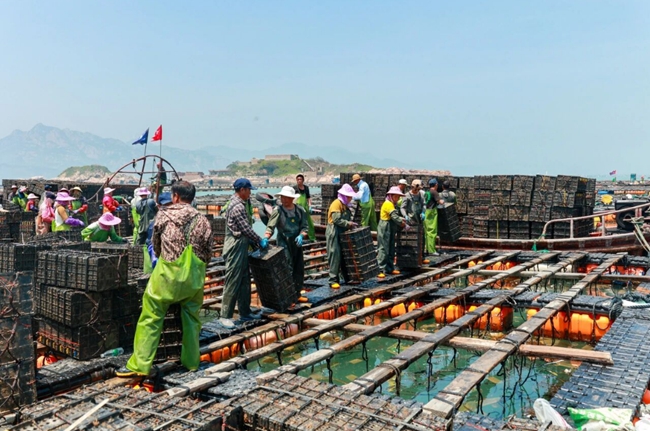
Workers transfer abalone cages at an abalone breeding area in Lianjiang county, southeast China's Fujian Province. (Photo/People's Daily Online)
"This model not only spares the abalone from the high temperatures and typhoons of a southern summer — lifting the summer survival rate for juvenile abalone from 40 percent to 80 percent — it also dovetails neatly with the northern kelp harvest season, giving the abalone an abundant supply of natural feed," said Wu Yongshou, executive president of the abalone branch of the China Aquatic Products Processing and Marketing Alliance.
Wu added that the model cuts the farming cycle and costs while improving both yield and quality. Of the 400 million semi-grown abalone heading north this year, the harvest in October is expected to hit 25,000 tonnes. Had the same stock been farmed locally in Lianjiang, the yield would have been just 15,000 tonnes. The added cost of long-distance transport is more than offset by the overall return on investment.
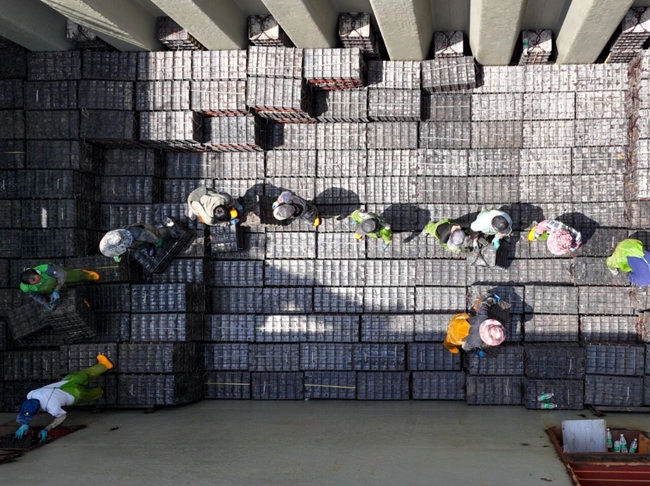
Workers transfer abalone cages at an abalone breeding area in Lianjiang county, southeast China's Fujian Province. (Photo/People's Daily Online)
Lianjiang has built a complete abalone industry chain spanning breeding, farming, processing, sales and brand development. In 2025, the county's abalone farming output reached 61,800 tonnes, with a production value of 5.19 billion yuan (about $760.8 million), and the full abalone industry chain was valued at nearly 10 billion yuan, making abalone one of the pillars of Lianjiang's marine economy.
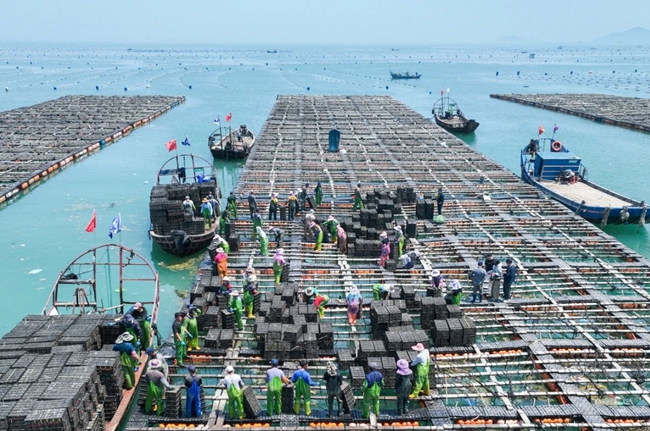
Workers transfer abalone cages at an abalone breeding area in Lianjiang county, southeast China's Fujian Province. (Photo/People's Daily Online)
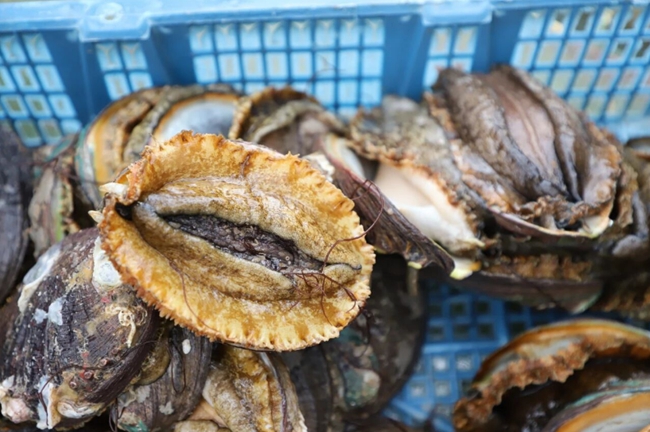
File photo shows abalones at an abalone breeding area in Lianjiang county, southeast China's Fujian Province.
Photos
Related Stories
Copyright © 2026 People's Daily Online. All Rights Reserved.
