



Large flying population reflects high-quality development of civil aviation in China
A passenger airplane lands at Jieyang Chaoshan International Airport in Jieyang, south China's Guangdong province. (Photo/Zheng Cong)
The total number of passenger trips across China during the 40-day 2026 Spring Festival travel rush reached 94.39 million, up 4.6 percent year on year, setting a new record high for the same period in history, statistics from the Civil Aviation Administration of China show.
One figure stands out in the growth of passenger travel: by 2025, China's total flying population had exceeded 500 million, making it the largest in the world.
Flying population is the number of people who have taken at least one flight during the statistical period. It serves as a key barometer of national and regional economic vitality, reflecting a country's economic activity and the disposable income of its residents.
From a micro perspective, it also benchmarks the quality of civil aviation services, measuring the sector's ability to meet consumer demands in safety, capacity, and service quality.
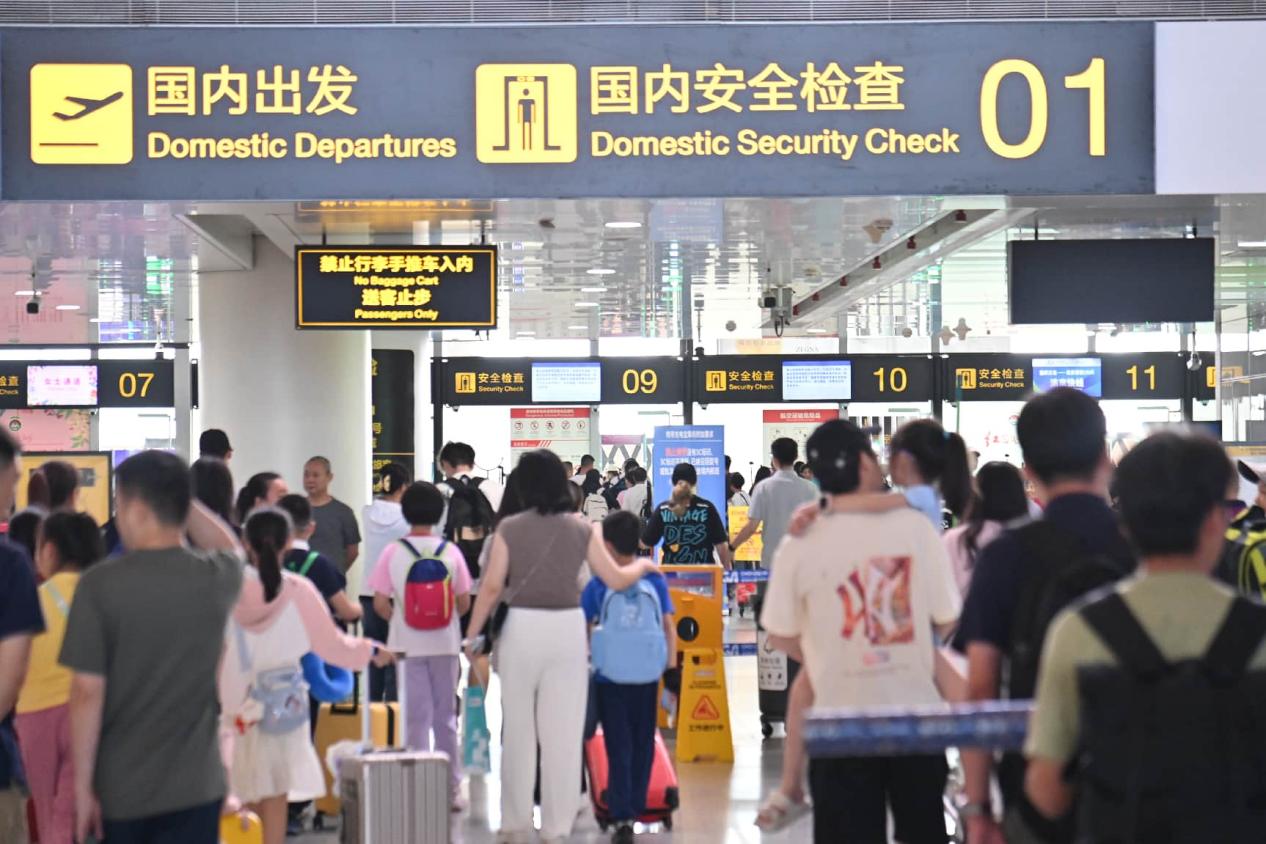
Passengers are seen at Terminal 3 at Chongqing Jiangbei International Airport in southwest China's Chongqing municipality. (Photo/Sun Kaifang)
China's position at the top of the global flying population rankings is attributed not just to its large population but also to its robust economic growth and the advanced development of its civil aviation sector.
Thanks to the growing role of consumption as a key driver of economic growth in China, cross-regional business connections, cultural tourism, and other economic activities have thrived, fueling robust demand in the civil aviation market.
Particularly, many third- and fourth-tier cities, along with remote regions, are seeing an influx of tourists facilitated by the civil aviation sector.
During this year's Spring Festival travel rush, flight bookings for destinations like Altay in northwest China's Xinjiang Uygur Autonomous Region, Beihai in south China's Guangxi Zhuang Autonomous Region, and Mangshi in southwest China's Yunnan province increased by 44 percent, 24 percent, and 22 percent, respectively, according to data from online travel platforms.
Meanwhile, the civil aviation sector has proactively handled passenger traffic by continuously improving flight safety and punctuality, expanding its air route network, and introducing a range of differentiated offerings, such as culture-and-tourism integrated products, air shuttle services, and air-rail intermodal options, better catering to consumers' personalized and diverse travel demands.
A large flying population positively impacts China's economic and social development in many ways and helps foster new competitive advantages.
For the aviation industry, steady growth directly benefits aeronautical equipment manufacturing. By the end of 2025, China's civil aviation fleet included 220 domestically built aircraft in operation, an increase of about 30 from the previous year.
This milestone is driving upgrades across related industrial chains, including aircraft engines, aviation materials, and onboard equipment, accelerating the development of China's aviation manufacturing sector.
From the perspective of expanding domestic demand, safe, convenient, and cost-effective civil aviation services continue to support business and cultural tourism, foreign trade, and logistics.
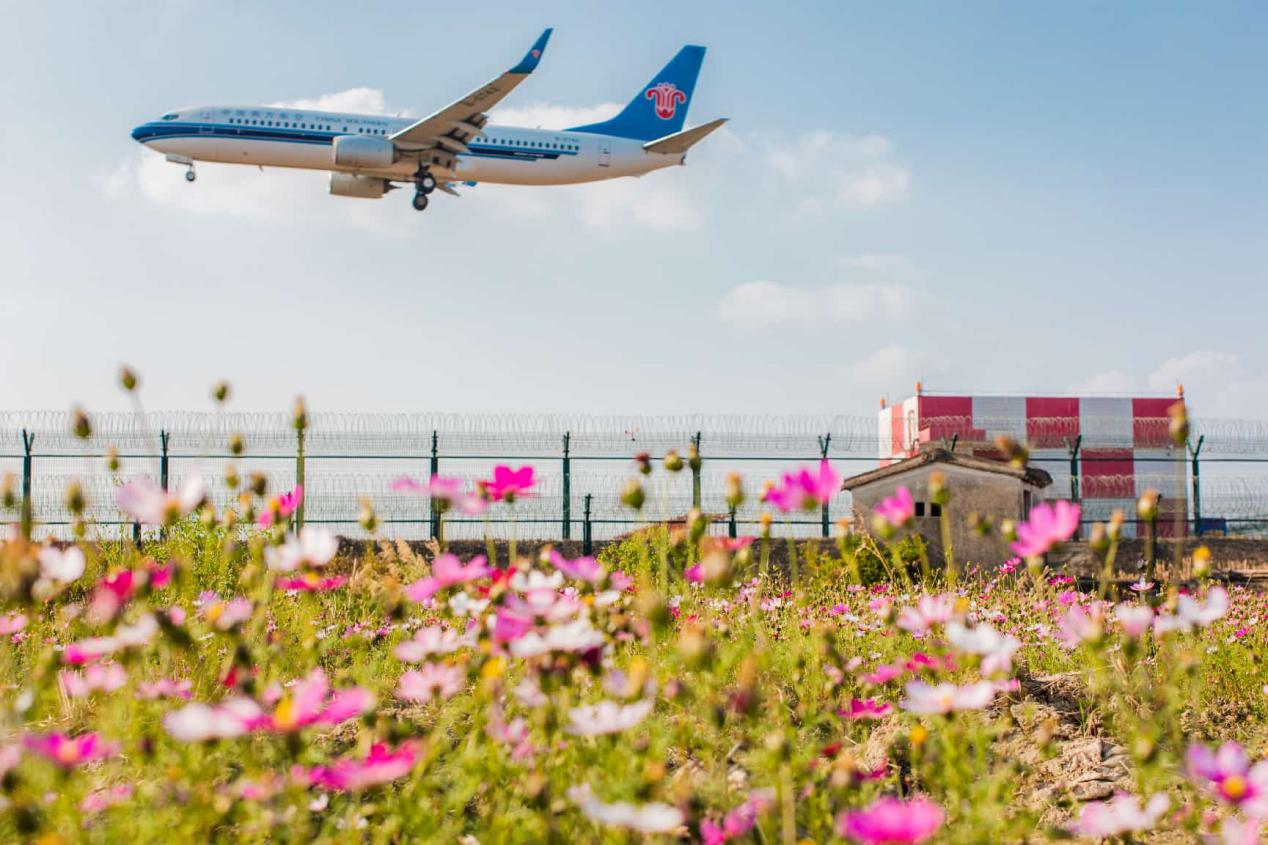
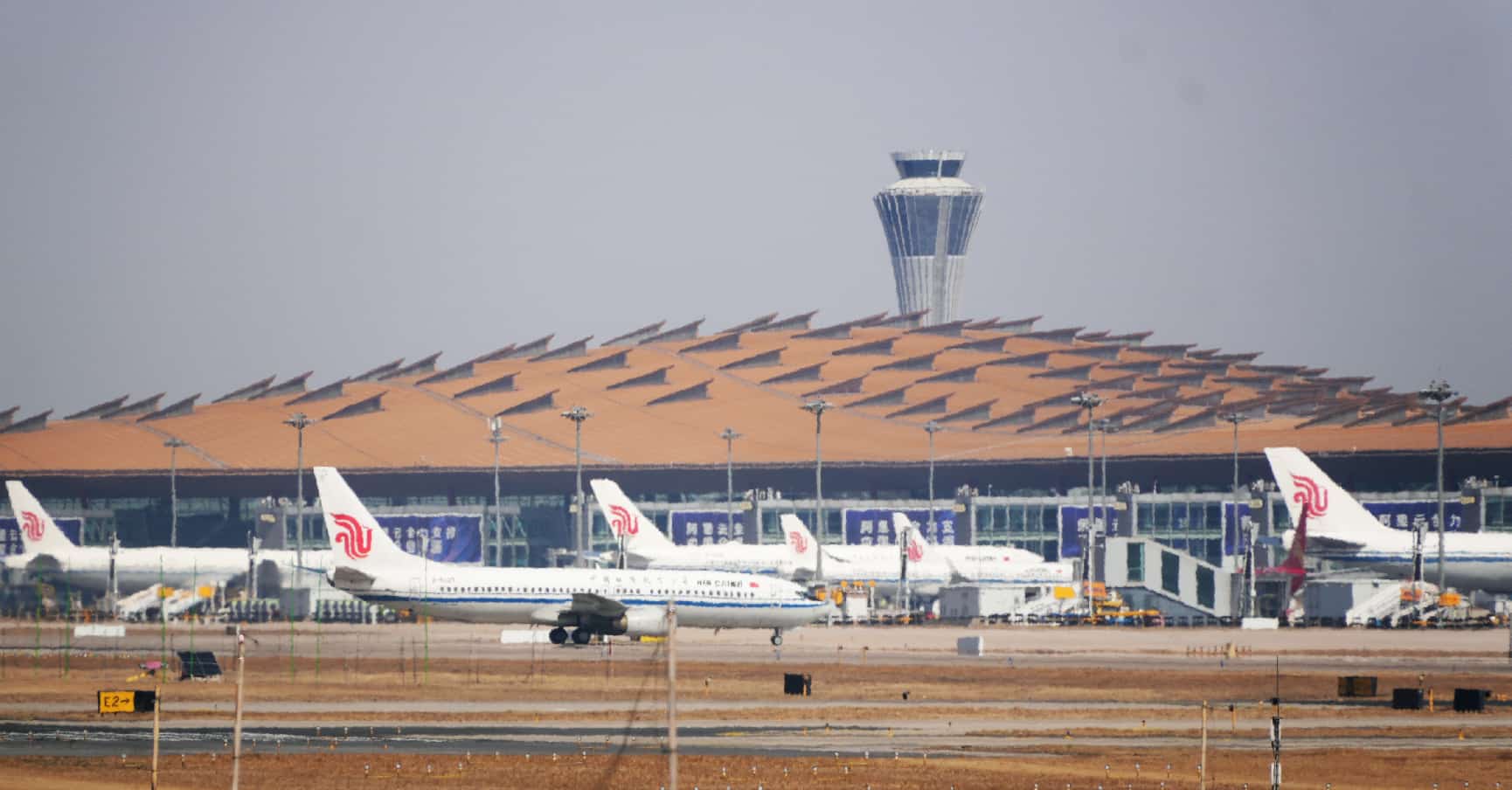
Photo shows the tarmac at Beijing Capital International Airport in Beijing, capital of China. (Photo/Tang Ke)
For example, during the 2025 Jiangsu Football City League in east China's Jiangsu province, Nanjing Lukou International Airport in Nanjing, the provincial capital, saw passenger traffic rise by about 29 percent year on year, while Yangzhou Taizhou International Airport in Yangzhou recorded an increase of roughly 21 percent year on year. These figures reflect the civil aviation sector's notable role in driving consumption.
From the perspective of spillover effects, areas surrounding airports experience relatively rapid economic growth. According to statistics from Civil Aviation University of China, in the first three quarters of 2025, the average GDP growth of cities hosting airports nationwide reached 7.5 percent. This growth is closely linked to airports' role in driving and supporting high value-added industries within the airport economic zone.
Looking ahead, China's flying population still has considerable room for growth. Young travelers are emerging as a key user group for civil aviation services, with the proportion of teenagers aged 13-18 taking their first flight rising significantly. At the same time, senior travelers are traveling more frequently and covering longer distances. During this year's Spring Festival holiday (Feb.15-23), first-time flight passengers aged over 60 increased by 20 percent on some major travel platforms.
Despite having one of the world's largest flying populations, China's civil aviation sector still has room to improve operational efficiency and profitability compared to global leaders. There is increasing demand for more personalized, diverse, and high-quality services delivered through smart solutions centered on passengers and cargo. Leveraging technologies like artificial intelligence (AI) to empower airlines, airports, and air traffic management, while strengthening airspace resource safeguarding capabilities, will be crucial.
From a long-term perspective, China's flying population of over 500 million is just the beginning. In the first two months of this year, China's civil aviation sector welcomed 8.38 million new first-time air passengers, according to statistics from TravelSky, an information technology service provider for China's civil aviation and travel industry.
With domestic demand expanding rapidly, a more comprehensive industrial system, and a higher level of openness, China is well-equipped to maintain its status as the world's largest flying population for years to come.
(Li Xiaojin is director of Aviation Economics and Improvement Research Institute at Civil Aviation University of China. This article is based on an interview Li had with People's Daily reporter Qiu Chaoyi)
Photos




Related Stories
- Air China launches new direct flights connecting Brussels with Beijing, Chengdu
- China revises temporary air route management measures
- Air China to launch direct flight linking China's Chongqing, Philippine capital
- Direct Dubai-Hangzhou flights resume after Dubai airports partially restore operations
- New direct air route links China's Hangzhou with Vietnam's Ho Chi Minh City
- Air China to operate over 70,000 flights during 2026 Spring Festival travel rush
- NW China's Xi'an to launch direct round-trip flights to Vienna in April
- New air cargo route links central China's Wuhan with Bangkok
- New direct flight route links Chinese capital, UAE's Abu Dhabi
- Singapore's Changi Airport to add 600 extra flights to China ahead of Chinese New Year
Copyright © 2026 People's Daily Online. All Rights Reserved.
