



Global trade growth to slow in 2026 with further pressure from Middle East conflict: WTO
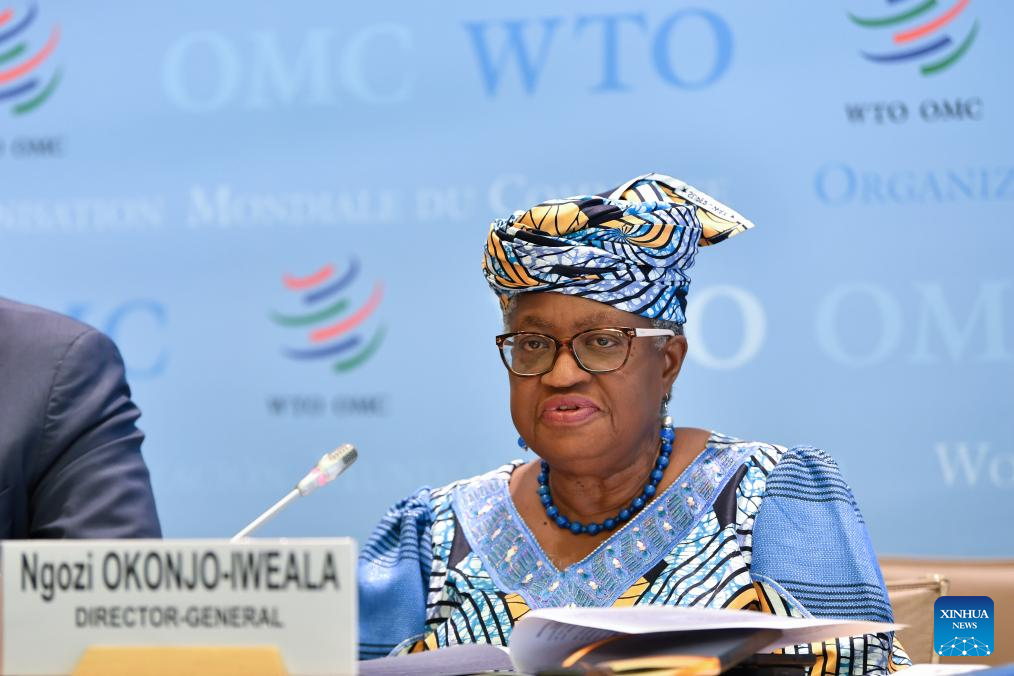
World Trade Organization (WTO) Director-General Ngozi Okonjo-Iweala speaks at a press conference on WTO's latest Global Trade Outlook and Statistics report at its headquarters in Geneva, Switzerland, March 19, 2026. The WTO said on Thursday that global trade growth is set to slow in 2026 after a stronger-than-expected performance in 2025, warning that the ongoing Middle East conflict could add further pressure on global trade. (Xinhua/Lian Yi)
GENEVA, March 19 (Xinhua) -- The World Trade Organization (WTO) said on Thursday that global trade growth is set to slow in 2026 after a stronger-than-expected performance in 2025, warning that the ongoing Middle East conflict could add further pressure on global trade.
In its latest Global Trade Outlook and Statistics report, the WTO forecast that in a baseline growth scenario excluding energy price shocks, global merchandise trade growth would slow to 1.9 percent in 2026 from 4.6 percent in 2025 before rebounding to 2.6 percent in 2027.
Commercial services trade growth will ease to 4.8 percent in 2026, then accelerate again to 5.1 percent in 2027. Together, goods and services trade will grow 2.7 percent in 2026 compared with 4.7 percent in 2025, the report said.
Global GDP growth is projected to moderate slightly from 2.9 percent in 2025 to 2.8 percent in both 2026 and 2027, the report noted.
However, the WTO warned that these baseline projections could deteriorate if the ongoing Middle East conflict continues to disrupt energy markets.
The United States and Israel launched massive attacks on Iran on Feb. 28, disrupting global shipping, sending oil prices soaring and shaking the global economy.
European gas and oil prices rose sharply in early trading on Thursday. The Dutch TTF benchmark, a key reference for European gas supply contracts, surged more than 30 percent to 70.7 euros (about 76.8 U.S. dollars) per megawatt-hour at the open, before easing to around 67 euros per megawatt-hour. The price has more than doubled from around 32 euros megawatt-hour before the conflict began.
Oil prices also moved higher. Brent crude, the international benchmark, rose to above 116 dollars per barrel in early trading.
If crude oil and liquefied natural gas prices remain elevated throughout 2026, world merchandise trade growth would be reduced by 0.5 percentage points to just 1.4 percent in 2026. Services trade would also grow at a slower rate of 4.1 percent. Global GDP growth could be cut by 0.3 percentage points, the report said.
WTO Director-General Ngozi Okonjo-Iweala said the outlook reflects the resilience of global trade, supported by trade in high technology products and digitally delivered services, adaptations in supply chains and the avoidance of tit-for-tat retaliation on tariffs.
However, Okonjo-Iweala cautioned against further pressure from the Middle East conflict on global trade. "Sustained increases in energy prices could increase risks for global trade, with potential spillovers for food security and cost pressures on consumers and businesses," she said.
The WTO's new chief economist Robert Staiger told a press conference that the "unusually strong trade growth" in 2025 was mainly driven by the frontloading of imports in North America in anticipation of higher U.S. tariffs, as well as a surge in AI-related goods.
But the two forces are "unlikely to persist through 2026," said Staiger.
However, the WTO economists still see potential upside if the Middle East conflict is short-lived and AI-related spending remains strong throughout 2026 and into 2027, which could lift merchandise trade growth by 0.5 percentage points to around 2.4 percent in 2026 and 2.7 percent in 2027.
Under the baseline scenario, Asia is expected to lead merchandise trade growth in 2026, with imports rising by 3.3 percent and exports by 3.5 percent. South America is also projected to post strong export growth of 3.5 percent.
In contrast, North America's imports growth would remain flat at 0.3 percent. Europe's exports are forecast to stagnate at 0.5 percent, while the Middle East is expected to see a sharp slowdown in exports to 0.6 percent.
The report also highlighted continued disruptions to global transport and services trade linked to the Middle East conflict.
The WTO cautioned that a prolonged crisis may lead to structurally higher transport costs, reduced transshipment activity and shifts in global travel and trade patterns toward alternative routes.
The logo of the World Trade Organization (WTO) is pictured at the WTO headquarters in Geneva, Switzerland, March 19, 2026. The WTO said on Thursday that global trade growth is set to slow in 2026 after a stronger-than-expected performance in 2025, warning that the ongoing Middle East conflict could add further pressure on global trade. (Xinhua/Lian Yi)
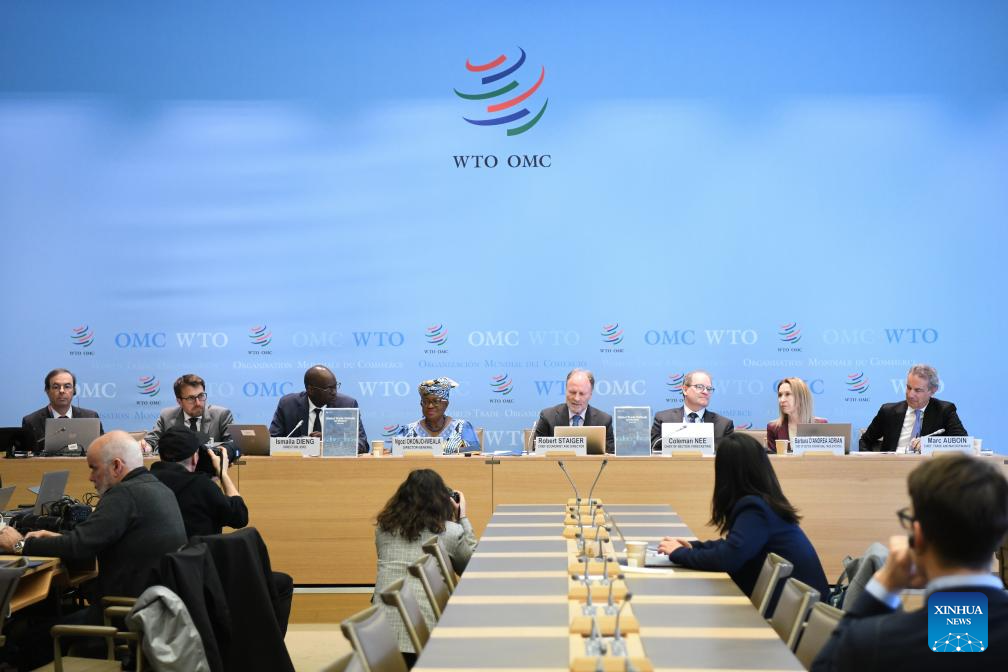
A press conference on World Trade Organization (WTO)'s latest Global Trade Outlook and Statistics report is held at its headquarters in Geneva, Switzerland, March 19, 2026. The WTO said on Thursday that global trade growth is set to slow in 2026 after a stronger-than-expected performance in 2025, warning that the ongoing Middle East conflict could add further pressure on global trade. (Xinhua/Lian Yi)
The World Trade Organization (WTO) headquarters is pictured in Geneva, Switzerland, March 19, 2026. The WTO said on Thursday that global trade growth is set to slow in 2026 after a stronger-than-expected performance in 2025, warning that the ongoing Middle East conflict could add further pressure on global trade. (Xinhua/Lian Yi)
Photos


Related Stories
- China's top diplomat urges avoiding further casualties, losses regarding war in Middle East
- Mainland facilitates 93 Taiwan compatriots stranded in Middle East to return home via Shanghai
- Middle East conflict feared to plunge tens of millions more into food insecurity: UN
- UN warns of mounting humanitarian threat amid Mideast conflict
- China urges parties to prevent regional instability from further affecting global economy
Copyright © 2026 People's Daily Online. All Rights Reserved.
