



NPC deputy helps turn tea into wealth for village in E China's Anhui
Yang Guangqi, secretary of the general Party branch in Jinjilong village, Xinhang town, Guangde city, east China's Anhui Province, was elected a deputy to the National People's Congress (NPC), China's top legislature, in 2023.
Over the years, he has fulfilled his duties diligently, conducting in-depth research, carefully considering how to address people's concerns, and serving as a voice for rural development and the revitalization of rural industries.
Based on extensive fieldwork, Yang put forward three suggestions during the 2025 annual sessions of China's top legislature and top political advisory body, in areas such as rural talent cultivation and the revitalization of rural organizations.
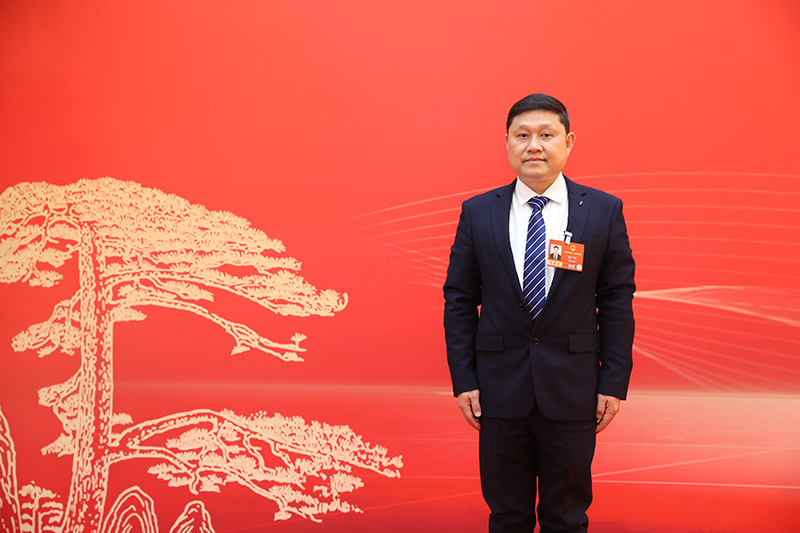
Photo shows Yang Guangqi, a deputy to the National People's Congress (NPC) and secretary of the general Party branch in Jinjilong village, Xinhang town, Guangde city, east China's Anhui Province. (Photo/Liu Weixin)
Yang said that his suggestions received responses from relevant departments. Over the past year, he has continued to devote significant energy to rural revitalization.
To address financing challenges for small- and medium-sized enterprises, Yang proposed improving the social credit system and guarantee mechanisms to channel more financial resources to businesses in towns and townships.
Jinjilong village is home to 10,000 mu (about 666.67 hectares) of tea gardens. In recent years, the local tea industry has seen steady annual growth, driven by the establishment of professional cooperatives, a smart tea garden system and improved road access. Total output value has exceeded 100 million yuan ($14.48 million).
Extending the tea-picking and processing season, expanding the tea industry chain and boosting farmers' incomes have long been among his priorities.
Not long ago, construction began on a matcha manufacturing project in Jinjilong village, injecting new momentum into the high-quality development of the local tea industry.
The first phase covers 50 mu and will start in the second month of the lunar calendar. Once it begins operations in the spring of 2027, the facility is expected to process 150,000 kilograms of matcha raw materials each year, increasing tea farmers' income by at least 5,000 yuan per mu, Yang said.
Photos




Related Stories
Copyright © 2026 People's Daily Online. All Rights Reserved.
