



China's Ninghai county produces 60 percent of world's trekking poles
At a sports equipment store near the Milan-Cortina Winter Olympics venues, shelves are filled with all kinds of winter sports gear. Among the items, a pair of beginner ski poles prominently displays its origin: "Made in China."
These poles hail from Ninghai county in Ningbo, east China's Zhejiang province. This region, a powerhouse in outdoor equipment manufacturing, exports over 15 million trekking poles annually to global markets.
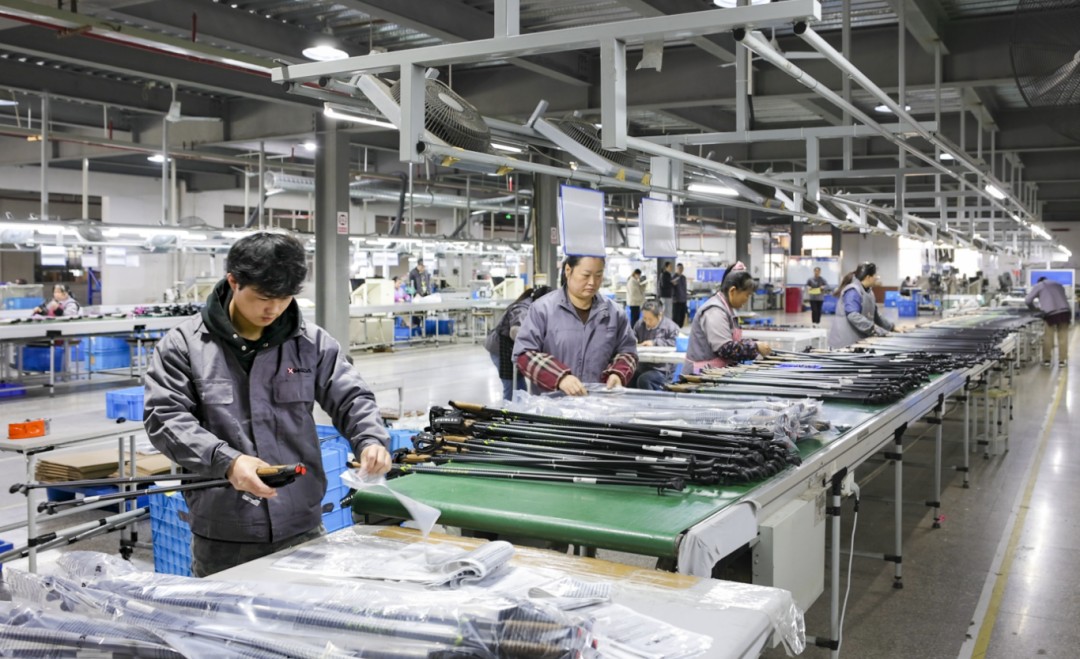
Workers pack trekking poles in plastic bags in a workshop of Xingda. (Photo/Chen Jinbo)
Today, Ninghai commands about 60 percent of the global trekking pole market, with an annual output value approaching 1 billion yuan (about $145 million). Starting from scratch, the county has spent over two decades cultivating the industry and building technical expertise. It now boasts a complete trekking pole industrial chain and is home to numerous well-known manufacturers and exporters.
Stepping into a showroom of Ninghai Better Outdoor Products Co., Ltd. (Better), visitors are greeted by a diverse array of trekking poles. One standout item is a training pole designed for novice alpine skiers. Made from aviation-grade aluminum alloy, the ski pole weighs less than 200 grams, offering both lightness and strength. Its handle, crafted from specialized materials, features an ergonomic design for added comfort.
"Overseas orders for this specific product for the 2025-2026 snow season alone have exceeded 800,000 units, a 30 percent increase year-on-year," said Zhu Xuefeng, general manager of the company.
Better exemplifies the success story of Ninghai, but its origins trace back 26 years.
In 2000, Hu Jinxue from Ninghai came across aluminum alloy trekking poles from Germany at an overseas trade fair. He quickly recognized the potential of the outdoor equipment industry.
"At the time, Ninghai had a solid base in aluminum alloy forging, but its products carried low added value. Local enterprises were eager to upgrade, yet lacked a clear direction," Hu recalled.
After returning to China, he founded his company Xingda, introduced advanced technologies, and began producing trekking poles.
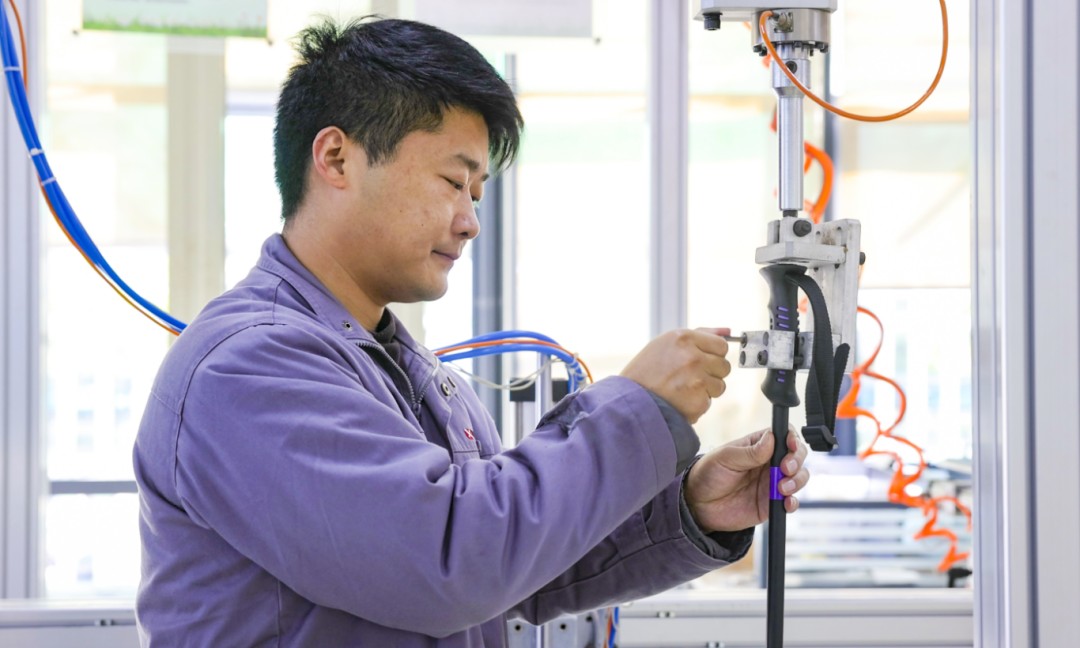
A technician tests the mechanical properties of a batch of client-customized alpine skiing poles at the test center of Xingda. (Photo/Chen Jinbo)
Leveraging strong expertise in metal processing and sustained technological upgrades, Xingda has grown into a leading industry player over the past two decades.
Even in its early stages, Ninghai adopted a forward-looking approach by identifying trekking poles as one of its key industries. A series of targeted measures has since helped turn it into a sector with an annual output approaching 1 billion yuan.
Inside Xingda's smart factory, robotic arms move with precision, nano-level ironing activates fiber properties, and intelligent winding systems form dense, layered structures. Remarkably, within just 15 seconds, a roll of carbon fiber fabric is transformed into the high-strength shaft of a premium ski pole.
As a key raw material for outdoor equipment such as ski poles, carbon shafts have long been expensive and subject to lengthy procurement cycles. Five years ago, Xingda still relied heavily on imports.
At that time, China depended on foreign suppliers for more than 90 percent of its high-end carbon fiber products, leaving independent innovation as the only sustainable path forward. Xingda responded by investing 70 percent of its annual profits into building a carbon shaft production facility and assembling a research team led by PhDs in materials science. After three years of intensive research, the company overcame key technical bottlenecks and achieved self-sufficiency in this critical material.
This breakthrough not only ensured stable supply and reduced costs but also led to a substantial leap in quality: Xingda's carbon shafts are now 20 percent stronger than those produced by leading international brands.
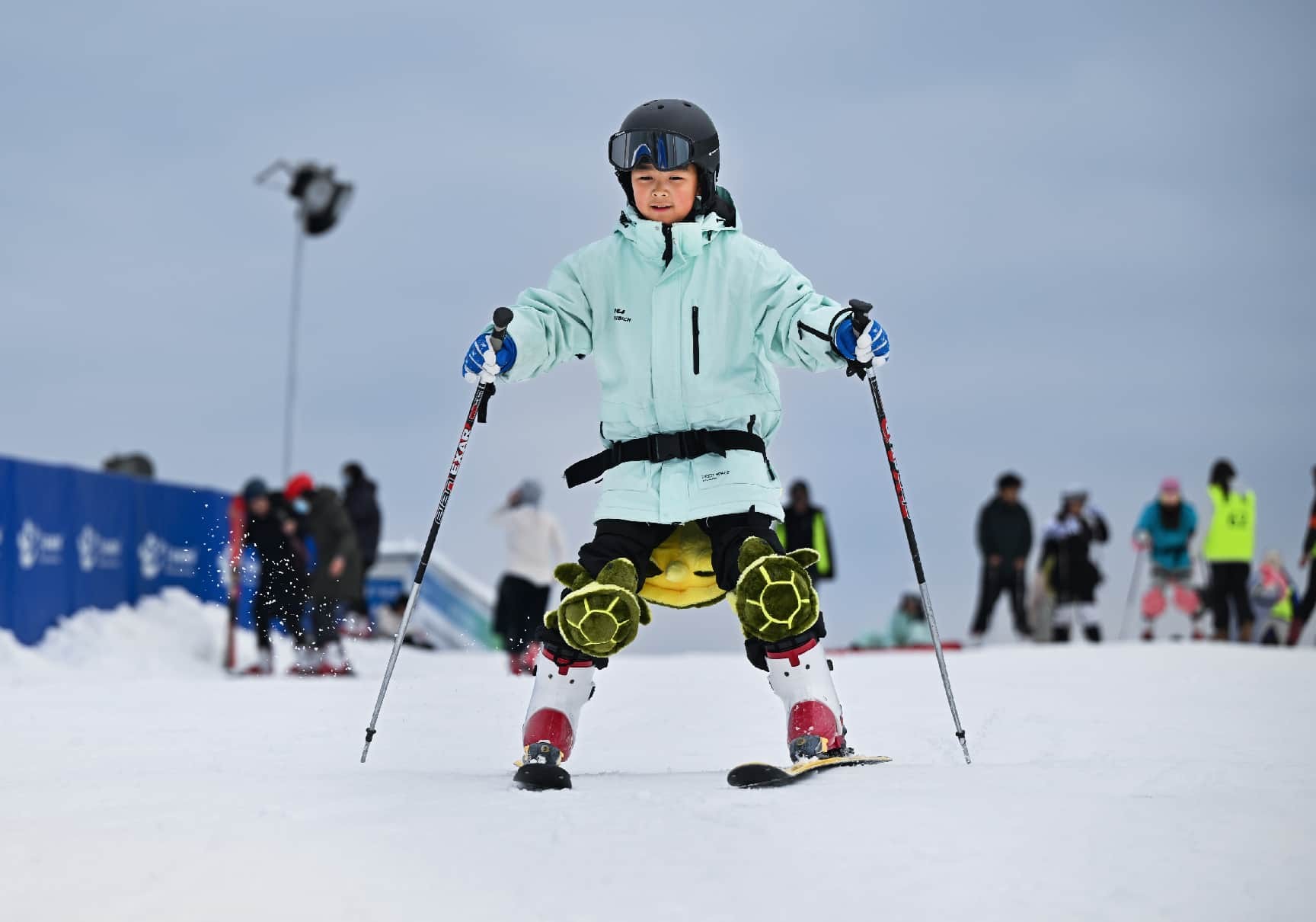
A tourist skis in a resort in Ningbo, east China's Zhejiang province. (Photo/Hu Xuejun)
Innovation is gaining momentum across Ninghai. Local manufacturers have filed more than 90 domestic patents, including utility models and industrial designs.
"This is one of our newly developed ski poles, designed to deliver high performance with environmental sustainability," said Zhu Zhenkun, general manager of Ningbo Eastdragon Hardware Co., Ltd. (Eastdragon), displaying a sample. The eco-conscious design has proven highly popular in overseas markets.
In recent years, Zhu and the team have expanded internationally, where increasingly stringent carbon certification standards in Europe and the United States pose new challenges. In response, Eastdragon has not only improved product quality but also embedded green principles throughout its manufacturing process.
During production, leftover aluminum is recycled and reused, while new materials and processes are continuously explored. "After extensive testing of different handle materials, our research and development (R&D) team selected a biodegradable seaweed-based material," Zhu said. "Handles made from this material offer a more comfortable grip and help reduce water use and carbon emissions."
From a single product to a thriving industry, trekking poles have become a driver of local growth. Today, Ninghai has developed a complete industrial chain covering R&D and design, materials processing, component manufacturing, final assembly, and brand operations. Today, the county hosts 34 leading enterprises and innovative small and medium-sized businesses within this specialized sector.
Photos


Copyright © 2026 People's Daily Online. All Rights Reserved.
