



S China's Shantou: A feast for all five senses
The sound of drums leading Yingge dance performers.
The smell of beef hot pot slowly simmering.
The sight of fresh seafood being unloaded directly from fishing boats.
The taste of melt-in-your-mouth braised goose.
The feel of a cool ocean breeze brushing past your hair.
Shantou announces itself through the senses.
Located in the Chaoshan region of south China's Guangdong Province, Shantou is the largest city in the area and one of its most vibrant. Here, food is not simply something you eat, but something you participate in. Culture is not preserved quietly, but performed loudly and proudly. Daily life unfolds not behind walls, but out in the open, shared with whoever happens to be nearby.
I spent five days in Chaoshan filming People's Daily Online's "Tales of Cities" program. By the end of the trip, one feeling became increasingly clear; Shantou is not a city meant to be understood through a checklist of attractions, it is a city best experienced through the senses. Taste, smell, sight, sound, and feel work together here, each revealing a different layer of how Chaoshan people live, eat, celebrate, and connect.
Five days were enough to awaken all five senses. They were not enough to satisfy them.
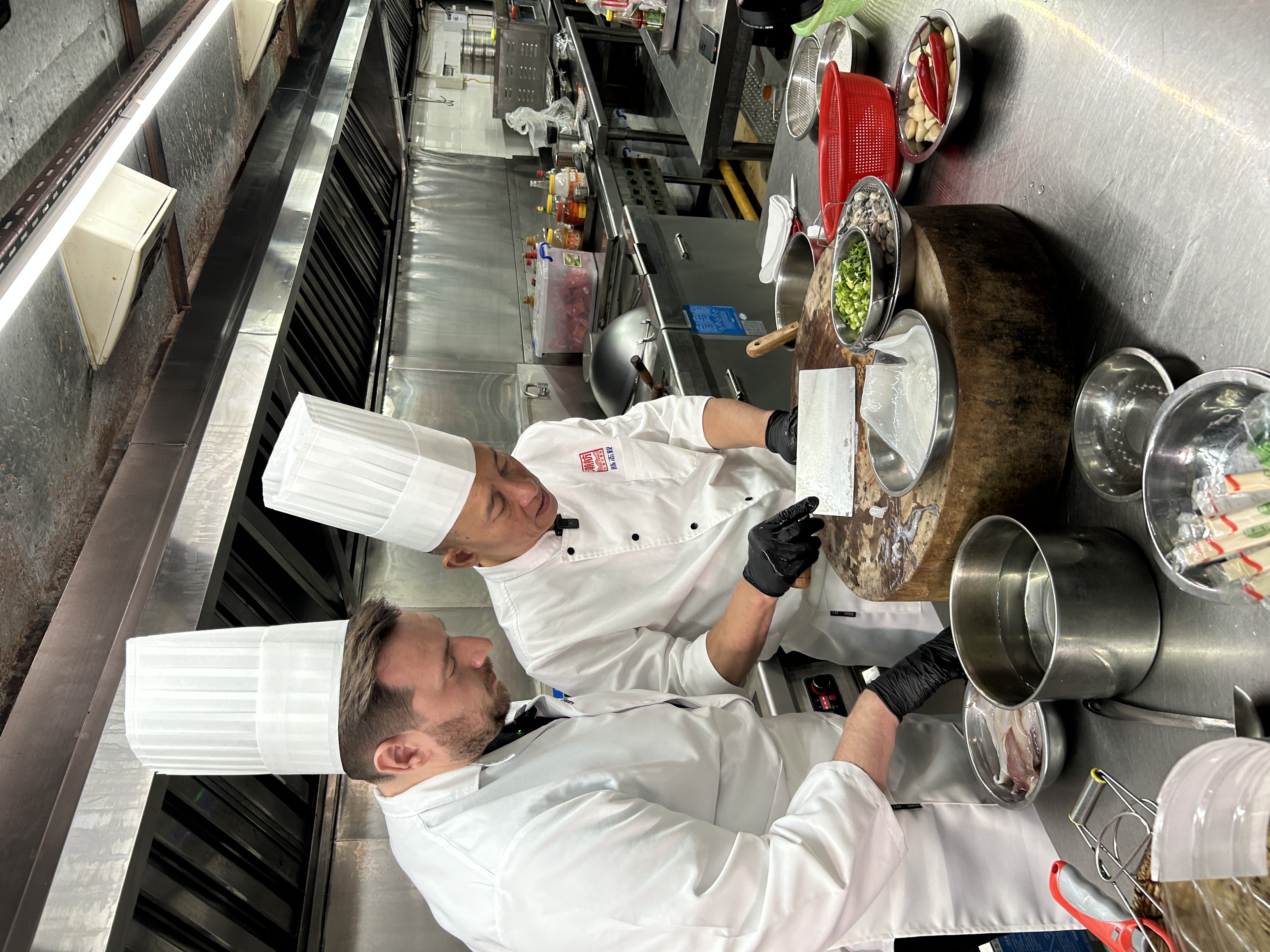
Michael learns from Chef Chen Zhiyi at Chen's Chaofang Yingge Banquet Restaurant in Shantou, south China's Guangdong Province. (People's Daily Online/Wang Xiaoping)
Taste: Freshness as trust
We often ask, "What is one word you would use to describe a food/place/thing?" It is usually an impossible question. For Chaoshan food, however, the answer is simple: fresh.
Freshness here is not a slogan or a selling point. It is an expectation, almost a promise. During my time in Chaoshan, I repeatedly heard the same quiet assurance. I have traveled extensively, living on four of the world's seven continents. Never have I encountered food as fresh as what I experienced in Shantou. The closest comparison would be my three years in Rome, one of the world's great culinary capitals. Even there, I doubt I was eating beef from a cow butchered the very same day.
In Shantou, I was.
At a local beef hot pot restaurant, the owner casually explained that the meat had been collected just hours earlier that afternoon, shortly before dinner service began. This was not a marketing line. It was simply how things are done.
I experienced this philosophy most clearly while spending two days learning from Chef Chen Zhiyi, the head chef and owner of Chaofang Yingge Banquet Restaurant. Early one morning, we walked through a neighborhood wet market together. Seafood was still alive in shallow tanks, fresh from the boats that had docked just hours earlier. Fruits and vegetables filled stall after stall, offering a variety that even the largest supermarkets struggle to match, like the white eggplants I witnessed for the first time in my life.
After buying our fresh ingredients, we went to the kitchen at Chen's restaurant to start my "apprenticeship." The dishes we prepared were simple. There were no heavy sauces, no elaborate techniques meant to impress. The flavors were clean, direct, and confident. After days of eating in Shantou, it became clear that taste here is not about intensity or excess. It is about respect. Respect for ingredients, for timing, and for the people who bring food from sea and soil to the table.
Smell: The rhythm of daily life
Shantou reveals itself quietly through smell.
In the early morning, incense drifts from temple courtyards, thin and steady, mixing with the damp air left behind by the night. As the day unfolds, steam rises from beef hot pot restaurants and clay pot porridge shops tucked along side streets. By evening, the air grows warmer and heavier. By night, it carries a faint briny note from the nearby sea, mixing with charcoal smoke from late-night food stalls and the lingering aroma of broth that has been simmering for hours.
These scents never overwhelm each other. Instead, they layer gently, each one signaling a shift in time and mood. Without checking the clock, you know when it is time for breakfast, when lunch crowds are forming, when dinner stretches late into the night. Smell becomes a guide, pointing you toward gathering places and shared moments before you ever see them.
At times, the aromas are fleeting. A passing hint of tea leaves. A trace of ginger and garlic carried briefly on the breeze. At others, they linger, clinging to clothes and memory alike. Long after you leave a street, the scent stays with you, quietly reminding you where you have been.
Even standing still, Shantou feels active. Something is always simmering, always preparing, always waiting to be shared. The city breathes through its kitchens, its stalls, and its courtyards, revealing a daily life that unfolds not in haste, but in rhythm.
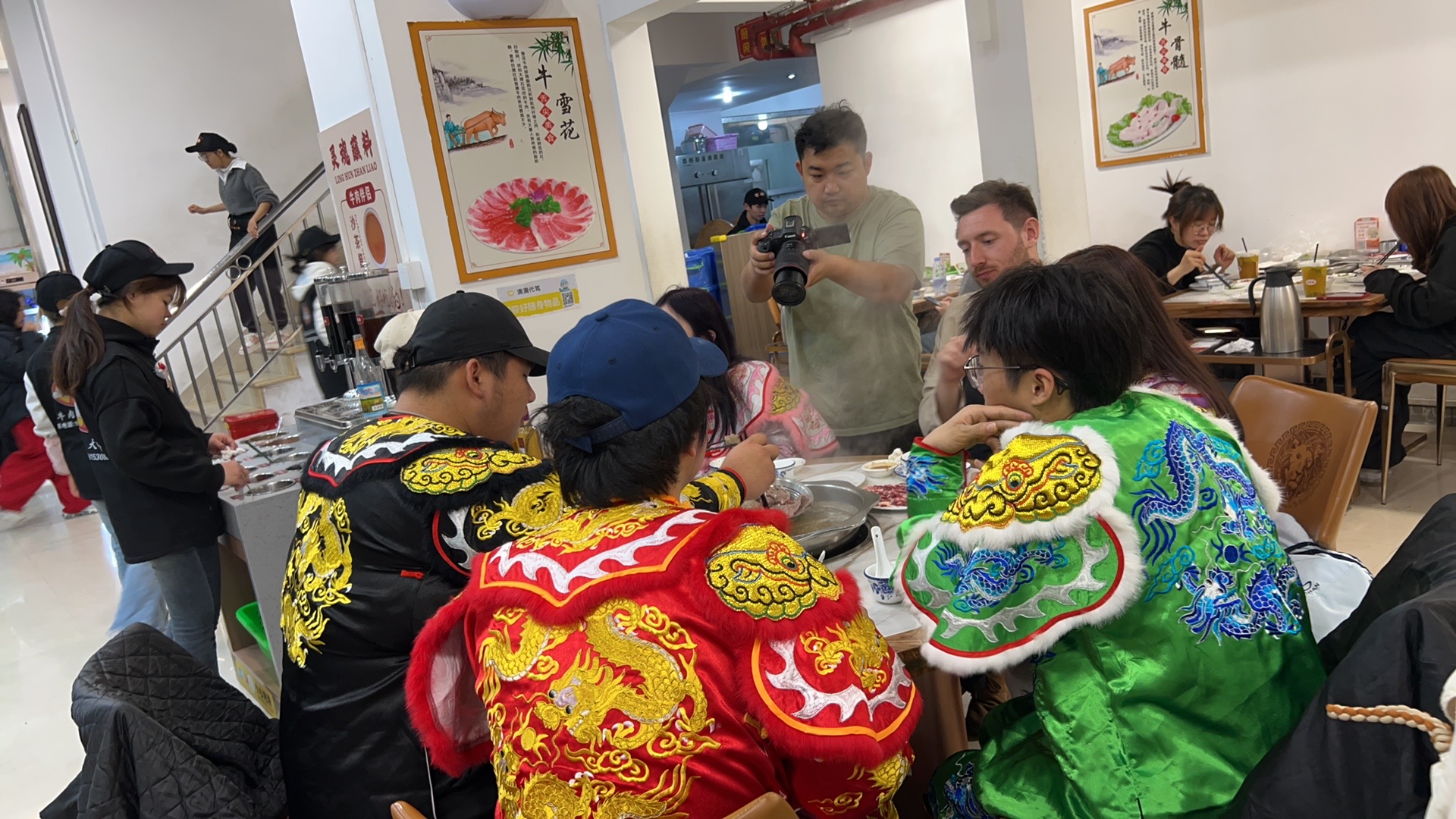
Michael enjoys beef hotpot with members of the Shantou Youth Yingge Dance Troupe in Shantou, south China's Guangdong Province. (People's Daily Online/Wang Xiaoping)
Sight: Yingge dance and living heritage
The most unforgettable sight in Shantou is movement.
Yingge dance fills streets, parks, and courtyards with explosive energy. Painted faces, bold costumes, and wooden sticks striking in precise, rhythmic unison. Each movement is powerful and disciplined, yet filled with joy.
Dating back to the Ming Dynasty (1368–1644), Yingge dance blends theater, martial arts, and folk ritual. Watching it feels less like observing a performance and more like witnessing history in motion. This tradition is not preserved behind glass. It lives openly, practiced and performed in everyday spaces.
I was lucky enough to witness performances by Yingge dance professionals, but the most moving encounter came through the Shantou Youth Yingge Dance Group. We first met several members during a performance at Chen's restaurant. Afterward, we shared a meal of beef hot pot together. Some dancers had been training for less than a year, yet each spoke with unmistakable pride about carrying forward this intangible cultural heritage.
Among them were two young women, the first female Yingge dancers I met during my time in Chaoshan. They spoke about wanting to show that while men may bring raw power to the dance, women contribute beauty, balance, and grace that are equally essential.
The next evening, they invited me to attend an open practice. "At least 50 dancers," they promised.
They were not exaggerating.
In a local park in Shantou, around 60 young people chose to spend their Friday night practicing Yingge dance together. Some were complete beginners. Others were seasoned performers. All of them shared the same intensity, focus, and joy.
Our filming work had already wrapped. Equipment was packed away. Dinner plans were waiting. Still, I stood there, unable to leave. Much of my job involves editing pieces about intangible cultural heritage and the efforts to preserve it. Rarely have I seen that work made so real, so human, and so alive.
Sound: A city that never feels empty
Shantou is alive with sound.
The deep beat of Yingge drums echoes through neighborhoods, sometimes announced from blocks away before the dancers come into view. Chopsticks tap against ceramic bowls in quick, practiced rhythms. Conversations spill from restaurants onto the street, overlapping with the calls of vendors and the hum of passing scooters. Friends greet one another loudly, as if distance itself were something to be overcome. Laughter rises, overlaps, and fades, only to be replaced by the next wave of voices.
What struck me was not volume, but continuity. Sound in Shantou does not start and stop. It flows. Even late at night, the city never truly quiets. Restaurants remain open, tea is still being poured, and people linger rather than rush home. The streets feel full, not crowded but inhabited, shaped by human presence rather than emptied by it.
At times, the sounds are subtle. The clink of teacups during an unhurried conversation. The scrape of chairs being pulled closer together. At others, they are unmistakable. Drums cutting through the air. Cheers erupting as Yingge dancers finish a sequence. The city moves between these registers effortlessly.
Shantou never feels staged or quiet for effect. Its sounds are communal, unfiltered, and reassuring. Listening closely, you begin to understand that this is a place where life happens out loud, and where silence is never required to prove sophistication.
Listening to Shantou is to hear a city comfortable with itself.
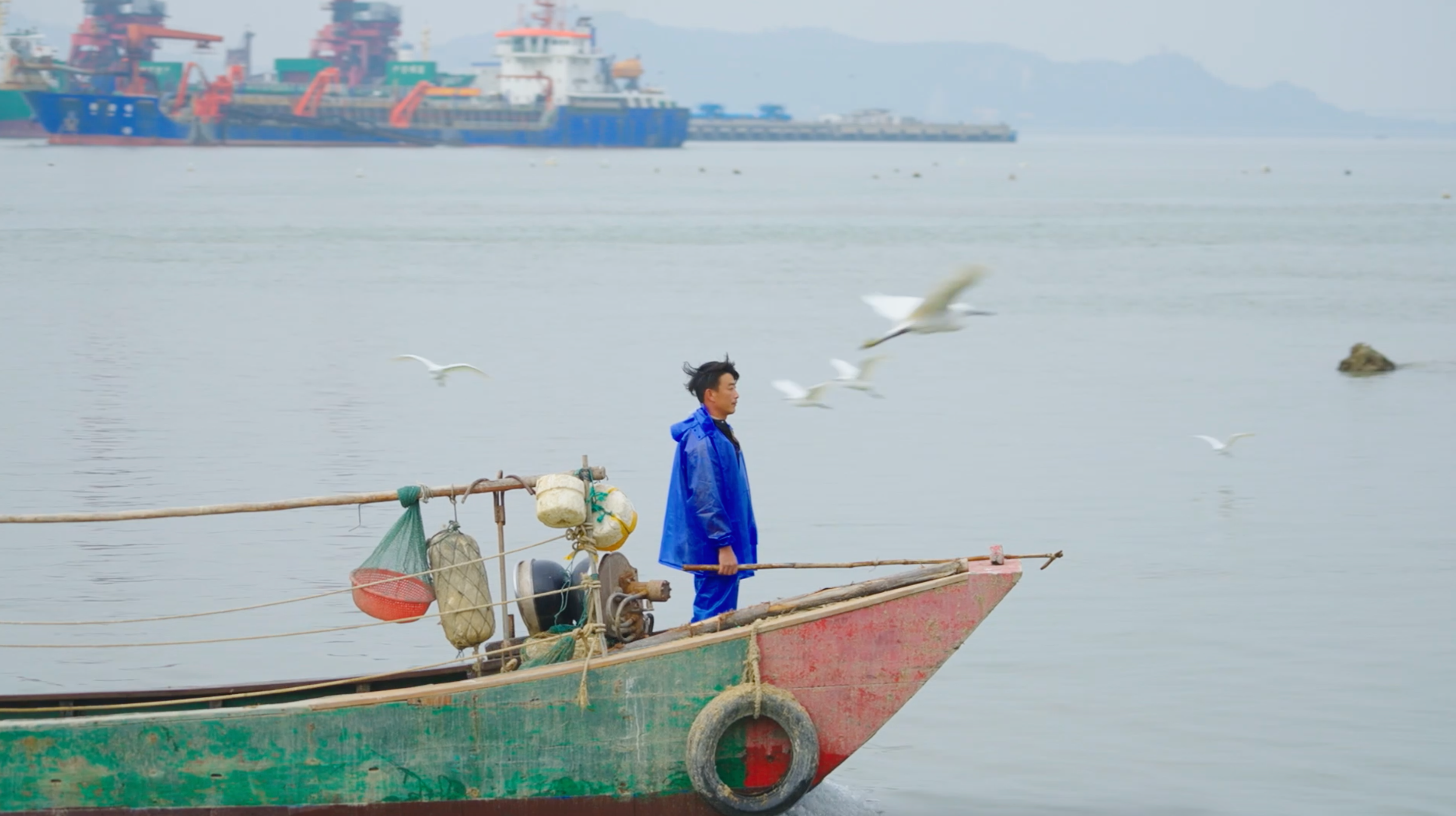
A fisherman at work off Mayu Island in Shantou, south China's Guangdong Province (People's Daily Online/Liu Ning)
Feel: Warmth that invites you to stay
Of all the impressions Shantou left on me, the strongest was a feeling of warmth.
It was there in physical ways first. The closeness of people gathered around small tables. The weight of a teacup passed from hand to hand. The ocean breeze running through my hair. Shantou is a city you feel before you fully understand.
That warmth quickly became personal. A rickshaw driver I spent only a few hours with insisted on a hug before we parted. A visit to a clay pot porridge restaurant ended with half an hour of tea outside with the owner, long after the meal was finished. At the restaurant where I briefly "apprenticed," diners treated me less like a stranger and more like part of the room. Drinks were poured my way, jokes were shared, and encouragement came easily as I moved between tables. I felt included in their energy and pride, even as I clumsily carried dishes and learned the rhythm of service.
The kitchen offered another layer of warmth. Cooking alongside Chen, I was never made to feel like an observer. Ingredients were handed directly into my hands. Instructions were given patiently. Tastes were shared openly. Learning here was not about hierarchy or perfection, but about inclusion, mentorship, and trust. Chen's calm guidance and subtle humor made the experience unforgettable, showing me that food is not only sustenance but connection.
The Shantou Youth Yingge Dance Group extended the same warmth in a different, unforgettable way. After their open practice, they crowded around me, asking for countless selfies, teasing me to dance with them, and joking about not letting me leave Shantou. Promises were made to meet in Beijing, and to one day return so that they could show me even more of their city and culture. Their energy was infectious; their friendliness unguarded, natural, and insistent. For a group of young people who had barely met me, the way they welcomed me felt like family.
Each of these moments was small on its own, but together, they created a sense of belonging, even for someone just passing through. This warmth was not performative or reserved for visitors. It felt instinctive, rooted in pride for their city and a genuine desire to share it.
By the time I left Shantou, I realized this feeling connected all five senses. The food, the dance, the sounds, the smells. All of it flows from the same source: people deeply connected to their culture and eager to pass it on.
Five days were enough to experience Shantou and Chaoshan. They were not enough to understand them. This is a city that does not ask to be rushed. It simply invites you to stay a little longer.
Photos




Related Stories
Copyright © 2026 People's Daily Online. All Rights Reserved.
