



China's 2025 foreign trade reflects economic resilience
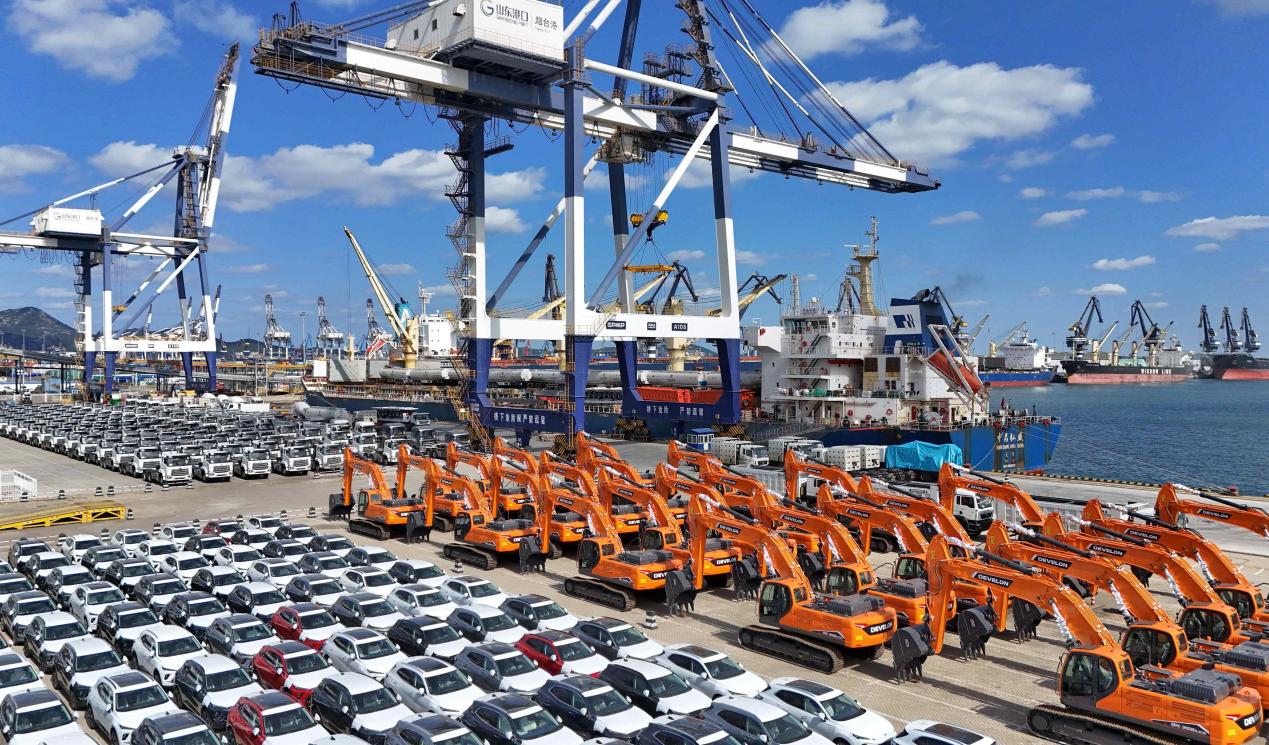
Chinese vehicles and excavators are about to be shipped overseas at Yantai port, Yantai, east China's Shandong province, Oct. 21, 2025. (Photo/Tang Ke)
China's 2025 foreign trade data has drawn significant analysis from economists worldwide, with international observers highlighting "robust exports," "diversified markets," and "sustained competitiveness". The Wall Street Journal noted that China had defied expectations for tariff-driven slowdown, continuing to show resilience as the world's second-largest economy.
Despite complex global headwinds, China's foreign trade in goods reached 45.47 trillion yuan ($6.54 trillion) in 2025, cementing its position as the world's largest trader in goods. Trade growth has now been sustained for nine consecutive years, marking the longest uninterrupted expansion since China joined the World Trade Organization.
Behind these impressive figures lie concrete stories of deepening economic ties between China and the world.
A Norwegian social media influencer recently experienced this firsthand through two encounters with a Chinese compact excavator. A few months earlier, while scrolling through a Chinese e-commerce platform, he stumbled upon the product and, judging by its low price, assumed it was little more than a toy. Curious, he placed an order. When the package arrived, the surprise was immediate: the machine was fully functional, solidly built, and far more capable than he had expected. His unboxing video quickly attracted widespread attention, drawing more than 4 million views.
Curious about the value-for-money of Chinese excavators and responding to questions from viewers, the influencer made his first trip to China. His destination was a factory of Shandong HuaYee Heavy Industry Group Co., Ltd. in Jining, east China's Shandong province. Orderly, automated production lines and a large, well-integrated supply chain capable of responding swiftly to manufacturing needs once again left him astonished. A follow-up video documenting his factory visit attracted over 500,000 overseas viewers.
The transoceanic journey of a single excavator offers a glimpse into the resilience of China's foreign trade.
Resilience lies in market diversification and win-win cooperation.
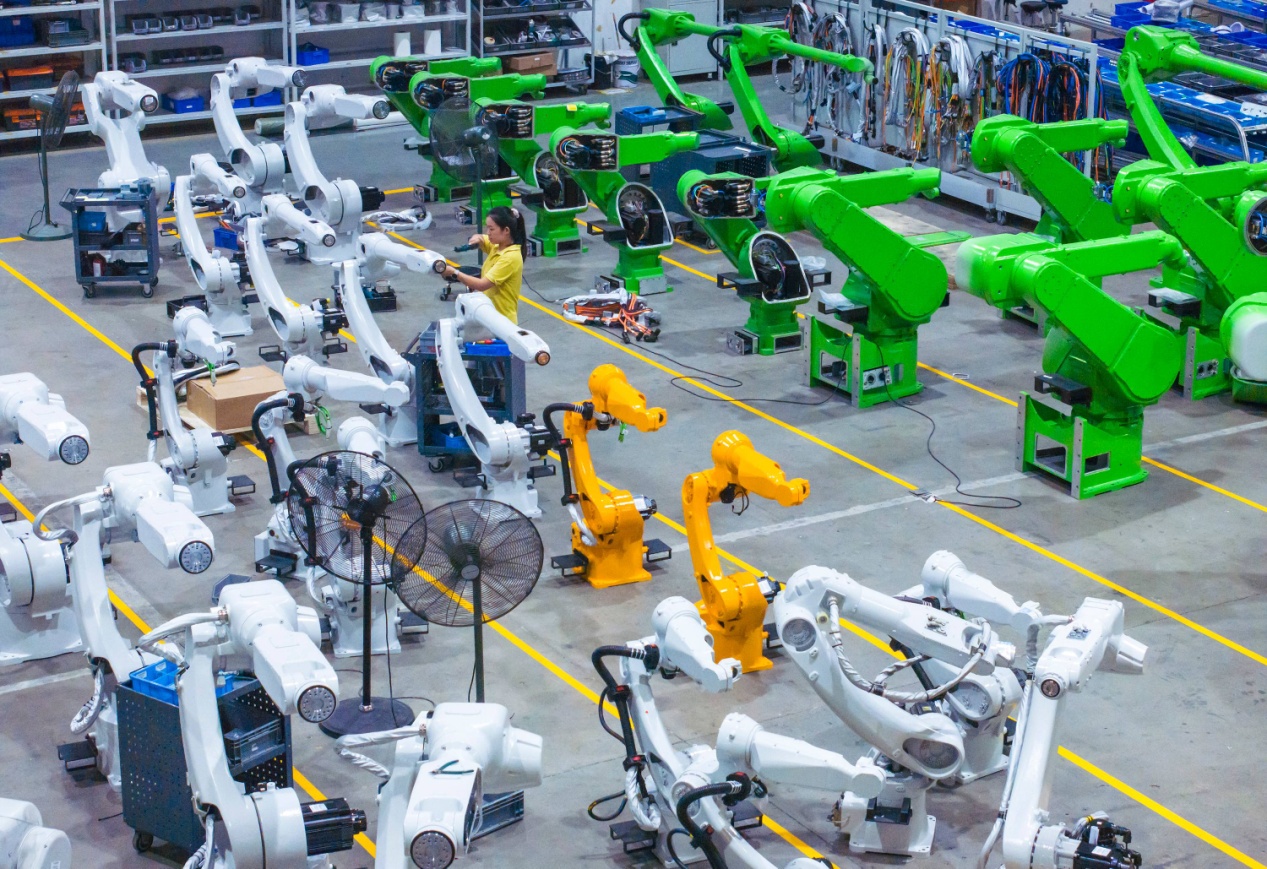
Industrial robots are assembled in a workshop of EFORT Intelligent Equipment Co., Ltd. in Wuhu, east China's Anhui province. (Photo/Xiao Benxiang)
In 2025, China's trade network covered more than 240 countries, and its trade with over 190 countries and regions reported positive growth. Trade continues to bring economies closer and create new opportunities for growth. An economist at Goldman Sachs noted that China's export resilience has been underpinned by the rapid growth of shipments to emerging markets.
China's trade with Central Asia offers a vivid example. In 2025, China-Central Asia trade exceeded $100 billion for the first time, maintaining positive growth for five consecutive years. China has also become the largest trading partner of Central Asian countries for the first time.
By promoting high-quality Belt and Road cooperation, advancing the New International Land-Sea Trade Corridor, and signing more regional and bilateral trade and investment agreements, China continues to push forward high-standard opening up through pragmatic measures.
Its foreign trade has long moved beyond reliance on a single market, forming a more balanced structure in which traditional markets provide stability while emerging markets drive expansion. As China's global economic partnerships expand, so does its capacity to withstand external risks.
Resilience lies in structural upgrading and innovation-driven growth.
Despite frequent tariff barriers and trade frictions, China's foreign trade has continued to advance, supported by an efficient, stable, and flexible supply chain system. The engineering machinery industry cluster in Jining, whose high-quality products are sold worldwide, exemplifies China's move toward higher-end, smarter manufacturing.
Industrial robots provide another example. In 2025, China became a net exporter of industrial robots. Data show that China's exports of manufactured goods have grown for nine consecutive years. Equipment manufacturing exports reached 16.03 trillion yuan in 2025, up 9.2 percent year on year, accounting for 59.4 percent of total exports--a clear sign of continued structural upgrading.
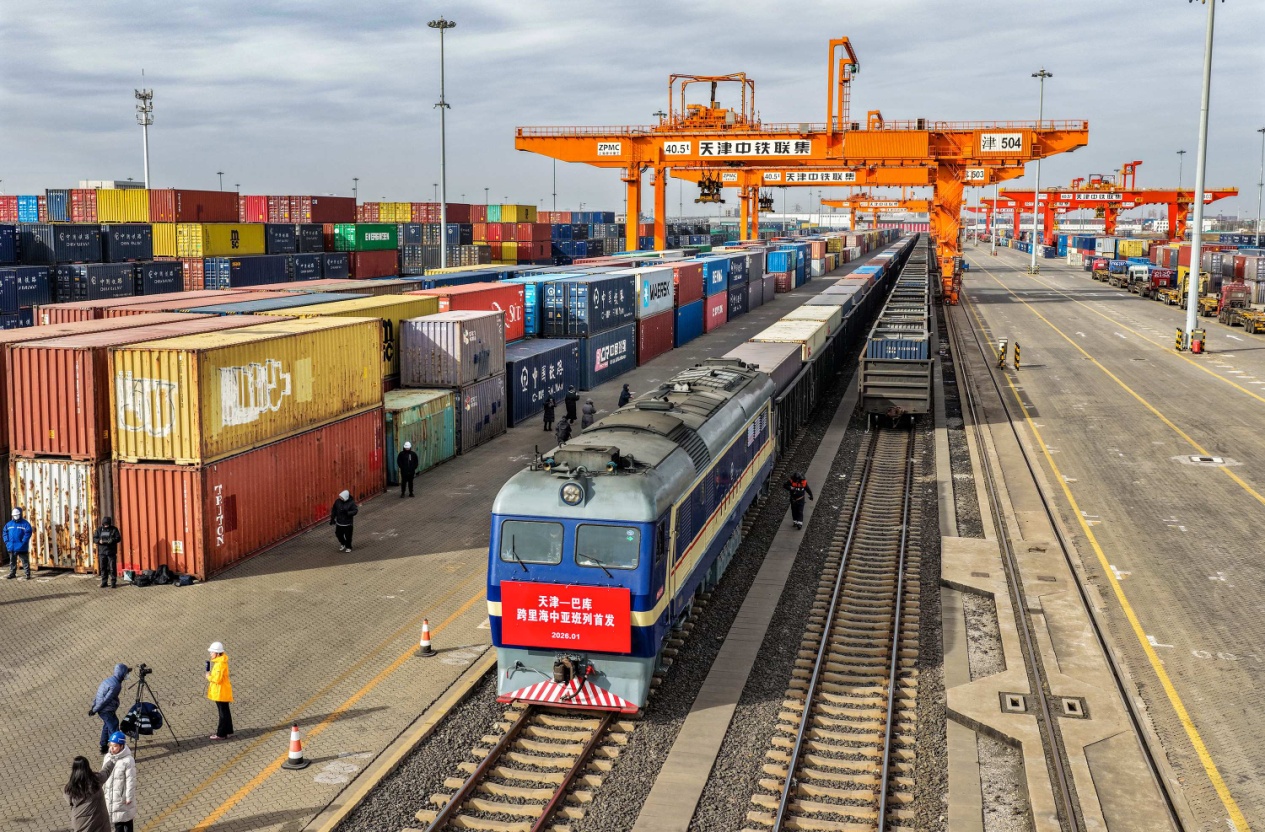
A fully loaded train bound for Central Asia is ready to set out in north China's Tianjin municipality, Jan. 19, 2026. (Photo/Yang Baosen)
This evolution stems from both industrial innovation and changing trade models. The integration of cross-border e-commerce with industrial clusters is reshaping traditional bulk trade. These highly connected platforms facilitate efficient global matching of supply and demand, opening new channels for Chinese products to reach overseas markets.
Every achievement in China's foreign trade underscores the resilience of its economy. Despite ongoing global uncertainties, China benefits its institutional strengths, vast market potential, comprehensive industrial system, and a steadfast commitment to expanding opening-up.
As experts quoted by the BBC observed, the deepening integration of Chinese goods and services into global business networks suggests this success is likely to extend into 2026. Looking ahead, China's foreign trade will continue to grow with resilience, writing new stories of win-win cooperation and injecting greater certainty into global economic and trade growth.
Photos




Related Stories
- Chinese economy hits 140-trillion-yuan milestone, boosting confidence in world development
- Interview: China's 2025 economic performance "exceeded expectations," says McKinsey expert
- Turning China's economic momentum into global connection
- China plans measures to further unlock demand
- Green, smart goods boosted by trade-ins
- China to promote at least 50,000 companies to undergo new industrial network upgrades by 2028: MIIT
- Foreign enterprises continue to ramp up investment in China; vast open market offers opportunities for world
- China's express deliveries top 200 billion parcels in 2025: official data
- Chinese A-share market goes off to a spectacular start in 2026 as Shanghai composite index surges to new highs in a decade
- Foreign investment shows confidence in Chinese market
Copyright © 2026 People's Daily Online. All Rights Reserved.
