Stories of High-Quality Development | How to enhance supply-demand alignment to boost consumption
Innovative products ranging from spontaneous travel photography experiences to bags of fresh seafood and bottles of trendy sparkling water have gained popularity with consumers in recent years.
The recommendations for the 15th Five-Year Plan propose that China ensure new demand drives new supply, new supply helps create fresh demand, and positive interactions are fostered between consumption and investment, as well as between supply and demand. All this will help enhance the dynamism and reliability of the domestic economy.
While making every effort to boost consumer income, it is also important to focus on aligning supply with demand. This means ensuring that the products and services provided by the supply side accurately meet consumers' immediate needs, while also leveraging product and service innovations to guide and create new demand. The goal is to achieve a two-way integration of supply and demand, forming a higher-level dynamic balance where demand drives supply and supply, in turn, creates demand, said Shi Yulong, director and researcher of the Research Center on Xi Jinping's Economic Thought, in a signed article for People's Daily's "Stories of High-Quality Development."
Internet platforms bridge trust gap between supply and demand in cultural tourism
The ancient city of Dali in southwest China's Yunnan Province is bathed in a golden glow as the sun sets. Lifting their cameras and snapping their shutters, photographers capture unforgettable moments for tourists dressed in traditional Bai ethnic attire.
"Before becoming a travel photographer, I was an architect," said Zhao Liwei, the owner of a travel photography studio in Dali. He noted that the preferences of young people are becoming increasingly personalized and diverse, with the traditional "been-there" style of travel gradually shifting toward "in-depth experiences." Ethnic attire photography, for instance, has become a way for tourists to immerse themselves in local culture.
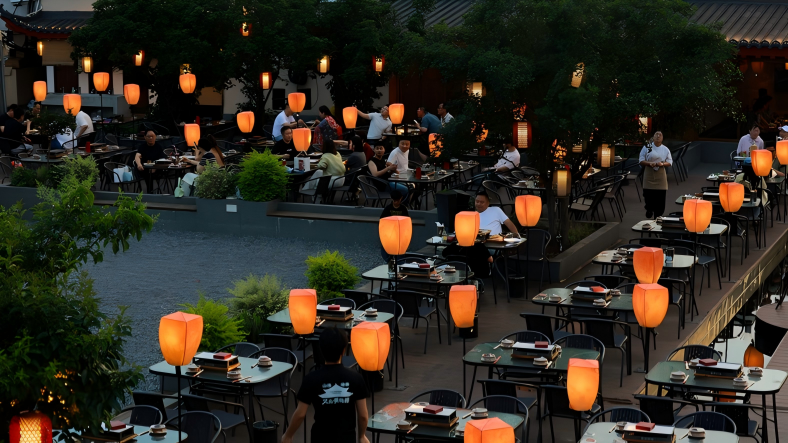
Thanks to the "bridge of trust" built between supply and demand through internet platforms such as Meituan, service consumption in sectors such as culture and tourism, health care and wellness is experiencing surging demand. From grassroots sports events like Village Basketball Association to regional leagues like the Jiangsu Super League and Jiangxi Super League, and from the museum craze to the booming performance market, consumption is transitioning from meeting people's basic daily needs to emphasizing quality, experiences and self-realization.
According to Shi, international experience shows that when per capita GDP approaches $10,000, it marks the beginning of a shift from material consumption to a service consumption-led model. China's per capita GDP has already surpassed $13,000, and for over a decade, the country has consistently held its position as the world's second-largest market for physical goods consumption and the largest online retail market. China is experiencing a rapid upgrading of its consumption structure.
Data offers solutions to better satisfy consumers' needs
At 5 a.m., when the city is not yet awake, Zhao Bo, a stocker for smart cabinets, has already started taking inventory of goods at a warehouse in Shunyi district, Beijing. Over the years, Zhao has witnessed the steady growth in the number of service outlets and observed the evolving patterns of demand.
Wang Pu, Party chief and co-founder of beverage firm Chi Forest, noted that in recent years, consumption has been shifting from "whether some product is available" to "how good it is" and "how refined it is." Take a bottle of beverage, for example: consumers not only seek convenience but also emphasize health benefits, taste and overall experience, reflecting increasingly detailed and diverse demands.
Many new characteristics have emerged in the consumption market. The integration of new technologies has enabled seamless online and offline interactions, fostering multi-channel integration and interactive development. Different demographic groups now demand more personalized, diversified, and refined products. Younger generations, such as Gen Z, show a preference for "interest-driven consumption," prioritizing trends, social attributes and experiential value. Meanwhile, rational, quality-focused consumption has become mainstream.
Shi said that consumption is a process of fulfilling needs while simultaneously creating new ones, which in turn drives further development in production. When people consume a particular product, they often develop new demands for related or upgraded products. This new demand guides the direction and scale of production. To meet these emerging needs, new processes in production, distribution and circulation must inevitably be undertaken.
Fintech provides customers with innovative seaweed products
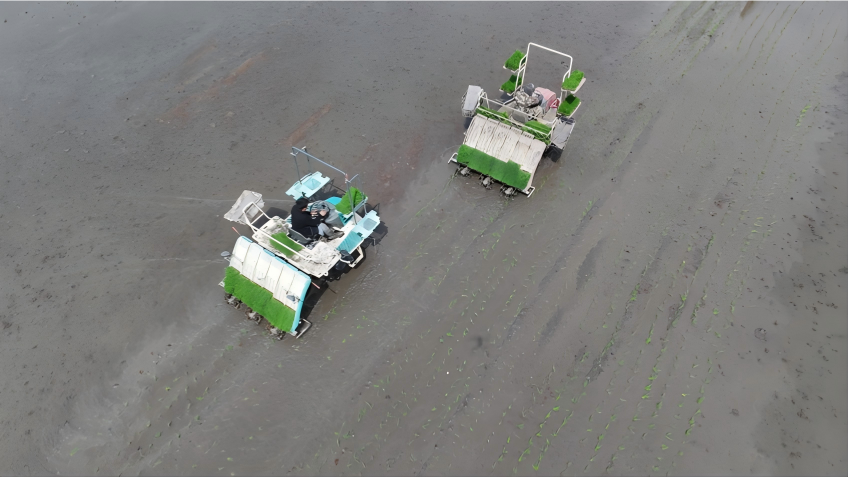
In Liu'ao Town, Zhangpu county, southeast China's Fujian Province, Liu'ao laver, a nationally recognized geographical indication product, has expanded its reach from small fishing ports to markets across the country. Lin Wenhui, a local grower, said, "In the past, laver was sold in bulk, but now it’s sold by the kilogram." With the support of financial technology, he upgraded equipment, expanded production capacity, and developed new products such as laver candy and laver sausage, transforming this traditional delicacy into a hot-selling item during the Spring Festival.
Recently, data released by the National Intellectual Property Administration revealed that China’s geographical indication products contribute an annual output value nearing 1 trillion yuan ($144 billion), marking the fifth consecutive year of growth. These products have become a golden calling card for specialized industries, boosting incomes and significantly contributing to regional economic development.
Wu Haisheng, CEO of QFIN, highlighted China's continuously upgrading consumption structure, with consumers increasingly demanding high-quality, culturally rich and distinctive products. Geographical indication products, he noted, embody regional advantages and cultural heritage, serving as a vital link between farmers’ livelihoods and market supply. They play a crucial role in rural revitalization and boosting consumption.
With the significant improvement in China’s industrial capabilities and standards in recent years, ample traditional goods are available across nearly all sectors, from agricultural products to industrial goods. Driven by the new round of technological revolution and industrial transformation, innovation and creativity on the production and supply side have greatly advanced. This has led to the development of many new products and services closely linked to digitalization, smart technologies, green initiatives and application scenarios.
Supply and demand are two aspects of economic development. Alignment means the proactive adaptation of the production and supply side to changes in consumption trends, ensuring a dynamic and precise match between the quality, structure, and utility of consumer goods and the diverse demands of consumers. Shi added that moving forward, efforts should focus on continuously stimulating consumption potential, expanding the supply of high-quality goods and services, and improving long-term mechanisms to boost consumption, all aimed at enhancing supply-demand alignment.
(Web editor: Hongyu, Wu Chengliang)