



Reindeer keeper preserves Ewenki traditions alive in N China's Inner Mongolia
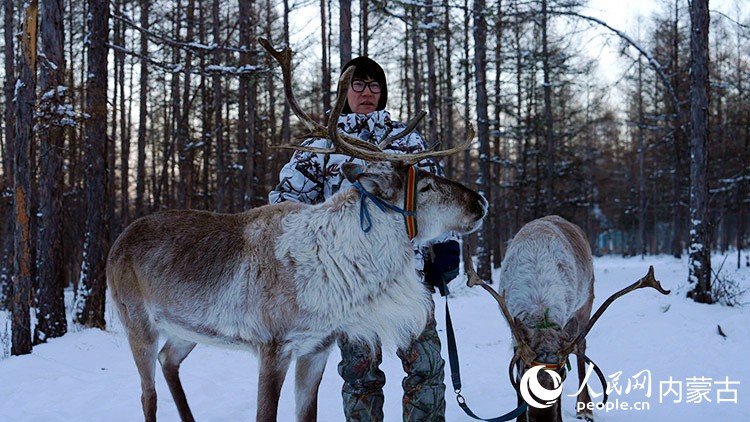
Liu Gang, a reindeer keeper of the Ewenki ethnic group, leads reindeer through a snow-covered forest in Genhe, north China's Inner Mongolia Autonomous Region. (People's Daily Online/Zhang Liyang)
In the snow-covered forests of Aoluguya Ewenki ethnic township, Genhe, north China's Inner Mongolia Autonomous Region, doctor-turned-reindeer keeper Liu Gang raises a herd of reindeer, leading them and the unique culture and traditions of the Ewenki ethnic group toward a brighter future.
Liu was born in the 1980s into an Ewenki family with a herd of reindeer in Aoluguya, which is home to China's only community traditionally known for reindeer herding.
Growing up among reindeer, he formed a deep bond with them. Even after starting his medical career in Beijing, he still visited home each year to care for the animals.
As his mother grew older and the herd continued to expand, Liu's desire to return home and care for the reindeer grew ever stronger.
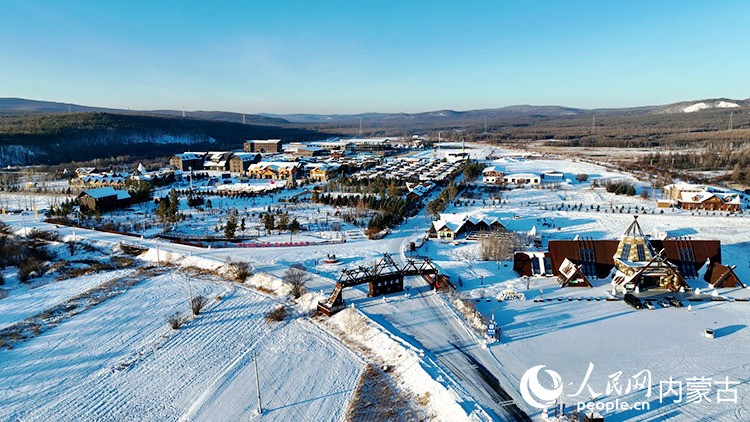
Photo shows an aerial view of Aoluguya Ewenki ethnic township in Genhe, Hulunbuir, north China's Inner Mongolia Autonomous Region. (People's Daily Online/Meng Jiashu)
In 2016, driven by his passion, Liu left his stable position at a Beijing hospital and returned home to focus on caring for the herd.
Today, he keeps more than 70 reindeer and has become an industry leader in reindeer farming while preserving and promoting the Ewenki culture and traditions.
With government support, including subsidies and reindeer introduction programs, Liu has expanded his herd and diversified its role.
In summer, he takes well-built male reindeer to the Aoluguya scenic area, allowing visitors to interact with the animals and experience traditional Ewenki crafts and culture.
During winter, he welcomes ski resorts in cities such as Wuhan and Yichang in central China's Hubei Province to rent his reindeer, helping introduce Ewenki culture to a wider audience.
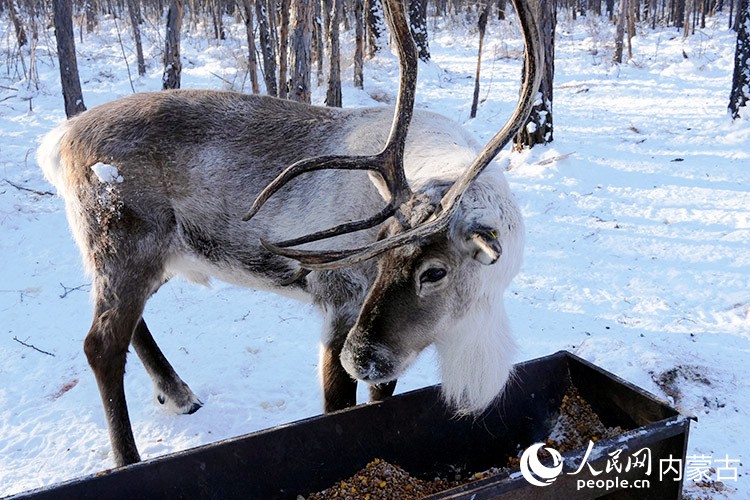
Photo shows a reindeer in Aoluguya Ewenki ethnic township, Genhe, Hulunbuir, north China's Inner Mongolia Autonomous Region. Reindeer raised in the township feed mainly on dried lichen, soybean cake, and wheat bran. (Photo by Niu Jia)
"As I rent the reindeer, I always send young Ewenki people to accompany the animals," Liu said. "They take care of the animals and share our stories with people from the outside world."
In recent years, tourism has become a major driver of employment in Aoluguya. The Aoluguya scenic area, featuring the reindeer herding tribe, is a national 4A-rated tourist attraction centered on Ewenki culture and underpinned by the local forest ecosystem. It has witnessed a significant increase in visitor numbers, according to Zhao Geng, head of the marketing department at a local tourism development company.
Reindeer-related experiences have emerged as the scenic area's most popular offering, while local homestays and handicraft shops have enjoyed sustained success, Zhao said.
The Ewenki people have a millennia-old history of reindeer herding. Historically, the animals served as essential companions for transport, hunting, and daily survival in the Greater Khingan Mountains in Inner Mongolia.
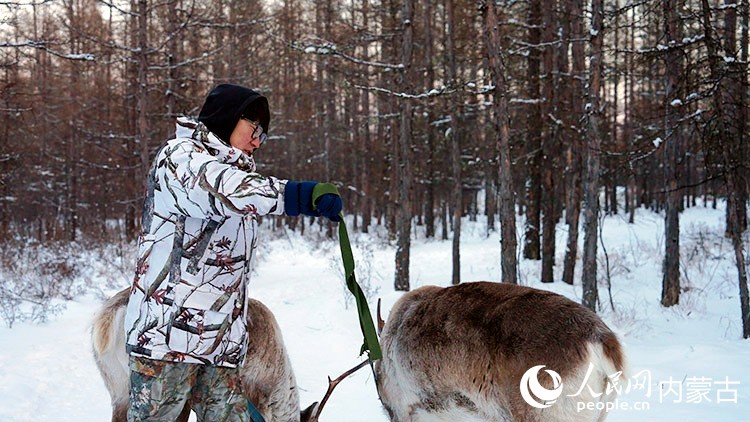
Liu Gang, a reindeer keeper of the Ewenki ethnic group, spends time with reindeer on a farm in Aoluguya Ewenki ethnic township, Genhe, north China's Inner Mongolia Autonomous Region. (People's Daily Online/Wang Yongjie)
For Liu, reindeer herding is more than just an industry; it represents an expression of Ewenki culture.
"Reindeer are not merely a symbol of our people. They are an emotional bond linking us to our history and country," Liu said. "Raising reindeer is both a way of passing down our traditions and culture. It’s a responsibility we must shoulder."
As his young child grows up among the reindeer, Liu believes the bond between the Ewenki people and their reindeer will be carried forward through each generation.
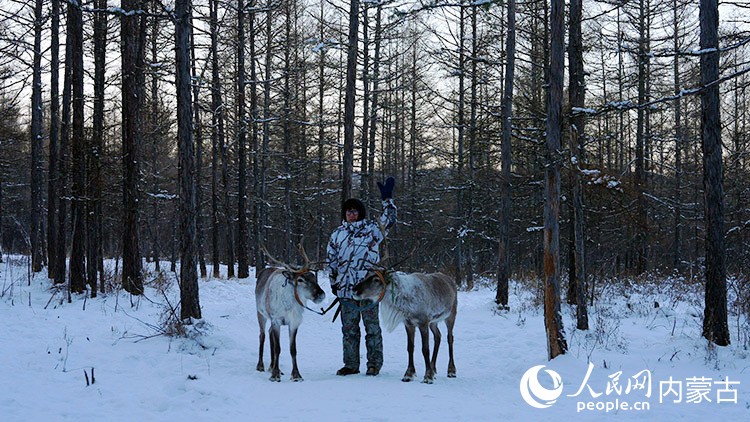
Liu Gang, a reindeer keeper of the Ewenki ethnic group, interacts with reindeer in the Aoluguya Ewenki ethnic township, Genhe, north China's Inner Mongolia Autonomous Region. (People's Daily Online/Kou Yanan)
Photos



Related Stories
Copyright © 2026 People's Daily Online. All Rights Reserved.
