



Micro-renewal projects breathe new life into Shaoxing, a 2,500-year-old city in Zhejiang
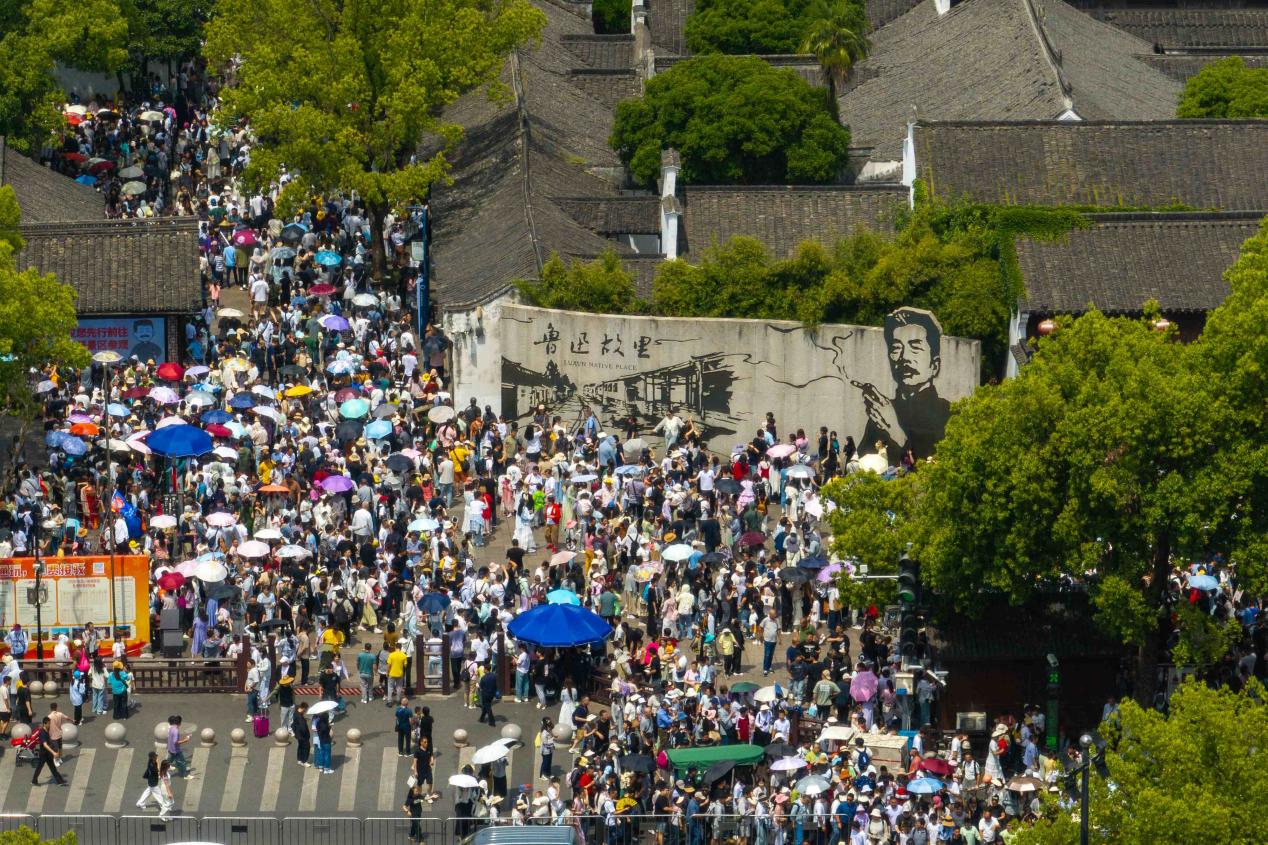
Tourists visit the former residence of 20th century Chinese writer Lu Xun in Shaoxing, east China's Zhejiang province. (Photo/Zhang Hui)
In recent years, micro-renewal projects have catalyzed remarkable transformations in Shaoxing, an ancient city in east China's Zhejiang province. While preserving its distinctive historical character, this ancient city, whose urban layout has remained largely unchanged for more than 2,500 years, has been revitalized with new energy.
Shaoxing is one of the first cities in China to be officially recognized as a "historical and cultural city." Located in Yuecheng district, the city's ancient core covers an area of 9.09 square kilometers and encompasses eight historical and cultural neighborhoods. Within this area, 53 major historical and cultural sites are safeguarded at the municipal level or higher.
Shen Bo, chief engineer of Shaoxing Cultural Tourism Group Co., Ltd., has witnessed and contributed to the city's transformation and preservation. "I joined the office for the protection and utilization of Shaoxing ancient city in 2004," Shen said. "Over the past two decades, I've been involved in numerous projects, all with a singular goal: to breathe new life into this millennium-old city."
A prime example of this revitalization is the renovation of Qingteng Study, formerly the residence of Xu Wei, a celebrated painter and calligrapher of the Ming Dynasty (1368-1644). Although Qingteng Study is a nationally protected historical and cultural site, its limited interior space posed challenges for accommodating large numbers of visitors.
To address this, Shen and his team transformed a nearby, previously closed-down machine-tool factory into the Xu Wei Art Museum. Surrounding traditional taimen houses, courtyard residences typical of Shaoxing, were also refurbished into boutique homestays and cultural spaces.
By blending culture, commerce, and tourism, the project not only enhanced the visitor experience but also improved living conditions for the local residents. One former critic of the renovation later shared a photo of herself and her son joyfully sitting outside their home, prompting Shen to reflect, "At that moment, I realized the effort had truly paid off."
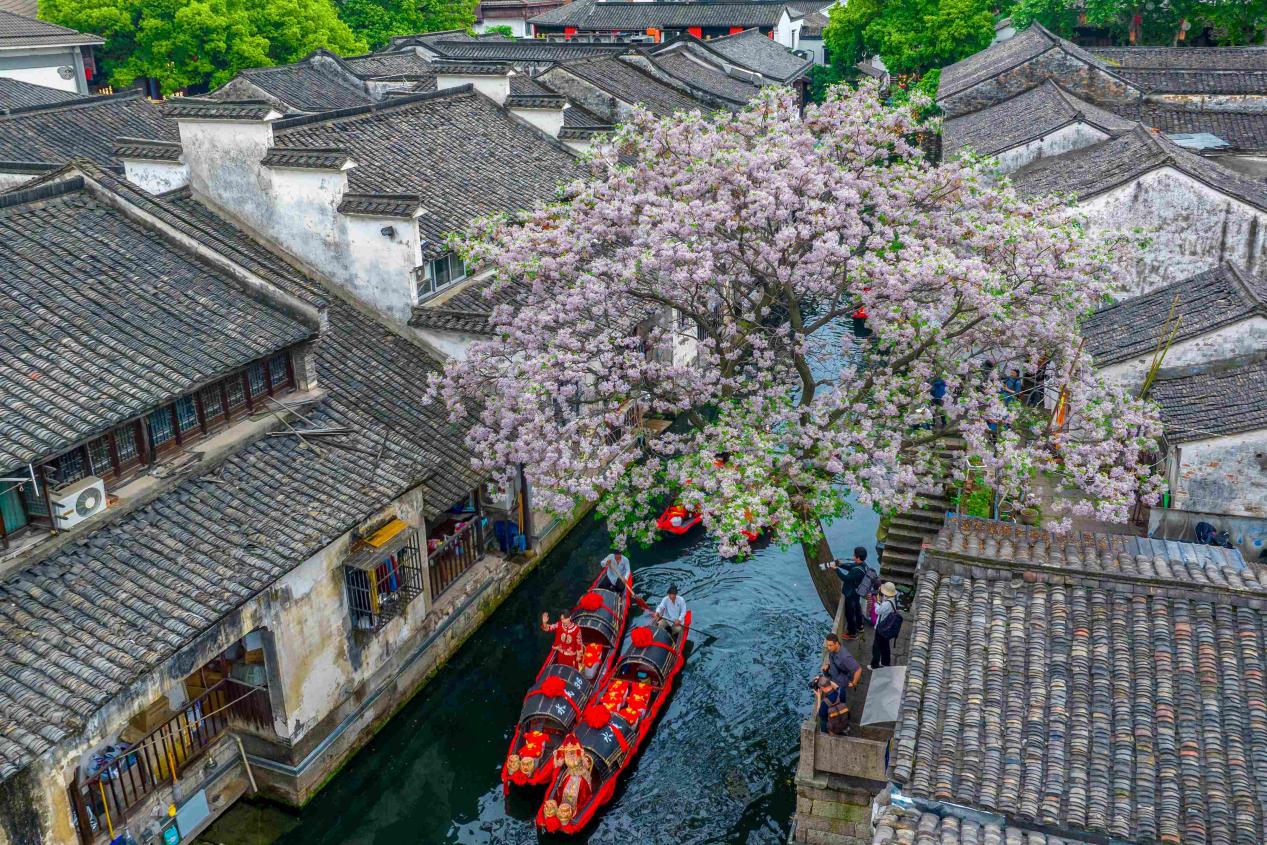
Tourists visit the Cangqiao Straight Street, one of Shaoxing ancient city's best-known historical streets, April 22, 2025. (Photo/Pan Weifeng)
Urban renewal within the ancient city requires a holistic, citywide approach. Two high-rise buildings, which previously obstructed the cityscape, were reduced from 12 stories to five and repurposed into a meteorological museum. Alongside the renovated Shaoxing hall of historical figures and a museum dedicated to clean governance, these spaces now contribute to the cultural richness of the city. In addition, smaller-scale renovations have expanded public open spaces, and around 60 percent of the historical buildings have been restored to their original appearance.
New technologies have played a major role as well. Drone-based remote sensing is used to document the ancient city's spatial layout, while a digital monitoring system provides real-time analysis of potential risks to immovable cultural relics. Furthermore, a digital archive now systematically catalogs both tangible and intangible cultural heritage, including local customs, revolutionary histories, and architectural landmarks.
By September of this year, the conservation of Shaoxing ancient city was nearing completion, with eight historical and cultural neighborhoods and two historical areas fully preserved. A total of 94 historical and cultural sites under protection, along with 55 historical buildings, have undergone professional restoration.
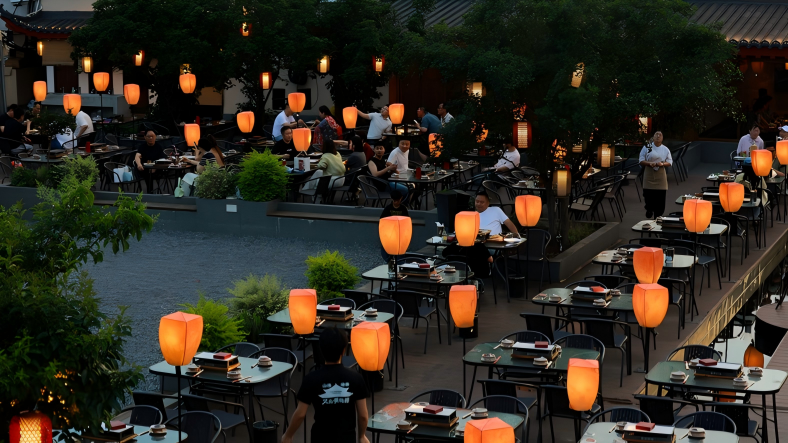
After its renovation, the Cangqiao Straight Street, one of the ancient city's best-known historical streets, has been revitalized to combine its well-preserved historical features with a vibrant, everyday atmosphere. The street has become particularly popular among visitors. One tourist from Shanghai left a message saying: "With its small bridges, flowing water, and old-world charm, sitting here with a cup of tea and enjoying the view is truly relaxing. I would love to come back again."
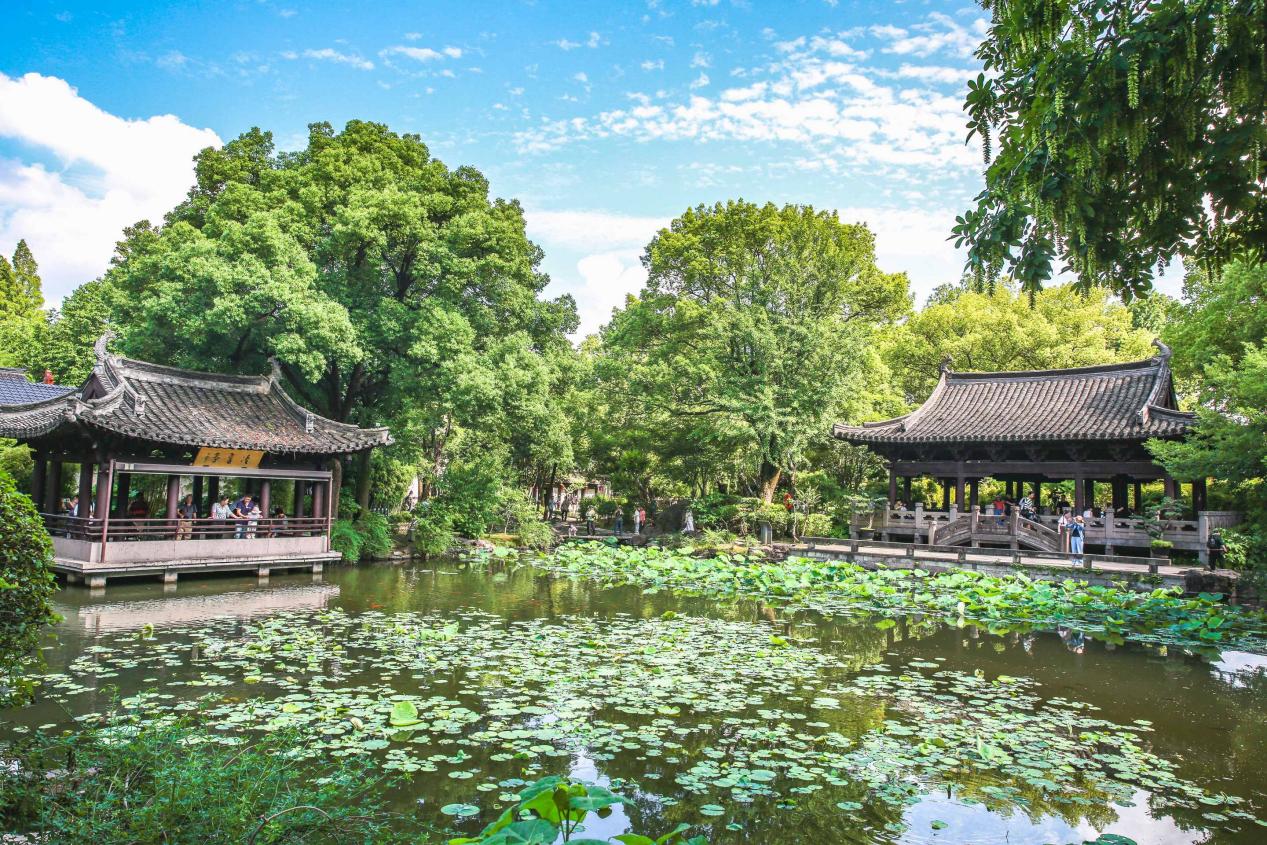
Tourists visit the Shen Garden in Shaoxing, east China's Zhejiang province. (Photo/Feng Guanglun)
Last year, Yuecheng district, which encompasses Shaoxing ancient city, welcomed 17 million tourist visits, a 12 percent increase from the previous year.
"Over the past five years, the ancient city has transformed almost every day," Shen said. More than 60 foundational and implementation-oriented conservation and utilization projects have been completed. Cultural events commemorating luminaries such as Xu Wei, Chinese Ming-dynasty philosopher Wang Yangming, and modern-time educator Cai Yuanpei have been successfully held. The former residences of writers like Lu Xun and calligraphers like Wang Xizhi have now become signature landmarks of Shaoxing ancient city.
Shaoxing's experience is far from unique. Across China, many cities with rich historical and cultural legacies are undergoing similar transformations. Over the past five years, China has made significant progress in preserving its urban and rural heritage, with many historical sites receiving urgent, rescue-based protection and a national consensus forming around the principle of "preserving what should be preserved and promoting protection through use."
By incorporating cultural heritage into modern urban life, cities nationwide have maintained the charm of ancient streets while modernizing infrastructure and eliminating safety hazards. This approach not only preserves history but also sustains the vibrancy of everyday life, turning old landmarks into new cultural icons.
Photos

Related Stories
- Big cities surge ahead in seeking quality growth
- Digital initiative turns city into innovation hub
- Qingdao develops advanced 3D "city map" to enhance smart urban management
- Mayors vow to boost friendship of cities
- AI Posters | City series spotlights unique character of Chinese cities
- China's city "health check" prioritizes people-centered development
- Chinese cities turn to live events to fuel economic growth
- Five cities eye globally attractive consumption
- China issues trial code of practice for fully automated urban rail systems
- Home sales in major cities rebound, market stabilized by favorable policy package
Copyright © 2026 People's Daily Online. All Rights Reserved.
