



Early-season mangoes drive income growth, green development in Yuanjiang in SW China
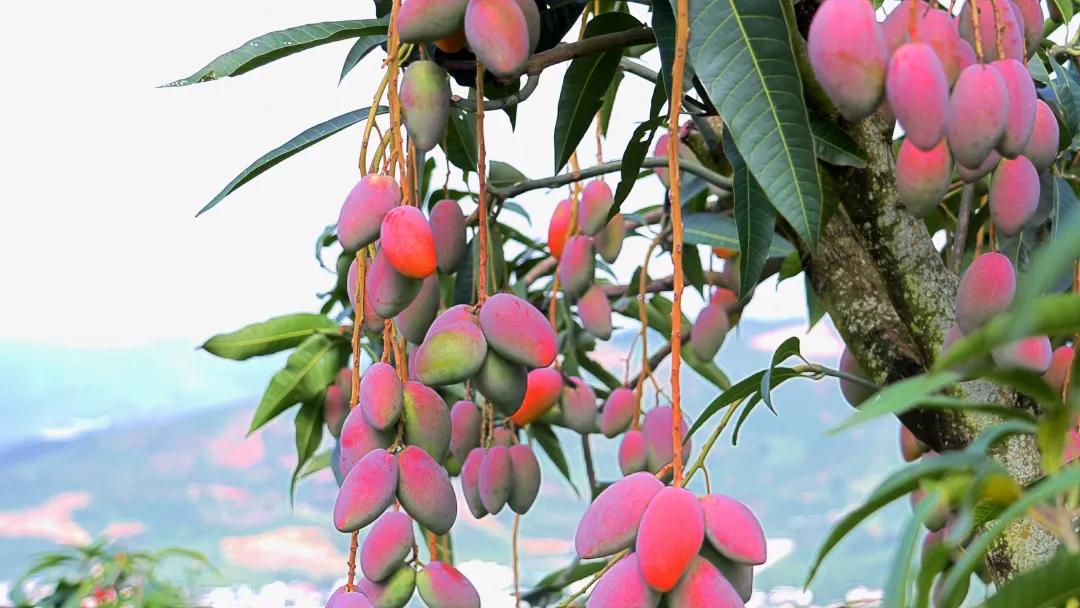
Photo shows Xiaojinfeng mango grown in Yuanjiang Hani, Yi and Dai autonomous county, southwest China's Yunnan province. (Photo/Hu Zunhui)
In the dry-hot valley of Yuanjiang, located within Yuanjiang Hani, Yi and Dai autonomous county, southwest China's Yunnan province, mango orchards are experiencing a brief winter respite. Farmers are actively engaged in pruning and tending to the trees, preparing for the upcoming growing season.
In recent years, mango cultivation has become a pillar industry in Yuanjiang, significantly increasing farmers' incomes while contributing to ecological restoration efforts along the Red River basin. The region, under the administration of Yuxi, sits on a low-latitude plateau with abundant sunshine and warmth. Known as a "natural greenhouse," the area remains frost-free for most of the year, making it an ideal environment for tropical agriculture.
Given the region's thin, rocky soils that limit grain cultivation, local authorities have focused on the cultivation of tropical cash fruit trees, particularly mangoes, as a strategic development initiative.
"Mangoes thrive in relatively high temperatures," explained Li Jianqi, a senior agronomist with the county's bureau of agriculture and rural affairs. "With an average annual temperature of 24.1 degrees Celsius and about 2,291 hours of sunshine each year, Yuanjiang offers optimal conditions for mango cultivation, including sugar conversion and nutrient accumulation, making Yuanjiang well-suited for producing high-quality fruit."
In the Ganzhuang community of Yuanjiang, farmer Bai Xue oversees more than 100 mu (approximately 6.7 hectares) of mango orchards. The harvest season, which begins in May, fills the air with a sweet fragrance of ripe, plump mangoes.
"Yuanjiang mangoes ripen early, have excellent taste, and possess an appealing appearance," Bai remarked. In her community, every household cultivates nearly 20 mu of mangoes on average, generating a per capita annual income of about 25,000 yuan ($3,550).
Even before the harvest begins, Su Yongren, head of the Yuanjiang Qinnong Fruit Cooperative, is inundated with orders. "Mangoes picked during the day are shipped out the same night," he explained. "Through a cooperative-plus-e-commerce model, we integrate both online and offline sales channels. During peak times this year, we processed nearly 4,000 orders in a single day."
This success has not been achieved overnight. In the past, mango sales were hindered by factors such as limited technical knowledge, an unbalanced mix of varieties, and weak sales channels. Despite favorable natural conditions and a wide array of mango varieties, Yuanjiang faced challenges in competing with other mango-producing regions.
"During the mango harvest, we often saw large volumes from other regions flooding the market, which drove prices down," Su recalled.
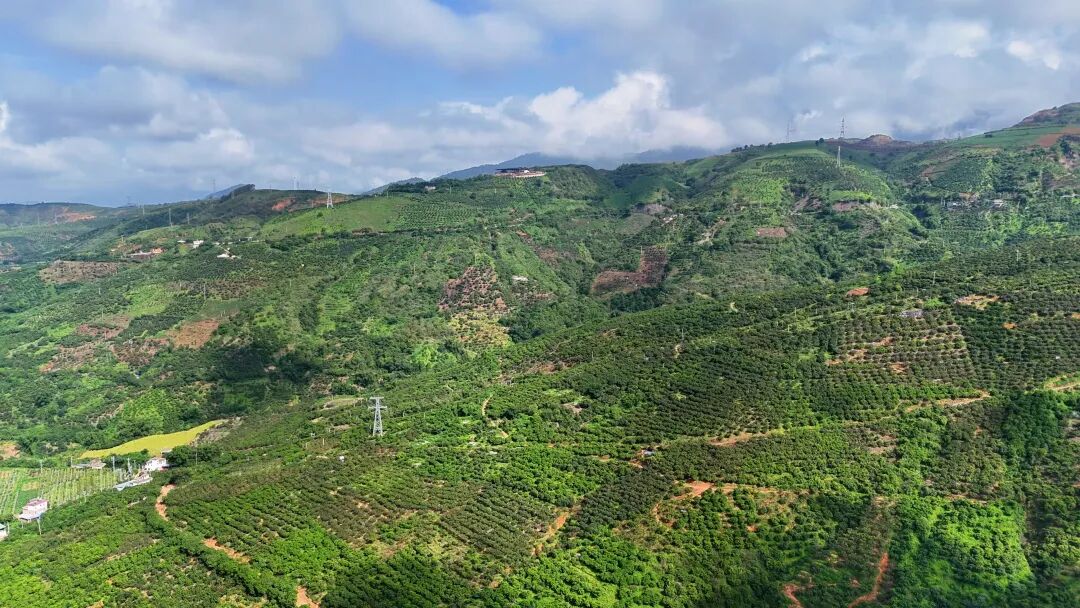
Photo shows mango orchards in Yuanjiang Hani, Yi and Dai autonomous county, southwest China's Yunnan province. (Photo/Hu Zunhui)
Yuanjiang's distinctive topography, with elevations ranging from 327 meters to 2,580 meters, creates a pronounced vertical climate ideal for growing different types of tropical fruits.
"Mangoes from Hainan mature the earliest, while those from Guangxi typically come onto the market in July and August," Su explained. "From early May to late June, there used to be a market gap."
Guided by experts, Su and other farmers leveraged Yuanjiang's vertical agricultural conditions to diversify and adjust mango varieties. Through scientific and technological support, the region has developed early-ripening varieties such as Xiaojinfeng, which now reach maturity in May. This enables Yuanjiang mangoes to be among the earliest to hit the market nationwide after Hainan.
By capitalizing on the timing gap, we can sell in large volumes when supply elsewhere is limited," Su said. "Our mangoes are shipped as far as Xinjiang and northeast China."
Today, Yuanjiang's mango germplasm nursery preserves more than 100 varieties, with harvest seasons extending from May to September. "Early-ripening mangoes remain the mainstay, while mid- and late-season varieties are being developed in mountainous areas," Li noted. "This continuous variety optimization helps to enhance the county's overall mango production."
Each year, technical training sessions are held in Yuanjiang, covering topics such as optimal fertilization, irrigation, fruit-setting techniques, and pest management. Experts from across Yunnan and beyond provide hands-on guidance to local farmers. Additionally, advanced tools such as agricultural drones, smart irrigation systems, and integrated water-and-fertilizer equipment have become increasingly common in the orchards.
Through close cooperation with research institutes and universities, the county has established primary-level expert workstations and on-site training schools for mango cultivation. New varieties and advanced planting techniques are regularly introduced, while local standards have also been issued to promote standardized, green production, improving both quality and efficiency across the industry.
As the number of mango orchards continues to expand and fruit quality improves, Yuanjiang has hosted a Golden Mango Cultural and Tourism Festival for consecutive years. The region is now home to more than 13,500 mango-growing households, with over 52,000 people employed in the industry. In 2024, mango orchards covered 242,000 mu, producing 264,000 tons of fruit and generating 1.16 billion yuan in agricultural output.
Today, the mango industry in Yuanjiang not only drives economic growth but also contributes to environmental sustainability and green development in the region.
Photos




Related Stories
- Golden mangoes fuel booming industry in Lijiang
- Mango industry bears fruit in southwest China county
- From hilltops to harvest: Rise of south China's mango industry
- Mango industry conference held in south China's Guangxi
- Feature: Cambodians get better income as more mangoes enter Chinese market
- Pakistan reckons on Chinese cooperation to give impetus to mango industry
- Village in SW China’s Yunnan shakes off poverty by boosting development of mango industry
- Sales of Xiaoji mango begin in market
- Press conference of Tainan Mango Festival held in Taipei
- Mangos blasted off trees with water cannons in Foshan
Copyright © 2026 People's Daily Online. All Rights Reserved.
