



European farmers' protests against Mercosur deal highlight EU division
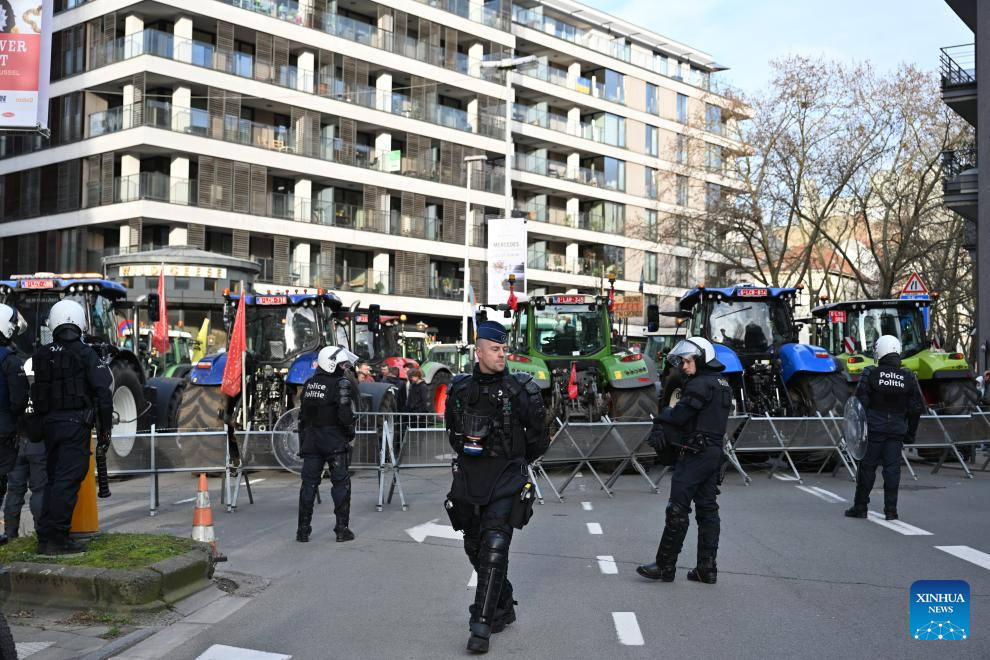
Police officers secure a road as farmers park tractors during a protest near the Europa Building in Brussels, Belgium, Dec. 18, 2025. Thousands of farmers from across Europe rallied near the European Parliament and the Europa Building in Brussels on Thursday as European Union (EU) leaders convened for a summit, with a long-negotiated trade deal with the South American bloc Mercosur on the agenda. (Xinhua/Lyu You)
BRUSSELS, Dec. 18 (Xinhua) -- Thousands of farmers from across Europe rallied near the European Parliament and the Europa Building in Brussels on Thursday as European Union (EU) leaders convened for a summit, with a long-negotiated trade deal with the South American bloc Mercosur on the agenda.
Protesters, many arriving in tractors, blocked the roads leading into central Brussels, blared horns and set off fireworks. Police deployed water cannon and tear gas near the Europa Building, where leaders of the 27 EU member states held discussions on the trade deal and other issues from early morning.
Outside the European Parliament, demonstrators initially threw potatoes and beets at police, who responded by using water cannons. The situation later escalated into violence, with protesters hurling stones, smoke bombs and fireworks at Parliament buildings, while tractors were seen uprooting trees in the square. Police used tear gas to disperse the violent protesters.
The demonstration targeted the free trade agreement between the EU and the four founding Mercosur countries -- Argentina, Brazil, Paraguay, and Uruguay. Initiated more than 20 years ago, the deal reached an agreement in principle in 2019, with negotiations finalized in 2024.
The proposed pact would expand EU exports of vehicles, machinery, wines and spirits to Latin America, while easing access for South American beef, sugar, rice, honey and soybeans to the European market.
Belgian dairy farmer Sabina Vandeweyer told Xinhua that the EU-Mercosur deal would be "very negative" for European farmers, as it would allow cheaper South American agricultural products into the European market.
"They can produce meat, milk and sugar much more cheaply than we can, under far less strict rules," said the 52-year-old farmer. "Our health could be endangered if we consume their products. It's a big problem."
European Commission President Ursula von der Leyen is scheduled to travel to Brazil on Saturday to sign the agreement with Mercosur partners. However, securing approval from all EU member states remains a significant challenge. Italian Prime Minister Giorgia Meloni on Wednesday joined France in calling for a delay of the signing of the deal, citing concerns over the impact on the country's agricultural sector.
According to latest media reports, the EU is postponing the signing of the free trade deal with Mercosur until January.
Farmers from Germany and other EU countries, including Bulgaria, Romania, Slovenia and Latvia, also converged in Brussels to voice concerns over the future of European agriculture.
Guenther Felssner, vice president of the German Farmers' Association and president of the Bavarian Farmers' Association, spoke out against the agreement during the demonstration.
"We are in favor of trade -- but fair trade," Felssner said, according to local reports. "Products must meet our standards. Anything else weakens Europe from within. Despite planned safeguard clauses, the agricultural component of the Mercosur agreement does not guarantee fair trade for our farmers, which is why we say a clear 'no' to Mercosur for agriculture."
Yu Xiaohua, professor of agricultural economics at the University of Gottingen in Germany, said the main objective of the EU-Mercosur deal is to establish a common market and promote trade among member countries. As Mercosur nations enjoy abundant resources and relatively low production costs, the agreement could lead to an influx of inexpensive South American agricultural products into the EU, dealing a devastating blow to European agriculture, particularly bulk commodities.
At the same time, Yu noted that the agreement would benefit other sectors, especially industry, and that increased agricultural imports from developing countries could help curb inflation.
Thursday's protests in Brussels were part of a broader wave of farmer mobilization across Europe. In France, farmers have staged nationwide protests against domestic agricultural policies and the Mercosur deal, using heavy tractors to block roads and erect makeshift barricades. Polish farmers have also held nationwide protests since mid-November, warning that cheap imports could threaten food sovereignty and farm incomes.
Greek farmers and livestock breeders have demonstrated nationwide for a third consecutive week, blocking highways and key border crossings to protest delayed and reduced agricultural subsidies, rising production costs and long-standing structural problems in the sector. Similar protests have also erupted in Bosnia and Herzegovina, with disruptions spilling across borders and affecting regional traffic and freight flows.
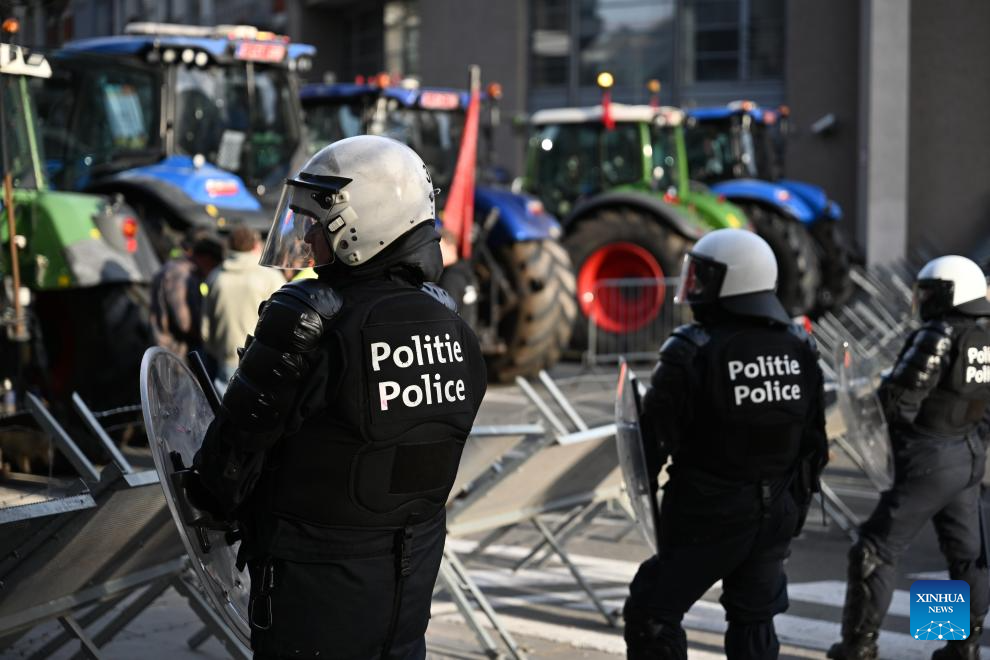
Police officers secure a road as farmers park tractors during a protest near the Europa Building in Brussels, Belgium, Dec. 18, 2025. Thousands of farmers from across Europe rallied near the European Parliament and the Europa Building in Brussels on Thursday as European Union (EU) leaders convened for a summit, with a long-negotiated trade deal with the South American bloc Mercosur on the agenda. (Xinhua/Lyu You)
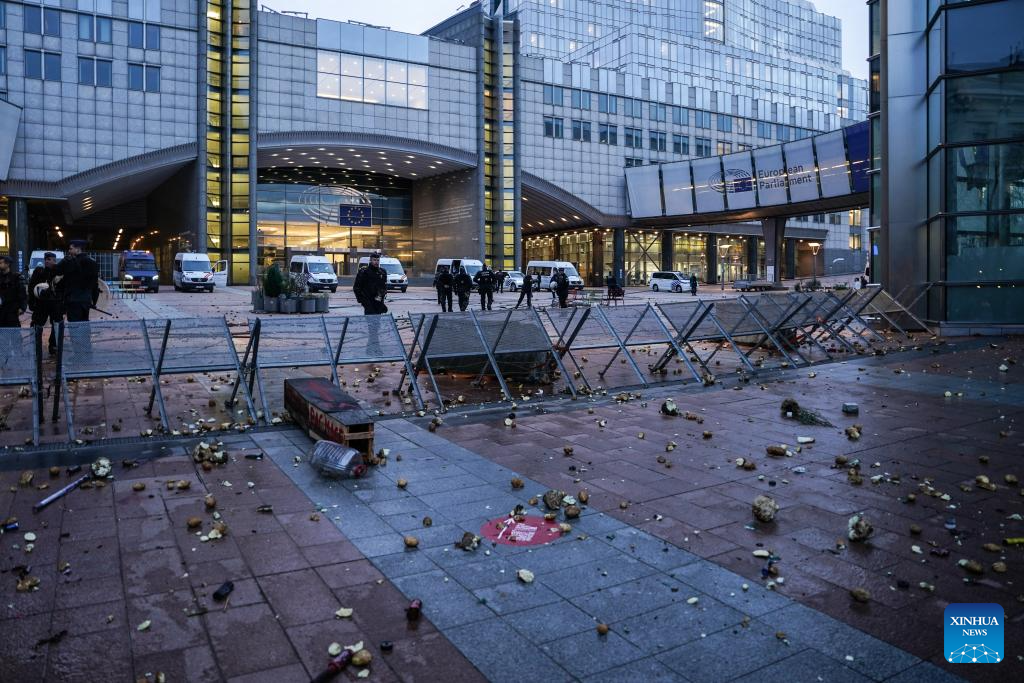
This photo taken on Dec. 18, 2025 shows the view outside the European Parliament during a farmers' protest in Brussels, Belgium. Thousands of farmers from across Europe rallied near the European Parliament and the Europa Building in Brussels on Thursday as European Union (EU) leaders convened for a summit, with a long-negotiated trade deal with the South American bloc Mercosur on the agenda. (Xinhua/Peng Ziyang)
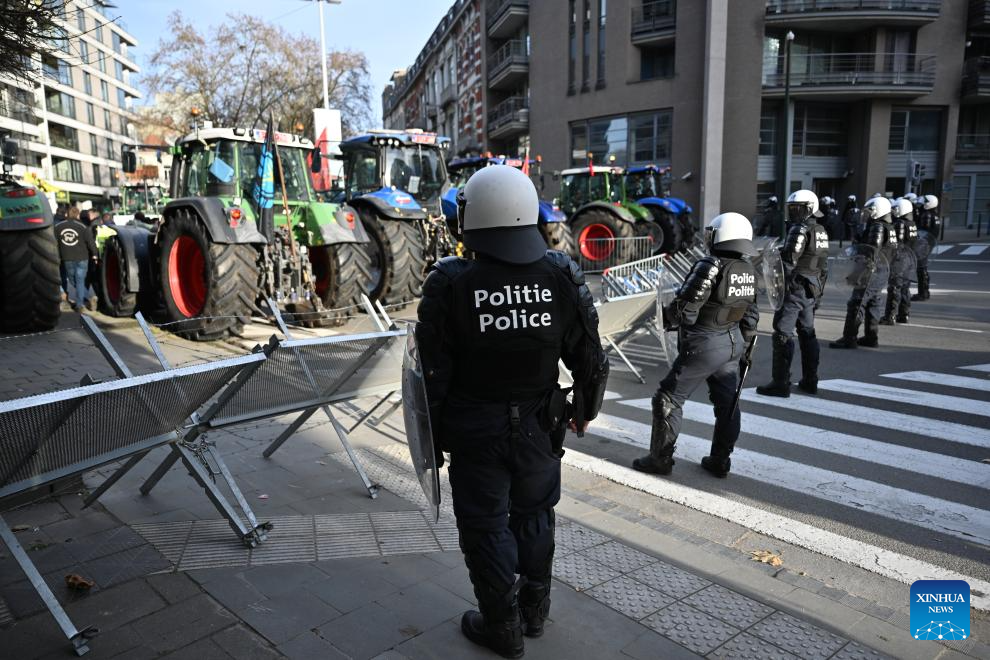
Police officers secure a road as farmers park tractors during a protest near the Europa Building in Brussels, Belgium, Dec. 18, 2025. Thousands of farmers from across Europe rallied near the European Parliament and the Europa Building in Brussels on Thursday as European Union (EU) leaders convened for a summit, with a long-negotiated trade deal with the South American bloc Mercosur on the agenda. (Xinhua/Lyu You)
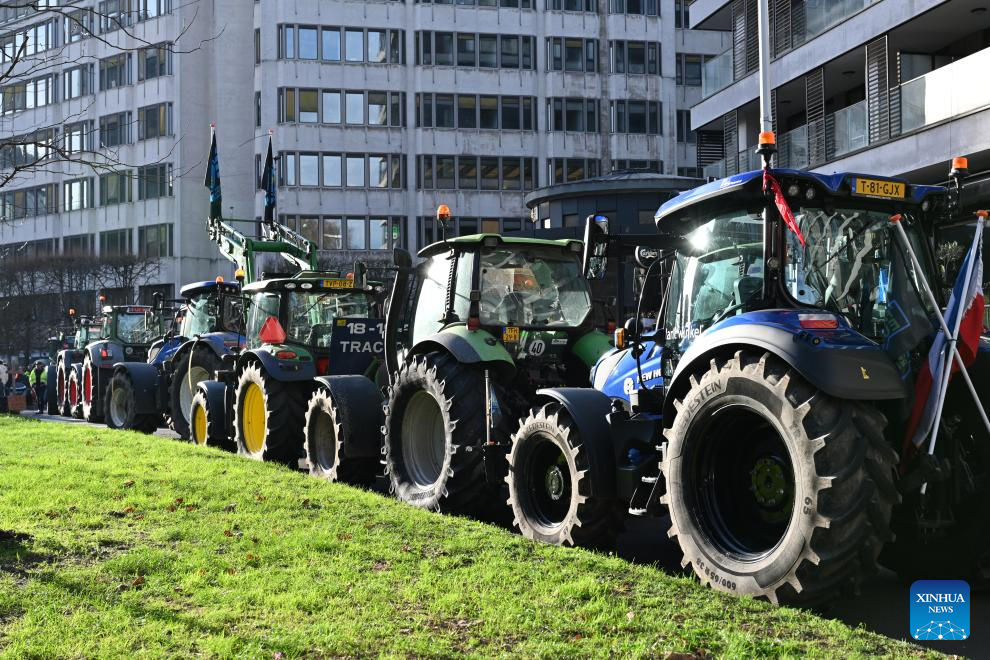
Tractors block a street during a farmers' protest near the Europa Building in Brussels, Belgium, Dec. 18, 2025. Thousands of farmers from across Europe rallied near the European Parliament and the Europa Building in Brussels on Thursday as European Union (EU) leaders convened for a summit, with a long-negotiated trade deal with the South American bloc Mercosur on the agenda. (Xinhua/Lyu You)
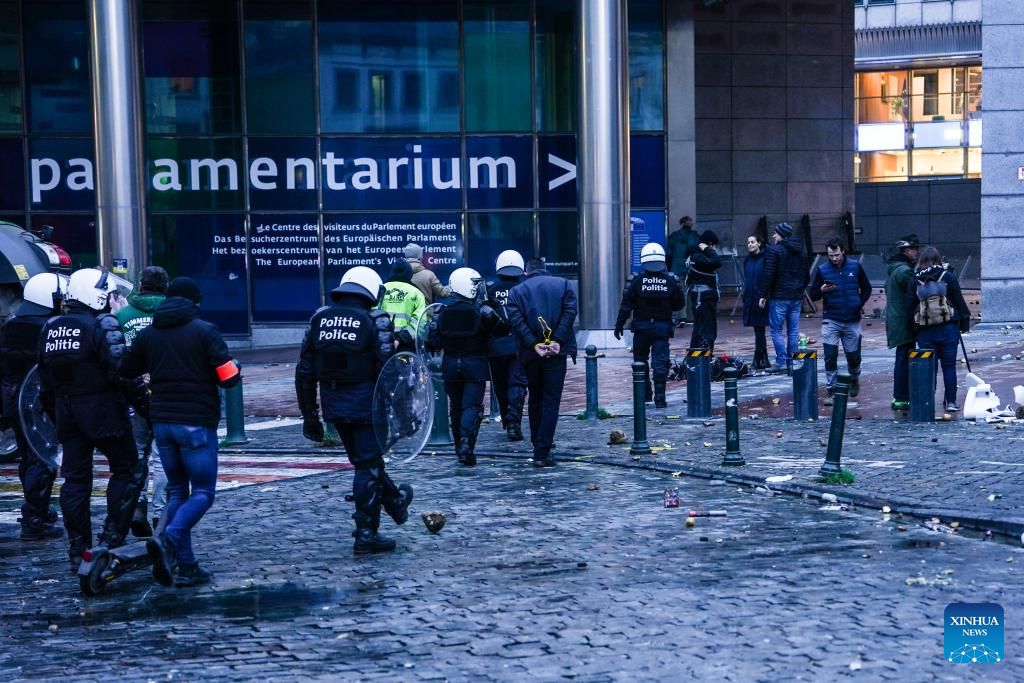
Police arrest demonstrators during a farmers' protest in Brussels, Belgium, Dec. 18, 2025. Thousands of farmers from across Europe rallied near the European Parliament and the Europa Building in Brussels on Thursday as European Union (EU) leaders convened for a summit, with a long-negotiated trade deal with the South American bloc Mercosur on the agenda. (Xinhua/Peng Ziyang)
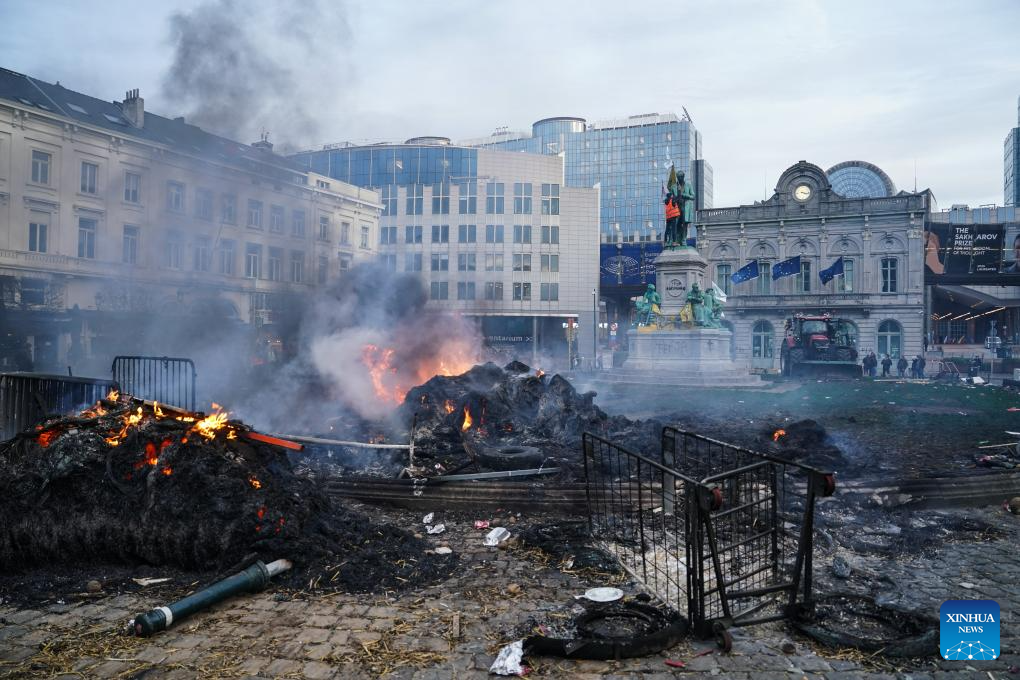
This photo taken on Dec. 18, 2025 shows a view after a farmers' protest in Brussels, Belgium. Thousands of farmers from across Europe rallied near the European Parliament and the Europa Building in Brussels on Thursday as European Union (EU) leaders convened for a summit, with a long-negotiated trade deal with the South American bloc Mercosur on the agenda. (Xinhua/Peng Ziyang)
Photos
Related Stories
- Europe grapples with a year of U.S. tariff-driven strain as internal imbalances deepen
- Yearender: Self-vassalization, US rift, internal fractures: Europe faces tough strategic year
- Europe decries "political war" over new U.S. national security strategy
- "Weak" people leading "decaying" Europe: Trump
- U.S.-Europe split widens over tech fines, new U.S. security strategy
Copyright © 2025 People's Daily Online. All Rights Reserved.
