
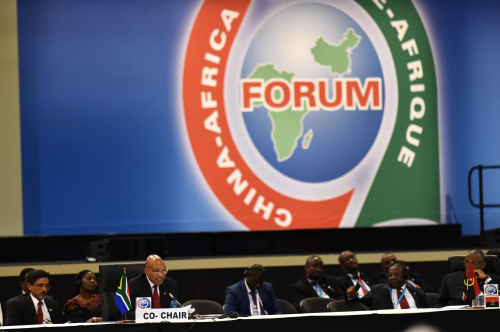
Someone suggested during an informal discussion at the recent Third Forum on China-Africa Media Cooperation in Beijing that there be effective ways to challenge the dominance of Western media.
This torched a “little” debate, with some arguing that the idea was plausible, while others thought it would be a futile attempt.
Those who dismissed the idea cited how Western media has been so entrenched, especially in African societies, that almost everything they say is taken as the gospel truth.
Then, from nowhere, someone suggested: “Why not pull resources together and come up with our own version of CNN or BBC”.
There was dead silence when another person pointed out that CCTV was already available, but had not managed to match the influence of the Western media so far.
This debate emanated from the undeniable fact that Western media has not been fair in its reportage of both Africa and China.
And media observers believe that time has come for the two to strengthen their cooperation in media to challenge the existing stereotypes being churned by the Western media.
The cooperation in media between China and African countries has already attracted the attention of Western critics, with volumes of articles being produced on what it entails.
What has been clear in such a discourse is that Western countries feel unsettled with that kind of relationship.
“China wants to colonise Africa using the influence of the media”, they argue, perhaps having learnt from their own deeds.
The West successfully used the media in its bid to control the mentality and culture of Africans.
And there is now genuine fear from those quarters that this unbalanced approach is getting a great deal of scrutiny.
They would not want cooperation between Chinese and African media to succeed for obvious reasons.
Zimbabwe’s Minister of Information, Media and Broadcasting Services Christopher Mushohwe believes that challenging media dominance from the West should be the priority in media cooperation between China and Africa.
Like many other media experts from both China and Africa, Mushohwe is convinced this can be done.
But he believes that the pace to reach the desired goal is a little too slow.
“In essence, the elimination of dependence on Western global media organisations for news, broadcasting content and sources of information is the most important outcome we expect from increased exchange and cooperation in the media between China and African countries,” he said.
Mushohwe was speaking at the Third Forum on China-Africa Media Cooperation.
“Evidently, progress towards the attainment of this goal will depend on the pace at which we African countries will work to wean ourselves from over dependence on Western global media,” he continued.
Mushohwe suggested that in the meantime, the short term solution can be to increase the presence of Chinese journalists in Africa and vice-versa, to give the people a true picture of both sides.
He suggested the pulling together of resources to encourage more exchange of content and personnel between African and Chinese media.
“China is a victim of Western media propaganda as most African states are, particularly against those regimes viewed as a threat to American and Western interests which they seek to remove,” he said.
“We need to stand shoulder to shoulder with China to fight Western imperialism which is fronted every day through their mass media outlets, with many of them operating from our countries.”
Most Africans know China from the eyes of the Western media lenses, in as much as the Chinese know Africa from the same source.
This has had an effect on the attitude of the people and sometimes hinder smooth progress in furthering Sino-Africa relations.
The reality, which must be accepted, is that the Western media will never change its stance on portrayal of both China and Africa.
So, in both China and Africa, there is a yawning gap for media that can give more objective, impartial and balanced public international opinion about the world.
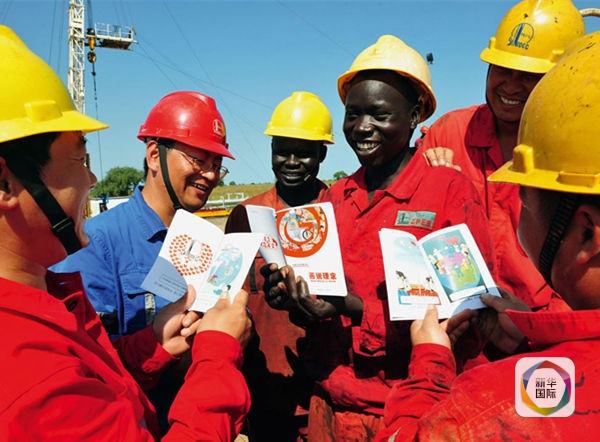
China has been capacitating the media in Africa through various means.
Several African journalists have been granted an opportunity to come to China for further training, familiarisation tours and furthering their education.
The Asian country has since established the China Africa Press Centre which takes journalists from Africa to stay and work in China for 10 months each year.
China has also been helping capacitate various media houses in African countries with the provision of the latest technologies.
The other advantage forming the foundation of this envisaged grand plan is that China’s media presence is already being felt in many African countries.
Media houses such as People's Daily, Xinhua, China Radio International, CCTV and China Daily already operate bureaus in some of the African countries.
Chinese Minister of State Administration of Radio, Film and Television Cai Fuchao is agreeable that a new level is needed in media cooperation between the two sides.
“China will hold firm and adhere to the genuine, frank, close and sincere principle so as to develop media cooperation with Africa in an all-round way,” he told the same forum.
“The Chinese media will work with their African counterparts to consolidate the basis for their cooperation, expand space for cooperation and broaden areas of cooperation to promote China-Africa media ties to a new level and make contributions to the development of the comprehensive China-Africa strategic partnership.”
The implementation of the media cooperation is being done under the auspices of the Forum on China-Africa Cooperation (FOCAC), a broad platform meant to enhance collaboration between the two sides.
For this media cooperation between China and Africa to be effective, the planners must not lose fact that the world is now globalised.
Anyone who comes with the news first is believed more.
So, the positive story of China and Africa should always be ahead of the negative story that can be difficult to correct once it reaches audiences first.
These days of advanced technologies, people are no longer interested much in reading or watching and then analyse the issues.
They now normally watch, read and spread the news, thanks to the one touch communication gadgets now readily available.
They don’t mind if it is a rumour or an outright lie.
African Union Commission deputy chairperson Erastus Mwencha says without a strong China-Africa media, the cooperation between the two sides will come to naught.
“The institutional capacity of the media needs to be reinforced, as I had mentioned earlier,” he told the delegates at the forum.
“We need to support media cooperation, media networking and media development, as well as capacity building in the field of journalism which remains a key factor to tell our stories and in fostering the development agenda.”
Observers say what is needed now is to put suggestions into tangible action to ensure that there emerges a strong media serving both China and Africa.
It is clear that the media plays an important role in promoting China-Africa relations and help debunk the biased information coming from other sources.
A new model of international relations, as pronounced by China, based on win-win cooperation, mutual respect and equality is emerging.
This can only be more effective when there is strong media to propagate it.
From the example of cooperation between China and Africa, the media project can end up having a buy-in from other developing countries.
That will be the day when developing countries, whose combined population is far much higher than the developed ones, will have their voice back.
Lovemore Chikova is the News Editor of The Herald Newspaper in Zimbabwe, a fellow at the China-Africa Press Centre and an intern at People’s Daily Online. He can be contacted on lchikovahh@yahoo.com
 World's fastest bullet train to start operating next month
 Huangluo: China's 'long hair village'
 Spectacular bridge with one of the tallest piers in the world
 Magnificent view of Hukou Waterfall
 A glimpse of Stride 2016 Zhurihe B military drill
 US Navy chief tours Liaoning aircraft carrier
 Chinese American woman wins Miss Michigan
 Centenarian couple takes first wedding photos
 Traditional Tibetan costumes presented during fashion show
 Top 10 livable Chinese cities
 Top 20 hottest women in the world in 2014
 Top 10 hardest languages to learn
 China’s Top 10 Unique Bridges, Highways and Roads
 China, Russia should join to foil THAAD
 Party warns of attempts to foment revolution after rights lawyer trial
 Biting the bait to see what the soothsayers outside Buddhist temples actually do
 Chinese death taboo makes it hard to develop care homes despite aging society
Day|Week


