
Wed,Jun 18,2014
 US aircraft carrier docks in HK, welcomes PLA aboard
 Graduation season: 'Take graduation photos to mark our love'
 College-student-turned nun becomes famous on Internet
 Japanese airplanes tail Chinese warplane in China's ADIZ
 China applies for UNESCO listing of Nanjing documents
 Picturesque scenery in Hongcun Village
 Japan's PM vows to resume commercial whale hunt
 Luoyang aims to become 'Chinese Culture City'
 Century-old jade disc found confirms ancient legend
 A serious mind behind Chinese leader
Hanoi should fulfill legal obligation spelled out in its diplomatic communication recognizing Xisha and Nansha islands as China's
A Chinese oil rig starting its normal drilling in the waters off China's Xisha Islands on May 2 has been the victim of ceaseless forcible and illegal harassments from Vietnamese vessels, although Vietnam has no legal basis to back up its disruptive and dangerous activities.
Hanoi should return to its long-held recognition that the Xisha and Nansha islands are China's territories. On Sept 4, 1958, the government of the People's Republic of China issued a statement, unequivocally declaring that the Xisha and Nansha islands are part of China's territory and that the principle on the maritime territory with a sovereign width of 12 nautical miles applies to these islands. In a diplomatic note to China's premier Zhou Enlai 10 days later, Pham Van Dong, the prime minister of the Democratic Republic of Vietnam, said he "recognizes and endorses" China's statement and pledged "complete respect" to China's maritime sovereignty in bilateral state-to-state ties. This signed note is called "Pham Van Dong's official letter" in Vietnam.
Before 1974, the Democratic Republic of Vietnam neither claimed its sovereignty over China's Xisha and Nansha islands, nor declared them within the scope of its sovereignty. On the contrary, the Vietnamese government expressed its stance, in both verbal and written form, that the Xisha and Nansha islands belong to China.
Vietnam changed its stance only after its south-north unification in 1975 and ever since it has made every effort to misinterpret and deny the official stance embodied in Pham's note.
During his visit to China in June 1977, in response to criticism from China's leaders over the reversal of his stance, Pham defended it by saying that "during Vietnam's war of resistance against the United States, it should certainly put the fight against the US above everything, and thus we should look at Vietnam's statements on territorial claims, including my note to premier Zhou Enlai, from historical circumstances at that time".
With this feeble excuse, Pham laid bare his logic that to realize its supreme goal of national independence and unification, Vietnam can do anything and is free from undertaking the corresponding consequences. Some Vietnamese scholars have tried to argue that Pham's note was only a gesture of support to China for the sake of the bilateral friendship at that time and thus is irrelevant to its territorial claim. At a time when Vietnam was at war with the US, it had to recognize the Chinese government's statement on the sovereignty of territorial waters in exchange for assistance from Beijing, which was providing Vietnam with aid.
Such self-serving arguments from the Vietnamese side have no place in modern international relations.
 |
 Graduation photo ideas: reliable alumnus and happy alumna
 Super daddies in 2014 World Cup
 College girls take stylish photos to help enrollment
 Rebuilding the silk road
 Top 10 Chinese products scoring World Cup goal
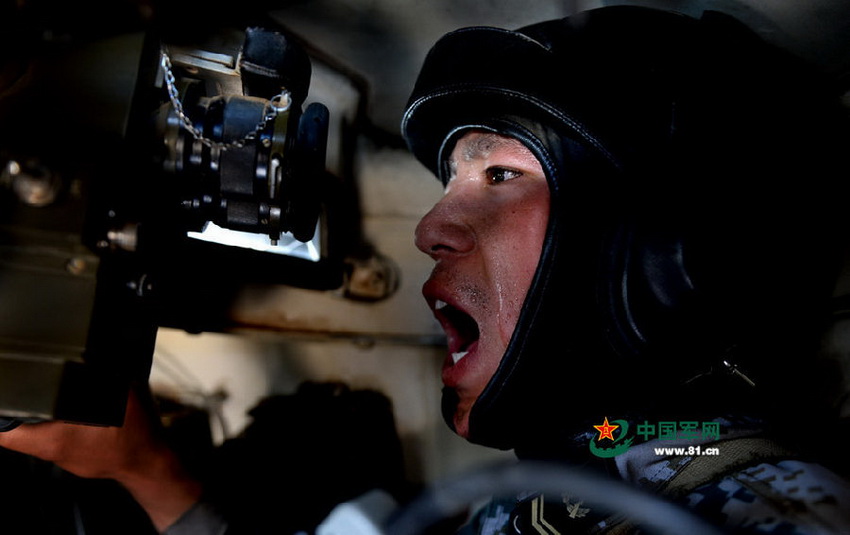 PLA units hone their tank combat skills
 Attendants shine at Xinjiang-Lanzhou high-speed rail
 Jiuzhai Valley - fairyland of the world
 Can't take eyes off national teams in World Cup
 In Pictures: Female fans of World Cup
 China's top 10 representative architectures
 Photo story: A day of 'mini girl'
 Top 20 hottest women in the world in 2014
  Cute animals' leisure summer in zoo
 Exhibition of the Buddha held in Tibet
Day|Week|Month