
Wed,Jun 18,2014
 US aircraft carrier docks in HK, welcomes PLA aboard
 Graduation season: 'Take graduation photos to mark our love'
 College-student-turned nun becomes famous on Internet
 Japanese airplanes tail Chinese warplane in China's ADIZ
 China applies for UNESCO listing of Nanjing documents
 Picturesque scenery in Hongcun Village
 Japan's PM vows to resume commercial whale hunt
 Luoyang aims to become 'Chinese Culture City'
 Century-old jade disc found confirms ancient legend
 A serious mind behind Chinese leader
It is a fact that China and Vietnam enjoyed a solid friendship at that time and Vietnam did extend its support to China on international occasions. However, territorial issues are always serious as they are related to a country's sovereignty. If Vietnam disagreed with China's sovereignty over the Xisha and Nansha islands, Pham, as the then prime minister of Vietnam, a country that has long held a tough nationalist stance, would not send to China an official letter, at least it would not mention the Xisha and Nansha islands. The fact is that Vietnam sent a diplomatic note using strict legal wording to China only 10 days after China issued the statement, in a show of Hanoi's support to Beijing. This, together with Vietnam's expressed recognition on different occasions that the Xisha and Nansha islands are a part of China's territory, is enough to prove that Pham's note acknowledging the islands as a part of China's inherent territory represented the real position of the Vietnamese government.
And there is no evidence to suggest that China took advantage of Vietnam's need for assistance during the war to force the Vietnamese government to go back on its original wishes and recognize China's territorial claims. To send an official letter to the Chinese government and use that wording was entirely the decision of the Vietnamese government itself.
According to relevant international laws, practices and norms, Pham's note to China belongs to a unilateral national statement that can produce a legal obligation and thus the Vietnamese government is obliged to undertake that obligation. Pham remained Vietnam's prime minister after the country's south-north unification, and there was not any change to the substance of the note he sent to China as a national statement in 1958.
The Vietnamese government cannot deny the legal force of Pham's note. It is Vietnam's international obligation to keep its stance consistent with Pham's note.
The author is director of the Research Institute of Vietnamese Law, Guangxi University for Nationalities.
 |
 Graduation photo ideas: reliable alumnus and happy alumna
 Super daddies in 2014 World Cup
 College girls take stylish photos to help enrollment
 Rebuilding the silk road
 Top 10 Chinese products scoring World Cup goal
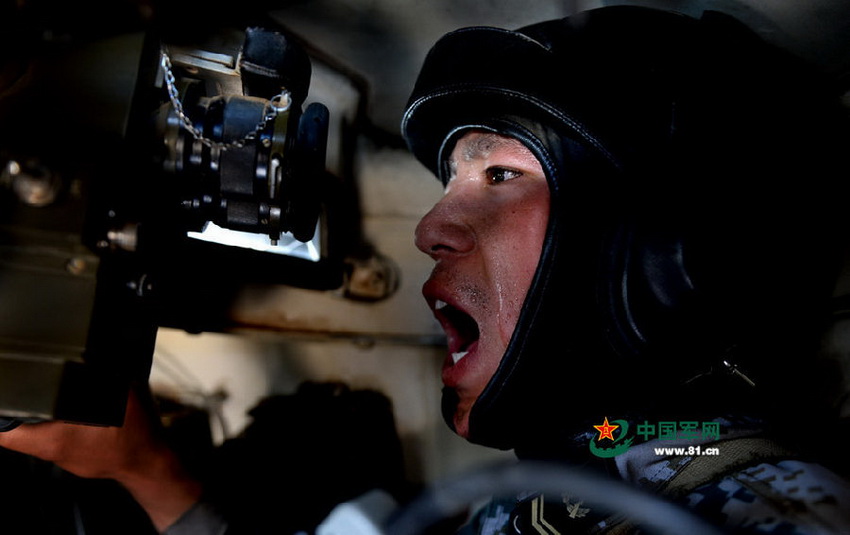 PLA units hone their tank combat skills
 Attendants shine at Xinjiang-Lanzhou high-speed rail
 Jiuzhai Valley - fairyland of the world
 Can't take eyes off national teams in World Cup
 In Pictures: Female fans of World Cup
 China's top 10 representative architectures
 Photo story: A day of 'mini girl'
 Top 20 hottest women in the world in 2014
  Cute animals' leisure summer in zoo
 Exhibition of the Buddha held in Tibet
Day|Week|Month